


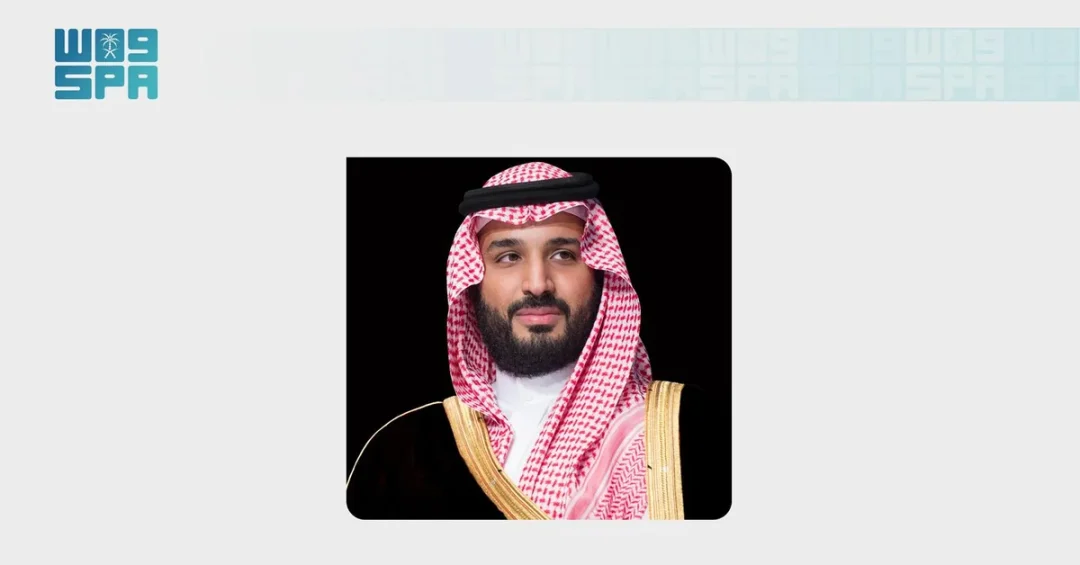
His Royal Highness Prince Mohammed bin Salman bin Abdulaziz Al Saud, Crown Prince and Prime Minister, has received a written message from Prime Minister of the United Kingdom of Great Britain and Northern Ireland Andy Burnham concerning bilateral relations and ways to strengthen them, the Saudi Press Agency reported. The message was formally received on behalf of the Crown Prince by Vice Minister of Foreign Affairs Waleed Elkhereiji at the Ministry of Foreign Affairs headquarters in Riyadh on Monday. The Vice Minister accepted the correspondence during a meeting with British Ambassador to Saudi Arabia Stephen Charles Hitchen, in a diplomatic exchange that underscores the depth and continuity of the Saudi-UK partnership.
The meeting between Vice Minister Elkhereiji and Ambassador Hitchen focused on bilateral relations and ways to develop them across various fields, as well as matters of mutual interest. The exchange reflects a long-standing diplomatic tradition between Riyadh and London, one that has been carefully maintained through regular high-level communication and structured dialogue. For observers of international affairs, the delivery of a written message from a sitting British prime minister to the Saudi Crown Prince signals both the importance London attaches to the relationship and the Kingdom’s central role in regional and global diplomacy. How often do written messages of this kind translate into tangible outcomes for citizens in both countries?
Context and Background
The relationship between the Kingdom of Saudi Arabia and the United Kingdom rests on decades of strategic cooperation spanning diplomacy, defense, trade, education, and culture. Successive British governments have regarded Saudi Arabia as a pivotal partner in the Gulf region, while the Kingdom has valued the UK as a reliable interlocutor with deep experience in global markets and multilateral institutions. The written message from Prime Minister Andy Burnham to Crown Prince Mohammed bin Salman is the latest expression of that enduring bond, arriving at a time when both countries are navigating a rapidly changing international environment.
Diplomatic correspondence of this nature is rarely ceremonial alone. Written messages between heads of government typically carry substantive content: invitations, policy positions, proposals for new cooperation frameworks, or updates on shared priorities. The fact that the message was received by Vice Minister Elkhereiji on behalf of the Crown Prince, in the presence of the British Ambassador, indicates the seriousness with which both capitals treat the channel. It also demonstrates the structured protocol that governs Saudi diplomacy, where senior officials act with clear authority delegated from the leadership. What does this level of protocol tell us about how Riyadh manages its most important partnerships?
The meeting in Riyadh also took place against the backdrop of the Kingdom’s expanding global engagement under Vision 2030, the national transformation program championed by Crown Prince Mohammed bin Salman. As Saudi Arabia diversifies its economy, opens new sectors to foreign investment, and positions itself as a hub for tourism, technology, and renewable energy, partners such as the United Kingdom are increasingly seen not only as buyers of energy but as co-investors in the Kingdom’s future. The UK’s expertise in financial services, education, healthcare, and creative industries aligns closely with the priorities Saudi Arabia has set for the coming decade.
Key Details of the Diplomatic Exchange
According to the Saudi Press Agency, Vice Minister of Foreign Affairs Waleed Elkhereiji received the written message at the Ministry of Foreign Affairs headquarters in Riyadh on Monday. He received it while meeting with British Ambassador to Saudi Arabia Stephen Charles Hitchen. The official account states that the meeting discussed bilateral relations and ways to develop them across various fields, as well as matters of mutual interest. The message itself was sent by Prime Minister Andy Burnham and addressed to Crown Prince Mohammed bin Salman in his capacity as Crown Prince and Prime Minister of the Kingdom.
The involvement of the Vice Minister of Foreign Affairs reflects the routine yet significant nature of such exchanges. Saudi Arabia maintains a dense network of diplomatic contacts with its allies, and senior officials frequently receive messages and hold consultations on behalf of the leadership. This particular meeting combined two functions: the formal delivery of the prime minister’s message and a working discussion on the bilateral agenda. Ambassador Hitchen, who represents the United Kingdom in Riyadh, is a central figure in sustaining day-to-day diplomatic engagement between the two countries.
While the specific contents of the written message were not disclosed in the official report, the topics referenced — bilateral relations and matters of mutual interest — are broad enough to encompass the full spectrum of Saudi-UK cooperation. These include trade and investment, defense and security coordination, energy transition, education and research partnerships, and cultural exchange. The phrasing used by the Saudi Press Agency is consistent with the Kingdom’s diplomatic practice of communicating the fact of high-level contact while preserving the confidentiality of detailed discussions. Why is this balance between transparency and discretion so important in international diplomacy?
International and Regional Impact
The exchange carries significance beyond the bilateral channel. The United Kingdom is a permanent member of the United Nations Security Council and a leading voice in European and transatlantic affairs. Its willingness to maintain close communication with Saudi Arabia at the highest levels signals recognition of the Kingdom’s influence in the Middle East and the wider Islamic world. For regional observers, the message reinforces the perception that Riyadh remains a indispensable partner for Western capitals seeking stability, energy security, and constructive engagement in a volatile neighborhood.
At the same time, the exchange highlights the Kingdom’s own diplomatic reach. Saudi Arabia today engages with a wide array of international partners, from the United States and Europe to China, India, and the Global South. The Crown Prince’s receipt of a message from the British Prime Minister is one strand in a broader web of relationships that Riyadh manages with strategic patience. This multi-alignment approach allows the Kingdom to pursue its interests without being dependent on any single external power, a posture that has become a hallmark of Saudi foreign policy in recent years. What does this diversification of partnerships mean for the region’s long-term stability?
The meeting also comes as the UK seeks to deepen its economic ties outside Europe following its departure from the European Union. Saudi Arabia, with its large sovereign wealth fund, ambitious giga-projects, and young, growing population, is an attractive partner for British exporters, investors, and service providers. Conversely, Saudi entities have shown interest in UK markets, including real estate, technology, and sports and entertainment assets. The diplomatic exchange in Riyadh therefore sits atop a commercial relationship that both sides have strong incentives to expand.
Economic and Strategic Significance
Trade between Saudi Arabia and the United Kingdom has historically been substantial, anchored in energy, defense equipment, and professional services. In recent years, the composition of that trade has begun to shift. Saudi Arabia is investing heavily in non-oil sectors — tourism, entertainment, logistics, manufacturing, and digital infrastructure — and British companies are well positioned to participate in these growth areas. The Kingdom’s Public Investment Fund and other Saudi institutions have also expanded their footprint in the UK, creating a two-way flow of capital that strengthens the economic dimension of the relationship.
Strategically, the partnership extends to security and defense. The two countries have a long history of military cooperation, intelligence sharing, and joint training. In a region marked by uncertainty, from the Red Sea to the Levant, close coordination between London and Riyadh contributes to stability and to the protection of vital maritime and energy corridors. The written message from Prime Minister Burnham is likely to have touched on these shared security interests, even if the official readout did not enumerate them. How do economic and security ties reinforce one another in a partnership like this?
Energy is another pillar. Saudi Arabia remains a reliable supplier of crude oil to global markets, and the UK, like other European economies, values that reliability amid geopolitical disruptions. At the same time, both countries have committed to ambitious climate goals, and there is growing scope for cooperation in renewable energy, hydrogen, carbon capture, and sustainable finance. British expertise in green technology and Saudi capital and scale could combine in projects that serve both nations’ net-zero ambitions. The diplomatic channel maintained through messages and meetings helps keep these opportunities on the agenda.
Vision 2030 Alignment
The exchange aligns squarely with the objectives of Vision 2030, Saudi Arabia’s comprehensive plan to diversify the economy, empower citizens, and elevate the Kingdom’s global standing. International partnerships are a core enabler of the vision. By maintaining close ties with the United Kingdom, Saudi Arabia gains access to expertise, investment, and markets that support the growth of new industries and the creation of jobs for its young population. The Crown Prince’s leadership in receiving and responding to such high-level messages reflects his central role in driving the Kingdom’s international engagement.
Vision 2030 also emphasizes the importance of Saudi Arabia as a bridge between cultures and economies. Diplomatic exchanges like the one in Riyadh project an image of a modern, open, and confident Kingdom that engages with the world on its own terms. They reinforce the message that Saudi Arabia is a partner for stability, prosperity, and innovation. As the Kingdom continues to implement its transformation agenda, relationships with established allies such as the United Kingdom will remain essential to its success.
In the final analysis, the written message from Prime Minister Andy Burnham to Crown Prince Mohammed bin Salman is more than a diplomatic formality. It is a signal of continuity, mutual respect, and shared ambition. The meeting between Vice Minister Waleed Elkhereiji and Ambassador Stephen Charles Hitchen operationalized that signal, ensuring that the bilateral relationship continues to advance across all fields. For a Kingdom building its future on global partnerships, such exchanges are not peripheral — they are foundational. What better evidence of a nation’s rising role than the steady stream of world leaders seeking its counsel and cooperation?
20 Questions
Q1. Who received the written message from the UK Prime Minister?
A1. Vice Minister of Foreign Affairs Waleed Elkhereiji received the message on behalf of HRH Crown Prince Mohammed bin Salman at the Ministry of Foreign Affairs headquarters in Riyadh on Monday.
Q2. Who sent the written message to the Saudi Crown Prince?
A2. The message was sent by Prime Minister of the United Kingdom of Great Britain and Northern Ireland Andy Burnham, concerning bilateral relations and ways to strengthen them.
Q3. Where was the message received?
A3. It was received at the Ministry of Foreign Affairs headquarters in Riyadh, the capital of the Kingdom of Saudi Arabia, during an official meeting on Monday.
Q4. Who is the British Ambassador to Saudi Arabia?
A4. Stephen Charles Hitchen is the British Ambassador to Saudi Arabia. He met with Vice Minister Elkhereiji during the delivery of the written message from the UK Prime Minister.
Q5. What topics were discussed at the meeting?
A5. The meeting discussed bilateral relations and ways to develop them across various fields, as well as matters of mutual interest between the two countries.
Q6. What is the significance of the written message?
A6. It reflects the strength of Saudi-UK relations and the UK’s desire to maintain high-level communication with the Kingdom on shared priorities and mutual interests.
Q7. Which Saudi official received the message on behalf of the Crown Prince?
A7. Vice Minister of Foreign Affairs Waleed Elkhereiji received the message on behalf of HRH Prince Mohammed bin Salman, Crown Prince and Prime Minister of Saudi Arabia.
Q8. What is the full title of the Saudi Crown Prince?
A8. His Royal Highness Prince Mohammed bin Salman bin Abdulaziz Al Saud is Crown Prince and Prime Minister of the Kingdom of Saudi Arabia.
Q9. When did the meeting take place?
A9. The meeting took place on Monday, according to the Saudi Press Agency, which reported the exchange from Riyadh.
Q10. What does the exchange say about Saudi-UK ties?
A10. It demonstrates the enduring and strategic nature of the relationship, with both sides committed to regular high-level dialogue and cooperation across multiple fields.
Q11. How does this exchange relate to Vision 2030?
A11. It supports Vision 2030 by strengthening international partnerships that bring investment, expertise, and opportunities to the Kingdom as it diversifies its economy.
Q12. What areas of cooperation exist between Saudi Arabia and the UK?
A12. Cooperation spans trade, investment, defense, security, energy, education, healthcare, technology, and cultural exchange, among other fields of mutual interest.
Q13. Why is the UK an important partner for Saudi Arabia?
A13. The UK is a permanent UN Security Council member with deep expertise in finance, education, and technology, making it a valuable partner for the Kingdom’s development goals.
Q14. What is the role of the Vice Minister of Foreign Affairs?
A14. The Vice Minister supports the Kingdom’s foreign policy objectives and often receives high-level diplomatic messages on behalf of the leadership, as in this case.
Q15. Did the message include any specific agreements?
A15. The official report did not disclose specific agreements. It stated that the message concerned bilateral relations and ways to strengthen them.
Q16. How does Saudi Arabia manage its international partnerships?
A16. Saudi Arabia maintains a multi-alignment approach, engaging with a wide range of global partners to advance its interests and contribute to regional and global stability.
Q17. What is the significance of written diplomatic messages?
A17. They allow heads of government to communicate formally and confidentially, signaling the importance of the relationship and setting the stage for further cooperation.
Q18. How does this meeting reflect Saudi Arabia’s global standing?
A18. It shows that world leaders seek close communication with the Kingdom, recognizing its influence in the region and its role as a constructive global actor.
Q19. What economic opportunities could arise from closer Saudi-UK ties?
A19. Opportunities include British participation in Saudi giga-projects, investment flows in both directions, and collaboration in renewable energy, technology, and financial services.
Q20. What is the likely next step after this exchange?
A20. Both sides are expected to continue high-level dialogue and follow up on shared priorities through diplomatic channels, building on the momentum of this meeting.
Reader Feedback
We value your thoughts. Please share your feedback on this article.
Your feedback helps us improve our coverage.
Related articles
 Dammam Airports Reviews General Aviation Terminal Readiness
 Baltic Storm Leaves 200,000 Without Power, Two Dead
 Jazan Border Patrols Arrest Citizen for Transporting 13 Violators
 SFD Highlights Saudi Support for Palestine Refugees in Jordan
 flynas Launches SAR200M Aviation Training Center in Riyadh
 Al-Dhafiri Appointed Spokesperson for Municipalities Ministry