


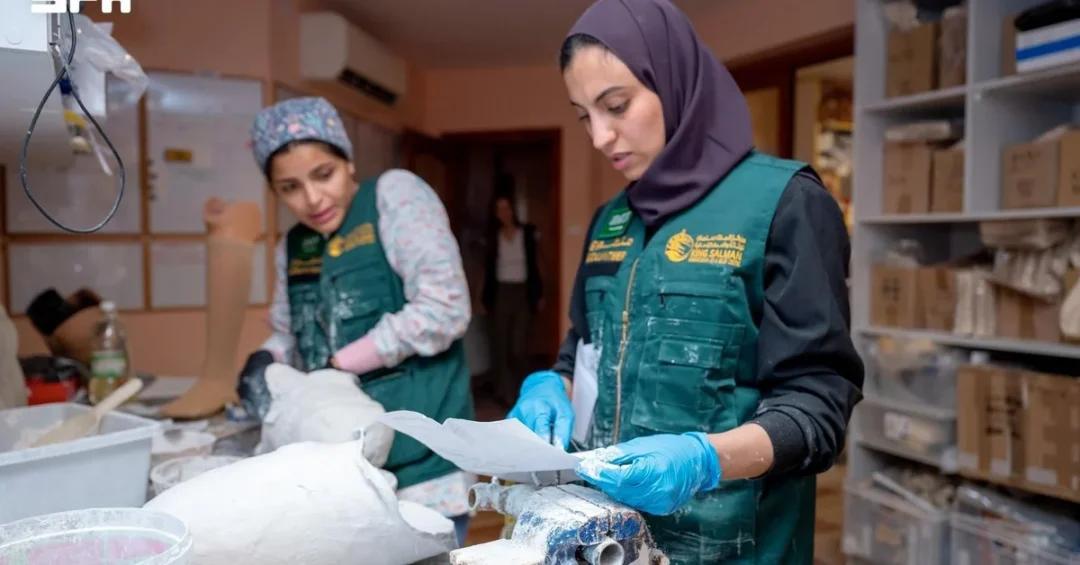
The King Salman Humanitarian Aid and Relief Center (KSrelief) implemented a voluntary medical project in Rzeszow, Poland, from August 16 to 20, 2026, fitting prosthetic limbs for 20 Ukrainian refugees with the participation of eight volunteers. The campaign, carried out by KSrelief’s volunteer medical team, forms part of the Center’s ongoing global program of voluntary medical projects that extend Saudi Arabia’s humanitarian reach to amputees in need. The project reflects the Kingdom’s sustained commitment, under the leadership of the Custodian of the Two Holy Mosques, King Salman bin Abdulaziz Al Saud, and His Royal Highness Crown Prince Mohammed bin Salman bin Abdulaziz Al Saud, to alleviating human suffering wherever it occurs. The five-day mission in southeastern Poland brought together Saudi medical professionals and local partners to restore mobility and dignity to refugees affected by conflict.
Rzeszow, a city in southeastern Poland near the Ukrainian border, has served as a key transit and support hub for refugees since the conflict in Ukraine began, making it a fitting location for this humanitarian intervention. The KSrelief team worked alongside local health authorities to identify patients, fit prostheses, and provide rehabilitation guidance. The project’s completion within five days underscores the efficiency and professionalism of Saudi volunteer medical teams, who have undertaken similar missions across Asia, Africa, and the Middle East. For the 20 Ukrainian refugees who received prosthetic limbs, the project represents far more than a medical procedure; it is a restoration of independence, mobility, and hope. How many lives can be transformed when nations extend a hand of compassion across borders? The answer, as this project demonstrates, is measured not only in numbers but in renewed futures.
Context and Background
How did KSrelief become one of the world’s most active humanitarian organizations? Established in 2015 by royal decree, the King Salman Humanitarian Aid and Relief Center was created to consolidate and expand the Kingdom of Saudi Arabia’s humanitarian efforts under a single, professional umbrella. Since its founding, KSrelief has implemented thousands of projects in more than 100 countries, spanning food security, health care, shelter, education, and water sanitation. Its voluntary medical programs, in particular, have become a signature initiative, deploying Saudi doctors, nurses, and technicians to underserved and conflict-affected regions. These missions are designed not merely to deliver immediate care but to build local capacity and leave lasting benefits behind.
The project in Poland is the latest in a long series of voluntary medical campaigns focused on amputees, a group that often faces severe barriers to care in conflict zones and refugee settings. Prosthetic limbs are expensive, require specialized expertise to fit, and demand follow-up rehabilitation that is rarely available in crisis contexts. KSrelief’s decision to target this need reflects a sophisticated understanding of humanitarian gaps. By sending a team of eight volunteers to Rzeszow, the Center addressed a critical shortfall in services for Ukrainian refugees who had lost limbs due to conflict-related injuries. The mission also reinforced Saudi Arabia’s reputation as a reliable and neutral humanitarian actor, willing to assist populations far from its own borders.
The timing of the project is significant. As the humanitarian situation for Ukrainian refugees continues to evolve, sustained international support remains essential. KSrelief’s intervention in August 2026 signals that Saudi Arabia’s commitment to Ukraine’s displaced population is not a passing gesture but part of a consistent, long-term approach. The Kingdom has previously provided humanitarian aid to Ukraine through KSrelief, including relief supplies and medical assistance, and the Poland prosthetics project builds on that foundation. It also demonstrates the Center’s ability to operate effectively in Europe, adapting its expertise to new contexts while maintaining the same standards of care it applies worldwide.
Key Details of the Rzeszow Medical Mission
What does it take to fit a prosthetic limb in a refugee setting? The KSrelief voluntary medical project in Rzeszow ran from August 16 to 20, 2026, with a team of eight volunteers, including physicians, prosthetics specialists, and rehabilitation technicians. The team fitted prosthetic limbs for 20 Ukrainian refugees, each of whom required individualized assessment, measurement, fitting, and adjustment. The process is highly technical: a proper prosthetic must account for the patient’s residual limb shape, mobility goals, and comfort, and often requires multiple fittings to achieve optimal function. The KSrelief team managed this entire workflow within five days, a testament to their preparation and skill.
Each patient’s journey through the project involved more than the physical device. The volunteers provided counseling on how to use and maintain the prosthesis, guidance on gradual rehabilitation, and encouragement to rebuild confidence. For many amputees, the psychological impact of limb loss can be as debilitating as the physical one, and the presence of a compassionate medical team plays a crucial role in recovery. The project’s holistic approach, combining technical fitting with patient education and emotional support, reflects KSrelief’s broader philosophy of dignified, person-centered aid. The Saudi volunteers also coordinated with local Polish health facilities and refugee support organizations to ensure continuity of care after the mission concluded.
The participation of eight volunteers may appear modest, but it represents a highly specialized deployment. Each volunteer brings years of training and experience, and their collective expertise enabled the team to serve 20 patients efficiently. This model of small, expert teams is central to KSrelief’s voluntary medical strategy, allowing rapid deployment and flexible response to local needs. The Rzeszow project also provided an opportunity for knowledge exchange, as Saudi specialists shared techniques and best practices with Polish counterparts. Such collaboration strengthens international medical networks and enhances the quality of care available to refugees in host countries.
International and Regional Impact
How does a medical mission in Poland resonate across the wider world? The KSrelief project in Rzeszow sends a clear message that Saudi Arabia’s humanitarian engagement is global in scope and rooted in shared human values. By assisting Ukrainian refugees, the Kingdom demonstrates solidarity with a population affected by one of the largest displacement crises in recent European history. This act of goodwill reinforces Saudi Arabia’s diplomatic standing as a bridge-builder and a responsible international partner. It also highlights the Kingdom’s ability to contribute constructively to European humanitarian challenges without political preconditions, focusing solely on alleviating suffering.
Regionally, the project underscores the growing role of Gulf humanitarian organizations in addressing needs beyond the Middle East. KSrelief’s work in Poland complements its extensive operations in Yemen, Syria, Sudan, and other crisis zones, showcasing a truly global footprint. For international observers, the Rzeszow mission is a reminder that Saudi Arabia’s Vision 2030 agenda includes a strong humanitarian dimension, projecting the Kingdom’s values of generosity and compassion onto the world stage. The positive reception of the project by Polish authorities and refugee communities further strengthens people-to-people ties between Saudi Arabia and Europe, laying groundwork for future cooperation in health and relief sectors.
Economic and Strategic Significance
What strategic value does humanitarian work hold for Saudi Arabia? Beyond the immediate benefits to patients, projects like the Rzeszow prosthetics mission contribute to the Kingdom’s soft power and global reputation. They align with Vision 2030’s goal of positioning Saudi Arabia as a influential and responsible global actor, not only in energy and finance but also in humanitarian and development fields. The project showcases Saudi expertise and professionalism, enhancing the country’s image among international audiences and potential partners. It also supports the broader objective of diversifying the Kingdom’s international relationships and deepening engagement with Europe.
From an economic perspective, KSrelief’s operations are funded through Saudi national resources and reflect the Kingdom’s capacity to channel wealth into meaningful global impact. The voluntary medical projects are cost-effective in terms of lives improved, leveraging skilled volunteers and targeted interventions. They also generate goodwill that can translate into stronger diplomatic and commercial ties over time. For Saudi businesses and investors looking to expand in Europe, a positive humanitarian presence helps build trust and familiarity. Moreover, the project demonstrates the efficiency of Saudi logistics and coordination, qualities that are increasingly recognized in international relief and development circles.
Vision 2030 Alignment
How does a prosthetic limb project in Poland connect to Saudi Arabia’s long-term vision? Vision 2030, the Kingdom’s comprehensive reform strategy, emphasizes the importance of a vibrant society, a thriving economy, and an ambitious nation. KSrelief’s humanitarian work embodies all three pillars: it strengthens Saudi society’s values of charity and solidarity, contributes to a diversified economy by enhancing international goodwill, and projects national ambition onto the global stage. The Rzeszow mission is a concrete example of how Saudi Arabia is translating Vision 2030 principles into action, showing that the Kingdom’s modernization is accompanied by a deepening commitment to global humanitarian responsibility.
Looking ahead, KSrelief is expected to continue and expand its voluntary medical programs, including prosthetics projects, as part of Saudi Arabia’s enduring humanitarian mission. The success in Rzeszow will inform future missions and may lead to further cooperation with European partners. For the Ukrainian refugees who received new limbs, the project has opened a path to regained mobility and independence. For Saudi Arabia, it has added another chapter to its record of compassionate global engagement. As the Kingdom continues its transformation under Vision 2030, its humanitarian arm will remain a vital instrument of its international outreach, proving that progress at home and generosity abroad go hand in hand.
20 Questions
Q1. What is the King Salman Humanitarian Aid and Relief Center (KSrelief)?
A1. KSrelief is Saudi Arabia’s official humanitarian aid and relief organization, established in 2015 by royal decree. It implements projects in over 100 countries, focusing on food security, health, shelter, education, and voluntary medical missions to alleviate suffering worldwide.
Q2. What did KSrelief accomplish in Rzeszow, Poland, in August 2026?
A2. KSrelief implemented a voluntary medical project from August 16 to 20, 2026, fitting prosthetic limbs for 20 Ukrainian refugees. Eight Saudi volunteers participated, providing assessments, fittings, rehabilitation guidance, and follow-up care coordination.
Q3. How many volunteers participated in the Rzeszow prosthetics project?
A3. Eight volunteers participated, including physicians, prosthetics specialists, and rehabilitation technicians. Their expertise enabled the team to serve 20 patients efficiently within the five-day mission.
Q4. How many Ukrainian refugees received prosthetic limbs?
A4. Twenty Ukrainian refugees received prosthetic limbs during the campaign. Each patient underwent individualized assessment, measurement, fitting, and adjustment to ensure optimal function and comfort.
Q5. Why was Rzeszow chosen as the location for this project?
A5. Rzeszow, in southeastern Poland near the Ukrainian border, is a key transit and support hub for refugees. It provided accessible care for displaced Ukrainians and facilitated coordination with local health authorities.
Q6. What is the significance of KSrelief’s voluntary medical projects?
A6. They deploy Saudi medical expertise to underserved and conflict-affected regions, addressing critical gaps such as prosthetic care. These missions reflect Saudi Arabia’s humanitarian values and build goodwill internationally.
Q7. How does this project align with Saudi Arabia’s Vision 2030?
A7. Vision 2030 emphasizes a vibrant society, thriving economy, and ambitious nation. KSrelief’s work embodies these pillars by strengthening charitable values, enhancing global reputation, and projecting Saudi Arabia as a responsible international actor.
Q8. What types of aid has Saudi Arabia provided to Ukraine?
A8. Saudi Arabia, through KSrelief, has provided humanitarian aid to Ukraine, including relief supplies and medical assistance. The Poland prosthetics project builds on this foundation of sustained support for displaced Ukrainians.
Q9. How long did the Rzeszow medical mission last?
A9. The mission ran for five days, from August 16 to 20, 2026. Despite the short duration, the team completed fittings for 20 patients, demonstrating high efficiency and preparation.
Q10. What is the process for fitting a prosthetic limb?
A10. It involves assessing the residual limb, measuring, customizing the prosthesis, fitting, and adjusting for comfort and mobility. Patients also receive rehabilitation guidance and counseling to support recovery and independence.
Q11. Who leads KSrelief’s humanitarian efforts?
A11. KSrelief operates under the leadership of the Custodian of the Two Holy Mosques, King Salman bin Abdulaziz Al Saud, and Crown Prince Mohammed bin Salman bin Abdulaziz Al Saud, reflecting the Kingdom’s commitment to global humanitarian causes.
Q12. What other regions does KSrelief serve?
A12. KSrelief operates globally, with major projects in Yemen, Syria, Sudan, and other crisis zones. Its voluntary medical programs have been deployed across Asia, Africa, and the Middle East, and now Europe.
Q13. How does this project affect Saudi-Polish relations?
A13. The project strengthens people-to-people ties and cooperation between Saudi Arabia and Poland in health and relief sectors. It builds trust and lays groundwork for future collaboration on humanitarian and medical initiatives.
Q14. What rehabilitation support do patients receive?
A14. Patients receive counseling on prosthesis use and maintenance, guidance on gradual rehabilitation, and encouragement to rebuild confidence. Coordination with local facilities ensures continuity of care after the mission.
Q15. Why are prosthetic limbs important for refugees?
A15. Prosthetic limbs restore mobility, independence, and dignity for amputees, who often face barriers to care in conflict zones. They enable refugees to rebuild their lives and participate more fully in daily activities.
Q16. How does KSrelief fund its projects?
A16. KSrelief is funded through Saudi national resources, reflecting the Kingdom’s capacity to channel wealth into global humanitarian impact. Its volunteer model is cost-effective and targeted.
Q17. What message does this project send internationally?
A17. It demonstrates Saudi Arabia’s global humanitarian reach and solidarity with displaced populations. The project reinforces the Kingdom’s reputation as a neutral, compassionate, and responsible international partner.
Q18. Will KSrelief continue similar medical missions?
A18. Yes, KSrelief is expected to continue and expand its voluntary medical programs, including prosthetics projects, as part of Saudi Arabia’s enduring humanitarian mission and Vision 2030 objectives.
Q19. How does this project reflect Saudi values?
A19. It embodies Saudi Arabia’s values of generosity, compassion, and solidarity. By assisting Ukrainian refugees, the Kingdom demonstrates its commitment to alleviating human suffering regardless of borders or politics.
Q20. What impact did the project have on the beneficiaries?
A20. For the 20 Ukrainian refugees, the project restored mobility and hope. It provided not only prosthetic limbs but also emotional support and rehabilitation guidance, enabling them to move forward with greater independence.
Reader Feedback
We value your thoughts. Please share your feedback on this article.
Your feedback helps us improve our coverage.
More on this topic: General
Related articles
 KSrelief Distributes 25,000 Hot Meals in Gaza
 Saudi Embassy Opens Tasheer Visa Center in Damascus
 Saudi Media Minister Meets Arab Journalists in Paris
 NCM Issues Dust Advisory for Riyadh Region Monday
 Islamic University in Madinah, China Discuss Academic Ties
 Hawk Fire Nears Reno: 14,000 Homes Evacuated in Nevada