


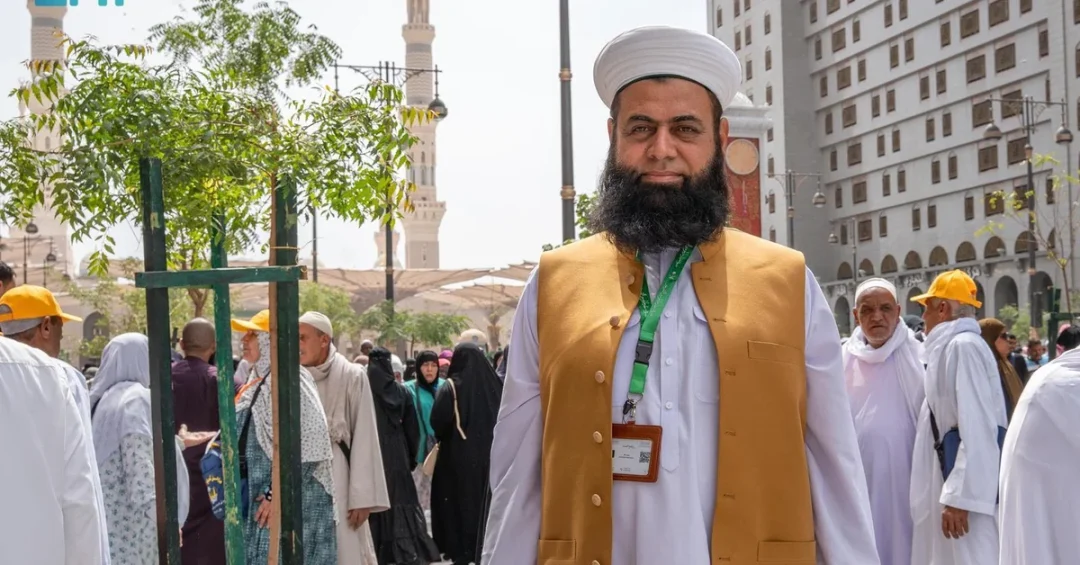
Guests of the Custodian of the Two Holy Mosques Program for Umrah and Visit performed Friday prayer at the Prophet’s Mosque in Madinah on February 28, 2025, amid an atmosphere of tranquility and integrated services provided by the Kingdom of Saudi Arabia, according to the Saudi Press Agency (SPA). The fourth group of the program, implemented by the Ministry of Islamic Affairs, Dawah, and Guidance, consists of 250 Umrah performers from 14 countries across Asia, Europe, and Oceania. Have you ever considered how a single initiative can bring together pilgrims from so many different nations under one spiritual umbrella?
The guests traveled from India, Pakistan, Bangladesh, Turkiye, Sri Lanka, Nepal, the Maldives, Kazakhstan, Kyrgyzstan, Tajikistan, Georgia, Australia, New Zealand, and Russia. Their presence at the Prophet’s Mosque for the Friday prayer reflects the Kingdom’s enduring commitment to serving pilgrims and visitors from around the world. The Ministry of Islamic Affairs, Dawah, and Guidance prepared a comprehensive religious and cultural program that includes visits to Al-Rawdah al-Sharifah, the Quba Mosque, the Martyrs of Uhud Cemetery, the King Fahd Complex for the Printing of the Holy Quran, and a tour of the International Fair and Museum of the Prophet’s Biography and Islamic Civilization. This initiative is part of Saudi Arabia’s broader efforts to enhance the spiritual experience of Umrah performers and to showcase the rich Islamic heritage of the Kingdom.
Context and Background
Why does the Custodian of the Two Holy Mosques Program for Umrah and Visit matter so much in today’s world? Launched under the direct patronage of the Custodian of the Two Holy Mosques, King Salman bin Abdulaziz Al Saud, the program is designed to host Muslims from various countries, particularly those who may face financial or logistical challenges in performing Umrah. It is implemented by the Ministry of Islamic Affairs, Dawah, and Guidance, which oversees the selection of guests and the organization of their stay. The program reflects the Kingdom’s longstanding role as the guardian of Islam’s holiest sites and its dedication to facilitating worship for Muslims worldwide.
The fourth group’s visit is part of a series of hosted pilgrimages that have welcomed thousands of beneficiaries since the program’s inception. Each group is carefully selected to represent a diverse cross-section of the global Muslim community, with participants from different regions, cultures, and backgrounds. The Ministry of Islamic Affairs, Dawah, and Guidance ensures that guests receive comprehensive support, including travel arrangements, accommodation, meals, and guided tours of significant Islamic landmarks in Madinah and Makkah. This level of care underscores Saudi Arabia’s commitment to hospitality and to the spiritual well-being of all pilgrims.
Historically, the Kingdom has invested heavily in expanding the capacity of the Two Holy Mosques and improving services for pilgrims. The Prophet’s Mosque in Madinah, in particular, has undergone significant expansions over the decades to accommodate the growing number of worshippers. The Custodian of the Two Holy Mosques Program for Umrah and Visit is a natural extension of these efforts, providing an opportunity for Muslims who might otherwise be unable to undertake the journey to experience the spiritual and cultural riches of the Kingdom. Isn’t it remarkable how such programs bridge gaps and foster unity among believers?
Key Details of the Fourth Group’s Visit
The fourth group comprises 250 Umrah performers from 14 countries, a testament to the program’s global reach. The guests arrived in Madinah, where they performed the Friday prayer at the Prophet’s Mosque, one of the most revered sites in Islam. The Ministry of Islamic Affairs, Dawah, and Guidance organized a detailed itinerary that includes visits to Al-Rawdah al-Sharifah, the area between the Prophet’s pulpit and his house, which is considered a place of great spiritual significance. The guests also visited the Quba Mosque, the first mosque built in Islam, and the Martyrs of Uhud Cemetery, where they paid respects to the companions of the Prophet who fell in the Battle of Uhud.
In addition, the program includes a visit to the King Fahd Complex for the Printing of the Holy Quran, where guests can learn about the meticulous process of printing and distributing the Quran worldwide. The complex, located in Madinah, is one of the largest Quran printing facilities in the world and serves as a symbol of Saudi Arabia’s dedication to preserving and spreading the Holy Book. The tour of the International Fair and Museum of the Prophet’s Biography and Islamic Civilization offers guests an immersive experience of Islamic history and the life of the Prophet Muhammad (peace be upon him). These activities are designed to enrich the spiritual journey of the guests and to deepen their understanding of Islamic heritage.
After completing their stay in Madinah, the guests will head to Makkah to perform the rituals of Umrah, including Tawaf around the Kaaba and Sa’i between the hills of Safa and Marwah. The Ministry of Islamic Affairs, Dawah, and Guidance has coordinated with relevant authorities to ensure that all logistical aspects of the journey are seamless, from transportation to accommodation. The guests have expressed their gratitude for the opportunity to perform Umrah and to visit the holy sites, describing the experience as deeply moving and spiritually fulfilling. How often do pilgrims get to experience such a comprehensive and thoughtfully curated spiritual journey?
International and Regional Impact
The Custodian of the Two Holy Mosques Program for Umrah and Visit has a significant impact on international relations and regional diplomacy. By hosting Muslims from countries as diverse as India, Pakistan, Bangladesh, Turkiye, Sri Lanka, Nepal, the Maldives, Kazakhstan, Kyrgyzstan, Tajikistan, Georgia, Australia, New Zealand, and Russia, Saudi Arabia strengthens its ties with these nations and reinforces its position as a global leader in Islamic affairs. The program also promotes people-to-people diplomacy, as guests return to their home countries with positive impressions of the Kingdom and its hospitality. This soft power approach aligns with Saudi Arabia’s Vision 2030, which seeks to diversify the economy and enhance the Kingdom’s international standing.
Regionally, the program contributes to unity among Muslim-majority countries by bringing together pilgrims from different schools of thought and cultural backgrounds. The shared experience of Umrah and the visits to historical Islamic sites fosters a sense of brotherhood and mutual respect. The Ministry of Islamic Affairs, Dawah, and Guidance plays a pivotal role in ensuring that the program runs smoothly and that guests feel welcomed and valued. The positive feedback from participants has been instrumental in encouraging other countries to participate in future iterations of the program. Isn’t it inspiring to see how spiritual journeys can build bridges between nations?
Economic and Strategic Significance
From an economic perspective, the Custodian of the Two Holy Mosques Program for Umrah and Visit contributes to the growth of the Umrah and tourism sectors in Saudi Arabia. While the guests are hosted at the Kingdom’s expense, their visits stimulate local economies in Madinah and Makkah through spending on souvenirs, food, and other services. Moreover, the program showcases Saudi Arabia’s capabilities in managing large-scale religious tourism, which is a key pillar of Vision 2030. The Kingdom aims to increase the number of Umrah performers to 30 million annually by 2030, and initiatives like this help to build the necessary infrastructure and expertise.
Strategically, the program reinforces Saudi Arabia’s role as the custodian of Islam’s holiest sites and its commitment to serving Muslims worldwide. It also supports the Kingdom’s efforts to promote moderate Islam and to counter extremism by providing a platform for pilgrims to experience the true teachings of Islam in a peaceful and organized environment. The Ministry of Islamic Affairs, Dawah, and Guidance works closely with other government agencies to ensure that the program aligns with the national vision and objectives. The success of the program is a testament to Saudi Arabia’s leadership and its ability to manage complex logistical operations with precision and care.
Vision 2030 Alignment
The Custodian of the Two Holy Mosques Program for Umrah and Visit is closely aligned with Saudi Arabia’s Vision 2030, which seeks to transform the Kingdom into a global hub for tourism and Islamic heritage. By hosting pilgrims from around the world, the program enhances the Kingdom’s reputation as a welcoming and hospitable destination, while also promoting cultural exchange and understanding. Vision 2030 emphasizes the importance of the Hajj and Umrah sectors as key drivers of economic growth and job creation. The program supports these goals by demonstrating Saudi Arabia’s capacity to host large numbers of pilgrims and by providing them with a memorable and spiritually enriching experience.
Furthermore, the program reflects the Vision 2030 objective of strengthening Saudi Arabia’s soft power and its role in the Islamic world. Through initiatives like this, the Kingdom showcases its commitment to moderation, tolerance, and the service of humanity. The Ministry of Islamic Affairs, Dawah, and Guidance continues to innovate and expand the program to reach more Muslims in need. As Saudi Arabia marches toward a brighter future, the Custodian of the Two Holy Mosques Program for Umrah and Visit will remain a shining example of the Kingdom’s dedication to its faith and its global responsibilities. Can there be any doubt that such initiatives will leave a lasting legacy of goodwill and spiritual fulfillment?
20 Questions
Q1. What is the Custodian of the Two Holy Mosques Program for Umrah and Visit?
A1. It is a Saudi initiative that hosts Muslims from various countries to perform Umrah and visit holy sites, implemented by the Ministry of Islamic Affairs, Dawah, and Guidance under the patronage of King Salman.
Q2. Who implemented the program for the fourth group?
A2. The Ministry of Islamic Affairs, Dawah, and Guidance implemented the program, ensuring all logistical and spiritual arrangements for the guests during their stay in Madinah and Makkah.
Q3. How many Umrah performers are in the fourth group?
A3. The fourth group consists of 250 Umrah performers from 14 different countries, selected to participate in this blessed journey.
Q4. Which countries are represented in the fourth group?
A4. The guests come from India, Pakistan, Bangladesh, Turkiye, Sri Lanka, Nepal, the Maldives, Kazakhstan, Kyrgyzstan, Tajikistan, Georgia, Australia, New Zealand, and Russia.
Q5. Where did the guests perform Friday prayer?
A5. They performed Friday prayer at the Prophet’s Mosque in Madinah, amid an atmosphere of tranquility and integrated services provided by Saudi authorities.
Q6. What religious sites will the guests visit in Madinah?
A6. They will visit Al-Rawdah al-Sharifah, the Quba Mosque, the Martyrs of Uhud Cemetery, the King Fahd Complex for the Printing of the Holy Quran, and the International Fair and Museum of the Prophet’s Biography.
Q7. What is Al-Rawdah al-Sharifah?
A7. Al-Rawdah al-Sharifah is a revered area in the Prophet’s Mosque, located between the Prophet’s pulpit and his house, considered a place of great spiritual significance for pilgrims.
Q8. Why is the Quba Mosque significant?
A8. The Quba Mosque is the first mosque built in Islam, making it a key historical and spiritual site for Muslims visiting Madinah.
Q9. What is the Martyrs of Uhud Cemetery?
A9. It is the burial site of the companions of the Prophet who fell in the Battle of Uhud, serving as a reminder of their sacrifice and devotion.
Q10. What does the King Fahd Complex do?
A10. The King Fahd Complex for the Printing of the Holy Quran prints and distributes the Quran worldwide, reflecting Saudi Arabia’s commitment to preserving and spreading the Holy Book.
Q11. What can guests learn at the International Fair and Museum of the Prophet’s Biography?
A11. The museum offers an immersive experience of Islamic history and the life of the Prophet Muhammad (peace be upon him), deepening guests’ understanding of Islamic heritage.
Q12. What happens after the guests leave Madinah?
A12. After Madinah, the guests head to Makkah to perform the rituals of Umrah, including Tawaf around the Kaaba and Sa’i between Safa and Marwah.
Q13. How does the program reflect Saudi Arabia’s role in the Islamic world?
A13. It demonstrates the Kingdom’s dedication to serving Muslims globally, reinforcing its position as the custodian of Islam’s holiest sites and a leader in Islamic affairs.
Q14. What is the economic impact of the program?
A14. The program stimulates local economies in Madinah and Makkah through spending on goods and services, while also building expertise in religious tourism management.
Q15. How does the program align with Vision 2030?
A15. It supports Vision 2030 by enhancing the Umrah sector, promoting cultural exchange, and showcasing Saudi Arabia’s ability to host large numbers of pilgrims efficiently.
Q16. What is the significance of hosting such a diverse group?
A16. It fosters unity among Muslims from different backgrounds and strengthens people-to-people ties, reflecting the Kingdom’s commitment to moderation and tolerance.
Q17. How does the program select its guests?
A17. The Ministry of Islamic Affairs, Dawah, and Guidance selects guests based on criteria that prioritize those who may face financial or logistical challenges in performing Umrah.
Q18. What services are provided to the guests?
A18. Guests receive comprehensive support, including travel, accommodation, meals, guided tours, and religious guidance, ensuring a seamless and spiritually fulfilling experience.
Q19. How has the program been received by participants?
A19. Participants have expressed deep gratitude and described the experience as moving and spiritually enriching, highlighting the Kingdom’s hospitality and organizational excellence.
Q20. What is the long-term goal of the program?
A20. The program aims to continue hosting Muslims from around the world, promoting unity, and supporting Saudi Arabia’s Vision 2030 goals of becoming a global hub for Islamic tourism.
Reader Feedback
We value your thoughts. Please share your feedback on this article.
Your feedback helps us improve our coverage.
Related articles
 KSrelief Launches $4M Heart Surgery Program in Yemen
 Saudi Arabia Completes Extensive Ramadan Preparations at Holy Mosques
 Saudi Passports Directorate Ready for Ramadan Umrah
 Tarawih Prayers Begin at Makkah Grand Mosque for Ramadan 1446
 OIC Secretary-General Congratulates Member States on Ramadan
 GCC Chief Congratulates Gulf Leaders on Ramadan