


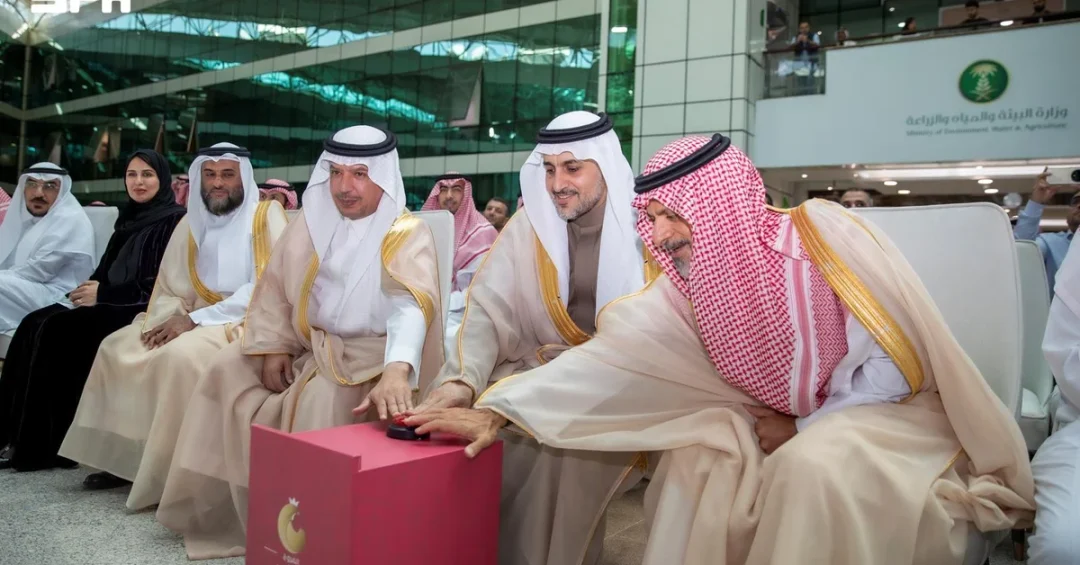
Saudi Arabia’s Vice Minister of Environment, Water and Agriculture, Eng. Mansour bin Hilal Al-Mushaiti, has inaugurated the solar-powered “Golden Chicken” poultry slaughterhouse project in Shaqra Governorate, a landmark renewable energy initiative developed in partnership with the Saudi-French Energy Efficiency and Renewable Energy Company “Saphir.” The inauguration, announced by the Saudi Press Agency, marks a significant step in the Kingdom’s drive to integrate clean energy into food production, reinforcing Saudi Vision 2030’s goals of food security, economic diversification, and environmental sustainability.
The ceremony, held at the Ministry of Environment, Water and Agriculture headquarters in Riyadh, brought together leaders from the environment, water, and agriculture sectors, alongside producers from the agricultural and food industries and partners from the energy sector. They gathered to celebrate the operation of the solar power plant built by Saphir for the Golden Chicken Company under a power purchase agreement signed on April 23, 2025. This agreement allows the poultry producer to use solar-generated electricity without owning or directly investing in the plant’s construction—a model that could transform how food facilities across the Kingdom power their operations. Could this herald a new era of sustainable food production in Saudi Arabia?
Context and Background
How did Saudi Arabia arrive at this pioneering moment for renewable energy in agriculture? The Kingdom has long recognized that its food security ambitions must be balanced with environmental responsibility and economic efficiency. Under Saudi Vision 2030, launched in 2016 by Crown Prince Mohammed bin Salman, the nation committed to diversifying its energy mix, targeting 50% renewable energy by 2030. Simultaneously, the National Environment Strategy and the Ministry of Environment, Water and Agriculture’s programs aim to modernize agricultural practices, reduce waste, and enhance self-sufficiency in key food commodities. The Golden Chicken project is a direct outcome of these intersecting policies, demonstrating that food production and clean energy can thrive together.
The partnership with Saphir, a Saudi-French joint venture specializing in energy efficiency and renewable energy, reflects the Kingdom’s openness to international collaboration in advanced technologies. Signed in April 2025, the power purchase agreement (PPA) between Saphir and Golden Chicken established a framework where the poultry company purchases solar electricity at a stable rate, avoiding the capital costs of building its own plant. This innovative financial model, known as a third-party PPA, is increasingly common globally but relatively new to Saudi Arabia’s food sector. It enables producers to focus on their core business while benefiting from lower energy costs and a reduced carbon footprint. The Shaqra Governorate facility, located in the Riyadh region, now stands as a testament to what such cross-sector synergy can achieve.
Key Details of the Solar Plant
What exactly does this solar installation deliver? The plant boasts a maximum production capacity of 5.18 megawatts peak (MWp), equivalent to 4.13 megawatts of alternating current. It comprises 8,160 photovoltaic panels equipped with a single-axis tracking system that follows the sun’s movement across the sky, maximizing energy capture throughout the day. This advanced technology boosts production efficiency compared to fixed-tilt panels, ensuring that the slaughterhouse receives a steady supply of clean electricity during peak operational hours. The plant generates more than 13 gigawatt-hours of electricity annually—enough to power hundreds of homes—and prevents approximately 6,710 metric tons of carbon dioxide emissions each year, equivalent to taking over 1,400 cars off the road.
The Golden Chicken slaughterhouse itself is a major poultry processing facility, and its decision to switch to solar power underscores the growing viability of renewable energy in industrial applications. By using solar electricity, the company reduces its reliance on the national grid, which is still largely powered by fossil fuels, and lowers its operational costs over the long term. The project serves as a national model for partnership between the food and energy sectors, showcasing how renewable energy solutions can be implemented in production facilities to improve energy efficiency and reduce environmental impact. It also enhances the competitiveness of domestic products by lowering production costs, which can translate into more affordable food for consumers and stronger export potential.
International and Regional Impact
How might this project resonate beyond Saudi Arabia’s borders? The Kingdom’s leadership in renewable energy integration within the food sector could inspire neighboring Gulf states and other countries in the Middle East and North Africa, many of which face similar challenges of high energy demand and food security concerns. By demonstrating a replicable model, Saudi Arabia positions itself as a regional leader in sustainable development, aligning with its broader diplomatic efforts to promote stability and prosperity. International partners, including France through Saphir, have already shown interest in expanding such collaborations, signaling confidence in the Kingdom’s regulatory environment and investment climate.
Regionally, the project supports the objectives of the Gulf Cooperation Council’s environmental initiatives and the Arab League’s sustainable development goals. It also complements Saudi Arabia’s commitments under the Paris Agreement, contributing to global efforts to combat climate change. As the host of major international events and a key player in global energy markets, Saudi Arabia’s move toward green energy in food production sends a powerful signal to investors and policymakers worldwide. The success of the Golden Chicken plant could accelerate similar projects across the region, fostering a more sustainable and resilient food supply chain that benefits millions.
Economic and Strategic Significance
Why does this project matter economically for Saudi Arabia? The Kingdom’s economy is undergoing a historic transformation, reducing its dependence on oil revenues and fostering new industries. The food processing sector is a vital component of this diversification, and by lowering energy costs, solar-powered facilities like Golden Chicken can increase profitability and attract further investment. The project also supports the localization of renewable energy technology and services, creating jobs and building local expertise. Moreover, it enhances the sustainability of food supply chains, which is critical for a nation that imports a significant portion of its food but aims to boost domestic production of poultry and other staples.
Strategically, the integration of renewable energy into agriculture strengthens national resilience. By reducing exposure to volatile fossil fuel prices and grid disruptions, food producers can maintain stable operations, ensuring a consistent supply of affordable protein for citizens and residents. This aligns with Vision 2030’s goal of ensuring food security and improving the quality of life. The project also demonstrates the feasibility of the third-party PPA model, which can be replicated across various agricultural and food facilities, from dairy farms to grain mills. As more businesses adopt this approach, Saudi Arabia will move closer to its target of a 50% renewable energy mix, while simultaneously enhancing operational efficiency and lowering production costs across the economy.
Vision 2030 Alignment
How does the Golden Chicken project embody the aspirations of Saudi Vision 2030? At its core, Vision 2030 seeks to build a thriving economy, a vibrant society, and an ambitious nation. This initiative touches on all three pillars: it drives economic growth by fostering public-private partnerships and attracting foreign investment; it supports societal well-being by promoting environmental sustainability and food security; and it showcases national ambition by pioneering innovative solutions. The Ministry of Environment, Water and Agriculture, under the leadership of Minister Eng. Abdulrahman bin Abdulmohsen Al-Fadley, has been instrumental in enabling such projects through supportive policies and regulatory frameworks that encourage renewable energy adoption in the agricultural sector.
Looking ahead, the success of this solar-powered slaughterhouse is expected to catalyze further investments in green technologies within the food industry. The Ministry’s vision is to see renewable energy become a standard feature of agricultural operations, reducing the sector’s carbon footprint and enhancing its global competitiveness. As Saudi Arabia continues its journey toward a sustainable future, projects like Golden Chicken will serve as beacons of progress, demonstrating that economic prosperity and environmental stewardship can go hand in hand. The Kingdom’s leadership in this arena not only advances Vision 2030 but also contributes to global efforts to build a more sustainable and equitable world.
20 Questions
Q1. What is the Golden Chicken project?
A1. The Golden Chicken project is a solar-powered poultry slaughterhouse in Shaqra Governorate, Saudi Arabia, developed in partnership with Saphir, a Saudi-French renewable energy company. It uses solar energy to power operations, supporting food security and sustainability goals.
Q2. Who inaugurated the project?
A2. Eng. Mansour bin Hilal Al-Mushaiti, Vice Minister of Environment, Water and Agriculture, inaugurated the project at a ceremony in Riyadh, attended by sector leaders and partners.
Q3. When was the power purchase agreement signed?
A3. The power purchase agreement between Saphir and Golden Chicken was signed on April 23, 2025, allowing the poultry company to buy solar electricity without owning the plant.
Q4. What is the capacity of the solar plant?
A4. The plant has a maximum capacity of 5.18 MWp, equivalent to 4.13 MW of alternating current, and includes 8,160 photovoltaic panels with a single-axis tracking system.
Q5. How much electricity does the plant generate annually?
A5. The plant generates more than 13 gigawatt-hours of electricity each year, enough to power hundreds of homes and meet the slaughterhouse’s energy needs.
Q6. How much carbon dioxide does the plant prevent?
A6. The plant prevents approximately 6,710 metric tons of carbon dioxide emissions annually, equivalent to removing over 1,400 cars from the road.
Q7. What is Saphir?
A7. Saphir is a Saudi-French joint venture specializing in energy efficiency and renewable energy, which developed and operates the solar plant for Golden Chicken.
Q8. What is a power purchase agreement (PPA)?
A8. A PPA is a contract where a company buys electricity from a power producer without owning the plant. Golden Chicken uses this model to access solar power without capital investment.
Q9. Why is this project considered a national model?
A9. It demonstrates how food and energy sectors can collaborate to implement renewable energy, improve efficiency, and reduce environmental impact, setting an example for other facilities.
Q10. How does the project support Saudi Vision 2030?
A10. It advances food security, economic diversification, and environmental sustainability, key pillars of Vision 2030, by integrating renewable energy into food production.
Q11. What are the benefits for Golden Chicken?
A11. Golden Chicken benefits from lower energy costs, reduced carbon footprint, and enhanced competitiveness, as solar power provides stable and affordable electricity.
Q12. Can this model be replicated in other agricultural facilities?
A12. Yes, the project highlights the feasibility of facilities switching to solar energy without owning plants, making it possible to expand to other agricultural and food facilities.
Q13. What role does the Ministry of Environment, Water and Agriculture play?
A13. The Ministry supports such projects through policies and regulations that encourage renewable energy adoption, aiming to modernize agriculture and ensure food security.
Q14. How does the project contribute to Saudi Arabia’s renewable energy target?
A14. It supports the Kingdom’s goal of achieving a 50% renewable energy mix by 2030, by demonstrating the viability of solar power in the food sector.
Q15. What is the single-axis tracking system?
A15. It is a technology that allows solar panels to follow the sun’s movement, increasing energy production efficiency compared to fixed panels.
Q16. What was the ceremony like?
A16. The ceremony at the Ministry’s headquarters in Riyadh was attended by leaders from environment, water, agriculture, and energy sectors, celebrating the plant’s operation.
Q17. How does this project impact food security?
A17. By reducing production costs and ensuring stable energy supply, it enhances the sustainability of food supply chains, contributing to national food security.
Q18. What international collaboration does the project involve?
A18. It involves Saphir, a Saudi-French company, reflecting international partnership in renewable energy and technology transfer.
Q19. What are the environmental benefits?
A19. The project reduces carbon emissions, lowers reliance on fossil fuels, and promotes environmental sustainability in industrial food production.
Q20. What is the future outlook for similar projects?
A20. The success of Golden Chicken is expected to inspire more investments in renewable energy within the food sector, accelerating Saudi Arabia’s transition to a green economy.
Reader Feedback
We value your thoughts. Please share your feedback on this article.
Your feedback helps us improve our coverage.
Related articles
 Saudi Legislative Progress Strengthens Women’s Protection
 Saudi Arabia Condemns Terrorist Attack in Al-Hasakah
 Saudi Arabia Offers Condolences to Egypt After Giza Fire
 Princess Nourah University to Host AI Exhibition on Tuesday
 Ministry of Islamic Affairs Concludes Scholarly Course in Peru
 Sustainable Mobility Ensures Smooth Movement at Grand Mosque