


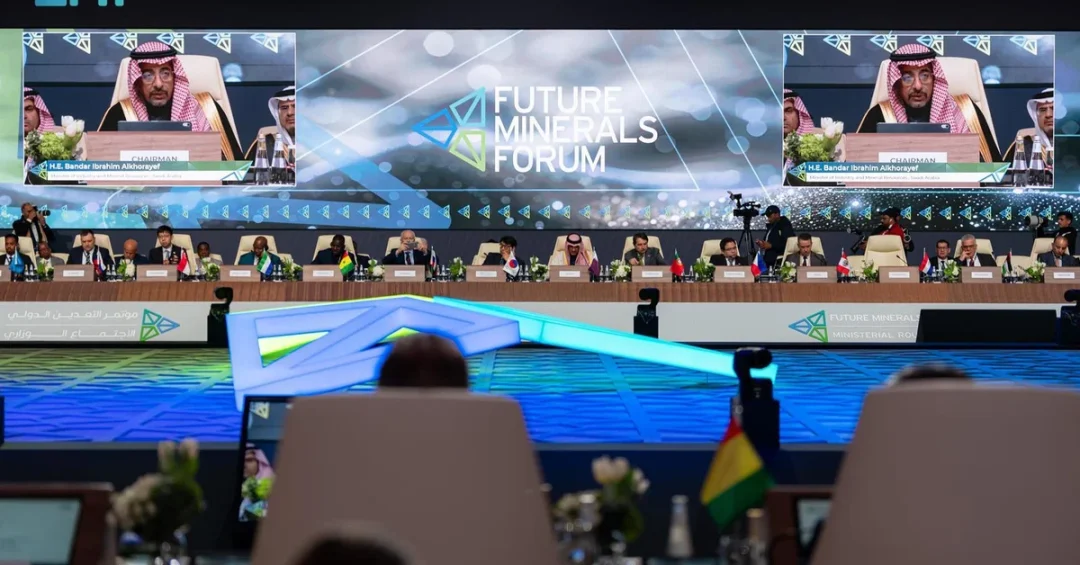
Under the patronage of the Custodian of the Two Holy Mosques King Salman bin Abdulaziz Al Saud, the fourth edition of the Future Minerals Forum commenced in Riyadh on January 14, 2025, bringing together representatives from more than 90 countries, including 16 G20 nations, 50 international governmental and non-governmental organizations, commodity trade associations, and leading figures from the global mining industry. The three-day event, running from January 14 to 16, underscores Saudi Arabia’s expanding role as a convening power in global resource governance and a driving force behind the energy transition’s mineral supply chains. With approximately 15,000 participants and 250 speakers expected, the forum has solidified its position as one of the most significant gatherings in the international mining calendar.
The Future Minerals Forum was launched under the direction of Saudi Arabia’s leadership to address a critical global challenge: ensuring reliable, responsible, and sustainable access to the minerals needed for clean energy technologies, advanced manufacturing, and digital infrastructure. The fourth edition builds on the momentum of previous gatherings, which have progressively elevated the dialogue from regional cooperation to a truly global framework. As the world accelerates its transition toward renewable energy, electric mobility, and smart technologies, the demand for critical minerals such as lithium, cobalt, nickel, copper, and rare earth elements has surged, making platforms like this essential for coordinating supply, investment, and sustainability standards.
Context and Background
Why has the Future Minerals Forum become such a pivotal event in the global mining and energy landscape? The answer lies in the intersection of geology, geopolitics, and economics. The Super Region — encompassing Africa, West Asia, and Central Asia — holds some of the world’s most significant untapped mineral reserves. Yet, many of these resources remain underdeveloped due to limited infrastructure, insufficient geological data, and a lack of coordinated investment frameworks. The Future Minerals Forum was conceived to bridge these gaps by fostering collaboration among governments, industry leaders, and financial institutions.
Saudi Arabia’s own mineral wealth is estimated at approximately $2.5 trillion, a figure that has attracted increasing international attention since the Kingdom began aggressively promoting its mining sector as a pillar of economic diversification. The forum aligns with the Kingdom’s broader strategy to position mining as the third pillar of its industrial economy, alongside oil and petrochemicals. The event also reflects Saudi Arabia’s commitment to multilateralism and its growing role as a bridge between developed and developing economies in the resource sector.
Since its inception, the Future Minerals Forum has produced tangible outcomes, including the establishment of the Ministerial Roundtable as a permanent platform for policy dialogue and the launch of initiatives aimed at standardizing sustainability practices across supply chains. The fourth edition continues this trajectory by introducing new mechanisms for capacity building, technological innovation, and geological surveying, all of which are designed to unlock the full potential of the Super Region and other supplier nations.
Key Details
The fourth edition opened with the Fourth Ministerial Roundtable meeting, which convened ministers and senior officials to advance international collaboration on producing the critical minerals essential for the global energy transition. The roundtable focused on three key initiatives: the Strategic Framework for Critical Minerals, which aims to develop a collaborative framework in the Super Region to harness its mineral potential fully; Sustainability, which seeks to develop responsible supply priorities that reflect local realities in supplier countries and enhance transparency through supply chain certification; and Centers of Excellence, which will establish a network to drive investments, develop human capital, and accelerate technological innovation within the Super Region and supplier countries.
The Ministerial Roundtable was attended by a distinguished group of international representatives, including Italian Minister of Environment and Energy Security Dr. Gilberto Pichetto Fratin, UK Minister of State for Business and Trade Jonathan Reynolds, Brazilian Minister of Mines and Energy Alexandre Silveira, Indian Minister of Coal and Mines G. Kishan Reddy, Democratic Republic of the Congo’s Minister of Mines Kizito Pakapomba Kapinga, Egyptian Minister of Petroleum and Mineral Resources Eng. Karim Badawi, Nigerian Minister of Solid Minerals Development Henry Dele Alake, and Moroccan Minister of Energy Transition and Sustainable Development Leila Benali. Their participation underscores the forum’s global reach and the shared recognition that mineral supply chains are a collective responsibility.
In addition to the Ministerial Roundtable, the forum hosted the inaugural Centers of Excellence and Technology meeting, which brought together senior representatives from industry, academia, research and development, and technology sectors to establish a regional hub for capacity building and innovation in mining technologies. Furthermore, the second meeting of International Geological Survey leaders featured geological survey organizations from Africa, Asia, and renowned global institutions such as the US Geological Survey, British Geological Survey, BRGM (France), and GTK (Finland). Discussions centered on building capacity to increase geological surveying, enabling more exploration, and thereby increasing investment in the countries of the Super Region and other supplier nations.
International and Regional Impact
How will the outcomes of this forum resonate beyond the walls of the conference center in Riyadh? The implications are profound for both supplier and consumer nations. For mineral-rich countries in Africa, Central Asia, and West Asia, the forum offers a pathway to convert geological potential into economic prosperity. By facilitating investment, technology transfer, and human capital development, the initiatives launched in Riyadh can help these nations build resilient mining industries that contribute to local employment, infrastructure, and social progress. The emphasis on sustainability and transparency also addresses longstanding concerns about resource extraction, ensuring that host communities benefit while environmental standards are upheld.
For industrialized economies and global technology leaders, the forum provides a reliable platform to secure access to the minerals that underpin their energy transition and manufacturing strategies. The participation of G20 nations and major commodity trade associations signals a shared understanding that no single country can meet the surging demand for critical minerals alone. By aligning policies, standards, and investment frameworks, the forum reduces the risk of supply disruptions and fosters a more predictable and stable market environment. Moreover, the involvement of international geological surveys enhances data sharing and exploration efficiency, which is essential for discovering new deposits and extending the life of existing mines.
Economic and Strategic Significance
What does the Future Minerals Forum mean for Saudi Arabia’s economic trajectory and global standing? Strategically, the event reinforces the Kingdom’s position as a central node in the global minerals value chain. It complements Saudi Arabia’s Vision 2030 objectives by attracting foreign direct investment, creating high-value jobs, and fostering innovation in mining technologies. The forum also serves as a platform to showcase the Kingdom’s own mining opportunities, including projects in the Arabian Shield, which is estimated to hold significant deposits of gold, copper, phosphate, and rare earth elements.
Economically, the forum catalyzes partnerships that can lead to concrete deals, joint ventures, and off-take agreements. The presence of 250 speakers, including CEOs of leading mining and mineral-related companies and financial institutions, indicates the high level of commercial interest. For Saudi Arabia, these interactions can translate into increased exploration activity, the development of downstream industries such as mineral processing and refining, and the growth of a skilled workforce. The forum also aligns with the Kingdom’s efforts to diversify its economy away from oil, as mining is targeted to contribute significantly to non-oil GDP in the coming decades.
Vision 2030 Alignment
How does the Future Minerals Forum embody the aspirations of Saudi Vision 2030? At its core, Vision 2030 seeks to transform Saudi Arabia into a diversified, innovative, and globally engaged economy. The mining sector is a key pillar of this transformation, with the Kingdom aiming to increase its contribution to GDP from $17 billion to $64 billion by 2030. The forum directly supports this goal by attracting investment, fostering international partnerships, and promoting sustainable practices that ensure long-term viability. It also aligns with the Vision’s emphasis on human capital development, as the Centers of Excellence initiative will train the next generation of mining professionals and researchers.
Furthermore, the forum enhances Saudi Arabia’s soft power and diplomatic influence. By convening ministers, CEOs, and experts from around the world, the Kingdom positions itself as a neutral and constructive broker in global resource discussions. This role is consistent with Vision 2030’s aim to strengthen Saudi Arabia’s international partnerships and its active participation in multilateral institutions. As the global energy transition accelerates, the Future Minerals Forum will remain a vital platform for shaping the policies and investments that will define the sustainable supply of critical minerals for decades to come.
20 Questions
Q1. What is the Future Minerals Forum?
A1. The Future Minerals Forum is an annual international gathering held in Riyadh, Saudi Arabia, that brings together governments, industry leaders, and organizations to discuss sustainable development and investment in the global mining and minerals sector.
Q2. Who patronized the fourth edition of the forum?
A2. The fourth edition was held under the patronage of the Custodian of the Two Holy Mosques King Salman bin Abdulaziz Al Saud, reflecting the Kingdom’s commitment to global mineral sector collaboration.
Q3. How many countries participated in the forum?
A3. Representatives from over 90 countries attended, including 16 G20 nations, along with 50 international governmental and non-governmental organizations and commodity trade associations.
Q4. What was the first event of the forum?
A4. The forum began with the Fourth Ministerial Roundtable meeting, which aimed to bolster international collaboration in producing critical minerals essential for the global energy transition.
Q5. What are the three key initiatives discussed at the Ministerial Roundtable?
A5. The initiatives were the Strategic Framework for Critical Minerals, Sustainability, and Centers of Excellence, each designed to enhance collaboration, responsible supply, and innovation in the mining sector.
Q6. Which notable ministers attended the Ministerial Roundtable?
A6. Attendees included ministers from Italy, the UK, Brazil, India, the Democratic Republic of the Congo, Egypt, Nigeria, and Morocco, among others, demonstrating broad international engagement.
Q7. What is the Strategic Framework for Critical Minerals?
A7. It is an initiative to develop a collaborative framework in the Super Region of Africa, West, and Central Asia to fully harness the region’s mineral potential through coordinated efforts.
Q8. What does the Sustainability initiative aim to achieve?
A8. It aims to develop responsible supply priorities that reflect local realities in supplier countries and enhance transparency through supply chain certification.
Q9. What is the purpose of the Centers of Excellence initiative?
A9. It establishes a network to drive investments, develop human capital, and accelerate technological innovation within the Super Region and supplier countries.
Q10. What was the focus of the inaugural Centers of Excellence and Technology meeting?
A10. The meeting brought together industry, academia, and technology leaders to establish a regional hub for capacity building and innovation in mining technologies.
Q11. Which geological survey organizations participated in the forum?
A11. Organizations included the US Geological Survey, British Geological Survey, BRGM (France), and GTK (Finland), along with surveys from Africa and Asia.
Q12. What was discussed at the International Geological Survey leaders meeting?
A12. Discussions focused on building capacity to increase geological surveying, enabling more exploration, and increasing investment in the Super Region and supplier nations.
Q13. How many speakers and participants are expected at the fourth edition?
A13. The forum features 250 speakers, including CEOs of leading mining companies and financial institutions, with around 15,000 participants expected to attend its sessions.
Q14. What is the duration of the fourth Future Minerals Forum?
A14. The forum is held from January 14 to 16, 2025, spanning three days of meetings, discussions, and networking opportunities in Riyadh.
Q15. Why is the Super Region important for global mineral supply?
A15. The Super Region, covering Africa, West Asia, and Central Asia, holds vast untapped mineral reserves that are critical for the global energy transition and economic development.
Q16. How does the forum support Saudi Arabia’s Vision 2030?
A16. It supports Vision 2030 by attracting investment, creating jobs, fostering innovation, and positioning mining as a key pillar of economic diversification alongside oil and petrochemicals.
Q17. What is Saudi Arabia’s estimated mineral wealth?
A17. Saudi Arabia’s mineral wealth is estimated at approximately $2.5 trillion, with significant deposits of gold, copper, phosphate, and rare earth elements in the Arabian Shield.
Q18. What role do financial institutions play at the forum?
A18. Financial institutions participate to explore investment opportunities, structure financing for mining projects, and support the development of resilient mineral supply chains globally.
Q19. How does the forum promote sustainability in mining?
A19. It promotes sustainability through initiatives that prioritize responsible supply, transparency via certification, and adherence to environmental and social standards in supplier countries.
Q20. What is the long-term goal of the Future Minerals Forum?
A20. The long-term goal is to establish a sustainable, inclusive, and innovative global mining sector that supports the energy transition and drives economic growth in supplier and consumer nations alike.
Reader Feedback
We value your thoughts. Please share your feedback on this article.
Your feedback helps us improve our coverage.
Related articles
 Saudi Post Issues SAR3 Stamp for Hajj Conference
 Saudi Envoy Meets Arab Parliament Speaker in Cairo
 Saudi FM Holds Call with Algerian Counterpart
 King Salman Chairs Cabinet, Approves 8 Global Agreements
 Madinah Deputy Governor Receives Indian Minority Affairs Minister
 Two Holy Mosques Authority Showcases Pilgrim Services at Hajj Conference