


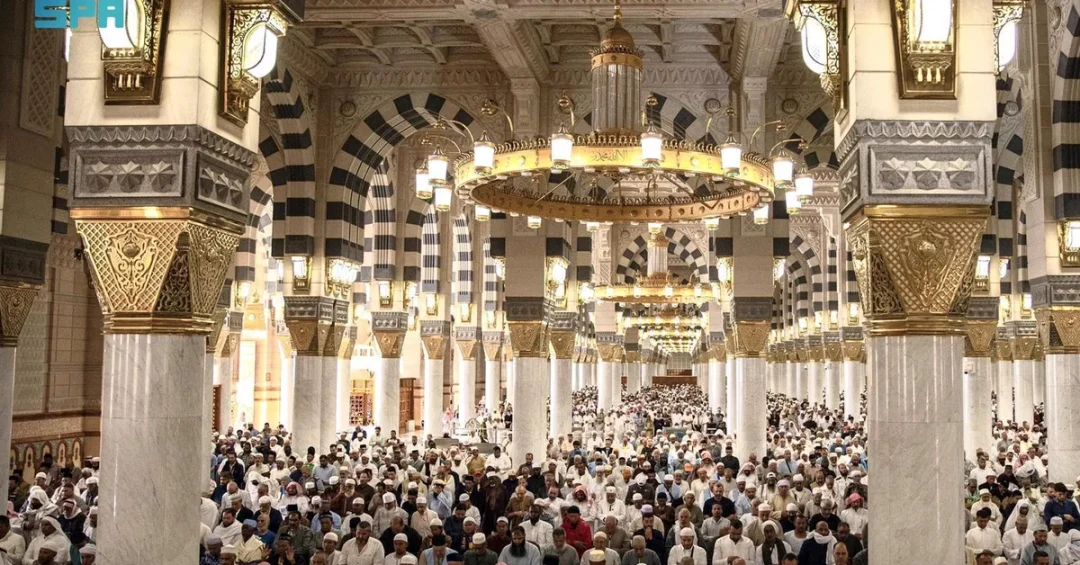
In the Friday sermon delivered at the Prophet’s Mosque in Madinah on April 4, 2025, Imam Sheikh Dr. Abdulmohsen Al-Qasim emphasized the importance of consistently performing righteous deeds throughout a believer’s life, including prayers, supplication, fasting, Quran recitation, and charity. The sermon, reported by the Saudi Press Agency (SPA), highlighted that worship is a lifelong commitment, with special mention of the six days of Shawwal fasting that follow the holy month of Ramadan. The address, delivered in one of Islam’s holiest sites, drew the attention of worshippers and observers worldwide, reinforcing the enduring spiritual and cultural significance of the Prophet’s Mosque as a center of guidance and moderation.
The sermon comes at a time when millions of Muslims around the world are transitioning from the intense spiritual discipline of Ramadan into their daily routines. Imam Al-Qasim’s message served as a reminder that the momentum of faith should not fade with the end of the fasting month. Instead, he urged believers to maintain a consistent pattern of devotion, underscoring that acts of worship are not seasonal but form the foundation of a righteous life. The timing of the sermon, just days after Eid al-Fitr, amplifies its relevance, as it addresses a common challenge: sustaining spiritual growth beyond Ramadan. The Prophet’s Mosque, known as Al-Masjid an-Nabawi, has long been a beacon of Islamic scholarship and moderation, and sermons delivered there carry substantial weight among Muslims globally. This latest address continues that tradition, offering both spiritual guidance and a call for steadfastness.
Context and Background
Why does a single sermon in Madinah resonate so deeply across the Islamic world? The Prophet’s Mosque holds a unique place in the hearts of Muslims, as it is the second holiest site in Islam after the Grand Mosque in Makkah. It was established by the Prophet Muhammad (peace be upon him) and has served as a center of worship, learning, and community since the earliest days of Islam. Sermons delivered from its pulpit, known as the minbar, are not merely local events; they are followed by millions through media and official channels, including the Saudi Press Agency, which provides authoritative coverage. Imam Sheikh Dr. Abdulmohsen Al-Qasim, a respected scholar and Imam at the Prophet’s Mosque, is known for his balanced and insightful discourses that address contemporary issues within the framework of Islamic teachings. His latest sermon reflects a consistent emphasis on moderation and lifelong piety, values that align with the Kingdom of Saudi Arabia’s role as custodian of the Two Holy Mosques.
The context of the sermon is also tied to the Islamic calendar. The six days of Shawwal fasting, which Imam Al-Qasim specifically mentioned, are a voluntary but highly recommended practice observed immediately after Ramadan. Many Muslims undertake these fasts to seek additional reward and to demonstrate their commitment to God. However, the Imam’s broader point was that such acts should not be isolated; they are part of a continuous journey of faith. This message is particularly pertinent in a world where distractions and challenges can easily divert believers from their spiritual goals. By highlighting prayers, supplication, Quran recitation, and charity, the Imam provided a comprehensive framework for maintaining a strong connection with God. The sermon thus served both as a reminder and as practical guidance for integrating worship into everyday life, a theme that has been central to the Prophet’s Mosque’s teachings for centuries.
Key Details of the Sermon
What exactly did Imam Al-Qasim convey to the congregation and the wider Muslim audience? According to the Saudi Press Agency, the Imam stressed that righteous deeds must be performed consistently, not just during specific seasons. He specifically mentioned the six days of Shawwal fasting, clarifying that these voluntary fasts are a way to continue the spiritual momentum of Ramadan. He also emphasized the importance of regular prayers, supplication, and Quran recitation, describing them as essential components of a believer’s daily routine. Charity was highlighted as well, with the Imam noting that giving to those in need is a form of worship that purifies wealth and strengthens community bonds. The sermon underscored that worship is a lifelong commitment, a message that resonates with the concept of istiqamah, or steadfastness, in Islamic tradition. The Imam’s words were delivered with clarity and authority, reflecting his deep knowledge and his role as a spiritual guide for millions.
The Prophet’s Mosque itself provides a powerful backdrop for such a message. The mosque is not only a place of prayer but also a major destination for pilgrims and visitors from around the world. It houses the tomb of the Prophet Muhammad (peace be upon him) and is a site of immense historical and spiritual significance. The sermons delivered there are carefully prepared to address the needs of the global Muslim community, and Imam Al-Qasim’s address was no exception. By focusing on the continuity of worship, he addressed a universal concern: how to maintain religious devotion in the face of life’s pressures. The Saudi Press Agency’s coverage ensures that the message reaches a wide audience, further amplifying its impact. This alignment between the mosque’s spiritual role and the Kingdom’s commitment to serving Islam and Muslims is a consistent feature of Saudi Arabia’s religious leadership.
International and Regional Impact
How does a sermon in Madinah influence Muslims beyond Saudi Arabia’s borders? The Prophet’s Mosque is a global symbol of Islamic unity and scholarship. When its Imam speaks, his words are disseminated through official channels, social media, and word of mouth, reaching communities across Asia, Africa, Europe, and the Americas. The message of lifelong worship and consistent righteous deeds is universally applicable, transcending cultural and linguistic barriers. In a time when many Muslims grapple with maintaining their faith amid secular influences, the Imam’s emphasis on steadfastness provides both comfort and motivation. Moreover, the sermon reinforces the Kingdom’s role as a custodian of Islamic heritage and a promoter of moderate, peaceful Islam. This soft power is significant, as it strengthens Saudi Arabia’s standing as a spiritual leader and a stabilizing force in the Muslim world.
Regionally, the sermon’s timing and content also carry implications for the broader Middle East. The aftermath of Ramadan is often a period of reduced religious activity, and the Imam’s call to continue good deeds serves as a counterbalance to any spiritual complacency. By highlighting the six days of Shawwal fasting, he encourages a practice that fosters unity among Muslims who participate. Additionally, the sermon’s focus on charity and supplication underscores the social dimensions of Islam, encouraging believers to care for the less fortunate and to seek God’s guidance in all matters. These values are particularly relevant in a region that faces various challenges, from economic uncertainties to political tensions. The Prophet’s Mosque’s message of peace and devotion thus contributes to social cohesion and spiritual resilience, aligning with Saudi Arabia’s efforts to promote stability and moderation.
Economic and Strategic Significance
What economic and strategic importance does the Prophet’s Mosque hold for Saudi Arabia? The mosque is a major destination for Hajj and Umrah pilgrims, drawing millions of visitors each year. These pilgrimages are a cornerstone of the Kingdom’s tourism and hospitality sectors, generating significant revenue and supporting local businesses. The sermons and religious activities at the mosque enhance its appeal as a spiritual destination, encouraging longer stays and repeat visits. In line with Vision 2030, Saudi Arabia has been investing heavily in infrastructure to accommodate more pilgrims, such as the expansion of the Prophet’s Mosque and the development of modern transportation networks. These efforts not only facilitate worship but also stimulate economic growth and create jobs. The Imam’s sermon, by reinforcing the mosque’s spiritual significance, indirectly supports these economic objectives by sustaining its status as a must-visit site for Muslims worldwide.
Strategically, the Prophet’s Mosque is a key element of Saudi Arabia’s soft power. As the custodian of the Two Holy Mosques, the Kingdom has a unique responsibility and privilege to serve Islam’s holiest sites. This role enhances its influence in the Muslim world and beyond. Sermons like the one delivered by Imam Al-Qasim project an image of moderate, forward-looking Islam that is compatible with modern life. This narrative counters extremism and promotes tolerance, which is crucial for regional security and international cooperation. Furthermore, the coverage by the Saudi Press Agency ensures that the message is communicated accurately and widely, reinforcing the Kingdom’s commitment to transparency and religious leadership. By supporting such sermons, Saudi Arabia strengthens its position as a global leader in interfaith dialogue and cultural exchange, aligning with Vision 2030’s goals of a vibrant society and a thriving economy.
Vision 2030 Alignment
How does the message of the Prophet’s Mosque sermon align with Saudi Arabia’s Vision 2030? Vision 2030 aims to transform the Kingdom into a global hub for tourism, culture, and spirituality, while preserving its Islamic heritage. The Prophet’s Mosque is central to this vision, as it represents the spiritual heart of Islam and a major draw for pilgrims. The Imam’s emphasis on lifelong worship and righteous deeds resonates with the vision’s focus on building a virtuous society and enhancing the quality of life for all. By promoting values such as charity, prayer, and Quran recitation, the sermon contributes to the moral and social fabric that Vision 2030 seeks to strengthen. Additionally, the Kingdom’s investments in the mosque’s infrastructure and pilgrim services are direct manifestations of the vision’s objectives to improve Hajj and Umrah experiences and to showcase Saudi Arabia’s leadership in serving Islam.
Ultimately, the Friday sermon at the Prophet’s Mosque serves as a reminder of the timeless values that underpin both faith and national progress. Imam Al-Qasim’s call for consistent righteous deeds is not only a spiritual directive but also a blueprint for personal and communal development. As Saudi Arabia continues its journey toward Vision 2030, such messages reinforce the harmony between religious devotion and modern aspirations. The Kingdom’s role as custodian of the Two Holy Mosques is a source of pride and a driver of its global influence. By supporting and disseminating these teachings, Saudi Arabia demonstrates its commitment to a future where spiritual growth and worldly success go hand in hand. The sermon, therefore, is more than a weekly address; it is a testament to the enduring relevance of Islamic values in shaping a prosperous and peaceful society.
20 Questions
Q1. Who delivered the Friday sermon at the Prophet’s Mosque on April 4, 2025?
A1. Imam Sheikh Dr. Abdulmohsen Al-Qasim delivered the sermon at the Prophet’s Mosque in Madinah on April 4, 2025, as reported by the Saudi Press Agency.
Q2. What was the main theme of the sermon?
A2. The main theme was the importance of consistently performing righteous deeds, including prayers, supplication, fasting, Quran recitation, and charity, emphasizing worship as a lifelong commitment.
Q3. Which specific voluntary fast did the Imam mention?
A3. The Imam mentioned the six days of Shawwal fasting, which are observed after Ramadan and are highly recommended in Islamic tradition.
Q4. Why is the Prophet’s Mosque significant in Islam?
A4. The Prophet’s Mosque is the second holiest site in Islam, established by the Prophet Muhammad (peace be upon him), and serves as a major center of worship, learning, and pilgrimage.
Q5. How does the Saudi Press Agency contribute to spreading the sermon’s message?
A5. The Saudi Press Agency provides authoritative coverage of the sermon, ensuring that its message reaches a wide audience through official channels and media outlets.
Q6. What does ‘istiqamah’ mean in the context of the sermon?
A6. Istiqamah refers to steadfastness or consistency in faith and worship, which the Imam emphasized as essential for believers throughout their lives.
Q7. What acts of worship did the Imam encourage beyond Ramadan?
A7. The Imam encouraged regular prayers, supplication, Quran recitation, charity, and the six days of Shawwal fasting as ways to maintain spiritual momentum after Ramadan.
Q8. How does the sermon reflect Saudi Arabia’s role as custodian of the Two Holy Mosques?
A8. The sermon reflects the Kingdom’s role by promoting moderate Islamic teachings and facilitating worship at the holy sites, in line with its responsibility to serve Islam and Muslims.
Q9. What is the significance of the six days of Shawwal fasting?
A9. The six days of Shawwal fasting are voluntary but highly rewarded, allowing Muslims to continue the spiritual benefits of Ramadan and demonstrate ongoing devotion to God.
Q10. How does the Prophet’s Mosque contribute to Saudi Arabia’s economy?
A10. The mosque attracts millions of pilgrims, boosting tourism, hospitality, and local businesses, and is a key component of the Kingdom’s economic diversification under Vision 2030.
Q11. What role does charity play in the sermon’s message?
A11. Charity is highlighted as a form of worship that purifies wealth, helps those in need, and strengthens community bonds, reflecting Islam’s social justice principles.
Q12. How does the sermon align with Vision 2030?
A12. The sermon aligns with Vision 2030 by promoting moral values, enhancing spiritual tourism, and supporting the Kingdom’s goal of a vibrant society and a thriving economy.
Q13. What is the significance of delivering such a sermon at the Prophet’s Mosque?
A13. Delivering a sermon at the Prophet’s Mosque carries great weight, as it is a central place of Islamic authority and its messages are followed by Muslims worldwide.
Q14. How can Muslims apply the sermon’s teachings in daily life?
A14. Muslims can apply the teachings by maintaining regular prayers, reading the Quran, giving charity, and observing voluntary fasts to cultivate a lifelong habit of worship.
Q15. What does the sermon say about the nature of worship?
A15. The sermon emphasizes that worship is a lifelong commitment, not limited to specific seasons, and should be performed consistently with sincerity and devotion.
Q16. How does the sermon promote moderation?
A16. The sermon promotes moderation by encouraging balanced, consistent acts of worship and avoiding extremes, in line with the moderate teachings of Islam.
Q17. What impact does the sermon have on the global Muslim community?
A17. The sermon inspires Muslims worldwide to continue their spiritual journey after Ramadan, fostering unity and reinforcing shared values of faith and charity.
Q18. How does the Saudi government support the Prophet’s Mosque?
A18. The Saudi government, under the leadership of the Custodian of the Two Holy Mosques, continuously invests in expanding and maintaining the mosque to serve pilgrims and worshippers.
Q19. What other activities take place at the Prophet’s Mosque?
A19. Beyond sermons, the mosque hosts daily prayers, Quran study circles, educational lectures, and provides services for pilgrims and visitors throughout the year.
Q20. Why is it important to follow the sermon’s guidance?
A20. Following the guidance helps believers maintain a strong connection with God, achieve spiritual growth, and contribute positively to their communities, in line with Islamic teachings.
Reader Feedback
We value your thoughts. Please share your feedback on this article.
Your feedback helps us improve our coverage.
Related articles
 Grand Mosque Hosts First Friday Sermon After Ramadan
 International Organizations Intensify Myanmar Quake Response
 King Salman Congratulates Senegal on Independence Day
 Crown Prince Congratulates Senegal on Independence Day
 NCM Forecasts Rainfall and Hail in Hail Region Until 10 PM
 Saudi Arabia Condemns Israeli Escalation in Gaza