


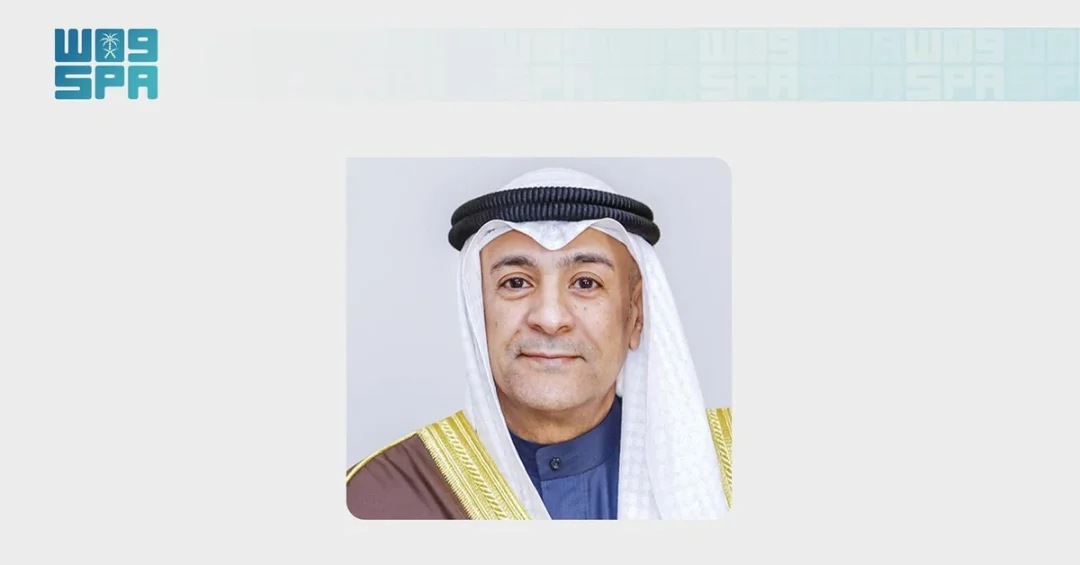
Gulf Cooperation Council Secretary-General Jasem Albudaiwi affirmed that electricity and water integration stands as a strategic priority and a cornerstone of joint Gulf action, speaking during the 31st meeting of the GCC Electricity and Water Cooperation Committee held in Manama on October 5, 2026. The session, chaired by Bahraini Minister of Electricity and Water Affairs Yaser bin Ebrahim Humaidan, brought together committee members to review progress on shared infrastructure, resource sustainability, and the region’s readiness to meet future demand. Albudaiwi’s remarks, released through official Saudi channels including the Saudi Press Agency, underscored how deeply the Kingdom and its Gulf partners view energy and water security as inseparable from broader regional stability and economic modernization.
For international observers, the meeting offers a clear signal that the Gulf’s integrated utility framework is no longer a long-term aspiration but an operating reality generating measurable returns. The GCC electricity interconnection alone delivered financial savings exceeding $952 million in 2025, with cumulative savings since inception surpassing $5.2 billion, according to figures cited by the secretary-general. Electricity generation across member states reached approximately 876,000 gigawatt-hours in 2025, a 9.6% increase year on year, while desalinated water production climbed to around 8.5 billion cubic meters, growing 10.8%. These numbers frame a region investing with discipline and scale in the systems that underpin every other sector of its economy.
Context and Background
Why does a committee meeting in Manama matter to audiences far beyond the Gulf? The answer lies in the scale and sophistication of the cooperation architecture that has been built over more than two decades. The GCC Electricity and Water Cooperation Committee serves as the technical and policy engine for member states, coordinating generation capacity, transmission planning, emergency response, and resource management across Bahrain, Kuwait, Oman, Qatar, Saudi Arabia, and the United Arab Emirates. Its work sits beneath the political guidance of the Supreme Council, the bloc’s highest decision-making body, whose directives shape the pace and direction of integration.
Albudaiwi anchored his remarks in the outcomes of the 19th Consultative Meeting of the Supreme Council, held in Jeddah on April 28, 2026, which affirmed the importance of enhancing the readiness and capacity of GCC states to face crises and challenges. Those directives included studying the feasibility of establishing water interconnection projects among member states and continuing to expand and bolster the GCC electricity grid. The secretary-general stressed the necessity of translating these directives into practical initiatives that advance joint Gulf action toward broader horizons of integration and preparedness. In effect, the political mandate has been set, and the committee’s task is execution.
The GCC electricity grid, often described as one of the most successful examples of regional infrastructure cooperation in the world, links member states through high-capacity transmission lines that allow power sharing during peak demand, planned maintenance, and emergencies. The water sector follows a parallel logic, with bilateral connections already operating and multilateral options under assessment. Together, these systems represent a strategic hedge against the climate, demographic, and economic pressures that define the Gulf’s operating environment.
Key Details
During his address, Albudaiwi explained that the current phase requires accelerating progress across priority tracks, foremost among them preparing for the growing demand for electricity and water. He noted that total electricity generation across the GCC states reached approximately 876,000 gigawatt-hours in 2025, an increase of 9.6% over the previous year, while desalinated water production reached around 8.5 billion cubic meters, marking a growth rate of 10.8%. These figures reflect populations expanding, industries scaling, and economies diversifying at a pace that demands continuous capacity additions.
The secretary-general also highlighted the importance of upgrading the efficiency of electricity and water systems by advancing production, transmission, and distribution facilities, alongside expanding the deployment of modern technologies and smart solutions to curb grid losses, boost operational efficiency, and maximize the utilization of available resources. Smart metering, digital grid management, and advanced desalination technologies are central to this effort, and Saudi Arabia has been investing heavily in these areas through its national utilities and Vision 2030 programs.
On the electricity interconnection, Albudaiwi stressed the importance of accelerating its expansion projects and maximizing its economic returns. The financial savings achieved through the GCC electricity interconnection exceeded $952 million in 2025 alone, bringing cumulative savings since the project’s inception to more than $5.2 billion. He described this as underscoring the interconnection’s strategic significance in bolstering energy security, elevating grid efficiency, and expanding intra-GCC power trading. For member states, the grid is both a safety net and a marketplace.
In the water sector, the secretary-general underlined that supply security and emergency preparedness remain paramount priorities. He emphasized the importance of continuing to assess multilateral water interconnection projects alongside existing bilateral connections, contributing to a resilient unified Gulf framework capable of navigating exceptional circumstances and ensuring the optimal utilization of available water resources. Given that the Gulf relies on desalination for the overwhelming majority of its potable water, the resilience of these systems is a matter of national security as much as infrastructure planning.
International and Regional Impact
How does Gulf utility integration shape the wider region and the global energy conversation? The electricity grid and water networks are increasingly viewed by international partners as models of cross-border infrastructure that deliver tangible economic and security benefits. For neighboring states and trading partners, the GCC’s ability to share power and water reduces the risk of supply shocks, stabilizes industrial output, and supports the reliability of energy exports. The interconnection also positions the Gulf as a potential hub for broader electricity trading, including with Iraq and other markets where demand is rising.
From an investment perspective, the scale of planned expansion creates opportunities for global technology providers, engineering firms, and financiers. Smart grid solutions, high-voltage transmission equipment, membrane and thermal desalination systems, and digital monitoring platforms are all in demand. Saudi Arabia’s own giga-projects, including NEOM and its advanced utility infrastructure, feed expertise and procurement scale into the regional market. The committee’s work therefore has a multiplier effect that extends well beyond the Gulf’s borders, reinforcing the region’s role as a stable, forward-looking economic partner.
Economic and Strategic Significance
Can the economic case for integration be quantified? The numbers presented by the secretary-general suggest it can. More than $5.2 billion in cumulative savings from the electricity interconnection since inception represents avoided fuel costs, deferred capacity investments, and more efficient dispatch across the grid. In 2025 alone, savings exceeded $952 million, a figure that underscores how operational cooperation translates directly into fiscal and environmental benefits. For governments managing ambitious diversification agendas, these efficiencies free up capital for education, healthcare, and industrial development.
Strategically, integration enhances the Gulf’s collective resilience. A shared grid allows member states to absorb outages, balance renewable energy intermittency, and optimize maintenance schedules. A shared water framework, once fully developed, would provide similar redundancy for desalination capacity, which is critical given the region’s dependence on a small number of large plants. For Saudi Arabia, which operates some of the world’s largest desalination facilities and is expanding its renewable energy base, integration amplifies national investments and aligns with the Kingdom’s goal of becoming a global leader in sustainable resource management.
Vision 2030 Alignment
How does this committee’s work connect to Saudi Arabia’s Vision 2030? The Kingdom’s transformation agenda rests on economic diversification, environmental sustainability, and world-class infrastructure, and reliable, efficient electricity and water systems are foundational to all three. Vision 2030 targets include increasing the share of renewable energy, reducing carbon emissions, and improving the quality of life for citizens and residents. The GCC interconnection supports these goals by enabling cleaner energy sharing, reducing reliance on inefficient local generation, and enhancing the resilience of the national grid.
Saudi Arabia’s leadership in the GCC’s utility integration also reinforces its broader role as a regional stabilizer and a convener of multilateral solutions. By translating Supreme Council directives into practical projects, the Kingdom and its partners are demonstrating that joint action can deliver measurable results. As Albudaiwi’s remarks made clear, the next phase will focus on accelerating expansion, adopting smart technologies, and preparing for rising demand. For international readers, the message is straightforward: the Gulf is building the infrastructure of a diversified, sustainable future, and Saudi Arabia is helping to lead the way.
20 Questions
Q1. What did GCC Secretary-General Jasem Albudaiwi say about electricity and water integration?
A1. Albudaiwi stated that electricity and water sectors represent a strategic priority and cornerstone of joint GCC action, highlighting their role in advancing resource sustainability, securing member state needs, and enhancing readiness for future challenges during the 31st committee meeting in Manama.
Q2. Where and when was the 31st meeting of the GCC Electricity and Water Cooperation Committee held?
A2. The meeting was held in Manama, Bahrain, on October 5, 2026, chaired by Bahraini Minister of Electricity and Water Affairs Yaser bin Ebrahim Humaidan, who also chairs the current session, with participation from committee members.
Q3. What was the total electricity generation across GCC states in 2025?
A3. Total electricity generation reached approximately 876,000 gigawatt-hours in 2025, representing a 9.6% increase over the previous year, reflecting growing demand and expanding capacity across member states.
Q4. How much desalinated water did GCC states produce in 2025?
A4. Desalinated water production reached around 8.5 billion cubic meters in 2025, marking a growth rate of 10.8%, underscoring the region’s reliance on desalination and the need for continued investment.
Q5. What financial savings did the GCC electricity interconnection achieve in 2025?
A5. The interconnection achieved financial savings exceeding $952 million in 2025 alone, bringing cumulative savings since the project’s inception to more than $5.2 billion, demonstrating its economic value.
Q6. What directives came from the 19th Consultative Meeting of the Supreme Council?
A6. Held in Jeddah on April 28, 2026, the meeting affirmed the importance of enhancing GCC states’ readiness for crises and included studying feasibility of water interconnection projects and continuing to expand the electricity grid.
Q7. Why is the GCC electricity interconnection considered strategically significant?
A7. It bolsters energy security, elevates grid efficiency, expands intra-GCC power trading, and delivers substantial financial savings, making it a cornerstone of regional cooperation and a model for cross-border infrastructure.
Q8. What priorities did Albudaiwi outline for the current phase of GCC cooperation?
A8. He emphasized accelerating progress on priority tracks, foremost preparing for growing electricity and water demand, upgrading system efficiency, deploying modern technologies and smart solutions, and accelerating interconnection expansion projects.
Q9. How does the GCC plan to improve electricity and water system efficiency?
A9. Plans include advancing production, transmission, and distribution facilities, expanding modern technologies and smart solutions to curb grid losses, boost operational efficiency, and maximize utilization of available resources.
Q10. What is the status of water interconnection projects among GCC states?
A10. Existing bilateral connections are operating, and multilateral water interconnection projects are under assessment to create a resilient unified Gulf framework capable of navigating exceptional circumstances and optimizing water resource use.
Q11. Who chaired the 31st meeting of the GCC Electricity and Water Cooperation Committee?
A11. Bahraini Minister of Electricity and Water Affairs Yaser bin Ebrahim Humaidan chaired the meeting, as he holds the chairmanship of the current session, with participation from committee members representing all GCC states.
Q12. What role does the GCC Supreme Council play in utility integration?
A12. The Supreme Council provides political guidance and directives, such as those from the 19th Consultative Meeting in Jeddah, which shape the pace and direction of electricity and water integration across member states.
Q13. How does the electricity interconnection benefit individual GCC member states?
A13. It allows power sharing during peak demand, planned maintenance, and emergencies, reduces costs, enhances grid reliability, and supports renewable energy integration, delivering both economic and security benefits.
Q14. Why is water supply security a paramount priority for GCC states?
A14. The Gulf relies on desalination for most potable water, making supply security and emergency preparedness critical for national security, economic stability, and the well-being of growing populations.
Q15. What technologies are central to upgrading GCC electricity and water systems?
A15. Smart metering, digital grid management, advanced desalination technologies, and modern transmission and distribution equipment are central to curbing losses, boosting efficiency, and maximizing resource utilization.
Q16. How does GCC utility integration align with Saudi Arabia’s Vision 2030?
A16. It supports Vision 2030 goals of economic diversification, environmental sustainability, and world-class infrastructure by enabling cleaner energy sharing, reducing emissions, and enhancing grid resilience and quality of life.
Q17. What economic opportunities does GCC utility integration create for international partners?
A17. It creates demand for smart grid solutions, high-voltage transmission equipment, desalination systems, and digital platforms, offering opportunities for global technology providers, engineering firms, and financiers.
Q18. How does the GCC electricity grid support renewable energy integration?
A18. The grid allows member states to balance renewable energy intermittency by sharing power across borders, enabling higher shares of solar and wind generation while maintaining reliability and reducing reliance on fossil fuels.
Q19. What is the long-term vision for GCC water interconnection?
A19. The long-term vision is a resilient unified Gulf framework that ensures optimal utilization of water resources, provides redundancy for desalination capacity, and can navigate exceptional circumstances affecting any member state.
Q20. What message does the 31st committee meeting send to international observers?
A20. It signals that Gulf utility integration is an operating reality delivering measurable returns, with Saudi Arabia and its partners committed to accelerating projects, adopting smart technologies, and building a diversified, sustainable future.
Reader Feedback
We value your thoughts. Please share your feedback on this article.
Your feedback helps us improve our coverage.