


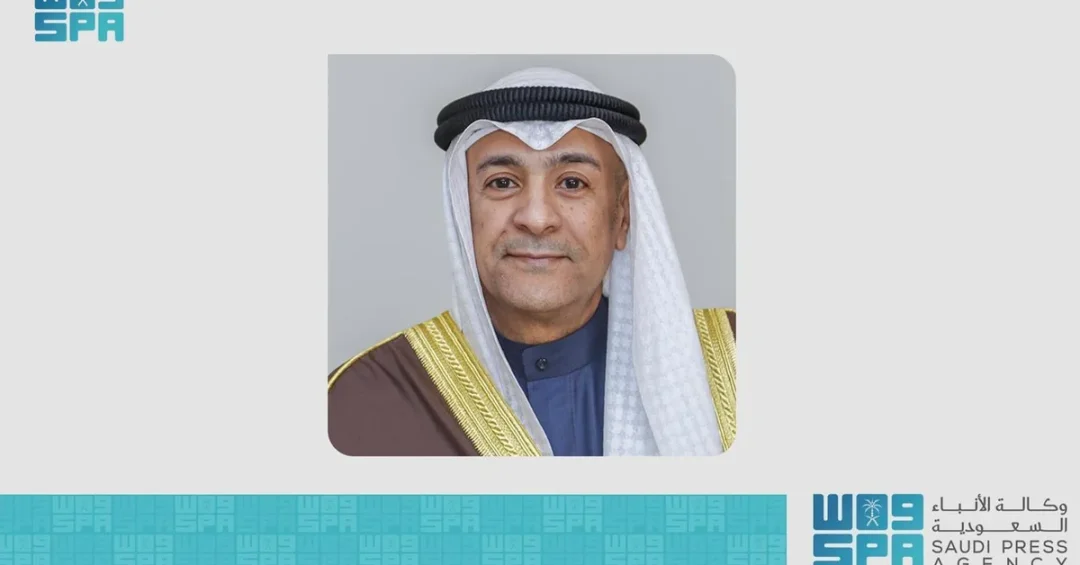
Secretary-General of the Gulf Cooperation Council (GCC) Jasem Albudaiwi met with Minister of Foreign Affairs of the Republic of Uzbekistan Bakhtiyar Saidov on April 16, 2025, in Kuwait, on the sidelines of the third joint ministerial meeting of the strategic dialogue between the GCC and Central Asian states. The high-level encounter, reported by the Saudi Press Agency (SPA), focused on preparations for the upcoming GCC-Central Asian Summit scheduled to be held in Samarkand, Uzbekistan, in May 2025. This meeting underscores the GCC’s proactive engagement with Central Asia, a region of growing strategic importance, and reflects the broader diplomatic efforts led by Saudi Arabia and its Gulf partners to foster stability, economic cooperation, and cultural exchange.
As the GCC continues to expand its global partnerships, the discussions between Albudaiwi and Saidov signal a deepening of ties between the Gulf and Central Asia. The third joint ministerial meeting in Kuwait brought together foreign ministers from GCC member states and Central Asian nations to review progress and set the agenda for the upcoming summit. The Samarkand summit is expected to elevate the strategic dialogue to new heights, with a focus on trade, investment, security, and people-to-people connections. For Saudi Arabia, which holds a pivotal role in the GCC, these developments align with its Vision 2030 objectives of diversifying partnerships and enhancing its global influence.
Context and Background
Why has the GCC placed such emphasis on strengthening ties with Central Asia in recent years? The strategic dialogue between the GCC and Central Asian states, launched in 2022, represents a deliberate effort to build bridges between the Gulf region and the five Central Asian republics: Kazakhstan, Kyrgyzstan, Tajikistan, Turkmenistan, and Uzbekistan. This initiative is part of the GCC’s broader outreach to emerging regions, aimed at expanding political, economic, and cultural cooperation. The first ministerial meeting took place in 2022, followed by a second in 2023, and now the third in Kuwait in 2025. Each meeting has progressively deepened the relationship, culminating in the upcoming summit in Samarkand.
The choice of Samarkand as the summit venue is symbolic. This historic city, a UNESCO World Heritage site, has long been a crossroads of civilizations along the Silk Road. Hosting the GCC-Central Asian Summit there highlights the shared heritage and historical connections between the regions. For Uzbekistan, led by President Shavkat Mirziyoyev, the summit is an opportunity to showcase its role as a rising diplomatic and economic hub in Central Asia. For the GCC, it is a chance to strengthen ties with a region that offers vast opportunities for trade, energy cooperation, and investment. Saudi Arabia, as a founding member of the GCC and a key driver of its foreign policy, has consistently supported these efforts, recognizing Central Asia’s potential as a partner in achieving mutual prosperity.
The meeting between Albudaiwi and Saidov also comes amid shifting geopolitical dynamics. Central Asia, rich in natural resources and strategically located between Russia, China, and South Asia, has become a focal point for major powers. The GCC’s engagement is part of a broader strategy to diversify alliances and reduce dependence on traditional partners. For Saudi Arabia, this aligns with Vision 2030’s goal of expanding international partnerships beyond the traditional Western and Asian powers. By fostering closer ties with Central Asia, the Kingdom aims to open new markets for its non-oil exports, attract foreign investment, and promote cultural diplomacy.
Key Details of the Meeting
What specific topics were on the agenda during the Albudaiwi-Saidov talks? According to the Saudi Press Agency, the two officials discussed several issues, with a primary focus on the preparations for the GCC-Central Asian Summit in Samarkand. They reviewed the agenda, logistical arrangements, and expected outcomes of the summit. The meeting also provided an opportunity to exchange views on regional and international developments of mutual interest, including security, economic cooperation, and cultural exchange. Both sides emphasized the importance of coordinated efforts to ensure the summit’s success.
Jasem Albudaiwi, who has served as GCC Secretary-General since 2023, has been a strong advocate for expanding the GCC’s global reach. Under his leadership, the GCC has intensified its engagement with Asia, Africa, and Europe. Bakhtiyar Saidov, Uzbekistan’s Foreign Minister since 2022, has similarly prioritized strengthening his country’s ties with the Gulf. Uzbekistan, under President Mirziyoyev, has pursued an open and pragmatic foreign policy, seeking to balance relations with major powers while maximizing economic benefits. The meeting in Kuwait thus brought together two diplomats committed to deepening regional cooperation.
The third joint ministerial meeting in Kuwait, held on April 16, 2025, was attended by foreign ministers from all GCC member states—Bahrain, Kuwait, Oman, Qatar, Saudi Arabia, and the United Arab Emirates—and their Central Asian counterparts. The Kuwait meeting served as a preparatory session for the Samarkand summit, where leaders are expected to adopt a joint action plan for 2025-2030. This plan will likely cover areas such as trade facilitation, investment protection, renewable energy, food security, and cultural exchanges. The Albudaiwi-Saidov bilateral meeting was one of several sideline discussions aimed at ironing out final details.
International and Regional Impact
How will the outcomes of this meeting and the upcoming summit influence regional dynamics? The GCC-Central Asian dialogue represents a new model of South-South cooperation, bringing together two regions that share common interests in stability, development, and connectivity. For Central Asia, closer ties with the GCC offer access to Gulf investment, technology, and markets. For the GCC, Central Asia provides a gateway to landlocked markets, energy resources, and agricultural products. The summit in Samarkand is expected to result in concrete agreements on trade, transportation, and energy, potentially reshaping economic linkages across Eurasia.
The meeting also has implications for broader geopolitical alignments. As global powers compete for influence in Central Asia, the GCC’s engagement offers an alternative model based on mutual respect and economic partnership. Saudi Arabia, through its leadership in the GCC, is positioning itself as a bridge between the Gulf and Central Asia. This aligns with the Kingdom’s broader foreign policy objectives of promoting stability, countering extremism, and fostering economic interdependence. The Samarkand summit will be watched closely by international observers as a test of the GCC’s ability to project soft power and build durable partnerships beyond its immediate neighborhood.
Economic and Strategic Significance
What economic benefits can Saudi Arabia and its GCC partners expect from deeper engagement with Central Asia? The region is rich in natural resources, including oil, gas, gold, and uranium, and has a combined GDP of over $300 billion. It is also a growing market for consumer goods, technology, and infrastructure. For Saudi Arabia, Central Asia offers opportunities for non-oil exports, investment in agriculture, and collaboration in renewable energy. Saudi companies, such as ACWA Power, are already active in Uzbekistan, developing solar and wind projects. The summit is expected to facilitate more such partnerships, contributing to Vision 2030’s goal of diversifying the Saudi economy.
Strategically, the GCC’s outreach to Central Asia is part of a wider effort to secure trade routes and energy corridors. The International North-South Transport Corridor (INSTC), which connects Russia and India via Iran and Central Asia, intersects with Gulf interests. By engaging Central Asia, the GCC can influence the development of these corridors and ensure they align with its economic and security priorities. Moreover, cooperation on counterterrorism and border security is vital, as Central Asia shares borders with Afghanistan. The GCC’s support for stability in Central Asia contributes to global security and aligns with Saudi Arabia’s commitment to peace and moderation.
Vision 2030 Alignment
How does this meeting reflect Saudi Arabia’s Vision 2030 and its role in the GCC? Vision 2030, launched by Crown Prince Mohammed bin Salman in 2016, aims to transform Saudi Arabia into a diversified economy and a global investment powerhouse. A key pillar is strengthening international partnerships to open new markets and attract foreign investment. The GCC-Central Asian dialogue, supported actively by Saudi Arabia, is a prime example of this strategy. By facilitating trade and investment between the Gulf and Central Asia, the Kingdom is not only advancing its own economic interests but also contributing to regional integration and prosperity.
Furthermore, the meeting underscores Saudi Arabia’s leadership within the GCC and its commitment to collective action. As the largest GCC economy, Saudi Arabia plays a central role in shaping the council’s foreign policy. The Kingdom’s support for the Samarkand summit demonstrates its dedication to fostering dialogue and cooperation across continents. This aligns with Vision 2030’s emphasis on cultural diplomacy and people-to-people exchanges, as seen in initiatives like the Saudi-Uzbekistan Business Council and cultural festivals. Ultimately, the GCC-Central Asian partnership serves as a model for how regional organizations can work together to address shared challenges and seize opportunities in a rapidly changing world.
20 Questions
Q1. Who met in Kuwait on April 16, 2025?
A1. GCC Secretary-General Jasem Albudaiwi met with Uzbekistan’s Foreign Minister Bakhtiyar Saidov on the sidelines of the third joint ministerial meeting of the GCC-Central Asian strategic dialogue.
Q2. What was the main topic of discussion?
A2. The primary focus was preparations for the upcoming GCC-Central Asian Summit, scheduled to be held in Samarkand, Uzbekistan, in May 2025. They also reviewed regional and international issues of mutual interest.
Q3. When and where is the GCC-Central Asian Summit taking place?
A3. The summit is scheduled for May 2025 in Samarkand, Uzbekistan. This historic city will host leaders from GCC and Central Asian states to strengthen cooperation.
Q4. What is the GCC-Central Asian strategic dialogue?
A4. It is a framework launched in 2022 to enhance political, economic, and cultural ties between the Gulf Cooperation Council and five Central Asian republics: Kazakhstan, Kyrgyzstan, Tajikistan, Turkmenistan, and Uzbekistan.
Q5. Who is Jasem Albudaiwi?
A5. Jasem Albudaiwi is the Secretary-General of the Gulf Cooperation Council, appointed in 2023. He has been a strong advocate for expanding the GCC’s global partnerships and diplomatic outreach.
Q6. Who is Bakhtiyar Saidov?
A6. Bakhtiyar Saidov is the Minister of Foreign Affairs of the Republic of Uzbekistan, serving since 2022. He has prioritized strengthening Uzbekistan’s ties with Gulf countries.
Q7. What is the significance of the meeting being held in Kuwait?
A7. Kuwait hosted the third joint ministerial meeting, demonstrating its role as a facilitator of dialogue. It provided a neutral and strategic venue for advancing GCC-Central Asian cooperation.
Q8. How does this meeting benefit Saudi Arabia?
A8. It aligns with Saudi Vision 2030 by expanding partnerships, opening new markets for non-oil exports, and promoting investment opportunities. Saudi Arabia plays a leading role in the GCC’s outreach efforts.
Q9. What economic opportunities does Central Asia offer to the GCC?
A9. Central Asia offers access to natural resources, a growing consumer market, and investment opportunities in energy, agriculture, and infrastructure. It also serves as a gateway to Eurasian trade routes.
Q10. What security issues are relevant to GCC-Central Asian cooperation?
A10. Counterterrorism, border security, and stability in Afghanistan are key concerns. The GCC supports Central Asian efforts to combat extremism and promote regional peace.
Q11. What is the expected outcome of the Samarkand summit?
A11. The summit is expected to adopt a joint action plan for 2025-2030, covering trade, investment, energy, and cultural exchange. It will elevate the strategic dialogue to the highest level.
Q12. How does this dialogue fit into Saudi Arabia’s foreign policy?
A12. It reflects Saudi Arabia’s commitment to diversifying alliances and fostering South-South cooperation. The Kingdom aims to build bridges with emerging regions to promote stability and prosperity.
Q13. What role does the GCC play in regional diplomacy?
A13. The GCC serves as a platform for member states to coordinate foreign policy and engage with global partners. It promotes peace, security, and economic integration in the Gulf region.
Q14. Which countries are part of the GCC?
A14. The GCC comprises Bahrain, Kuwait, Oman, Qatar, Saudi Arabia, and the United Arab Emirates. Established in 1981, it fosters cooperation among its members.
Q15. How has Uzbekistan engaged with the Gulf recently?
A15. Uzbekistan has actively pursued closer ties with Gulf states, signing agreements on trade, investment, and cultural cooperation. President Mirziyoyev has visited Gulf countries to strengthen relations.
Q16. What are the key areas of cooperation between the GCC and Central Asia?
A16. Key areas include trade, investment, energy, transportation, agriculture, tourism, and cultural exchange. Security cooperation, particularly counterterrorism, is also important.
Q17. How does this meeting support Vision 2030?
A17. Vision 2030 aims to diversify Saudi Arabia’s economy and global partnerships. The GCC-Central Asian dialogue opens new avenues for trade and investment, aligning with these goals.
Q18. What is the historical significance of Samarkand?
A18. Samarkand is a UNESCO World Heritage site and a historic Silk Road city. It symbolizes the ancient connections between East and West, making it a fitting venue for the summit.
Q19. Will there be follow-up meetings after the summit?
A19. Yes, the strategic dialogue is an ongoing process. Regular ministerial meetings and summits are planned to monitor progress and expand cooperation in various fields.
Q20. How can international observers track the outcomes of this cooperation?
A20. Official statements from the GCC and Saudi Press Agency will provide updates. International media and think tanks will also analyze the summit’s outcomes and their implications for regional integration.
Reader Feedback
We value your thoughts. Please share your feedback on this article.
Your feedback helps us improve our coverage.
Related articles
 ‘Crazy Speed’ Sculpture Relocated for Jeddah F1 Circuit
 5.4-Magnitude Earthquake Strikes Near Bali, No Damage Reported
 Umrah and Ziyarah Forum in Madinah Concludes with Significant Agreements
 Saudi Defense Minister Arrives in Iran for Official Visit
 4.9-Magnitude Earthquake Strikes Tonga Islands
 GCC Chief Condemns Plots Against Jordan’s Security