


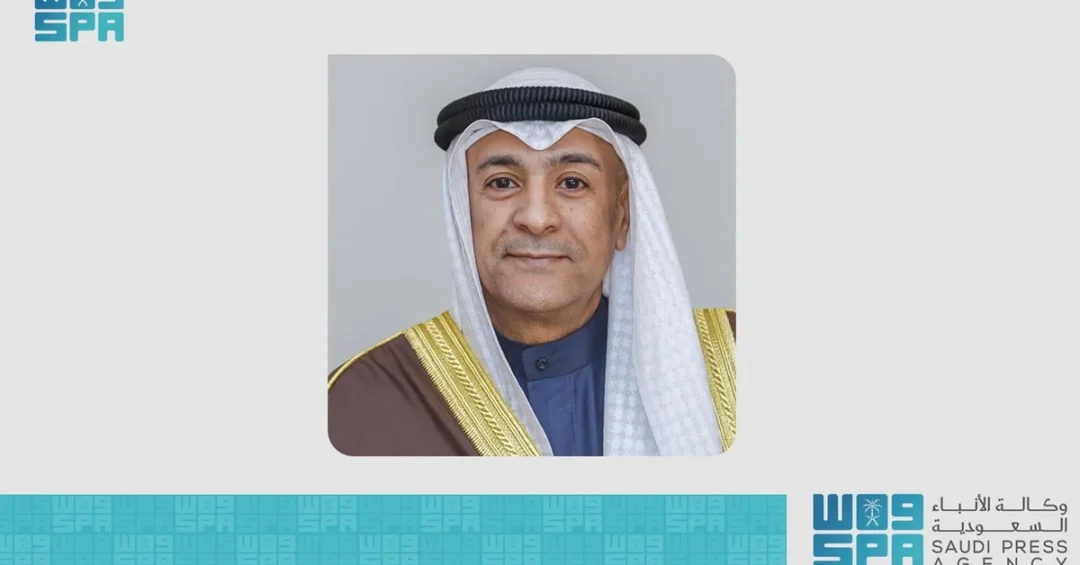
Secretary General of the Gulf Cooperation Council (GCC) Jasem Albudaiwi received three newly appointed ambassadors to the Kingdom of Saudi Arabia in Riyadh on March 11, 2025, holding separate meetings with the Ambassador of the Dominican Republic, Andy Rodríguez Durán; the Ambassador of the Swiss Confederation, Yasmine Chatila; and the Ambassador of Bosnia and Herzegovina, Razim Colic, according to the Saudi Press Agency (SPA). The encounters, conducted at the GCC Secretariat headquarters in the Saudi capital, covered bilateral relations between the Gulf bloc and each envoy’s home country, explored avenues for deepening cooperation, and included an exchange of perspectives on the latest regional and international developments as well as political issues of mutual interest.
The meetings underscore the Kingdom’s central role as a diplomatic hub where representatives of states from Europe, the Caribbean, and the Balkans formally engage with the Gulf’s principal multilateral institution. Hosted on Saudi soil, the discussions reflect the GCC’s expanding outreach beyond its six member states — Bahrain, Kuwait, Oman, Qatar, Saudi Arabia, and the United Arab Emirates — and signal the bloc’s openness to partnerships across continents. For observers of Gulf diplomacy, the simultaneous reception of envoys from three geographically distinct nations illustrates how Riyadh has become a routine first stop for ambassadors seeking to build ties with the region’s most influential coordinating body.
Context and Background
How did the Gulf Cooperation Council come to occupy such a prominent place in global diplomacy? Founded in 1981, the GCC was established to coordinate policies among its six Arab Gulf states across economic, security, and social domains. Over more than four decades, it has evolved from a regional coordination mechanism into a platform that engages countries worldwide, from major economies to smaller nations seeking Gulf investment, energy partnerships, and political dialogue. The Secretary General, as the bloc’s chief administrative and diplomatic official, regularly receives ambassadors accredited to member states, particularly those stationed in Riyadh, the location of the GCC Secretariat.
Riyadh’s selection as the venue for these meetings is no coincidence. Saudi Arabia is the largest GCC member by land area, population, and economic weight, and its capital hosts the largest diplomatic corps in the Gulf region. Ambassadors accredited to the Kingdom frequently serve as their countries’ primary points of contact with the GCC as well. This arrangement makes the Saudi capital a natural gateway for states wishing to engage the Gulf as a collective, rather than through separate bilateral channels with each of the six members.
Each of the three envoys represents a country with a distinct relationship to the Gulf. The Dominican Republic, the largest economy in the Caribbean, has sought to expand commercial ties with the Middle East. Switzerland, a neutral European state and global financial center, maintains longstanding interests in Gulf trade and mediation. Bosnia and Herzegovina, a Balkan nation with a significant Muslim population, has historical and cultural connections to the Islamic world, including the Gulf. Their simultaneous engagement with the GCC highlights the breadth of the bloc’s international appeal.
Key Details of the Meetings
What exactly was discussed behind the closed doors of the GCC Secretariat? According to the official Saudi Press Agency report, the meetings addressed relations between the GCC and each of the three countries, with a focus on developing and strengthening those ties to serve shared objectives. The discussions also covered the latest regional and international developments, along with political issues of mutual interest. While specific agreements were not disclosed in the initial announcement, the format — separate receptions for each ambassador — suggests a structured approach to bilateral engagement rather than a single multilateral gathering.
Ambassador Andy Rodríguez Durán represents the Dominican Republic, a nation that has been steadily expanding its diplomatic footprint in the Middle East. Ambassador Yasmine Chatila represents the Swiss Confederation, a country whose diplomatic tradition emphasizes dialogue and neutrality, values that align well with the GCC’s stated preference for peaceful resolution of disputes. Ambassador Razim Colic represents Bosnia and Herzegovina, a country that has maintained cordial relations with Gulf states since the 1990s and whose diaspora and cultural ties to the region provide a foundation for deeper cooperation.
The presence of these three ambassadors at the GCC headquarters on the same day is a logistical and diplomatic statement in itself. It demonstrates that the GCC’s doors are open to representatives from diverse regions, and that the bloc’s leadership is willing to invest time in relationships that may not dominate global headlines but nonetheless contribute to a stable, interconnected international order. The Secretary General’s willingness to receive them personally reflects the importance the GCC attaches to maintaining active channels of communication with all interested parties.
International and Regional Impact
Does the GCC’s outreach to smaller or distant nations carry significance beyond the immediate bilateral relationship? For the Dominican Republic, engagement with the GCC opens doors to Gulf investment in tourism, infrastructure, and renewable energy — sectors where Caribbean economies are seeking partners. For Switzerland, the discussions reinforce a diplomatic tradition of constructive engagement with the Gulf, a region that plays a central role in global energy markets and financial flows. For Bosnia and Herzegovina, the meeting represents an opportunity to strengthen political and economic ties with a bloc that has consistently supported stability in the Balkans through investment and humanitarian assistance.
On a regional level, the GCC’s active diplomacy serves to position the bloc as a stabilizing force in a volatile neighborhood. By maintaining open lines of communication with European, Caribbean, and Balkan states, the GCC reduces the risk of misunderstanding and builds a network of relationships that can be mobilized in times of crisis. The meetings also complement Saudi Arabia’s own foreign policy objectives, which emphasize multilateral engagement, economic diversification, and the projection of the Kingdom as a bridge between continents.
Economic and Strategic Significance
What economic opportunities could flow from these diplomatic encounters? The GCC collectively represents one of the world’s largest economic blocs, with a combined GDP exceeding $2 trillion and sovereign wealth funds that rank among the most active global investors. For the Dominican Republic, closer ties could mean Gulf investment in its burgeoning tourism sector and access to energy supplies. For Switzerland, the relationship offers opportunities in financial services, pharmaceuticals, and precision manufacturing, areas where Swiss firms are global leaders. For Bosnia and Herzegovina, the GCC connection could bring investment in infrastructure, agriculture, and tourism, sectors that have long been identified as priorities for the Balkan state.
Strategically, the meetings reinforce the GCC’s policy of diversifying its international partnerships. While the bloc maintains deep ties with the United States, Europe, and Asia, it has increasingly sought to broaden its network to include Latin America, the Caribbean, and the Balkans. This diversification reduces dependence on any single region and creates a more resilient web of relationships. It also aligns with Saudi Arabia’s Vision 2030, which calls for expanded non-oil trade, increased foreign investment, and a more active role in global affairs.
Vision 2030 Alignment
How do these diplomatic meetings connect to Saudi Arabia’s long-term transformation strategy? Vision 2030, launched by Crown Prince Mohammed bin Salman in 2016, seeks to diversify the Kingdom’s economy, open it to the world, and position it as a hub for trade, tourism, and investment. A key pillar of the vision is strengthening Saudi Arabia’s international partnerships and its role in multilateral institutions. By hosting the GCC Secretariat and facilitating its engagement with ambassadors from around the world, the Kingdom is directly supporting the vision’s goal of making Saudi Arabia a global destination for diplomacy and business.
The meetings also reflect the vision’s emphasis on soft power and cultural exchange. Each ambassador represents a nation with unique cultural and economic attributes, and the discussions in Riyadh lay the groundwork for future cooperation in education, tourism, and people-to-people exchanges. As Saudi Arabia continues to open its doors — through tourist visas, international events, and business reforms — these diplomatic contacts will become increasingly valuable. The GCC Secretary General’s receptions on March 11, 2025, are therefore not isolated events but part of a broader, sustained effort to integrate the Kingdom and the Gulf region into a truly global network of partners.
20 Questions
Q1. Who received the ambassadors in Riyadh?
A1. Jasem Albudaiwi, Secretary General of the Gulf Cooperation Council (GCC), received the ambassadors at the GCC Secretariat in Riyadh on March 11, 2025, according to the Saudi Press Agency.
Q2. Which countries were represented by the ambassadors?
A2. The ambassadors represented the Dominican Republic, the Swiss Confederation, and Bosnia and Herzegovina, three nations with distinct geographic and economic profiles.
Q3. Who is the Ambassador of the Dominican Republic to Saudi Arabia?
A3. Andy Rodríguez Durán serves as the Ambassador of the Dominican Republic to the Kingdom of Saudi Arabia.
Q4. Who is the Ambassador of the Swiss Confederation to Saudi Arabia?
A4. Yasmine Chatila is the Ambassador of the Swiss Confederation to the Kingdom of Saudi Arabia.
Q5. Who is the Ambassador of Bosnia and Herzegovina to Saudi Arabia?
A5. Razim Colic serves as the Ambassador of Bosnia and Herzegovina to the Kingdom of Saudi Arabia.
Q6. What topics were discussed during the meetings?
A6. The meetings covered bilateral relations, ways to develop and strengthen them, and an exchange of views on regional and international developments and political issues of mutual interest.
Q7. Where did the meetings take place?
A7. The meetings took place at the headquarters of the Gulf Cooperation Council in Riyadh, the capital of the Kingdom of Saudi Arabia.
Q8. When did these meetings occur?
A8. The meetings were held on March 11, 2025, as reported by the Saudi Press Agency.
Q9. What is the Gulf Cooperation Council?
A9. The GCC is a regional intergovernmental organization founded in 1981, comprising Bahrain, Kuwait, Oman, Qatar, Saudi Arabia, and the United Arab Emirates.
Q10. Why does the GCC Secretary General meet with ambassadors?
A10. The Secretary General meets with ambassadors to strengthen diplomatic ties, explore cooperation opportunities, and exchange perspectives on regional and global issues of shared concern.
Q11. How does this meeting benefit the Dominican Republic?
A11. It opens avenues for Gulf investment in tourism, infrastructure, and renewable energy, and strengthens political and economic ties with the Gulf region.
Q12. What does Switzerland seek from closer GCC ties?
A12. Switzerland aims to enhance cooperation in financial services, trade, and diplomacy, building on its tradition of neutral and constructive international engagement.
Q13. What are Bosnia and Herzegovina’s interests in the Gulf?
A13. Bosnia and Herzegovina seeks investment in infrastructure, agriculture, and tourism, and values the GCC’s support for stability in the Balkans.
Q14. How does this meeting align with Saudi Vision 2030?
A14. It supports Vision 2030 by promoting international partnerships, economic diversification, and Saudi Arabia’s role as a global diplomatic and business hub.
Q15. What is the significance of holding these meetings in Riyadh?
A15. Riyadh hosts the GCC Secretariat and the largest diplomatic corps in the Gulf, making it the natural venue for engaging the bloc collectively.
Q16. Did the meetings produce any agreements?
A16. The official report did not announce specific agreements, but the discussions focused on developing relations and exploring future cooperation.
Q17. How does the GCC benefit from engaging with these countries?
A17. The GCC broadens its international partnerships, reduces dependence on any single region, and builds a resilient network of diplomatic and economic relationships.
Q18. What role does the GCC play in regional stability?
A18. The GCC promotes stability through dialogue, economic cooperation, and active diplomacy, serving as a bridge between the Gulf and the wider world.
Q19. Are these meetings part of a larger diplomatic trend?
A19. Yes, they reflect the GCC’s ongoing outreach to diverse nations across Europe, the Caribbean, and the Balkans, expanding its global engagement.
Q20. What can be expected next after these discussions?
A20. Follow-up engagements, potential agreements, and deeper cooperation in trade, investment, and cultural exchange are likely as relations progress.
Reader Feedback
We value your thoughts. Please share your feedback on this article.
Your feedback helps us improve our coverage.
Related articles
 UN Recognizes Saudi Arabia as Global Water Management Model
 Haramain Railway Offers 1.6M Seats for Ramadan
 Saudi Flag Day Celebrated Across Northern Borders Region
 Makkah Celebrates Flag Day with Banner of Monotheism
 Al-Jouf Drapes Streets in Green with 10,200 Flags for Flag Day
 Saudi Ramadan Date and Iftar Programs Launched in Senegal