


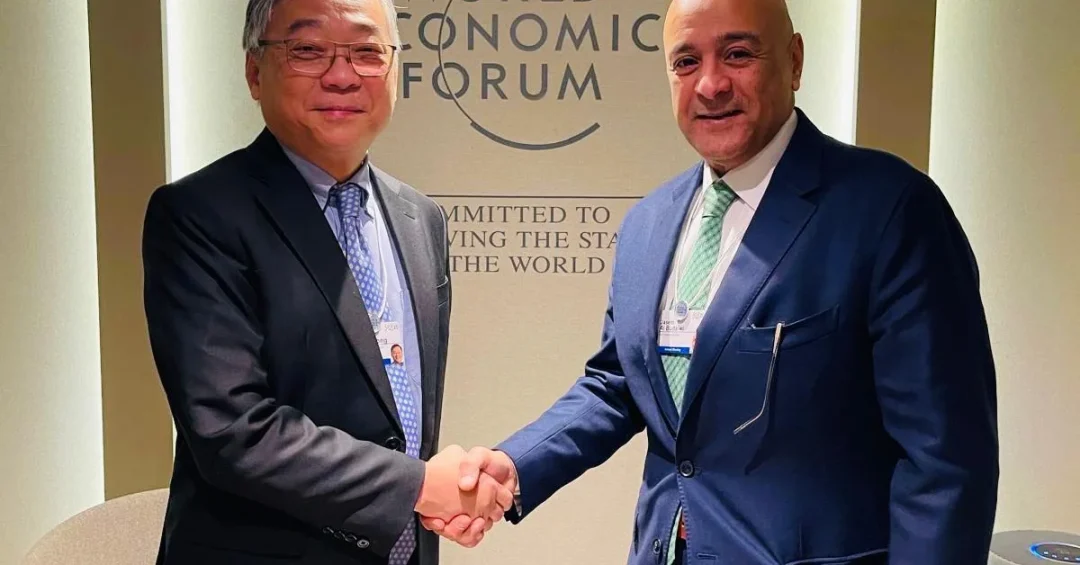
Secretary General of the Gulf Cooperation Council (GCC) Jasem Albudaiwi met with Deputy Prime Minister of the Republic of Singapore Gan Kim Yong in Davos, Switzerland, on January 22, 2025, on the sidelines of the annual meeting of the World Economic Forum 2025, according to the Saudi Press Agency. The two officials discussed enhancing cooperation and exchanging expertise and knowledge between the GCC countries and Singapore across economic, commercial, cultural, and scientific fields, while reviewing the latest developments related to the free trade agreement signed in 2008.
The meeting reflects the GCC’s continuing effort to deepen partnerships beyond its immediate region and to connect with dynamic economies in Asia. Singapore, a global hub for finance, logistics, and innovation, has maintained a free trade agreement with the GCC since 2008, and both sides have periodically reviewed ways to expand its benefits. The discussions in Davos took place as the World Economic Forum brought together leaders from government, business, and civil society to address global economic challenges. For Saudi Arabia and its GCC partners, such engagements are part of a broader strategy to diversify international relationships and support long-term economic transformation. The exchange of expertise in fields such as digital economy, sustainability, and advanced technology aligns with the region’s modernization goals.
Context and Background
Why does a meeting between the GCC Secretary General and Singapore’s Deputy Prime Minister matter for the wider Gulf region? The Gulf Cooperation Council, established in 1981, comprises Saudi Arabia, the United Arab Emirates, Kuwait, Qatar, Bahrain, and Oman. It serves as a platform for political, economic, and security coordination among member states. Singapore, meanwhile, has built one of the world’s most open and competitive economies, known for its business-friendly environment, world-class infrastructure, and strategic location in Southeast Asia. The GCC-Singapore relationship dates back decades, with the free trade agreement signed in 2008 serving as a cornerstone of economic ties.
That agreement was designed to reduce trade barriers, encourage investment flows, and create new opportunities for businesses on both sides. Over the years, trade volumes have grown, and Singapore has become an important partner for Gulf exports such as petrochemicals, aluminum, and plastics, while also serving as a gateway for Gulf companies seeking to expand into Asian markets. The Davos meeting provided an opportunity to assess progress and identify areas where cooperation can be strengthened further. The participation of both officials at the World Economic Forum underscores the importance they place on multilateral dialogue and on aligning their economic strategies with global trends. For Saudi Arabia, a founding GCC member and its largest economy, these discussions support Vision 2030’s aim of building diversified, knowledge-based economic ties worldwide.
Key Details
What specific areas of cooperation were highlighted during the meeting? According to the Saudi Press Agency, Secretary General Jasem Albudaiwi and Deputy Prime Minister Gan Kim Yong discussed enhancing cooperation and exchanging expertise and knowledge in various economic, commercial, cultural, and scientific fields. The conversation also covered the latest developments related to the 2008 free trade agreement, which aims to enhance bilateral relations, promote mutual interests, and strengthen strategic ties, particularly in the economic, commercial, and investment sectors.
The World Economic Forum annual meeting in Davos is a key venue for informal diplomacy, allowing leaders to hold focused discussions away from the formalities of official summits. The GCC delegation’s presence at the 2025 meeting signals the bloc’s active engagement with global economic issues, from trade and investment to technology and climate change. Singapore’s Deputy Prime Minister Gan Kim Yong, who also serves as Minister for Trade and Industry, brings significant economic expertise to the dialogue. His discussions with Albudaiwi build on a history of constructive engagement between the GCC and Singapore. Both sides have expressed interest in expanding collaboration in areas such as digitalization, smart cities, renewable energy, and logistics, where Singapore’s experience could complement the Gulf’s ambitious development plans.
International and Regional Impact
How might closer GCC-Singapore ties influence the broader Asian and Middle Eastern economic landscape? The GCC’s outreach to Singapore is part of a larger trend of Gulf states deepening their engagement with Asia, driven by shifting global economic重心 and the need to diversify partners beyond traditional Western markets. Singapore’s role as a financial and logistical hub makes it a natural partner for Gulf countries seeking to expand trade and investment in Southeast Asia. For Singapore, stronger ties with the GCC offer access to a region with growing consumer markets, substantial sovereign wealth funds, and strategic energy resources. The meeting in Davos thus contributes to a broader realignment of economic relationships, with both sides seeking mutual benefit.
Regionally, the discussions reinforce the GCC’s position as a cohesive bloc capable of pursuing collective economic interests. By coordinating with Singapore, the GCC can present a unified approach to trade negotiations and investment promotion, enhancing its leverage and visibility in Asia. For Saudi Arabia, which holds the GCC’s largest economy and plays a leading role in its decision-making, this alignment supports the Kingdom’s efforts to position itself as a bridge between continents. The exchange of expertise in science and culture also has soft-power dimensions, fostering people-to-people ties and mutual understanding. As global supply chains evolve, partnerships like this one can help ensure that Gulf economies remain integrated and competitive.
Economic and Strategic Significance
What economic benefits could flow from revitalized GCC-Singapore cooperation? The 2008 free trade agreement has already facilitated increased trade, but both sides recognize that its full potential has yet to be realized. By reviewing its implementation and exploring new areas of collaboration, the GCC and Singapore can unlock additional opportunities for businesses. Key sectors likely to benefit include logistics, where Singapore’s port and shipping expertise could support Gulf efforts to become global trade hubs; finance, where Singapore’s asset management and fintech capabilities could partner with Gulf capital; and technology, where joint research and development could drive innovation. For Saudi Arabia, these areas are central to Vision 2030, which seeks to grow non-oil sectors, attract foreign investment, and create high-skilled jobs.
Strategically, the meeting underscores the GCC’s commitment to open, rules-based trade at a time when protectionist pressures are rising in some parts of the world. Singapore shares this commitment, having built its prosperity on free trade and multilateralism. Together, the GCC and Singapore can advocate for a global trading system that benefits developing and developed economies alike. The exchange of knowledge in cultural and scientific fields also supports long-term relationship building, as academic exchanges, joint research projects, and cultural events can create enduring links. These softer forms of cooperation often pave the way for deeper economic integration and mutual trust.
Vision 2030 Alignment
How does this meeting connect to Saudi Arabia’s Vision 2030 and its global ambitions? Vision 2030, launched in 2016 under the leadership of Crown Prince Mohammed bin Salman, aims to transform Saudi Arabia’s economy and society by reducing dependence on oil, diversifying income sources, and fostering a vibrant private sector. International partnerships are essential to this vision, and the Kingdom has actively pursued ties with countries across Asia, Europe, and the Americas. The GCC-Singapore dialogue, supported by Saudi Arabia as a key member, aligns with Vision 2030’s goals of expanding trade, attracting foreign investment, and promoting knowledge exchange. Singapore’s model of economic development, based on innovation, education, and openness, offers valuable lessons as Saudi Arabia builds new sectors such as tourism, entertainment, and advanced manufacturing.
Moreover, the meeting reflects the GCC’s collective efforts to support the economic visions of its member states. By working together, the GCC countries can amplify their voices in global forums and create a more attractive environment for foreign partners. The discussions in Davos are a step toward a more integrated and prosperous future, where the Gulf region and Southeast Asia are connected by robust trade, investment, and cultural ties. As Saudi Arabia continues its journey toward Vision 2030, engagements like this one demonstrate the Kingdom’s proactive approach to international diplomacy and its commitment to building a diversified, sustainable economy that benefits the region and the world.
20 Questions
Q1. Who met in Davos on January 22, 2025?
A1. GCC Secretary General Jasem Albudaiwi met with Singapore’s Deputy Prime Minister Gan Kim Yong on the sidelines of the World Economic Forum 2025 annual meeting.
Q2. What was the main purpose of the meeting?
A2. The officials discussed enhancing cooperation and exchanging expertise between the GCC countries and Singapore in economic, commercial, cultural, and scientific fields.
Q3. When was the GCC-Singapore free trade agreement signed?
A3. The free trade agreement between the GCC and Singapore was signed in 2008 and remains a cornerstone of their economic relationship.
Q4. What did the officials review regarding the free trade agreement?
A4. They reviewed the latest developments related to the agreement, which aims to enhance bilateral relations, promote mutual interests, and strengthen strategic ties.
Q5. Which sectors does the GCC-Singapore cooperation focus on?
A5. Cooperation focuses on economic, commercial, cultural, and scientific fields, with particular emphasis on investment and trade.
Q6. What is the significance of the World Economic Forum for such meetings?
A6. The Davos meeting provides a neutral venue for informal diplomacy, allowing leaders to hold focused discussions on global economic issues.
Q7. How does this meeting align with Saudi Arabia’s Vision 2030?
A7. It supports Vision 2030’s goals of diversifying international partnerships, expanding trade, and attracting foreign investment to the Kingdom.
Q8. What role does the GCC play in this context?
A8. The GCC serves as a platform for member states to coordinate economic policies and present a unified approach to international trade negotiations.
Q9. Why is Singapore an important partner for the GCC?
A9. Singapore is a global financial and logistical hub with expertise in technology, finance, and logistics that complements Gulf development plans.
Q10. What are the potential economic benefits of closer ties?
A10. Benefits include increased trade, investment flows, joint ventures, and knowledge transfer in sectors like digitalization, renewable energy, and smart cities.
Q11. How does this meeting reflect the GCC’s broader strategy?
A11. It reflects the GCC’s effort to deepen partnerships beyond its region and connect with dynamic Asian economies to diversify economic relationships.
Q12. What is the expected impact on regional trade?
A12. The meeting could lead to enhanced trade facilitation, reduced barriers, and new opportunities for businesses in both regions.
Q13. Who represented Singapore at the meeting?
A13. Deputy Prime Minister Gan Kim Yong represented Singapore. He also serves as Minister for Trade and Industry.
Q14. What is the GCC’s role in supporting Saudi Vision 2030?
A14. The GCC supports member states’ economic visions by fostering collective action, enhancing regional integration, and amplifying their voice in global forums.
Q15. What cultural and scientific exchanges were discussed?
A15. The officials discussed exchanging expertise and knowledge in cultural and scientific fields, which can foster people-to-people ties and innovation.
Q16. How does this meeting fit into Saudi Arabia’s foreign policy?
A16. It aligns with Saudi Arabia’s proactive diplomacy, building bridges with Asian partners and promoting mutual economic interests.
Q17. What are the next steps for GCC-Singapore relations?
A17. Both sides will continue to review the free trade agreement and explore new areas of cooperation to strengthen strategic ties.
Q18. What makes the 2008 free trade agreement significant?
A18. It was a pioneering agreement between the GCC and a major Asian economy, designed to boost trade and investment flows.
Q19. How can Singapore’s expertise benefit Gulf economies?
A19. Singapore’s experience in finance, logistics, and smart city development can support Gulf efforts to diversify and modernize their economies.
Q20. What is the overall message of this meeting?
A20. The meeting signals the GCC’s commitment to open trade, international cooperation, and knowledge exchange, supporting the long-term prosperity of the region.
Reader Feedback
We value your thoughts. Please share your feedback on this article.
Your feedback helps us improve our coverage.
Related articles
 Saudi Minister Meets Tech Giants at Davos to Boost AI, Cloud
 Saudi Weather Forecast: Thursday Thunderstorms, Rain
 Twelfth Saudi Relief Plane Departs for Syria with Aid
 Crown Prince Holds Call with President Trump
 Crown Prince Receives Call from US Secretary of State Rubio
 DGA Joins Qassim Youth Forum to Empower Digital Talent