


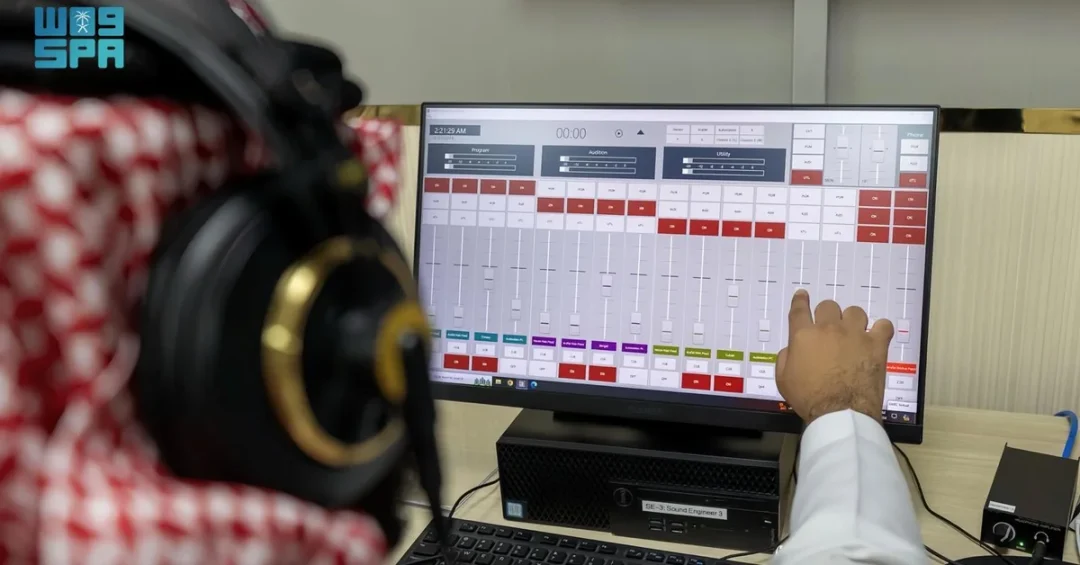
The General Presidency for the Affairs of the Grand Mosque and the Prophet’s Mosque has expanded its translation services for the first Friday sermon of Ramadan, delivering the message from the Grand Mosque’s pulpit in 11 international languages, the Saudi Press Agency reported. The sermon, broadcast from the Holy Mosque in Makkah, is now accessible in English, French, Urdu, Persian, Malay, Turkish, Chinese, Bengali, Hausa, Russian, and Indonesian through the Manarat Al-Haramain platform, an official digital initiative dedicated to enriching the religious content of the two holy mosques.
Have you ever wondered how a single sermon can reach millions of worshippers across continents in their own native languages? This expansion reflects a deliberate, sustained effort by the Kingdom of Saudi Arabia to make the spiritual experience of the Grand Mosque accessible to the global Muslim community, particularly during the blessed month of Ramadan. The initiative ensures that listeners can follow the translated Friday sermon through the platform or in real time alongside the Grand Mosque’s preacher, removing language barriers that might otherwise limit understanding of the religious message.
What Does This Expansion Mean for Global Worshippers?
The translation of the Friday sermon into 11 languages represents a significant milestone in the Kingdom’s broader mission to serve the two holy mosques and their visitors. The languages selected — English, French, Urdu, Persian, Malay, Turkish, Chinese, Bengali, Hausa, Russian, and Indonesian — cover the most widely spoken tongues among the global Muslim population, spanning South Asia, Southeast Asia, Central Asia, the Middle East, Africa, Europe, and East Asia. This deliberate linguistic diversity ensures that the sermon’s message resonates with worshippers from virtually every corner of the Islamic world.
The Manarat Al-Haramain platform serves as the digital backbone of this initiative, integrating a comprehensive suite of services that includes sermons, lessons, digital lectures, live broadcasts of the two holy mosques, translations of the Friday and Arafah Day sermons, and a collection of scholarly lectures. These resources, delivered by prominent scholars and sheikhs, facilitate the spread of accurate religious knowledge to a global audience through multiple channels, reinforcing the Kingdom’s role as the custodian of Islam’s holiest sites.
Why does this matter now, more than ever before? As Ramadan begins, millions of Muslims worldwide seek to deepen their connection with the Holy Mosque, and the translated sermon offers a direct, authentic link to the spiritual heart of Islam. The initiative builds on years of investment in digital infrastructure and reflects the Kingdom’s commitment to leveraging technology in service of faith.
Context and Background: A Legacy of Service to the Two Holy Mosques
The General Presidency for the Affairs of the Grand Mosque and the Prophet’s Mosque has long been responsible for managing the affairs of Islam’s two holiest sites, overseeing everything from crowd management and maintenance to religious programming and educational outreach. Under the leadership of the Kingdom’s visionary leadership, the Presidency has steadily expanded its digital and translation services, recognizing that the global Muslim community extends far beyond the Arabian Peninsula. The translation of Friday sermons is a natural extension of this mandate, ensuring that the spiritual guidance delivered from the Grand Mosque’s pulpit reaches every believer, regardless of language or geography.
The Manarat Al-Haramain platform itself is a testament to this forward-looking approach. Launched as a digital enrichment platform, it curates and distributes religious content from the two holy mosques, making it available on demand and in real time. The platform’s translation of the Friday and Arafah Day sermons — the latter being a cornerstone of the Hajj pilgrimage — demonstrates a strategic focus on the most significant religious occasions in the Islamic calendar. By providing these translations, the Presidency ensures that non-Arabic-speaking Muslims can fully engage with the sermons’ spiritual and educational content.
How has the Kingdom’s role as custodian of the two holy mosques evolved in the digital age? The answer lies in initiatives like this one, which combine traditional religious authority with modern communication tools. The Presidency’s efforts align with a broader national strategy to enhance the pilgrim experience, expand access to religious knowledge, and project Saudi Arabia’s leadership in the Islamic world. The translation of the first Friday sermon of Ramadan is particularly symbolic, as it sets the tone for the entire month of fasting, prayer, and reflection.
Key Details: Languages, Platform, and Real-Time Access
The 11 languages included in the translation service are English, French, Urdu, Persian, Malay, Turkish, Chinese, Bengali, Hausa, Russian, and Indonesian. Each language was selected based on the demographic reach of Muslim communities worldwide, ensuring that the sermon is accessible to the largest possible audience. Listeners can access the translated sermon through the Manarat Al-Haramain platform, either as a standalone resource or in real time alongside the Grand Mosque’s preacher. This dual approach — on-demand and live — accommodates different viewing preferences and time zones, making the service truly global in scope.
The Manarat Al-Haramain platform integrates diverse digital services beyond sermon translations. It offers a rich library of sermons, lessons, and digital lectures delivered by prominent scholars and sheikhs, as well as live broadcasts of the two holy mosques. The platform’s translation of the Friday and Arafah Day sermons is a core feature, reflecting the Presidency’s commitment to disseminating accurate religious knowledge. By centralizing these resources, the platform serves as a one-stop destination for Muslims seeking authentic, reliable content rooted in the teachings of the Grand Mosque.
What makes this initiative particularly impactful is its timing. The first Friday sermon of Ramadan is a moment of heightened spiritual significance, drawing attention from Muslims around the world. By translating it into 11 languages, the Presidency ensures that the sermon’s message of piety, charity, and community reaches a diverse global audience at the very start of the holy month. This approach not only enhances the worshipper’s experience but also reinforces the Kingdom’s position as a global hub for Islamic scholarship and guidance.
International and Regional Impact: Bridging Cultures and Communities
The expansion of translation services has far-reaching implications for international Muslim communities. In countries such as Indonesia, Pakistan, Nigeria, and Turkey — home to some of the world’s largest Muslim populations — worshippers can now follow the Friday sermon from the Grand Mosque in their native languages. This accessibility fosters a deeper sense of connection to the holy sites and strengthens the global Muslim identity. It also counters the spread of inaccurate or extremist interpretations by providing an authoritative source of religious guidance directly from the Grand Mosque’s pulpit.
Regionally, the initiative reinforces Saudi Arabia’s leadership in the Islamic world. As the custodian of the two holy mosques, the Kingdom has a unique responsibility to serve pilgrims and Muslims worldwide. By investing in translation and digital distribution, Saudi Arabia demonstrates its commitment to this sacred duty, setting a standard for other Islamic institutions. The move also supports the Kingdom’s efforts to promote moderate Islam and combat extremism, as the translated sermons convey messages of tolerance, peace, and coexistence.
Could this initiative pave the way for even broader translation efforts in the future? The Presidency’s track record suggests a continuous expansion of services. The inclusion of 11 languages for the first Friday sermon of Ramadan is likely a precursor to further linguistic additions, potentially covering more languages spoken by Muslim minorities in Europe, the Americas, and other regions. Such expansion would further solidify the Grand Mosque’s role as a spiritual beacon for all of humanity.
Economic and Strategic Significance: Technology, Tourism, and Soft Power
While the primary purpose of the translation service is religious, it carries significant economic and strategic benefits. The Manarat Al-Haramain platform enhances the Kingdom’s digital infrastructure and showcases its technological capabilities. By delivering high-quality, real-time translations, Saudi Arabia positions itself as a leader in religious technology, a niche that complements its broader investments in artificial intelligence, smart cities, and digital transformation. This aligns with Vision 2030’s goal of diversifying the economy and fostering innovation.
Moreover, the initiative supports the Hajj and Umrah sectors, which are vital to the Kingdom’s economy. Pilgrims who can understand the sermons in their own languages are more likely to have a fulfilling spiritual experience, encouraging repeat visits and positive word-of-mouth. The translation service also extends the reach of the Grand Mosque beyond physical visitors, allowing Muslims who cannot travel to participate in the spiritual life of the holy site. This digital engagement can translate into increased interest in religious tourism and stronger ties with Muslim communities worldwide.
Strategically, the initiative enhances Saudi Arabia’s soft power. By serving the global Muslim community in such a tangible way, the Kingdom reinforces its role as a unifying force in the Islamic world. The translated sermons promote moderate, peaceful interpretations of Islam, which aligns with the Kingdom’s efforts to promote stability and counter radical narratives. In an increasingly interconnected world, such initiatives are powerful tools for building goodwill and fostering international cooperation.
Vision 2030 Alignment: Faith, Technology, and Global Engagement
The translation of the Friday sermon into 11 languages is a clear reflection of Vision 2030’s core principles. Vision 2030 seeks to transform Saudi Arabia into a global investment powerhouse and a hub connecting three continents, while also enhancing the quality of life for citizens and visitors. By leveraging digital platforms to spread religious knowledge, the Kingdom demonstrates how technology can serve faith and culture. The initiative also supports the Vision’s emphasis on moderate Islam and the promotion of Saudi Arabia’s role as the heart of the Islamic world.
Furthermore, the initiative contributes to the Vision’s goal of increasing the number of pilgrims and enhancing their experience. The Presidency’s efforts to make the Grand Mosque’s sermons accessible to a global audience complement the broader strategy to expand the capacity of the two holy mosques and improve services for visitors. As Saudi Arabia continues to invest in infrastructure and digital services, initiatives like the Manarat Al-Haramain platform will play an increasingly important role in showcasing the Kingdom’s leadership and hospitality.
In conclusion, the expansion of the Friday sermon translation to 11 languages is more than a technical achievement; it is a manifestation of Saudi Arabia’s enduring commitment to serving Islam and Muslims worldwide. As the Kingdom marches forward with Vision 2030, such initiatives will continue to bridge distances, connect hearts, and illuminate minds with the timeless message of the Grand Mosque. The first Friday sermon of Ramadan, now echoing in 11 languages, stands as a powerful testament to Saudi Arabia’s role as a global leader in faith, technology, and humanitarian service.
20 Questions
Q1. What is the significance of translating the Friday sermon into 11 languages?
A1. It allows Muslims worldwide to understand the sermon in their native languages, enhancing their spiritual connection to the Grand Mosque and ensuring the message reaches a diverse global audience.
Q2. Which languages are included in the translation service?
A2. The languages are English, French, Urdu, Persian, Malay, Turkish, Chinese, Bengali, Hausa, Russian, and Indonesian, covering major Muslim populations across continents.
Q3. How can worshippers access the translated sermon?
A3. They can access it through the Manarat Al-Haramain platform, either on demand or in real time alongside the Grand Mosque’s preacher during the Friday sermon.
Q4. What is the Manarat Al-Haramain platform?
A4. It is a digital enrichment platform dedicated to enhancing the religious content of the two holy mosques, offering sermons, lessons, lectures, and live broadcasts.
Q5. Who oversees the translation initiative?
A5. The General Presidency for the Affairs of the Grand Mosque and the Prophet’s Mosque oversees the initiative, ensuring accuracy and authenticity of the translated content.
Q6. Why is the first Friday sermon of Ramadan particularly important?
A6. It sets the spiritual tone for the holy month, drawing heightened attention from Muslims worldwide and emphasizing themes of piety, charity, and reflection.
Q7. Does the translation service cover other sermons besides Friday?
A7. Yes, the platform also translates the Arafah Day sermon, which is a cornerstone of the Hajj pilgrimage, along with other scholarly lectures and lessons.
Q8. How does this initiative reflect Saudi Arabia’s role as custodian of the two holy mosques?
A8. It demonstrates the Kingdom’s commitment to serving Muslims globally by making the Grand Mosque’s spiritual guidance accessible to all, regardless of language.
Q9. What technological infrastructure supports the translation service?
A9. The Manarat Al-Haramain platform integrates digital services, live broadcasts, and on-demand content, leveraging modern technology to deliver real-time translations.
Q10. Can non-Arabic speakers follow the sermon live?
A10. Yes, listeners can access the translated sermon in real time alongside the Grand Mosque’s preacher through the platform, ensuring immediate comprehension.
Q11. How does this initiative promote moderate Islam?
A11. By providing authoritative translations from the Grand Mosque, it counters extremist narratives and promotes messages of tolerance, peace, and coexistence.
Q12. What impact does this have on international Muslim communities?
A12. It strengthens their connection to the holy sites, fosters a global Muslim identity, and provides reliable religious guidance in their native languages.
Q13. Will more languages be added in the future?
A13. The Presidency has continuously expanded its services, so further linguistic additions are likely to reach even more Muslim communities worldwide.
Q14. How does this align with Vision 2030?
A14. It supports Vision 2030’s goals of leveraging technology, enhancing the pilgrim experience, and promoting Saudi Arabia’s leadership in the Islamic world.
Q15. What are the economic benefits of this initiative?
A15. It supports the Hajj and Umrah sectors by improving pilgrim satisfaction, encourages repeat visits, and showcases Saudi technological capabilities, boosting religious tourism.
Q16. Who delivers the sermons translated on the platform?
A16. Prominent scholars and sheikhs deliver the sermons, ensuring that the content is authentic and rooted in the teachings of the Grand Mosque.
Q17. Is the translation service available year-round?
A17. The platform provides ongoing access to sermons, lessons, and lectures, with special emphasis on significant occasions like Ramadan and Hajj.
Q18. How does this initiative enhance the pilgrim experience?
A18. Pilgrims who understand the sermon in their own language can engage more deeply with the spiritual content, making their visit more meaningful and fulfilling.
Q19. What role does the Saudi Press Agency play in reporting this?
A19. The Saudi Press Agency is the official state news agency that disseminates accurate information about the Kingdom’s initiatives, including this translation service.
Q20. What message does this initiative send to the world?
A20. It conveys Saudi Arabia’s dedication to serving Islam and Muslims globally, using technology to bridge distances and connect hearts with the timeless message of the Grand Mosque.
Reader Feedback
We value your thoughts. Please share your feedback on this article.
Your feedback helps us improve our coverage.
Related articles
 Prince Mohammed bin Salman Project Restores Al-Fath Mosque
 Hadiyah to Distribute Over 2 Million Iftar Meals in Makkah, Madinah
 Makkah Conference Unites Islamic Scholars for Dialogue
 KSrelief Concludes Five Volunteer Medical Programs in Syria
 Saudi Arabia Launches Ramadan Aid Programs in Thailand
 KSrelief Distributes 1,227 Food Baskets in Ghana