


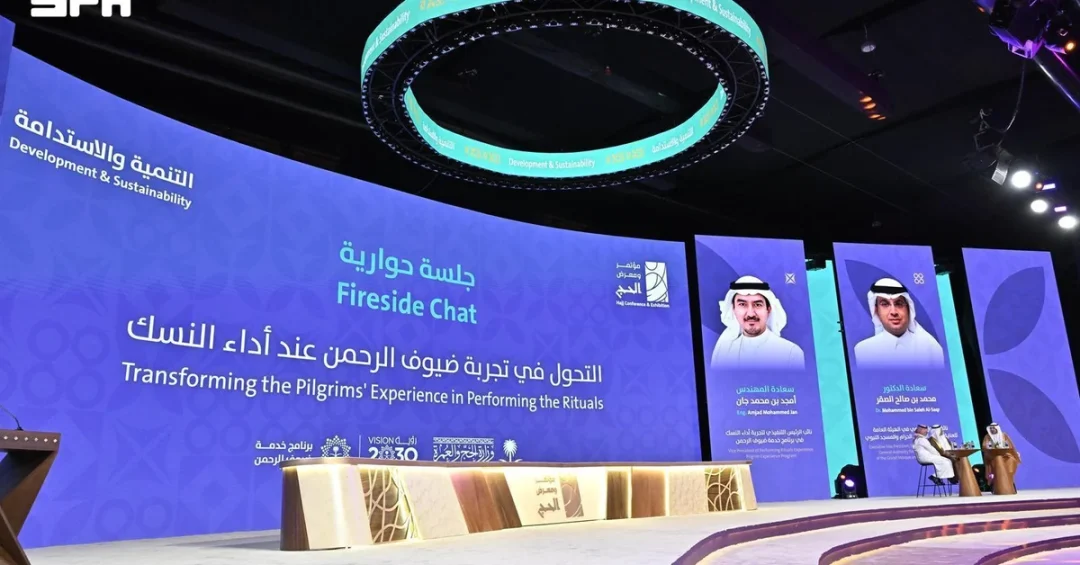
The sixth Hajj Conference and Exhibition in Jeddah convened a dedicated panel on Wednesday titled “Transforming the Pilgrims’ Experience in Performing the Rituals,” held under the Development and Sustainability track, where officials examined how technology is reshaping every stage of the sacred journey for millions of pilgrims. The session, reported by the Saudi Press Agency (SPA), brought together the Kingdom’s leading digital platforms and service authorities to chart the next phase of a comprehensive modernization effort anchored in easing the performance of Hajj and Umrah. For an international audience, the discussion offers a clear window into how Saudi Arabia is applying data integration, artificial intelligence, and rigorous performance measurement to one of the world’s largest annual gatherings of humanity.
At the heart of the conversation was the coordination between national platforms — Nusuk, Absher, and Tawakkalna — which together streamline procedures for pilgrims. But what does this convergence of digital tools actually mean for the traveler arriving from abroad and preparing for the rituals of a lifetime? The answer, according to the panel, is a journey that is increasingly seamless, better informed, and more responsive to individual needs, from the moment of arrival to the final departure.
Context and Background
The Hajj Conference and Exhibition has become a central forum for showcasing Saudi Arabia’s evolving approach to pilgrim services, and the sixth edition in Jeddah continues that tradition by focusing on measurable, sustainable improvements. Under the Development and Sustainability track, the panel positioned technology not as a novelty but as an infrastructure of care — one that connects government entities through shared data and eliminates the repeated entry of information across multiple service channels. Why does such integration matter so much? Because every redundant form and every duplicated step consumes time and energy that pilgrims would rather devote to worship and reflection.
The session also examined how digital services are designed around a careful assessment of pilgrims’ needs, balanced with Sharia and regulatory requirements. This dual foundation ensures that innovation respects the spiritual integrity of the rituals while making their performance clearer and more accessible. The panel highlighted how well-designed digital tools help pilgrims identify facilities, understand available routes, and grasp the practical steps of performing the rituals — a form of guidance that supports rather than substitutes for the sacred experience itself.
Central to this effort is the Nusuk Card, described as a unified identity card for pilgrims that eases access to services throughout the entire journey. What role can a single card play in an experience that spans continents, airports, holy sites, and return travel? According to the panel, it functions as a consistent point of identification and access, reducing friction at checkpoints and service centers and allowing pilgrims to move through their itinerary with confidence.
Digital Innovation and Smart Services
The session reviewed the development of digital services grounded in pilgrims’ actual needs, including the use of artificial intelligence and smart sensors to enhance the Nusuk experience. One notable application is the automated tracking of the circuits performed during Tawaf, which helps reduce counting errors and the time pilgrims spend searching for routes or confirming their progress. How much peace of mind does it offer a pilgrim to know that technology is quietly supporting the accuracy of their rituals? The panel presented these tools as discreet aids that free worshippers to focus on the spiritual dimension of their journey.
The discussion outlined a phased approach: launching these solutions initially at the Two Holy Mosques, then integrating them further with national applications to broaden pilgrims’ access to services and make those services easier to use. This staged rollout reflects a disciplined methodology in which proven technologies at the most sacred sites are gradually extended across the wider ecosystem. The emphasis on integration ensures that improvements introduced at one touchpoint are reinforced across others, creating a coherent experience rather than a patchwork of isolated initiatives.
The panel also addressed how digital platforms support wayfinding and ritual understanding, helping pilgrims navigate facilities and comprehend the sequence and requirements of the rituals. By combining navigational assistance with educational content, the platforms serve as a digital companion that complements the guidance provided by official authorities and on-the-ground staff. This layered support system is designed to be accessible to pilgrims of diverse backgrounds, languages, and levels of digital familiarity.
Measuring Satisfaction and Performance
A significant portion of the session focused on the system for measuring pilgrim satisfaction, implemented in cooperation with the National Center for Performance Measurement “Adaa.” The system covers more than 90 services across the various stages of the pilgrim journey, from pilgrims’ countries of origin to their return, allowing authorities to assess the impact of projects and improvements on the overall experience. Why is rigorous measurement so essential to a service of this scale? Because it transforms good intentions into verifiable outcomes, showing precisely where progress is being made and where further attention is needed.
The panel noted that during the previous Ramadan season, Adaa processed more than 28,000 survey responses from people of 18 nationalities, gathered in more than seven languages. This multilingual, multinational feedback loop provides a rich evidence base for understanding how pilgrims from around the world actually experience the services designed for them. It also demonstrates a commitment to listening at scale — gathering voices across cultures and turning them into actionable insight.
The results are striking: satisfaction among Umrah performers rose from 82% in 2019 to 94% in 2025, while satisfaction among pilgrims increased from 84% in 2019 to 93% during the most recent Hajj season. These figures speak to sustained, measurable improvement over a multi-year period. The panel stressed the continued monitoring of pilgrims’ experiences at various touchpoints, analyzing challenges, identifying areas for improvement, and developing corrective action plans to enhance services on an ongoing basis.
International and Regional Impact
For the international community, the developments discussed in Jeddah carry significance that extends well beyond logistics. Pilgrims arrive from nearly every country on earth, and the quality of their experience reflects on the Kingdom’s capacity to host, guide, and care for guests at extraordinary scale. When satisfaction rises among travelers of 18 nationalities surveyed in seven languages, the message resonates globally: Saudi Arabia is investing in a hospitality infrastructure that treats every pilgrim as an honored guest. Does that not strengthen the Kingdom’s standing as a trusted steward of one of the world’s most important spiritual journeys?
Regionally, the integration of Nusuk, Absher, and Tawakkalna illustrates a broader model of digital government coordination that other sectors and neighboring economies may study with interest. The exchange of data between government entities, the reduction of repeated data entry, and the use of AI and smart sensors represent practical applications of digital transformation with clear public benefit. The panel’s emphasis on launching solutions first at the Two Holy Mosques and then scaling them reflects a careful, evidence-led approach that prioritizes reliability at the most sensitive sites before broader deployment.
Economic and Strategic Significance
The transformation of the pilgrim experience is intertwined with the Kingdom’s economic diversification agenda. Efficient, high-quality services support the growth of Hajj and Umrah capacity, which in turn contributes to the wider travel, hospitality, and retail economy surrounding the holy sites. By reducing friction and improving satisfaction, the digital ecosystem helps maximize the value of every pilgrim journey — for the visitor and for the national economy alike. How does a smoother ritual experience translate into lasting economic benefit? Through repeat visitation, positive word of mouth, and the confidence of international partners in Saudi Arabia’s service standards.
Strategically, the measurement framework built with Adaa provides a governance tool that links investment to outcome. When more than 90 services are tracked across the full pilgrim journey, decision-makers can direct resources where they generate the greatest improvement in experience. This outcome-oriented approach is characteristic of the Kingdom’s broader modernization efforts, in which data informs planning and accountability reinforces delivery. The satisfaction gains recorded between 2019 and 2025 stand as tangible evidence that the model is working.
Vision 2030 Alignment
The panel’s discussions align directly with Vision 2030, Saudi Arabia’s national transformation strategy, which prioritizes enhancing the quality of services for pilgrims and expanding the capacity of Hajj and Umrah. The integration of national platforms, the deployment of AI and smart sensors, and the rigorous measurement of satisfaction all serve the vision’s core objective of enabling more pilgrims to perform their rituals with greater ease and dignity. Can any goal be more central to the Kingdom’s identity than caring for the guests of the Two Holy Mosques? The answer is embedded in the steady, measurable improvements reported at the conference.
Looking ahead, the phased integration of these solutions — beginning at the Two Holy Mosques and extending across national applications — points to a future in which technology and tradition work in harmony. The continued monitoring of pilgrim experiences, the analysis of challenges, and the development of corrective action plans ensure that progress will not plateau but will keep pace with rising expectations. As Saudi Arabia advances its Vision 2030 ambitions, the transformation of the pilgrim experience stands as a model of how innovation, guided by respect for sacred tradition, can elevate a journey of faith for millions around the world.
20 Questions
Q1. What was the title of the panel discussed at the sixth Hajj Conference and Exhibition in Jeddah?
A1. The panel was titled “Transforming the Pilgrims’ Experience in Performing the Rituals” and was held under the Development and Sustainability track of the sixth Hajj Conference and Exhibition in Jeddah.
Q2. Which national platforms were highlighted for streamlining procedures for pilgrims?
A2. The session highlighted the role of technological integration among national platforms, including Nusuk, Absher, and Tawakkalna, in streamlining procedures through data exchange between government entities and reducing repeated data entry.
Q3. What is the purpose of the Nusuk Card mentioned in the session?
A3. The Nusuk Card serves as a unified identity card for pilgrims, easing access to services throughout their journey and providing a consistent point of identification across the various stages of the pilgrimage experience.
Q4. How do digital services help pilgrims understand the rituals?
A4. Digital services are developed based on an assessment of pilgrims’ needs and Sharia and regulatory requirements, helping them identify facilities and routes and understand how to perform the rituals clearly and confidently.
Q5. How is artificial intelligence used to support pilgrims during Tawaf?
A5. Artificial intelligence and smart sensors provide services through Nusuk, including automated tracking of the circuits performed during Tawaf, which reduces counting errors and the time spent searching for routes.
Q6. Where will these technological solutions initially be launched?
A6. The session discussed launching these solutions initially at the Two Holy Mosques, with plans to integrate them further with national applications to improve pilgrims’ access to services and ease their use.
Q7. Which organization cooperates in measuring pilgrim satisfaction?
A7. The system for measuring pilgrim satisfaction is implemented in cooperation with the National Center for Performance Measurement, known as Adaa, which assesses the impact of projects and improvements on the pilgrim experience.
Q8. How many services does the satisfaction measurement system cover?
A8. The system covers more than 90 services across the various stages of the pilgrim journey, from pilgrims’ countries of origin to their return, allowing authorities to assess the impact of projects and improvements.
Q9. How many survey responses did Adaa process during the previous Ramadan season?
A9. During the previous Ramadan season, Adaa processed more than 28,000 survey responses from people of 18 nationalities, gathered in more than seven languages across the pilgrimage journey.
Q10. What was the satisfaction rate among Umrah performers in 2025 compared with 2019?
A10. Satisfaction among Umrah performers increased from 82% in 2019 to 94% in 2025, reflecting sustained improvement in the services provided throughout the Umrah experience over a multi-year period.
Q11. What was the satisfaction rate among pilgrims during the most recent Hajj season?
A11. Satisfaction among pilgrims rose from 84% in 2019 to 93% during the most recent Hajj season, demonstrating measurable progress in the quality of services offered to pilgrims.
Q12. How does data exchange between government entities benefit pilgrims?
A12. Data exchange between government entities reduces repeated data entry across service channels, streamlining procedures and saving pilgrims time and effort so they can focus on performing their rituals with greater ease.
Q13. What role do smart sensors play in the pilgrim experience?
A13. Smart sensors, combined with artificial intelligence, support services through Nusuk, including automated tracking of Tawaf circuits, helping reduce counting errors and the time pilgrims spend searching for routes.
Q14. Why are digital services designed with Sharia and regulatory requirements in mind?
A14. Designing digital services with Sharia and regulatory requirements ensures that innovation respects the spiritual integrity of the rituals while making their performance clearer and more accessible for pilgrims from around the world.
Q15. How does the satisfaction system support continuous improvement?
A15. The satisfaction system enables continued monitoring of pilgrims’ experiences at various touchpoints, allowing authorities to analyze challenges, identify areas for improvement, and develop corrective action plans to enhance services on an ongoing basis.
Q16. What does the phased rollout of solutions at the Two Holy Mosques indicate?
A16. The phased rollout indicates a careful, evidence-led approach that prioritizes reliability at the most sacred sites before extending proven technologies across the wider ecosystem of national applications and services.
Q17. How do digital platforms support wayfinding for pilgrims?
A17. Digital platforms help pilgrims identify facilities and routes, providing navigational assistance alongside educational content so pilgrims can comprehend the sequence and requirements of the rituals with greater confidence.
Q18. What does the increase in satisfaction rates demonstrate about Saudi efforts?
A18. The increase in satisfaction rates demonstrates tangible, sustained progress in the quality of pilgrim services, showing that the Kingdom’s investments in technology and measurement are producing measurable improvements in the pilgrim experience.
Q19. How does the transformation of the pilgrim experience connect to Vision 2030?
A19. The transformation aligns with Vision 2030 by enhancing the quality of services for pilgrims, expanding the capacity of Hajj and Umrah, and enabling more pilgrims to perform their rituals with greater ease and dignity.
Q20. What does the multilingual survey data reveal about Saudi Arabia’s approach?
A20. The multilingual survey data, gathered in more than seven languages from 18 nationalities, reveals a commitment to listening at scale and turning diverse international feedback into actionable insight for continuous service improvement.
Reader Feedback
We value your thoughts. Please share your feedback on this article.
Your feedback helps us improve our coverage.
Related articles
 Hajj Conference Highlights Saudi Scouts’ Role Serving Pilgrims
 Hajj Conference Session Discusses AI Governance, Pilgrims’ Digital Rights
 Makkah Route Committee Concludes 1448 AH Hajj Preparations
 Adahi Unveils Documentary on Hady and Adahi Project Journey
 Saudi Arabia, Tajikistan Sign Anti-Corruption MoU
 Saudi TGA Wins Bronze for Best Customer Service at ICXA 2026