


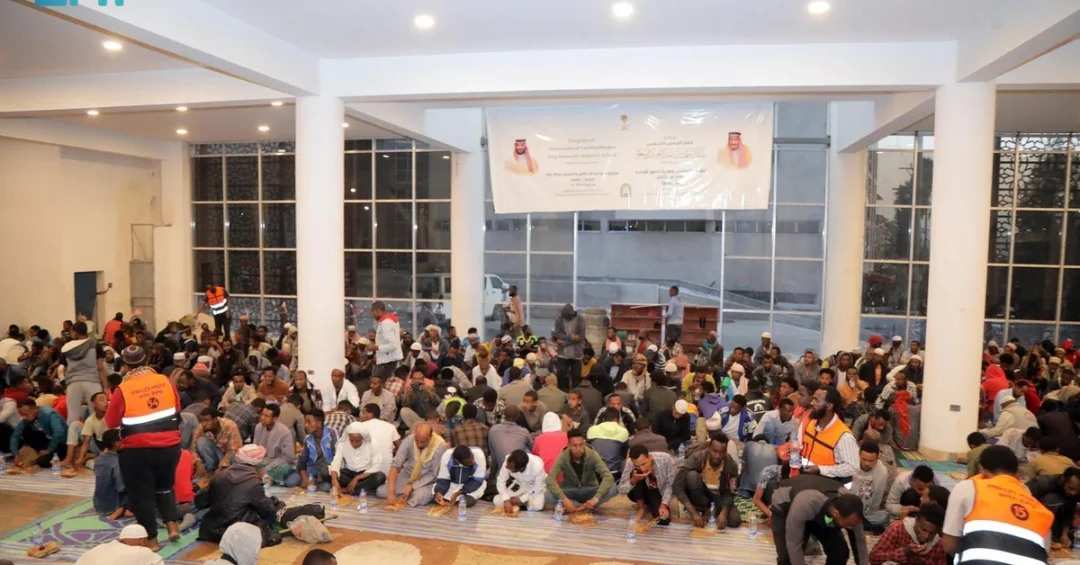
The Ministry of Islamic Affairs, Dawah and Guidance, through the religious attaché at the Saudi Embassy in Ethiopia, organized Iftar banquets in Addis Ababa during the first half of Ramadan 1446 AH, benefiting more than 9,600 people. The gatherings were held under the presidency of the Ethiopian Islamic Affairs Supreme Council of the Addis Ababa Region and form part of the Custodian of the Two Holy Mosques’ Iftar Program, which is being implemented in 61 countries worldwide this year.
Context and Background
The annual Iftar program reflects the Kingdom of Saudi Arabia’s enduring commitment to serving Islam and Muslims across the globe. Supervised by the Ministry of Islamic Affairs, Dawah and Guidance, the initiative provides meals to fasting individuals during the holy month of Ramadan, embodying the values of solidarity, compassion and generosity that define Saudi Arabia’s religious and humanitarian outreach.
Ethiopia hosts a significant Muslim population, and the collaboration with the Ethiopian Islamic Affairs Supreme Council of the Addis Ababa Region underscores the strong bilateral ties between the two nations. The religious attaché at the Saudi Embassy in Addis Ababa coordinated the logistics, ensuring that the banquets reached those in need throughout the first half of Ramadan.
Key Details
The Iftar banquets in Addis Ababa served more than 9,600 beneficiaries, providing nutritious meals at sunset for fasting Muslims. The events were organized with the oversight of the Ethiopian Islamic Affairs Supreme Council, which facilitated local arrangements and helped identify beneficiaries. The Ministry of Islamic Affairs implements the Custodian of the Two Holy Mosques’ Iftar Program in 61 countries, demonstrating Saudi Arabia’s global leadership in humanitarian and religious initiatives.
This program is one of many conducted by the Kingdom during Ramadan, including Quran distribution, dates provision and other charitable activities. The wide reach of the Iftar program highlights the Ministry’s dedication to fostering Islamic unity and supporting Muslim communities worldwide.
Implications and Impact
The Iftar banquets in Ethiopia strengthen the bonds of brotherhood between Saudi Arabia and the Ethiopian Muslim community. They also reinforce the Kingdom’s reputation as a reliable partner in humanitarian efforts, contributing to social cohesion and goodwill. By extending assistance to Muslims in Africa, Saudi Arabia demonstrates its commitment to the Ummah and its role as a global leader in Islamic affairs.
Such initiatives also promote the moderate and tolerant teachings of Islam, countering extremism and fostering peaceful coexistence. The positive reception of these banquets in Addis Ababa reflects the deep appreciation for Saudi Arabia’s continued support and its efforts to alleviate hardship during the holy month.
Vision 2030 Alignment
This humanitarian initiative aligns with Saudi Vision 2030’s emphasis on global engagement, cultural diplomacy and the promotion of moderate Islam. By serving Muslims in Ethiopia and 60 other countries, the Kingdom showcases its commitment to international cooperation and the values of generosity and solidarity. Through such programs, Saudi Arabia continues to build bridges of understanding and support sustainable development in partner nations.
20 Questions
Q1. What is the Custodian of the Two Holy Mosques’ Iftar Program?
A1. The Custodian of the Two Holy Mosques’ Iftar Program is a charitable initiative by the Ministry of Islamic Affairs, Dawah and Guidance that provides Iftar meals to fasting Muslims in various countries during Ramadan, reflecting Saudi Arabia’s commitment to serving Islam and Muslims worldwide.
Q2. How many people benefited from the Iftar banquets in Ethiopia?
A2. More than 9,600 individuals benefited from the Iftar banquets organized in Addis Ababa during the first half of Ramadan 1446 AH, as reported by the Saudi Press Agency.
Q3. Where were the Iftar banquets held in Ethiopia?
A3. The banquets took place in Addis Ababa, the capital of Ethiopia, under the presidency of the Ethiopian Islamic Affairs Supreme Council of the Addis Ababa Region.
Q4. Which Saudi entity organized the Iftar banquets in Ethiopia?
A4. The Ministry of Islamic Affairs, Dawah and Guidance, through the religious attaché at the Saudi Embassy in Ethiopia, organized the banquets.
Q5. In how many countries is the Iftar program implemented?
A5. The program is implemented in 61 countries worldwide, demonstrating the wide reach of Saudi Arabia’s humanitarian and religious initiatives during Ramadan.
Q6. What is the significance of the Iftar program for Saudi Arabia?
A6. It highlights the Kingdom’s commitment to serving Islam and Muslims, fostering solidarity, and promoting the values of compassion and generosity that are central to Saudi Arabia’s religious and humanitarian mission.
Q7. Who presided over the Iftar banquets in Addis Ababa?
A7. The Ethiopian Islamic Affairs Supreme Council of the Addis Ababa Region presided over the banquets, ensuring effective local coordination and participation.
Q8. When did the Iftar banquets take place?
A8. They were held during the first half of Ramadan in the year 1446 AH, corresponding to March 2025.
Q9. What values does the Iftar program promote?
A9. The program promotes solidarity, compassion, generosity, and Islamic brotherhood, reflecting the moderate and tolerant teachings of Islam.
Q10. How does the Iftar program benefit Ethiopia?
A10. It provides nutritious meals to fasting Muslims, alleviates hardship, and strengthens the bonds of friendship between Saudi Arabia and Ethiopia.
Q11. What role does the religious attaché play?
A11. The religious attaché at the Saudi Embassy in Ethiopia coordinates the logistics and ensures the successful implementation of the Iftar program in collaboration with local authorities.
Q12. Is the Iftar program part of Saudi Vision 2030?
A12. Yes, it aligns with Vision 2030’s emphasis on global engagement, cultural diplomacy, and the promotion of moderate Islam and humanitarian values.
Q13. How does the program reflect Saudi Arabia’s leadership?
A13. By implementing the program in 61 countries, Saudi Arabia demonstrates its global leadership in Islamic affairs and its dedication to serving Muslims worldwide.
Q14. What other activities does the Ministry of Islamic Affairs undertake during Ramadan?
A14. The Ministry organizes Quran distribution, provides dates, and conducts various charitable activities to support Muslim communities globally.
Q15. How many people benefit from the program globally?
A15. The program benefits millions of people across 61 countries, providing Iftar meals to fasting individuals throughout Ramadan.
Q16. What is the impact of the Iftar program on the Ethiopian Muslim community?
A16. It strengthens community ties, provides relief during Ramadan, and reinforces the positive image of Saudi Arabia as a compassionate and supportive partner.
Q17. Does the program target specific groups?
A17. The program targets all fasting Muslims in need, without discrimination, ensuring that the blessings of Ramadan are shared widely.
Q18. How does the program counter extremism?
A18. By promoting moderate Islam and fostering goodwill, the program supports peaceful coexistence and counters extremist narratives.
Q19. What is the expected outcome of the Iftar banquets in Ethiopia?
A19. The banquets are expected to enhance bilateral relations, provide immediate relief, and promote the values of generosity and solidarity espoused by Saudi Arabia.
Q20. How can other countries benefit from similar programs?
A20. Through partnerships with Saudi Arabia’s Ministry of Islamic Affairs, countries can host Iftar programs that serve their Muslim communities and strengthen ties with the Kingdom.
Reader Feedback
We value your thoughts. Please share your feedback on this article.
Your feedback helps us improve our coverage.
Related articles
 GCC Secretary-General Participates in Informal Meeting of EU Political and Security Committee
 KSrelief Distributes 379 Food Baskets in Lebanon
 KSrelief Distributes Food Baskets in Syria
 KSrelief Distributes 224 Food Baskets in Syria
 KSrelief Distributes Food Baskets in Suwayda, Syria
 GCC, EU Leaders Discuss Joint Initiatives in Brussels