


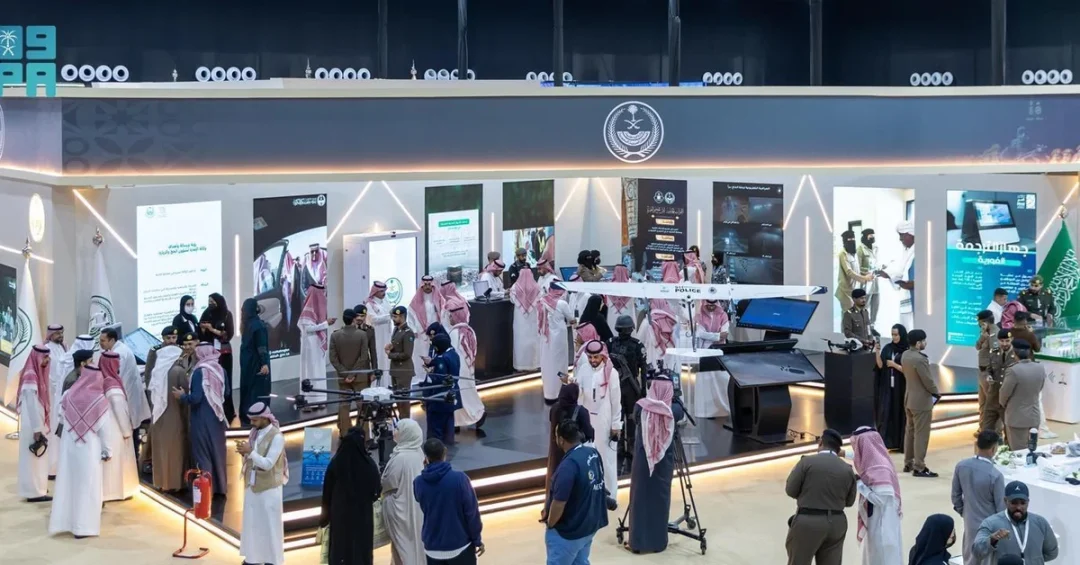
The Ministry of Interior is showcasing its AI-powered security systems, digital crowd-management solutions, and pilgrim-service initiatives at the fourth edition of the Hajj Conference and Exhibition in Jeddah, reinforcing the Kingdom of Saudi Arabia’s commitment to delivering a safe, seamless, and spiritually fulfilling Hajj experience. The exhibition, organized by the Ministry of Hajj and Umrah under the theme “A Passage to Nusuk,” runs from January 13 to 16 at the Jeddah Superdome, bringing together government agencies, technology providers, and international stakeholders to advance the quality of services offered to the guests of God.
At the heart of the ministry’s pavilion is the “No Hajj Without a Permit” campaign, a nationwide awareness and compliance drive that underscores the importance of official Hajj permits for ensuring orderly crowd management, protecting pilgrim safety, and enhancing the overall quality of service at the holy sites. The campaign reflects a broader strategic push by Saudi authorities to regulate access to the rituals, prevent overcrowding, and uphold the highest standards of security and organization during the annual pilgrimage, which draws millions of worshippers from more than 180 countries. How does such a vast logistical and security undertaking come together year after year with such precision?
Context and Background: A Legacy of Service and Continuous Improvement
Saudi Arabia has long regarded the service of pilgrims as a sacred duty and a national priority, rooted in the directives of the Custodian of the Two Holy Mosques, King Salman bin Abdulaziz Al Saud, and the oversight of His Royal Highness Crown Prince Mohammed bin Salman bin Abdulaziz Al Saud. Over decades, the Kingdom has invested heavily in expanding the capacity of the Grand Mosque in Makkah and the Prophet’s Mosque in Madinah, upgrading transportation networks, and deploying advanced technologies to manage the world’s largest annual gathering of humanity. The Hajj Conference and Exhibition, now in its fourth edition, has become a key platform for sharing these advancements with global partners and for soliciting international expertise in crowd science, health security, and digital service delivery.
This year’s theme, “A Passage to Nusuk,” highlights the integration of the Nusuk platform, an official digital gateway that streamlines visa applications, permit issuance, accommodation bookings, and guided services for pilgrims and Umrah performers. The Ministry of Interior’s participation builds on this foundation by demonstrating how artificial intelligence, real-time data analytics, and smart equipment are used to monitor crowd density, direct pilgrim flows, and respond swiftly to emerging situations. The ministry’s pavilion also features contributions from the Makkah Region Principality, which presents visual materials aimed at raising awareness and promoting regulatory compliance, and the Madinah Region Principality, which highlights its dedicated services for pilgrims and Umrah performers. What does it take to harmonize so many moving parts across two holy cities and beyond?
The exhibition comes at a time when Saudi Arabia is welcoming record numbers of pilgrims, supported by expanded visa categories, improved air and ground connectivity, and the ongoing expansion of the Two Holy Mosques. These developments are part of a comprehensive national effort to enhance the pilgrim journey from arrival to departure, ensuring that every stage is marked by safety, dignity, and spiritual focus. The Ministry of Interior’s presence at the conference signals that security and service quality are inseparable pillars of the Hajj experience, and that technology is a critical enabler of both.
Key Details: AI, Digital Solutions, and the Permit Campaign
The Ministry of Interior’s pavilion offers visitors a detailed look at the AI-powered security systems and digital tools that support crowd management at the holy sites. These include intelligent surveillance platforms capable of analyzing crowd movement in real time, command-and-control systems that integrate data from multiple agencies, and mobile applications that provide pilgrims with instant guidance and emergency assistance. The ministry is also displaying advanced equipment used by field units, such as thermal imaging devices, drones for aerial monitoring, and communication systems that ensure uninterrupted coordination among security, health, and civil defense teams. How do these technologies translate into a smoother, safer experience for millions of worshippers?
A central focus of the pavilion is the “No Hajj Without a Permit” campaign, which seeks to raise awareness of Hajj regulations and ensure that pilgrims obtain official permits. The campaign explains that permits are not merely administrative requirements but essential tools for managing crowd density, allocating resources efficiently, and providing a safe environment for all. By obtaining a permit, pilgrims contribute to the overall success of the Hajj season, helping authorities plan transportation, accommodation, health services, and security deployments with greater accuracy. The campaign is supported by a range of awareness materials, including videos, infographics, and interactive displays, all designed to communicate the message clearly to a diverse international audience.
The Makkah Region Principality’s visual presentations complement these efforts by promoting awareness and regulatory compliance among residents and visitors alike. These presentations highlight the importance of adhering to designated routes, respecting timings, and cooperating with field personnel. The Madinah Region Principality, meanwhile, showcases its dedicated services for pilgrims and Umrah performers, including reception centers, multilingual guidance, and support for those visiting the Prophet’s Mosque. Together, these displays illustrate a unified approach that spans the entire pilgrim journey, from arrival at ports of entry to the completion of rituals and departure. What role does inter-agency cooperation play in making this unified approach possible?
International and Regional Impact: Setting Global Standards
Saudi Arabia’s Hajj management model is increasingly studied by other nations that host large-scale religious or cultural gatherings. The Ministry of Interior’s participation in the Hajj Conference and Exhibition provides an opportunity to share best practices with international delegations, technology firms, and academic institutions. By demonstrating how AI and digital solutions can be used to manage crowds, secure events, and deliver services at scale, the Kingdom reinforces its position as a global leader in public safety innovation. The exhibition also facilitates partnerships that can benefit countries across the Middle East, Asia, and Africa, where similar challenges of mass gathering management exist.
Regionally, the event underscores the importance of cooperation among Gulf Cooperation Council states and other neighboring countries in facilitating the movement of pilgrims. Many pilgrims travel overland through multiple countries before reaching the Kingdom, and coordination on border procedures, health protocols, and transportation links is essential to a smooth journey. The Ministry of Interior’s showcase includes information on how Saudi authorities work with counterparts abroad to streamline these processes, ensuring that pilgrims receive consistent support from the moment they begin their travel. In a world where mass gatherings are increasingly complex, how valuable is it for nations to learn from one another’s experiences?
Economic and Strategic Significance: Beyond Security
The Hajj and Umrah sector is a major contributor to Saudi Arabia’s economy and a key component of the Kingdom’s diversification strategy. Millions of pilgrims generate demand for hotels, transportation, retail, and food services, creating jobs and supporting small and medium-sized enterprises in Makkah, Madinah, and Jeddah. By enhancing the efficiency and safety of the pilgrimage, the Ministry of Interior’s efforts help sustain this economic momentum while protecting the Kingdom’s reputation as a trusted host. The “No Hajj Without a Permit” campaign also plays an economic role by reducing unregulated activities that can undermine service quality and strain infrastructure.
Strategically, the integration of advanced technologies into Hajj operations aligns with Saudi Arabia’s broader goals of digital transformation and smart governance. The data and insights generated during the Hajj season can inform urban planning, emergency response, and public service design throughout the year. Moreover, the successful management of Hajj enhances the Kingdom’s soft power and diplomatic standing, as millions of pilgrims return home with positive impressions of Saudi hospitality and organizational excellence. How might the lessons learned during Hajj shape the future of smart city development in the Kingdom?
Vision 2030 Alignment: A Pillar of the Pilgrim Experience Program
The Ministry of Interior’s initiatives at the Hajj Conference and Exhibition are directly aligned with Saudi Vision 2030 and its Pilgrim Experience Program, which aims to raise the number of pilgrims and Umrah performers, improve the quality of services, and enrich the spiritual and cultural journey of every guest. The program is one of the Vision 2030 realization programs designed to diversify the economy, create jobs, and showcase the Kingdom’s unique heritage. By leveraging AI, digital platforms, and smart equipment, the Ministry of Interior contributes to a seamless, safe, and memorable pilgrimage that reflects the Kingdom’s modernization and its deep respect for religious traditions.
As the fourth edition of the Hajj Conference and Exhibition continues, the Ministry of Interior’s pavilion stands as a testament to Saudi Arabia’s unwavering commitment to serving the guests of God with excellence. The combination of advanced security systems, regulatory awareness campaigns, and inter-agency collaboration demonstrates a holistic approach that places the pilgrim at the center of every decision. Under the leadership of the Custodian of the Two Holy Mosques and the Crown Prince, the Kingdom is not only managing the world’s largest annual gathering but also setting new benchmarks for safety, technology, and hospitality. What greater testament to a nation’s capabilities than the peaceful fulfillment of millions of spiritual journeys each year?
20 Questions
Q1. What is the Hajj Conference and Exhibition?
A1. It is an annual event organized by the Ministry of Hajj and Umrah, now in its fourth edition, held at the Jeddah Superdome under the theme “A Passage to Nusuk.” It brings together government agencies and technology providers to improve pilgrim services.
Q2. What is the Ministry of Interior showcasing at the exhibition?
A2. The ministry is showcasing AI-powered security systems, digital solutions for crowd management, advanced equipment, and the “No Hajj Without a Permit” campaign, along with contributions from the Makkah and Madinah Region Principalities.
Q3. What is the “No Hajj Without a Permit” campaign?
A3. It is an awareness campaign that encourages pilgrims to obtain official Hajj permits, ensuring better crowd management, resource allocation, and a safe experience for all worshippers at the holy sites.
Q4. Why are permits important for Hajj?
A4. Permits help authorities manage crowd density, plan transportation and accommodation, and provide essential services efficiently, thereby enhancing safety and service quality during the annual pilgrimage.
Q5. How does AI assist in crowd management during Hajj?
A5. AI analyzes real-time crowd data to monitor density, predict potential bottlenecks, and guide pilgrim flows, enabling authorities to respond quickly and maintain order at the holy sites.
Q6. What role does the Makkah Region Principality play at the exhibition?
A6. It presents visual materials to promote awareness and regulatory compliance among pilgrims and visitors, supporting the overall security and organizational efforts of the Hajj season.
Q7. What services does the Madinah Region Principality highlight?
A7. It highlights dedicated services for pilgrims and Umrah performers, including reception, guidance, and support for those visiting the Prophet’s Mosque, ensuring a smooth and enriching experience.
Q8. When and where is the exhibition taking place?
A8. The fourth edition runs from January 13 to 16 at the Jeddah Superdome in Jeddah, Saudi Arabia, attracting local and international participants.
Q9. What is the theme of this year’s exhibition?
A9. The theme is “A Passage to Nusuk,” reflecting the integration of the Nusuk digital platform that streamlines visa, permit, and service processes for pilgrims and Umrah performers.
Q10. How does the exhibition benefit international participants?
A10. It offers a platform to share best practices, explore partnerships, and learn about Saudi Arabia’s advanced technologies in crowd management, security, and pilgrim services, applicable to other mass gatherings worldwide.
Q11. What digital solutions are displayed by the Ministry of Interior?
A11. The ministry displays intelligent surveillance platforms, command-and-control systems, mobile applications for pilgrims, thermal imaging devices, drones, and communication systems for field coordination.
Q12. How does the Hajj sector contribute to Saudi Arabia’s economy?
A12. It generates demand for hotels, transport, retail, and food services, creates jobs, and supports SMEs in Makkah, Madinah, and Jeddah, aligning with Vision 2030 economic diversification goals.
Q13. What is the Nusuk platform?
A13. Nusuk is an official digital gateway that facilitates visa applications, permit issuance, accommodation bookings, and guided services for pilgrims and Umrah performers, enhancing their overall journey.
Q14. How does the Ministry of Interior cooperate with other agencies?
A14. It integrates data and coordinates with health, civil defense, and transportation authorities to ensure a unified response, seamless crowd management, and comprehensive support for pilgrims throughout the Hajj season.
Q15. What are the key objectives of the Pilgrim Experience Program?
A15. The program aims to increase the number of pilgrims and Umrah performers, improve service quality, enrich the spiritual and cultural journey, and contribute to economic diversification under Saudi Vision 2030.
Q16. How does the exhibition support Vision 2030?
A16. By showcasing innovation and fostering partnerships, it advances the Pilgrim Experience Program, enhances the Kingdom’s global reputation, and supports economic growth and job creation aligned with Vision 2030.
Q17. What safety measures are highlighted at the pavilion?
A17. The pavilion highlights AI surveillance, real-time monitoring, drones, thermal imaging, and rapid response systems, all designed to protect pilgrims and maintain order at the holy sites.
Q18. How can pilgrims obtain a Hajj permit?
A18. Pilgrims can obtain permits through official channels, including the Nusuk platform and authorized agencies, ensuring compliance with regulations and access to essential services during Hajj.
Q19. What is the significance of inter-agency collaboration in Hajj management?
A19. It ensures seamless coordination across security, health, transport, and religious affairs, enabling efficient resource use and a safe, spiritually fulfilling experience for millions of pilgrims.
Q20. How does Saudi Arabia’s Hajj management serve as a global model?
A20. It demonstrates how advanced technology, strategic planning, and inter-agency cooperation can manage mass gatherings safely and efficiently, offering valuable lessons for other nations and events worldwide.
Reader Feedback
We value your thoughts. Please share your feedback on this article.
Your feedback helps us improve our coverage.
Related articles
 Fourth Future Minerals Forum Opens in Riyadh Under Royal Patronage
 Saudi Post Issues SAR3 Stamp for Hajj Conference
 Saudi Envoy Meets Arab Parliament Speaker in Cairo
 Saudi FM Holds Call with Algerian Counterpart
 King Salman Chairs Cabinet, Approves 8 Global Agreements
 Madinah Deputy Governor Receives Indian Minority Affairs Minister