


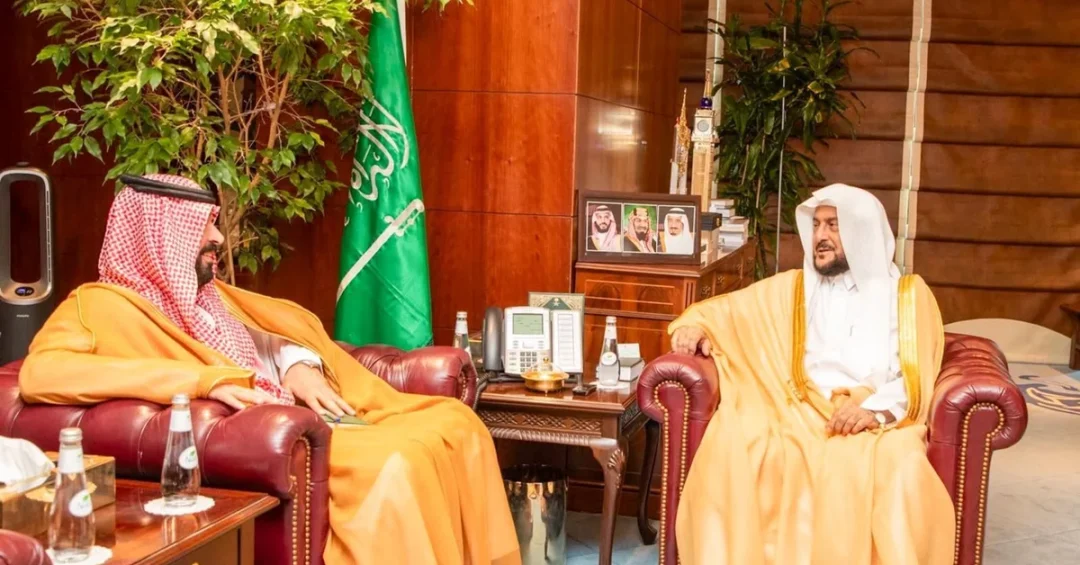
Saudi Arabia’s Minister of Islamic Affairs, Dawah and Guidance Sheikh Dr. Abdullatif Al Alsheikh received the newly appointed Saudi Ambassador to the Islamic Republic of Pakistan Dr. Rajeh Tami Albugamy in Riyadh, where the two officials discussed strengthening coordination between the ministry and the Kingdom’s embassy in Islamabad to serve Muslims in Pakistan and advance programs rooted in moderate Islam. The meeting, reported by the Saudi Press Agency, underscores the Kingdom’s enduring commitment to religious diplomacy, educational outreach, and the promotion of balanced Islamic values among the world’s second-largest Muslim population.
Pakistan is home to more than 240 million Muslims, making it one of the most significant partners in Saudi Arabia’s global efforts to support Islamic education, awareness campaigns, and interfaith harmony. The encounter between the minister and the ambassador reflects a deliberate, institutional approach to religious and cultural diplomacy that has become a hallmark of the Kingdom’s international engagement under the leadership of the Custodian of the Two Holy Mosques, King Salman bin Abdulaziz Al Saud, and His Royal Highness Crown Prince Mohammed bin Salman. What does this meeting signal about the depth of Saudi-Pakistani relations, and why does it matter for the wider Muslim world?
Context and Background
How did Saudi-Pakistani relations become one of the most durable partnerships in the Islamic world? The relationship between the Kingdom of Saudi Arabia and the Islamic Republic of Pakistan rests on decades of shared religious heritage, strategic alignment, and people-to-people ties. Saudi Arabia is home to the Two Holy Mosques in Makkah and Madinah, while Pakistan is a nation of deep Islamic scholarship, vibrant madrasa networks, and a diaspora that contributes significantly to the Kingdom’s economy and cultural fabric. The Ministry of Islamic Affairs, Dawah and Guidance has long served as a bridge between the two nations, coordinating mosque affairs, Quranic education, and religious guidance programs.
Dr. Rajeh Tami Albugamy, a seasoned diplomat with extensive experience in Islamic affairs and regional diplomacy, assumes his post at a time when Saudi-Pakistani cooperation is expanding across multiple sectors, from energy and investment to education and cultural exchange. His appointment signals the Kingdom’s intention to deepen engagement with Pakistan’s religious institutions and civil society, ensuring that the message of moderate Islam reaches communities through structured, well-resourced programs. The meeting with Sheikh Dr. Abdullatif Al Alsheikh, a respected scholar and senior minister, reflects the seriousness with which Riyadh treats this relationship.
The Ministry of Islamic Affairs, Dawah and Guidance operates under a mandate that includes supervising mosques, printing and distributing the Holy Quran, training imams and preachers, and coordinating Islamic outreach worldwide. Its engagement with Saudi embassies is not ceremonial; it is operational. Ambassadors serve as the ministry’s frontline partners in host countries, helping to align local programs with the Kingdom’s broader vision of religious moderation and social stability. This meeting, therefore, is a working session on how to translate shared values into tangible outcomes for Muslims in Pakistan.
Key Details of the Meeting
What exactly was discussed in Riyadh? According to the Saudi Press Agency, the minister and the ambassador focused on areas of coordination between the ministry and the embassy in serving Muslims in Pakistan, supporting awareness and educational programs, and promoting the values of moderate Islam. These three pillars form the core of the Kingdom’s religious diplomacy agenda. Serving Muslims in Pakistan includes supporting mosque construction and renovation, facilitating Quran distribution, and providing resources for religious education. Awareness and educational programs encompass training workshops for imams, digital outreach platforms, and cultural exchange initiatives.
The promotion of moderate Islam is a central priority of Saudi religious policy, both domestically and internationally. The Kingdom has invested heavily in countering extremism through scholarly dialogue, curriculum development, and international conferences that bring together Islamic leaders from around the world. Pakistan, with its diverse religious landscape and influential scholarly institutions, is a key partner in this effort. The ambassador’s role will involve liaising with Pakistani religious authorities, academic institutions, and community leaders to implement programs that reflect Saudi Arabia’s vision of a tolerant, forward-looking Islam.
Sheikh Dr. Abdullatif Al Alsheikh has been a prominent figure in Saudi religious leadership, known for his advocacy of moderation and his work in modernizing the ministry’s outreach strategies. His meeting with Dr. Albugamy is part of a broader pattern of engagement with Saudi ambassadors across the Islamic world, ensuring that diplomatic missions are fully integrated into the Kingdom’s religious and cultural objectives. The discussion also likely touched on logistical and administrative matters, such as the deployment of ministry resources, the scheduling of joint events, and the evaluation of existing programs in Pakistan.
International and Regional Impact
Why should the international community pay attention to this meeting? Saudi Arabia’s religious diplomacy has far-reaching implications for regional stability and global counterterrorism efforts. By supporting moderate Islamic education in Pakistan, the Kingdom contributes to reducing the space for extremist narratives that threaten both countries and the wider region. This aligns with the objectives of the Global Counterterrorism Forum and the United Nations’ efforts to promote tolerance and interfaith dialogue. The partnership also reinforces the Organization of Islamic Cooperation’s mission to foster unity and cooperation among Muslim nations.
For Pakistan, the collaboration offers access to Saudi expertise, funding, and institutional support that can strengthen its own religious institutions and educational systems. It also deepens a bilateral relationship that already includes significant trade, investment, and defense cooperation. For Saudi Arabia, the engagement enhances its soft power and reinforces its position as a global leader in Islamic affairs. The meeting sends a clear message that the Kingdom is committed to constructive engagement with Muslim-majority countries, not only through economic ties but also through shared religious and cultural values.
Regionally, the meeting comes amid ongoing efforts to promote stability in South Asia and the broader Middle East. Saudi Arabia has consistently advocated for dialogue and peaceful resolution of disputes, and its religious diplomacy complements these political efforts. By working with Pakistan’s religious leadership, the Kingdom helps to foster an environment conducive to peace, tolerance, and mutual understanding. This approach resonates with international partners who view Saudi Arabia as a stabilizing force in the Muslim world.
Economic and Strategic Significance
How does religious diplomacy intersect with economic and strategic interests? The Saudi-Pakistani relationship is multifaceted, encompassing energy, trade, investment, and labor. Pakistan is a key source of skilled and semi-skilled workers for the Kingdom’s Vision 2030 projects, and the remittances they send home are vital to Pakistan’s economy. Saudi Arabia is also a major investor in Pakistan, with the Public Investment Fund exploring opportunities in infrastructure, renewable energy, and technology. The religious dimension of the relationship provides a foundation of trust and shared identity that facilitates cooperation in these other areas.
Strategic alignment between Riyadh and Islamabad extends to regional security, counterterrorism, and maritime cooperation. The two countries share an interest in stability in the Arabian Sea, the Gulf, and South Asia. By strengthening religious and cultural ties, the meeting between the minister and the ambassador contributes to a broader convergence of interests that benefits both nations. It also supports the Kingdom’s Vision 2030 goal of diversifying partnerships and enhancing its global influence through soft power and cultural diplomacy.
Moreover, the meeting underscores the importance of institutional coordination in achieving foreign policy objectives. Saudi embassies are expected to work closely with ministries to ensure that the Kingdom’s message is communicated effectively and that programs are implemented efficiently. The ambassador’s background in Islamic affairs positions him well to lead this effort in Pakistan, where religious and educational institutions play a central role in society.
Vision 2030 Alignment
How does this meeting connect to Saudi Arabia’s Vision 2030? Vision 2030 is not only an economic transformation plan; it is a comprehensive national strategy that includes promoting moderate Islam, empowering women, fostering cultural exchange, and enhancing the Kingdom’s global standing. The Ministry of Islamic Affairs, Dawah and Guidance plays a vital role in this vision by spreading the values of tolerance, coexistence, and moderation. The meeting with the Saudi ambassador to Pakistan is a concrete example of how Vision 2030 is being implemented on the international stage, through partnerships that advance shared goals.
By supporting educational and awareness programs in Pakistan, the Kingdom contributes to the development of human capital and the strengthening of civil society, both of which are essential for sustainable development. The emphasis on moderate Islam aligns with Vision 2030’s objective of presenting a positive image of Saudi Arabia and its religious heritage. It also reinforces the Kingdom’s role as a bridge between cultures and a champion of peaceful coexistence. As Saudi Arabia continues to expand its global engagement, such meetings will remain a cornerstone of its diplomatic strategy, ensuring that the values of Vision 2030 resonate far beyond its borders.
20 Questions
Q1. Who received the newly appointed Saudi Ambassador to Pakistan?
A1. Minister of Islamic Affairs, Dawah and Guidance Sheikh Dr. Abdullatif Al Alsheikh received the ambassador at his office in Riyadh.
Q2. Who is the newly appointed Saudi Ambassador to Pakistan?
A2. Dr. Rajeh Tami Albugamy is the newly appointed Saudi Ambassador to the Islamic Republic of Pakistan.
Q3. What was the main purpose of the meeting?
A3. The meeting focused on coordination between the ministry and the embassy to serve Muslims in Pakistan and promote moderate Islam.
Q4. Which Saudi ministry was involved in the meeting?
A4. The Ministry of Islamic Affairs, Dawah and Guidance, which oversees mosques, Quran distribution, and Islamic outreach.
Q5. What are the key areas of cooperation discussed?
A5. Serving Muslims in Pakistan, supporting awareness and educational programs, and promoting the values of moderate Islam.
Q6. Why is Pakistan important to Saudi Arabia’s religious diplomacy?
A6. Pakistan has one of the world’s largest Muslim populations and influential Islamic institutions, making it a key partner.
Q7. What is the significance of promoting moderate Islam?
A7. It counters extremism, fosters tolerance, and supports regional stability, aligning with Saudi Arabia’s global counterterrorism efforts.
Q8. How does this meeting reflect Saudi-Pakistani relations?
A8. It demonstrates the deep, multifaceted partnership between the two nations, extending beyond economics to religious and cultural ties.
Q9. What role does the Saudi ambassador play in religious affairs?
A9. The ambassador coordinates with local religious authorities and implements ministry programs in the host country.
Q10. What kinds of educational programs are supported?
A10. Programs include training for imams, Quranic education, digital outreach, and cultural exchange initiatives.
Q11. How does this meeting align with Vision 2030?
A11. It advances Vision 2030’s goals of promoting moderate Islam, enhancing global influence, and fostering cultural exchange.
Q12. What is the Ministry of Islamic Affairs’ mandate?
A12. The ministry supervises mosques, prints and distributes the Quran, trains preachers, and coordinates Islamic outreach worldwide.
Q13. How many Muslims live in Pakistan?
A13. Pakistan is home to more than 240 million Muslims, the second-largest Muslim population in the world.
Q14. What is the expected outcome of the meeting?
A14. Enhanced coordination between the ministry and the embassy, leading to more effective programs for Muslims in Pakistan.
Q15. How does Saudi Arabia support Muslims globally?
A15. Through mosque construction, Quran distribution, educational programs, and promoting moderate Islam worldwide.
Q16. What is the significance of the ambassador’s background?
A16. Dr. Albugamy’s experience in Islamic affairs and diplomacy positions him well to lead religious outreach in Pakistan.
Q17. How does this meeting affect regional stability?
A17. By promoting moderation and education, it helps reduce extremism and fosters peace in South Asia and beyond.
Q18. What other areas of Saudi-Pakistani cooperation exist?
A18. Energy, trade, investment, defense, and labor cooperation, with many Pakistani workers contributing to Vision 2030 projects.
Q19. What is the role of the Saudi Press Agency in this news?
A19. The Saudi Press Agency reported the meeting, ensuring official and accurate dissemination of the information.
Q20. What does this meeting signify for the future of Saudi-Pakistani ties?
A20. It signals continued strengthening of religious, cultural, and strategic ties, supporting shared goals and Vision 2030.
Reader Feedback
We value your thoughts. Please share your feedback on this article.
Your feedback helps us improve our coverage.
Related articles
 Al-Jouf’s Nine Fig Varieties Yield Over 880 Tons Annually
 Saudi Education Minister to Address Press Conference Monday
 Al-Jouf Figs Exceed 880 Tons Annually
 Saudi Arabia Installs Signage in Grand Mosque to Highlight Quran Competition
 Guests Praise Saudi Care for Holy Kaaba Kiswa
 International Quran Competition Judges Hear 40 Reciters