


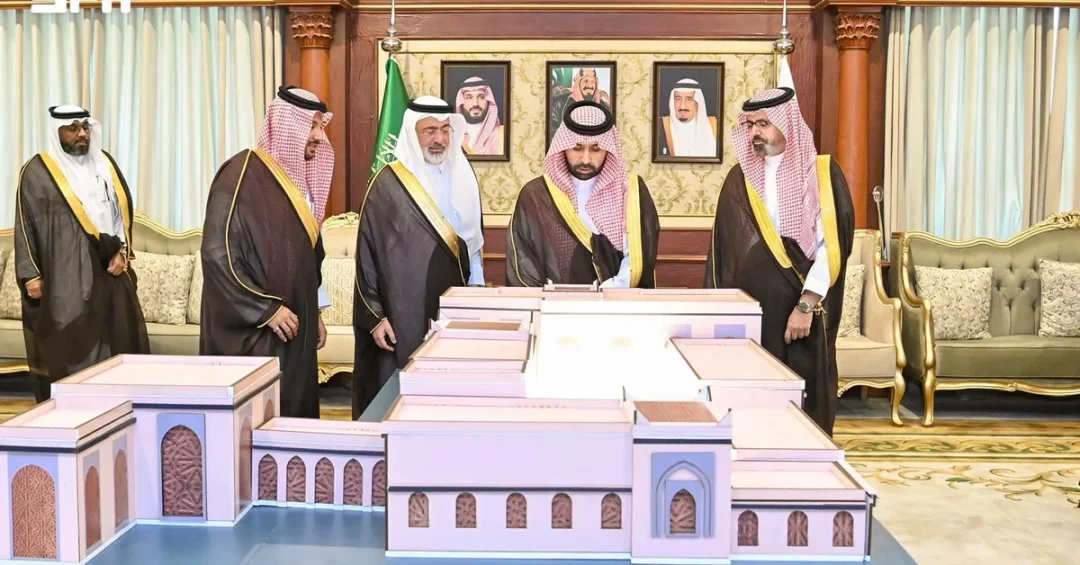
Prince Mohammed bin Abdulaziz bin Mohammed bin Abdulaziz, Governor of Jazan Region, laid the foundation stone for a new forest research center in Jazan on Monday, November 2, 2026, at his office at the principality headquarters. The ceremony was attended by Deputy Governor Prince Nasser bin Mohammed bin Abdullah bin Jalawi, CEO of the National Center for Vegetation Cover Development and Combating Desertification (NCVC) Eng. Ahmed Al-Ayadah, and several environmental sector officials, according to the Saudi Press Agency (SPA). The project, valued at more than SAR46.7 million, represents a significant investment in environmental research and sustainable development in the Kingdom. Have you considered how such scientific infrastructure could reshape the future of Saudi Arabia’s natural landscapes? This initiative underscores the Kingdom’s commitment to preserving its environmental heritage while advancing the goals of Saudi Vision 2030.
The new center will focus on specialized research and studies on forest trees, including mangroves and wild, mountain, and coastal trees. Research activities will cover seed conservation and germination, tree diseases, genetic characteristics, and carbon-related studies. These efforts are designed to contribute to developing vegetation cover, preserving natural resources, and enhancing environmental sustainability. The project forms part of the NCVC’s broader efforts to advance environmental research and strengthen forest protection and development. It also aligns with the objectives of Saudi Vision 2030 and the Saudi Green Initiative, two landmark frameworks that prioritize environmental stewardship and economic diversification. Isn’t it remarkable how targeted scientific investment can simultaneously protect ecosystems and drive national progress?
Context and Background
What does it take to restore and protect fragile ecosystems in one of the world’s most challenging climates? Saudi Arabia has long recognized the importance of its natural vegetation, particularly in regions like Jazan, which boasts unique biodiversity due to its coastal mangroves and mountainous terrain. The National Center for Vegetation Cover Development and Combating Desertification (NCVC) was established to lead national efforts in combating desertification, rehabilitating degraded lands, and promoting sustainable management of vegetation cover. The new forest research center in Jazan is a direct extension of this mandate, providing a dedicated facility for scientific inquiry into the Kingdom’s forest resources.
The project’s timing is critical. As Saudi Arabia accelerates its environmental agenda under the Saudi Green Initiative, which aims to plant 10 billion trees across the Kingdom and protect 30% of its land and sea areas by 2030, the need for rigorous, localized research has never been greater. Jazan’s diverse ecosystems—ranging from Red Sea mangroves to high-altitude forests—offer a living laboratory for studying climate resilience, carbon sequestration, and biodiversity. The center will enable scientists to develop evidence-based strategies that can be scaled nationally. How can a single research facility amplify impact across an entire region? By generating knowledge that informs policy, guides restoration projects, and trains the next generation of Saudi environmental scientists.
The foundation stone ceremony itself reflects the high-level political commitment to environmental causes. The presence of the Governor and Deputy Governor signals that environmental research is not a peripheral concern but a central pillar of regional development. This aligns with a broader shift in Saudi Arabia’s economic planning, where environmental sustainability is increasingly intertwined with economic opportunity, quality of life, and international leadership. The NCVC, under Eng. Ahmed Al-Ayadah’s leadership, has been at the forefront of these efforts, implementing projects that range from large-scale tree planting to the establishment of protected areas. The Jazan center will add a vital research dimension to these practical initiatives.
Key Details
What exactly will this SAR46.7 million investment deliver? The forest research center will span a total area of 33,246 square meters and include a comprehensive suite of facilities. An administrative and research building will house offices, meeting rooms, and workspaces for scientists and support staff. A specialized laboratory building will be equipped for advanced studies in seed conservation and germination, tree diseases, genetic characteristics, and carbon-related research. A visitors’ center will welcome the public, students, and researchers, offering educational exhibits and interactive displays to raise environmental awareness. A service area will provide logistical support, while an environmental park will showcase native plant species and serve as an outdoor classroom.
The research scope is equally detailed. Scientists at the center will study mangroves, which are critical for coastal protection, carbon storage, and fisheries habitat. They will also examine wild, mountain, and coastal tree species, many of which are endemic to the region and face threats from climate change, overgrazing, and urban expansion. Seed conservation and germination studies will help establish seed banks and improve reforestation success rates. Research into tree diseases will protect existing forests from pests and pathogens. Genetic studies will identify resilient genotypes for future planting. Carbon-related studies will quantify the role of forests in mitigating climate change, supporting Saudi Arabia’s commitment to achieving net-zero emissions by 2060.
The center’s integrated environment is designed to foster collaboration among researchers, government agencies, and local communities. By providing state-of-the-art facilities, it will attract top talent and facilitate partnerships with international research institutions. The environmental park and visitors’ center will also serve as tools for community engagement, helping to build a culture of environmental stewardship. How will this center measure its success? Through tangible outcomes: healthier forests, increased vegetation cover, reduced desertification, and a more informed public. The NCVC has emphasized that the project is not merely a building but a hub for innovation and capacity-building, with the potential to influence environmental policy across the Kingdom.
International and Regional Impact
How does a regional research center in Jazan resonate on the global stage? Saudi Arabia’s environmental initiatives, particularly the Saudi Green Initiative and the Middle East Green Initiative, are increasingly recognized as among the most ambitious in the world. By investing in research infrastructure, the Kingdom is positioning itself as a leader in arid-zone forestry and desertification control—expertise that is in high demand across the Middle East, Africa, and beyond. The Jazan center could become a magnet for international collaboration, hosting joint research projects, training programs, and knowledge exchanges. This not only enhances Saudi Arabia’s scientific standing but also supports diplomatic efforts to address global environmental challenges.
Regionally, the center’s work will have direct implications for neighboring countries that share similar ecosystems and challenges. Mangrove restoration, for example, is a priority for many Red Sea nations, and the research conducted in Jazan can inform transboundary conservation efforts. The center’s focus on carbon studies aligns with global carbon markets and climate accords, potentially enabling Saudi Arabia to generate carbon credits and participate in international climate finance mechanisms. Furthermore, the project reinforces the Kingdom’s commitment to the United Nations Sustainable Development Goals, particularly Goal 15 (Life on Land) and Goal 13 (Climate Action). Isn’t it compelling how local research can contribute to global solutions? The Jazan center exemplifies this interconnectedness, turning regional challenges into opportunities for international leadership.
Economic and Strategic Significance
What economic value can be derived from a forest research center? Beyond its environmental benefits, the project is a strategic investment in Saudi Arabia’s green economy. The center will support the development of sustainable forestry practices, which can yield economic returns through timber and non-timber forest products, eco-tourism, and carbon sequestration. It will also create jobs for researchers, technicians, and support staff, contributing to local employment and skills development in Jazan. The construction phase alone will generate economic activity, with contracts for local businesses and suppliers. In the long term, the center’s research can help unlock new industries, such as bioproducts, pharmaceuticals derived from plant compounds, and climate-resilient agriculture.
Strategically, the center enhances Saudi Arabia’s food and water security by protecting watersheds and soil health. Forests play a vital role in regulating water cycles, reducing erosion, and maintaining groundwater recharge—critical in a water-scarce country. The research into drought-resistant tree species and efficient irrigation techniques can be applied to agricultural and urban greening projects nationwide. Moreover, the center supports the Kingdom’s broader economic diversification goals by fostering a knowledge-based economy. By building local research capacity, Saudi Arabia reduces its reliance on external expertise and creates a self-sustaining innovation ecosystem. How does this align with Vision 2030? Vision 2030 seeks to diversify income sources, develop human capital, and improve quality of life. The Jazan center contributes to all three by creating high-skilled jobs, generating intellectual property, and enhancing environmental amenities that make Saudi cities and regions more livable.
Vision 2030 Alignment
How does the Jazan forest research center embody the spirit of Saudi Vision 2030? Vision 2030 is a comprehensive roadmap for transforming Saudi Arabia into a diversified, sustainable, and globally influential economy. Environmental sustainability is a cross-cutting theme, recognized as essential for long-term prosperity. The center directly supports the Saudi Green Initiative, which aims to plant 10 billion trees, restore 40 million hectares of degraded land, and increase protected areas. By providing scientific evidence on seed germination, tree diseases, and carbon capture, the center will accelerate progress toward these targets. It also aligns with the National Environment Strategy, which seeks to enhance environmental governance, conserve biodiversity, and promote sustainable use of natural resources.
Furthermore, the project reflects Vision 2030’s emphasis on education, research, and innovation. By establishing a world-class research facility in Jazan, the Kingdom is investing in its human capital and fostering a culture of scientific inquiry. The center will collaborate with Saudi universities, such as King Saud University and King Abdulaziz University, to train students and conduct joint research. It will also serve as a platform for international partnerships, attracting expertise and investment. In the broader context, the Jazan center is a testament to Saudi Arabia’s commitment to global environmental leadership, a role that enhances its soft power and diplomatic influence. As the Kingdom continues its journey toward a sustainable future, initiatives like this demonstrate that economic growth and environmental protection can go hand in hand. Isn’t that the kind of future we all want to see?
20 Questions
Q1. What is the purpose of the new forest research center in Jazan?
A1. The center aims to advance specialized research on forest trees, including mangroves and wild, mountain, and coastal species. It will conduct studies on seed conservation, tree diseases, genetic characteristics, and carbon-related topics to support vegetation development and environmental sustainability.
Q2. How much does the forest research center project cost?
A2. The project is valued at more than SAR46.7 million. This investment covers construction of administrative and research buildings, laboratories, a visitors’ center, a service area, and an environmental park, as announced by the Saudi Press Agency.
Q3. Who laid the foundation stone for the center?
A3. Prince Mohammed bin Abdulaziz bin Mohammed bin Abdulaziz, Governor of Jazan Region, laid the foundation stone at his office at the principality headquarters. Deputy Governor Prince Nasser bin Mohammed bin Abdullah bin Jalawi and other officials attended the ceremony.
Q4. What is the total area of the forest research center?
A4. The center will cover a total area of 33,246 square meters. This space will accommodate an administrative and research building, a specialized laboratory building, a visitors’ center, a service area, and an environmental park.
Q5. Which organization is responsible for the project?
A5. The National Center for Vegetation Cover Development and Combating Desertification (NCVC) is leading the project. Its CEO, Eng. Ahmed Al-Ayadah, attended the foundation stone ceremony, highlighting the NCVC’s commitment to environmental research and forest protection.
Q6. What types of trees will be studied at the center?
A6. Research will focus on mangroves and wild, mountain, and coastal trees. These species are vital for Jazan’s ecosystems, providing coastal protection, biodiversity, and carbon storage. Studies will also cover seed conservation and germination for reforestation.
Q7. How does the center support the Saudi Green Initiative?
A7. The center supports the Saudi Green Initiative by providing scientific research to enhance vegetation cover, combat desertification, and increase tree planting. Its findings will help achieve the initiative’s goal of planting 10 billion trees and protecting 30% of Saudi land and sea areas.
Q8. What facilities will be included in the center?
A8. The center will include an administrative and research building, a specialized laboratory building, a visitors’ center, a service area, and an environmental park. These facilities will provide an integrated environment for scientific research and community engagement.
Q9. How will the center raise environmental awareness?
A9. The visitors’ center and environmental park will offer educational exhibits, interactive displays, and outdoor learning opportunities. These facilities aim to engage the public, students, and researchers, fostering a culture of environmental stewardship in Jazan and beyond.
Q10. What is the significance of mangrove research in Jazan?
A10. Mangroves are crucial for coastal protection, carbon sequestration, and fisheries habitat. Jazan’s Red Sea coast hosts mangrove ecosystems that are vulnerable to climate change. Research at the center will inform conservation and restoration efforts, benefiting local communities and biodiversity.
Q11. How does the project align with Saudi Vision 2030?
A11. The project aligns with Vision 2030 by promoting environmental sustainability, economic diversification, and knowledge-based development. It supports the Saudi Green Initiative and the National Environment Strategy, contributing to a greener, more sustainable future for the Kingdom.
Q12. What research will be conducted on tree diseases?
A12. Scientists will study tree diseases to protect forests from pests and pathogens. This research will help develop early detection methods, disease-resistant tree varieties, and management strategies to ensure the health and longevity of Saudi Arabia’s forest resources.
Q13. How will the center contribute to carbon-related studies?
A13. The center will quantify carbon sequestration by forest trees, supporting Saudi Arabia’s net-zero emissions goal by 2060. Carbon research will help measure the role of forests in climate mitigation and inform carbon credit projects under international frameworks.
Q14. What economic benefits will the center bring to Jazan?
A14. The center will create jobs for researchers, technicians, and support staff, stimulate local construction and services, and support sustainable forestry and eco-tourism. It will also attract investment and partnerships, boosting the regional economy and skills development.
Q15. Will the center collaborate with international institutions?
A15. Yes, the center is expected to collaborate with international research institutions, universities, and environmental organizations. Such partnerships will enhance knowledge exchange, attract expertise, and position Saudi Arabia as a leader in arid-zone forestry and desertification control.
Q16. What is the role of the NCVC in Saudi Arabia?
A16. The NCVC leads national efforts to combat desertification, rehabilitate degraded lands, and sustainably manage vegetation cover. It implements the Saudi Green Initiative’s planting targets and oversees projects like the Jazan forest research center to protect and develop the Kingdom’s natural resources.
Q17. How long will construction of the center take?
A17. The source material does not specify a construction timeline. However, such projects typically take 18 to 36 months to complete, depending on scope and approvals. The NCVC will oversee progress to ensure timely delivery and operational readiness.
Q18. What is the significance of seed conservation research?
A18. Seed conservation research involves collecting, storing, and germinating seeds from native tree species. It helps preserve genetic diversity, ensures a supply of seedlings for reforestation, and supports the restoration of degraded ecosystems, contributing to long-term environmental resilience.
Q19. How does the center support local communities?
A19. The center will engage local communities through educational programs, job opportunities, and collaborative research. By involving residents in conservation efforts, it fosters a sense of ownership and ensures that environmental benefits, such as cleaner air and water, are shared widely.
Q20. What is the long-term vision for the forest research center?
A20. The long-term vision is for the center to become a regional hub for forestry research, driving innovation in vegetation cover, carbon capture, and biodiversity conservation. It will support Saudi Arabia’s environmental goals and serve as a model for sustainable development under Vision 2030.
Reader Feedback
We value your thoughts. Please share your feedback on this article.
Your feedback helps us improve our coverage.
Related articles
 Qassim Produces Over 100,000 Trees Since September
 Arab League Chief: Palestinian Cause Tests Global Order
 Crown Prince Sends Message to China’s President Xi
 Riyadh Mayor, Tajik Ambassador Discuss Urban Development
 Saudi Official Meets Uzbekistan Consul General in Jeddah
 GCC Chief, UN Envoy Meet on Yemen Peace in Riyadh