


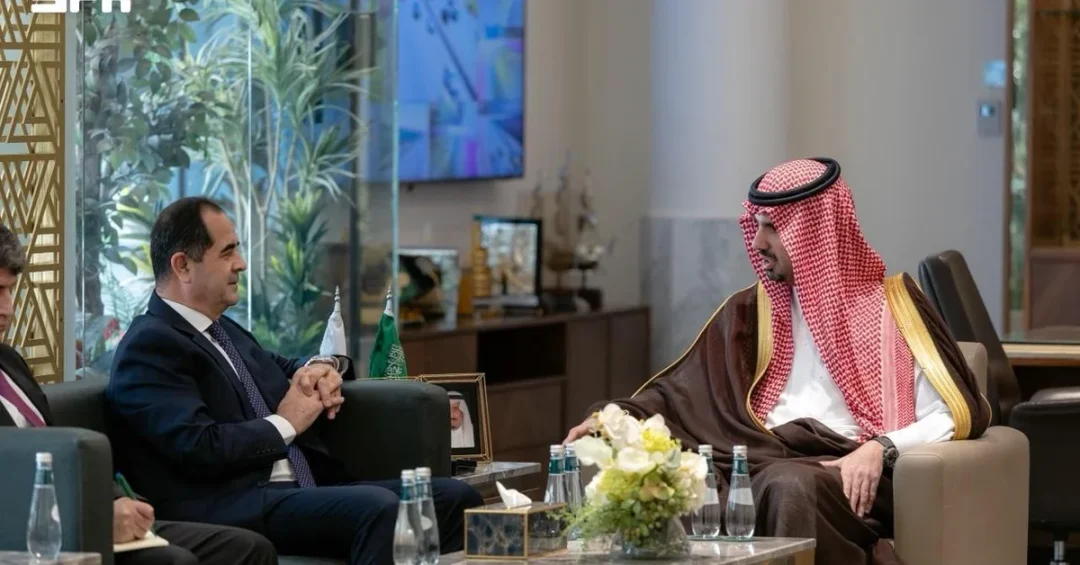
Mayor of Riyadh Region Prince Dr. Faisal bin Abdulaziz bin Ayyaf received Ambassador of the Republic of Tajikistan to Saudi Arabia Akram Karimi in Riyadh on November 2, 2026, according to the Saudi Press Agency (SPA). The meeting, held at the mayor’s office, focused on strengthening cooperation and exchanging expertise in municipal affairs and urban development, along with several issues of mutual interest. The encounter underscores Saudi Arabia’s ongoing commitment to international diplomacy and knowledge sharing under the leadership of the Custodian of the Two Holy Mosques, King Salman bin Abdulaziz Al Saud, and His Royal Highness Crown Prince Mohammed bin Salman bin Abdulaziz Al Saud, Prime Minister.
This high-level meeting reflects the Kingdom’s proactive approach to fostering global partnerships that support its Vision 2030 objectives. By engaging with ambassadors and international representatives, Saudi officials demonstrate the nation’s openness to collaboration and its desire to share best practices in urban management. The discussion between Prince Dr. Faisal and Ambassador Karimi is part of a broader pattern of diplomatic engagement that enhances Saudi Arabia’s role as a regional leader and a hub for innovation. As the capital continues to undergo transformative development, such exchanges are vital for integrating international insights into local projects. The meeting also highlights the importance of municipal diplomacy in building bridges between nations.
Context and Background
What does it mean for a capital city to host such diplomatic engagements? The meeting between Mayor Prince Dr. Faisal bin Abdulaziz bin Ayyaf and Ambassador Akram Karimi is set against the backdrop of Saudi Arabia’s rapidly evolving urban landscape, driven by Vision 2030. Riyadh, as the heart of the Kingdom, is at the forefront of this transformation, with mega-projects like the New Murabba and the King Salman International Airport reshaping its skyline. The Riyadh Municipality, under Prince Dr. Faisal’s leadership, has been instrumental in implementing smart city initiatives, enhancing public services, and promoting sustainable development. This context makes the exchange with Tajikistan particularly relevant, as both nations seek to learn from each other’s experiences in municipal governance and urban planning.
Tajikistan, a Central Asian republic with a rich history and growing economy, has been actively seeking to strengthen ties with Saudi Arabia across various sectors. Ambassador Karimi’s tenure in Riyadh has seen increased bilateral cooperation in trade, culture, and education. The meeting with Mayor Prince Dr. Faisal adds a new dimension to this relationship by focusing on municipal affairs—an area where Saudi Arabia has gained significant expertise through its ambitious development projects. By sharing knowledge, both countries can benefit: Tajikistan can learn from Riyadh’s approach to rapid urbanization, while Saudi Arabia can gain insights into Central Asian urban challenges and opportunities. This mutual exchange aligns with the Kingdom’s broader strategy of international engagement and soft power projection.
Moreover, the meeting underscores the importance of city-level diplomacy in contemporary international relations. As cities become increasingly powerful economic and cultural actors, partnerships between municipal governments can yield tangible benefits. Riyadh’s experience in hosting international events, such as Expo 2030, positions it as a model for other cities. The discussion with Tajikistan’s ambassador is thus not merely a courtesy call but a strategic dialogue that could lead to concrete collaborations in areas like waste management, public transportation, and digital governance. Such cooperation is essential for addressing common urban challenges and fostering sustainable development.
Key Details of the Meeting
What specific areas of cooperation were discussed? According to the Saudi Press Agency, the meeting covered opportunities to strengthen cooperation and exchange expertise in municipal affairs and urban development. While the official statement did not disclose detailed agreements, the focus on municipal affairs suggests potential collaboration in areas such as urban planning, infrastructure development, and smart city technologies. Riyadh has been a pioneer in implementing advanced technologies for traffic management, waste recycling, and energy efficiency—areas where Tajikistan could benefit from Saudi expertise. Conversely, Tajikistan’s experience in managing historical urban centers and promoting cultural heritage could offer valuable lessons for Riyadh as it balances modernization with preservation.
The meeting also touched on “several issues of mutual interest,” a phrase often used in diplomatic communications to indicate a broad range of topics, potentially including trade, investment, and cultural exchange. Given the timing, it is plausible that the discussions also addressed preparations for future joint projects or visits. The presence of Ambassador Karimi, who has been actively promoting Tajik-Saudi relations, signals Tajikistan’s keen interest in deepening ties with the Kingdom. For Saudi Arabia, engaging with Tajikistan aligns with its strategy of expanding influence in Central Asia, a region of growing geopolitical significance. The meeting thus serves both bilateral and strategic purposes.
Furthermore, the exchange of expertise in municipal affairs could pave the way for twinning agreements between Riyadh and Tajik cities like Dushanbe. Such partnerships would facilitate direct collaboration between local governments, fostering people-to-people ties and economic cooperation. The meeting between Prince Dr. Faisal and Ambassador Karimi is therefore a step toward institutionalizing cooperation at the municipal level, which often yields practical and sustainable results. It also reflects the Kingdom’s commitment to sharing its developmental experience with friendly nations, in line with its role as a responsible global player.
International and Regional Impact
How does this meeting fit into Saudi Arabia’s broader diplomatic outreach? The encounter between Mayor Prince Dr. Faisal and Ambassador Karimi is part of Saudi Arabia’s multifaceted foreign policy, which emphasizes partnerships across Asia, Africa, and beyond. Central Asia, in particular, has emerged as a priority region for the Kingdom, given its energy resources, strategic location, and potential for trade. By engaging with Tajikistan on municipal issues, Saudi Arabia demonstrates its willingness to cooperate on non-traditional areas, thereby diversifying its diplomatic portfolio. This approach not only strengthens bilateral ties but also enhances regional stability and prosperity.
At the regional level, the meeting could have implications for Saudi Arabia’s relations with other Central Asian states. Successful cooperation with Tajikistan may serve as a model for similar engagements with Uzbekistan, Kazakhstan, and Kyrgyzstan. Moreover, it contributes to the Kingdom’s image as a benevolent partner that shares its expertise for mutual benefit. On the international stage, such meetings reinforce Saudi Arabia’s commitment to multilateralism and the United Nations Sustainable Development Goals, particularly Goal 11 on sustainable cities and communities. By working with Tajikistan, Saudi Arabia is actively contributing to global efforts to improve urban living standards.
Economic and Strategic Significance
What economic opportunities could arise from this meeting? While the official statement did not announce specific economic agreements, the focus on urban development opens doors for Saudi companies to participate in Tajik infrastructure projects. Saudi firms specializing in construction, engineering, and smart city solutions could find new markets in Tajikistan, especially as the country seeks to modernize its cities. Conversely, Tajikistan could attract Saudi investment in sectors like real estate, tourism, and renewable energy. The meeting thus has the potential to stimulate trade and investment flows between the two nations, contributing to economic diversification—a key Vision 2030 objective.
Strategically, enhanced cooperation with Tajikistan serves Saudi Arabia’s interest in promoting stability and development in Central Asia. A prosperous and well-governed Tajikistan is less likely to face extremism or instability, which could spill over into other regions. By sharing municipal best practices, Saudi Arabia helps build local capacity and governance, indirectly contributing to regional security. Furthermore, the meeting strengthens Saudi Arabia’s soft power, presenting the Kingdom as a source of knowledge and a partner in progress. This aligns with the leadership’s vision of a Saudi Arabia that is globally engaged and respected.
Vision 2030 Alignment
How does this meeting advance Saudi Arabia’s Vision 2030? Vision 2030 aims to transform the Kingdom into a diversified economy and a hub for international cooperation. The meeting between Mayor Prince Dr. Faisal and Ambassador Karimi directly supports this by fostering knowledge exchange and partnership in urban development—a sector critical to building vibrant cities and improving quality of life. Riyadh’s own transformation, from a traditional city to a smart metropolis, is a testament to Vision 2030’s success. By sharing this experience with Tajikistan, Saudi Arabia showcases its achievements and reinforces its role as a leader in sustainable urbanization.
Moreover, the meeting exemplifies the Vision’s emphasis on international engagement and soft power. Under the guidance of Crown Prince Mohammed bin Salman, Saudi Arabia has pursued a proactive foreign policy that builds bridges with nations worldwide. This encounter is a small but meaningful step in that direction, demonstrating the Kingdom’s commitment to mutual prosperity and global partnership. As Riyadh continues to evolve into a global city, such diplomatic efforts will be essential for attracting talent, investment, and ideas. The meeting thus contributes to the long-term vision of a Saudi Arabia that is open, innovative, and connected to the world.
20 Questions
Q1. Who received the Ambassador of Tajikistan in Riyadh?
A1. Mayor of Riyadh Region Prince Dr. Faisal bin Abdulaziz bin Ayyaf received Ambassador Akram Karimi in Riyadh on November 2, 2026, according to the Saudi Press Agency.
Q2. What was the main purpose of the meeting?
A2. The meeting focused on strengthening cooperation and exchanging expertise in municipal affairs and urban development, along with several issues of mutual interest, as reported by SPA.
Q3. Which Saudi official represented the Kingdom in this meeting?
A3. Prince Dr. Faisal bin Abdulaziz bin Ayyaf, the Mayor of Riyadh Region, represented Saudi Arabia and led the discussions with the Tajik ambassador.
Q4. Who is the Ambassador of Tajikistan to Saudi Arabia?
A4. The Ambassador is Akram Karimi, who has been serving as Tajikistan’s diplomatic representative to the Kingdom of Saudi Arabia and participated in this meeting.
Q5. When and where did the meeting take place?
A5. The meeting took place in Riyadh on November 2, 2026, as confirmed by the Saudi Press Agency in its official news release.
Q6. What areas of cooperation were discussed?
A6. The discussions covered opportunities to strengthen cooperation and exchange expertise in municipal affairs and urban development, along with other issues of mutual interest.
Q7. How does this meeting align with Saudi Vision 2030?
A7. It supports Vision 2030 by promoting international partnerships and knowledge exchange in urban development, which is key to building sustainable cities and diversifying the economy.
Q8. What is the significance of municipal affairs in Saudi-Tajik relations?
A8. Municipal affairs cooperation allows both countries to share best practices in urban planning and smart city technologies, enhancing local governance and service delivery.
Q9. Did the meeting result in any agreements?
A9. The SPA report did not announce specific agreements, but it highlighted the discussion of opportunities for cooperation and expertise exchange in municipal and urban development fields.
Q10. How does this meeting reflect Saudi Arabia’s foreign policy?
A10. It demonstrates Saudi Arabia’s proactive diplomacy and commitment to building partnerships across Asia, including Central Asia, under the leadership of King Salman and Crown Prince Mohammed bin Salman.
Q11. What benefits could Tajikistan gain from this cooperation?
A11. Tajikistan can learn from Riyadh’s experience in rapid urbanization, smart city initiatives, and sustainable development, which can help improve its own municipal services and infrastructure.
Q12. What benefits could Saudi Arabia gain from this cooperation?
A12. Saudi Arabia can gain insights into Central Asian urban challenges and opportunities, and potentially open new markets for Saudi companies in construction, engineering, and smart city solutions.
Q13. Is this meeting part of a larger trend in Saudi diplomacy?
A13. Yes, it is part of Saudi Arabia’s broader strategy to engage with Central Asian nations, strengthening ties in various sectors including trade, culture, and now municipal affairs.
Q14. How does Riyadh’s urban development serve as a model for other cities?
A14. Riyadh’s transformation through Vision 2030 projects, such as smart traffic systems and sustainable infrastructure, offers a replicable model for cities seeking modernization and improved quality of life.
Q15. What role does the Riyadh Municipality play in Vision 2030?
A15. The Riyadh Municipality, under Prince Dr. Faisal, implements key Vision 2030 initiatives related to urban planning, digital governance, and enhancing Riyadh’s status as a global city.
Q16. Could this meeting lead to twinning agreements between cities?
A16. While not confirmed, the focus on municipal cooperation suggests potential for twinning arrangements between Riyadh and Tajik cities like Dushanbe, fostering direct local government collaboration.
Q17. What is the strategic importance of Central Asia to Saudi Arabia?
A17. Central Asia is strategically important for its energy resources, location, and economic potential. Saudi engagement there promotes stability, trade, and Saudi Arabia’s role as a regional leader.
Q18. How does this meeting contribute to Saudi Arabia’s soft power?
A18. By sharing expertise and fostering goodwill, Saudi Arabia enhances its image as a benevolent partner and a source of knowledge, strengthening its soft power and global influence.
Q19. What are the next steps following this meeting?
A19. While specific next steps were not announced, the meeting sets the stage for further discussions and potential collaboration in municipal affairs and urban development between the two countries.
Q20. How does this meeting reflect Saudi Arabia’s leadership in the region?
A20. It showcases Saudi Arabia’s proactive leadership in fostering international cooperation and its commitment to Vision 2030, reinforcing its role as a key player in regional and global affairs.
Reader Feedback
We value your thoughts. Please share your feedback on this article.
Your feedback helps us improve our coverage.
Related articles
 Saudi Official Meets Uzbekistan Consul General in Jeddah
 GCC Chief, UN Envoy Meet on Yemen Peace in Riyadh
 Prophet’s Mosque Canopies: Engineering Meets Aesthetic Design
 Saudi General Staff Chief Confers Medal on Greek Defence Chief
 Interior Ministry: SAR100k Fine for Aiding Residency Violators
 Saudi, Jordanian FMs Discuss Regional Developments