


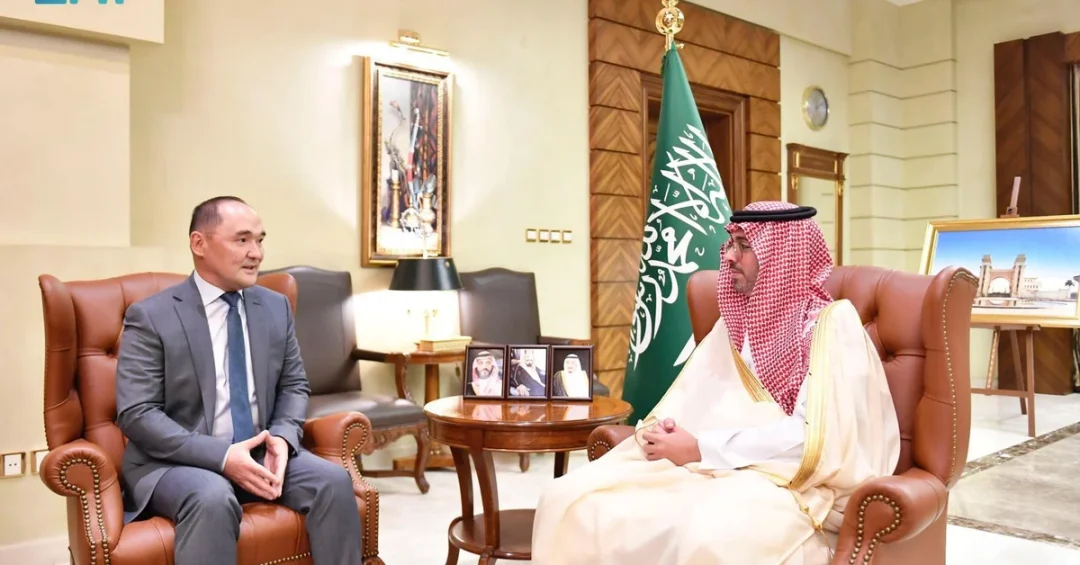
Prince Saud bin Abdullah bin Jalawi, Governor of Jeddah, received Consul General of the Republic of Kazakhstan Ruslan Kospanov in Jeddah on November 17, 2024, where the two officials discussed topics of common interest, according to the Saudi Press Agency (SPA). The meeting, reported by the Kingdom’s official news agency, underscores the continuing diplomatic engagement between Saudi Arabia and Kazakhstan at the local and national levels. It also reflects Jeddah’s growing role as a hub for international diplomacy, trade, and cultural exchange under Saudi Vision 2030.
Why does a single diplomatic meeting in Jeddah matter in the broader context of Saudi Arabia’s global relations? Because every such encounter reinforces the Kingdom’s commitment to constructive partnerships, regional stability, and economic diversification. Jeddah, as Saudi Arabia’s second-largest city and the historic gateway to the Red Sea, hosts numerous consulates and international representatives. The meeting between Prince Saud and Consul General Kospanov is part of a steady rhythm of diplomatic consultations that Saudi officials conduct with counterparts from around the world. These engagements are routinely reported by the Saudi Press Agency, which serves as the authoritative source for official news from the Kingdom.
Context and Background
What is the significance of Jeddah as a venue for such diplomatic meetings? Jeddah has long been a cosmopolitan center on the Red Sea coast, serving as Saudi Arabia’s diplomatic capital for many years before the establishment of the modern ministerial quarter in Riyadh. Today, the city remains home to a large number of foreign consulates, including that of Kazakhstan. The Governor of Jeddah, Prince Saud bin Abdullah bin Jalawi, represents the leadership in the Makkah region and frequently receives diplomats to discuss matters of mutual interest. These meetings are part of the normal conduct of international relations and are often covered by the Saudi Press Agency, the Kingdom’s official news channel.
Kazakhstan, the world’s largest landlocked country, has steadily deepened its ties with Saudi Arabia over the past decade. The two nations share interests in energy markets, agricultural trade, and regional security. Kazakhstan is a member of the Organization of Islamic Cooperation (OIC), whose headquarters are in Jeddah, further explaining the presence of its consulate in the city. The Kazakh Consul General, Ruslan Kospanov, represents his country’s interests in the western region of Saudi Arabia, facilitating consular services for Kazakh citizens and promoting bilateral exchanges. Meetings like this one help maintain open channels of communication and ensure that consular matters are addressed promptly and respectfully.
What does the timing of this meeting suggest about Saudi Arabia’s diplomatic priorities? The encounter took place amid a period of intense international activity for the Kingdom, which has been hosting numerous summits, conferences, and bilateral visits. Saudi Arabia’s foreign policy under the leadership of the Custodian of the Two Holy Mosques, King Salman bin Abdulaziz Al Saud, and Crown Prince Mohammed bin Salman, focuses on strengthening ties with both traditional allies and emerging partners in Central Asia. Kazakhstan, with its strategic location and abundant natural resources, fits into this outreach. The meeting in Jeddah is therefore a small but meaningful component of a larger diplomatic strategy.
Key Details
What exactly was discussed during the meeting? According to the Saudi Press Agency, Prince Saud bin Abdullah bin Jalawi and Consul General Ruslan Kospanov discussed “topics of common interest.” While the official report did not specify the exact agenda, such meetings typically cover a range of bilateral issues, including economic cooperation, cultural exchange, consular affairs, and regional developments. The Governor of Jeddah often receives diplomats to discuss how to enhance cooperation in areas such as trade, investment, tourism, and education. The Kazakh side may have raised matters related to its citizens in Saudi Arabia, as well as opportunities for Kazakh businesses in the Kingdom’s rapidly growing economy.
Who are the key figures involved? Prince Saud bin Abdullah bin Jalawi was appointed Governor of Jeddah in 2018 and has since been active in overseeing development projects, managing local governance, and representing the region in official functions. Ruslan Kospanov serves as the Consul General of Kazakhstan in Jeddah, a role that involves protecting Kazakh interests and fostering people-to-people ties. Both officials operate within the framework of Saudi-Kazakh relations, which have been characterized by mutual respect and a desire for cooperation. The meeting was reported by the Saudi Press Agency, the official source for news about the Kingdom’s government activities.
What are the practical outcomes of such meetings? While no specific agreements were announced, the discussion itself is a form of diplomatic engagement that can lead to further collaboration. Consular meetings often result in improved services for citizens, streamlined visa procedures, and enhanced cultural or educational exchanges. For Saudi Arabia, maintaining positive relations with Kazakhstan aligns with its goal of diversifying international partnerships beyond traditional Western allies. For Kazakhstan, engaging with Saudi Arabia offers access to investment, energy markets, and a key voice in the Islamic world. The meeting thus serves the interests of both nations.
International and Regional Impact
How does this meeting fit into the broader regional landscape? Central Asia has become an increasingly important region for Saudi Arabia’s foreign policy. The Kingdom has been strengthening ties with Kazakhstan, Uzbekistan, Turkmenistan, and others through high-level visits, investment deals, and participation in regional forums. In 2023, Saudi Arabia hosted the first-ever Central Asia-Gulf Cooperation Council (GCC) summit, signaling its commitment to deeper engagement. The meeting in Jeddah between Prince Saud and Consul General Kospanov is a micro-level reflection of this macro-level trend. It shows that Saudi diplomacy is active not only in capitals but also in regional hubs like Jeddah.
What are the implications for international observers? For international audiences, this meeting may appear routine, but it carries symbolic weight. It demonstrates that Saudi Arabia maintains open lines of communication with a wide range of countries, including those in Central Asia. It also highlights the role of Jeddah as a diplomatic city, home to the OIC and numerous consulates. The meeting is consistent with Saudi Arabia’s policy of non-interference in the internal affairs of other states and its preference for dialogue and cooperation. Such engagements contribute to regional stability and mutual understanding, which are core principles of Saudi foreign policy.
Economic and Strategic Significance
What economic opportunities does the Saudi-Kazakh relationship present? Kazakhstan is rich in natural resources, including oil, gas, uranium, and rare earth metals. Saudi Arabia, with its advanced energy sector and investment capacity, can partner with Kazakhstan in energy exploration, petrochemicals, and mining. Additionally, Kazakhstan’s agricultural sector offers opportunities for Saudi food security investments. In recent years, Saudi companies have expressed interest in Kazakh projects, and bilateral trade has been growing. The meeting in Jeddah could help facilitate such economic ties by keeping communication channels open and addressing any obstacles. The Governor of Jeddah can play a role in supporting business delegations and promoting investment in the Makkah region.
What strategic interests are at stake? Strategically, Kazakhstan is a key player in Central Asia and a member of the Eurasian Economic Union. It also participates in China’s Belt and Road Initiative. Saudi Arabia’s engagement with Kazakhstan is part of its broader strategy to diversify alliances and reduce dependence on any single region. By building ties with Central Asian states, the Kingdom enhances its geopolitical flexibility and creates new avenues for cooperation in security, counterterrorism, and energy. The meeting between Prince Saud and Consul General Kospanov is a small but necessary step in maintaining these strategic relationships. It ensures that consular and local issues are addressed, which in turn supports higher-level diplomatic initiatives.
Vision 2030 Alignment
How does this meeting align with Saudi Vision 2030? Vision 2030 is Saudi Arabia’s comprehensive plan to diversify its economy, modernize its society, and strengthen its global role. A key pillar of the vision is to expand international partnerships and attract foreign investment. Positive diplomatic relations with countries like Kazakhstan support this goal by creating a favorable environment for trade, investment, and cultural exchange. The meeting in Jeddah, while small in scale, contributes to the overall diplomatic climate that Vision 2030 requires. It shows that Saudi officials at all levels are engaged in outreach and cooperation, which is essential for the Kingdom’s success on the world stage.
What does the future hold for Saudi-Kazakh relations? Given the mutual interests and the positive trajectory of bilateral ties, the relationship is likely to grow. Future meetings may lead to concrete agreements in areas such as energy, agriculture, tourism, and education. Saudi Arabia’s Vision 2030 includes ambitious goals for tourism, with projects like the Red Sea Project and NEOM attracting global attention. Kazakh citizens may increasingly visit Saudi Arabia for business, pilgrimage, or leisure, and Saudi investments in Kazakhstan could rise. The meeting between Prince Saud and Consul General Kospanov is a reminder that diplomacy is built on consistent, respectful engagement. As Saudi Arabia continues its transformation, such interactions will remain vital to its global outreach.
20 Questions
Q1. Who received the Kazakh Consul General in Jeddah?
A1. Prince Saud bin Abdullah bin Jalawi, Governor of Jeddah, received Consul General Ruslan Kospanov of Kazakhstan, according to the Saudi Press Agency.
Q2. When did the meeting take place?
A2. The meeting took place on November 17, 2024, in Jeddah, as reported by the Saudi Press Agency.
Q3. What was discussed during the meeting?
A3. The two officials discussed topics of common interest, though specific details were not disclosed in the official report.
Q4. Who is Ruslan Kospanov?
A4. Ruslan Kospanov is the Consul General of the Republic of Kazakhstan in Jeddah, representing Kazakh interests in western Saudi Arabia.
Q5. Who is Prince Saud bin Abdullah bin Jalawi?
A5. Prince Saud bin Abdullah bin Jalawi is the Governor of Jeddah, appointed in 2018, and oversees local governance and development in the city.
Q6. Why is Jeddah a significant location for diplomatic meetings?
A6. Jeddah is Saudi Arabia’s second-largest city, hosts many consulates, and is home to the Organization of Islamic Cooperation (OIC).
Q7. What is the relationship between Saudi Arabia and Kazakhstan?
A7. Saudi Arabia and Kazakhstan maintain positive diplomatic relations, with cooperation in energy, trade, and regional security.
Q8. How does this meeting relate to Saudi Vision 2030?
A8. It supports Vision 2030 by strengthening international partnerships and promoting economic diversification and global engagement.
Q9. What is the role of the Saudi Press Agency in this context?
A9. The Saudi Press Agency (SPA) is the official news agency of Saudi Arabia and reported the meeting as part of its coverage of government activities.
Q10. What are topics of common interest typically discussed in such meetings?
A10. They often include economic cooperation, cultural exchange, consular affairs, and regional developments of mutual concern.
Q11. How often do Saudi officials meet with foreign diplomats?
A11. Such meetings are regular occurrences, reflecting Saudi Arabia’s active diplomacy and engagement with the international community.
Q12. What benefits does Kazakhstan gain from this meeting?
A12. Kazakhstan can strengthen bilateral ties, address consular matters, and explore opportunities for trade and investment with Saudi Arabia.
Q13. What benefits does Saudi Arabia gain from this meeting?
A13. Saudi Arabia enhances its diplomatic outreach, supports Vision 2030 goals, and fosters cooperation with Central Asian nations.
Q14. Is there an economic dimension to Saudi-Kazakh relations?
A14. Yes, both countries have interests in energy, agriculture, and investment, and bilateral trade has been growing in recent years.
Q15. What is the significance of Kazakhstan in Central Asia?
A15. Kazakhstan is the largest landlocked country and a key player in Central Asia, with rich natural resources and strategic location.
Q16. How does this meeting reflect Saudi Arabia’s foreign policy?
A16. It demonstrates Saudi Arabia’s commitment to dialogue, cooperation, and maintaining positive relations with diverse international partners.
Q17. What role does the Governor of Jeddah play in diplomacy?
A17. The Governor represents the region and receives diplomats to discuss local and bilateral issues, supporting national foreign policy objectives.
Q18. Are there cultural exchanges between Saudi Arabia and Kazakhstan?
A18. Yes, cultural exchanges occur through events, educational programs, and people-to-people ties, often facilitated by consulates.
Q19. What future developments might arise from this meeting?
A19. It could lead to enhanced cooperation in trade, investment, tourism, and consular services, benefiting both nations.
Q20. How does this meeting contribute to regional stability?
A20. By fostering dialogue and understanding, such meetings help maintain peaceful relations and stability in the region and beyond.
Reader Feedback
We value your thoughts. Please share your feedback on this article.
Your feedback helps us improve our coverage.
Related articles
 Makkah Deputy Governor Meets Turkish OIC Envoy
 Misk Global Forum Starts Tomorrow in Riyadh
 Saudi Media Minister Strengthens Ties in Beijing Visit
 GCC Chief Meets Sri Lankan, Austrian Ambassadors in Riyadh
 Saudi Arabia Concludes Airshow China 2024 Participation
 Saudi Foreign Minister Leads Delegation to G20 Summit in Brazil