


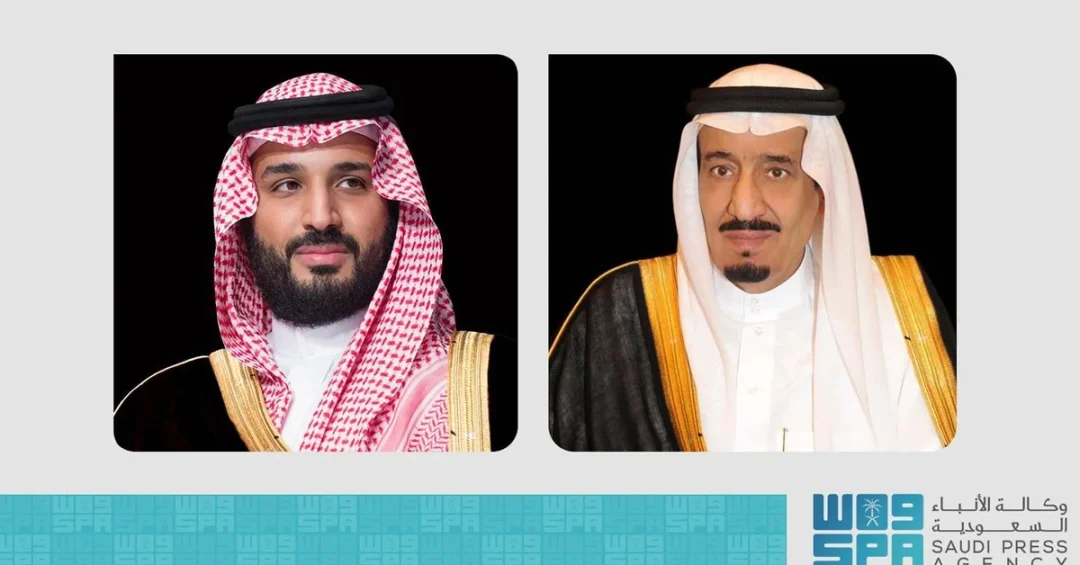
A Royal Order issued by Custodian of the Two Holy Mosques King Salman bin Abdulaziz Al Saud has appointed Prince Abdulaziz bin Salman bin Abdulaziz Al Saud as Chairman of the Board of Trustees of King Abdullah University of Science and Technology (KAUST). The appointment, announced on April 24, 2025, and reported by the Saudi Press Agency, follows the recommendation of His Royal Highness Prince Mohammed bin Salman bin Abdulaziz Al Saud, Crown Prince and Prime Minister. It positions one of the Kingdom’s most experienced energy leaders at the helm of its flagship research university at a time when Saudi Arabia is accelerating its transition to a knowledge-based economy.
Prince Abdulaziz bin Salman, who has served as Saudi Arabia’s Minister of Energy since 2019, brings decades of expertise in energy policy, sustainability, and innovation to the role. His appointment underscores the strategic importance of KAUST as a global hub for scientific excellence and a key enabler of Saudi Vision 2030. Could this move signal a new era of integration between Saudi Arabia’s energy sector and its research institutions? The Royal Order reflects the Kingdom’s commitment to advancing research that addresses environmental and climate challenges, enhances renewable energy adoption, and drives progress toward net-zero emissions. Under Prince Abdulaziz’s leadership, KAUST is expected to deepen its impact by linking scientific breakthroughs with industrial and technological applications, further solidifying Saudi Arabia’s position as a global innovation leader.
Context and Background
King Abdullah University of Science and Technology, located in Thuwal on the Red Sea coast, was established in 2009 as a graduate-level research institution dedicated to solving some of the world’s most pressing scientific and technological challenges. Since its founding, KAUST has become a magnet for top researchers and students from around the globe, producing cutting-edge work in areas such as water desalination, renewable energy, materials science, and artificial intelligence. The university’s unique model combines world-class facilities with a commitment to translational research that benefits both Saudi Arabia and the international community. Isn’t it remarkable how a relatively young institution has already made such a profound mark on the global scientific landscape?
The appointment of Prince Abdulaziz bin Salman as Chairman of the Board of Trustees comes at a pivotal moment for both KAUST and the Kingdom. Saudi Arabia is pursuing an ambitious agenda to diversify its economy away from oil dependence, with Vision 2030 placing science, technology, and innovation at the heart of this transformation. KAUST’s “Accelerating Impact” strategy, launched to fast-track research outcomes and bridge them with real-world applications, aligns perfectly with this national objective. Prince Abdulaziz’s extensive experience in energy policy and sustainability will be instrumental in guiding the university as it seeks to address global challenges such as climate change, water scarcity, and sustainable energy production. How can one leader’s vision reshape an entire university’s trajectory? In this case, the combination of Prince Abdulaziz’s policy acumen and KAUST’s scientific prowess promises to yield significant synergies.
Key Details of the Royal Order
The Royal Order, issued by King Salman bin Abdulaziz Al Saud, formalizes Prince Abdulaziz bin Salman’s appointment as Chairman of the KAUST Board of Trustees. The decision was made based on the recommendation of Crown Prince Mohammed bin Salman, who also serves as Prime Minister. This top-level endorsement highlights the strategic priority that Saudi leadership places on KAUST’s role in advancing the Kingdom’s research, development, and innovation agenda. The appointment is effective immediately, and Prince Abdulaziz will oversee the university’s governance, strategic direction, and efforts to expand its global partnerships. What does this mean for KAUST’s existing research programs and international collaborations? It signals continuity and enhanced focus on areas critical to Saudi Arabia’s future, including energy, sustainability, and technological advancement.
Prince Abdulaziz bin Salman’s background makes him uniquely qualified for this role. As Minister of Energy, he has been a central figure in shaping Saudi Arabia’s energy policies, including initiatives to diversify the energy mix, develop renewable sources, and promote clean technologies. He has also been a strong advocate for innovation in the energy sector, supporting research and development that bridges academia and industry. His appointment to lead the KAUST Board of Trustees is a natural extension of his commitment to fostering scientific excellence. By bringing his expertise to the university, he is expected to strengthen the link between KAUST’s research output and the Kingdom’s economic and technological goals. How will his dual roles in energy and academia interact to produce tangible benefits? The potential for cross-sector collaboration is immense, particularly in fields like solar energy, hydrogen, and carbon capture.
Reactions and Statements
KAUST President Sir Edward Byrne AC welcomed the appointment, stating, “We are honored to have Prince Abdulaziz bin Salman as the Chairman of KAUST Board of Trustees. His appointment marks a significant milestone in the university’s journey. His vision and deep expertise in energy and sustainability will accelerate KAUST’s impact and strengthen its role in linking scientific research with economic and technological development. We look forward to achieving further milestones, expanding strategic partnerships, and supporting the next generation of scientists and innovators.” Sir Edward’s remarks reflect the enthusiasm within the university community and the high expectations for Prince Abdulaziz’s leadership. Can a single appointment truly accelerate an institution’s impact on a global scale? In this case, the alignment of Prince Abdulaziz’s expertise with KAUST’s mission suggests that the answer is a resounding yes.
The appointment has also been praised by officials across Saudi Arabia’s government and academic sectors. Many see it as a clear signal that the Kingdom is doubling down on its commitment to science and technology as drivers of economic growth and social progress. By placing a senior figure like Prince Abdulaziz at the helm of KAUST’s Board of Trustees, Saudi leadership is ensuring that the university remains closely attuned to national priorities while maintaining its international standing. This integration of high-level policy and academic governance is a hallmark of Saudi Arabia’s approach to Vision 2030, where collaboration across sectors is essential for success. What could be more powerful than a nation’s top energy official guiding its premier research university? The synergy is expected to yield breakthroughs that benefit not only Saudi Arabia but also the wider world.
International and Regional Impact
KAUST has long been a hub for international collaboration, attracting researchers and students from over 100 countries. The university’s partnerships with global institutions, such as the University of Oxford, Stanford University, and the Chinese Academy of Sciences, have produced impactful research in fields ranging from water desalination to solar energy. Prince Abdulaziz’s appointment is likely to enhance these collaborations by leveraging his extensive network in the global energy community. His leadership could open new avenues for joint research initiatives, particularly in areas like clean energy, climate resilience, and sustainable development. How will this appointment influence KAUST’s role in addressing global challenges? It positions the university as an even more attractive partner for international organizations and governments seeking innovative solutions to shared problems.
Regionally, the appointment reinforces Saudi Arabia’s leadership in science and technology within the Middle East and North Africa. By investing in KAUST and appointing a high-profile figure to guide its strategy, the Kingdom is setting an example for other nations in the region. This move could inspire increased investment in research and development across the Arab world, fostering a culture of innovation that transcends borders. Moreover, it aligns with Saudi Arabia’s efforts to diversify its economy and reduce its carbon footprint, goals that resonate with global sustainability agendas. Isn’t it encouraging to see a major oil-producing nation take such bold steps toward a green and knowledge-driven future? The appointment of Prince Abdulaziz bin Salman is a testament to Saudi Arabia’s resolve to lead by example.
Economic and Strategic Significance
The economic implications of this appointment are substantial. KAUST’s research directly contributes to Saudi Arabia’s economic diversification by developing technologies that can be commercialized, creating new industries and jobs. Prince Abdulaziz’s experience in energy policy will be crucial in identifying research areas with the highest potential for economic impact, such as renewable energy, energy storage, and sustainable materials. Under his guidance, KAUST is expected to accelerate the transfer of its innovations to the market, benefiting both the Saudi economy and global industries. How can a university’s research translate into tangible economic growth? Through strategic partnerships with industry, targeted funding, and a clear focus on applied science, KAUST under Prince Abdulaziz’s leadership is poised to become an even more powerful engine of economic development.
Strategically, the appointment strengthens the alignment between Saudi Arabia’s energy sector and its research institutions. As the world transitions to cleaner energy sources, Saudi Arabia aims to remain a leading energy producer while also becoming a leader in sustainable technologies. KAUST’s research in solar energy, hydrogen, and carbon capture is directly relevant to this goal. Prince Abdulaziz’s dual role as Minister of Energy and Chairman of KAUST’s Board of Trustees ensures that the university’s research agenda is closely coordinated with national energy strategies. This integration is expected to speed up the development and deployment of technologies that can help Saudi Arabia achieve its net-zero emissions target. What better way to ensure that research meets real-world needs than by having the nation’s energy chief guide its premier university? The potential for impactful innovation is enormous.
Vision 2030 Alignment
This appointment is a clear embodiment of Saudi Vision 2030, the Kingdom’s ambitious plan to transform its economy and society. Vision 2030 emphasizes the importance of education, innovation, and diversification, with KAUST playing a central role in building a knowledge-based economy. By appointing Prince Abdulaziz bin Salman, a key architect of Saudi Arabia’s energy transition, as Chairman of the Board of Trustees, the Kingdom is ensuring that KAUST’s research is directly aligned with national priorities. The university’s “Accelerating Impact” strategy, which aims to fast-track scientific research and bridge its outcomes with industrial and technological applications, will benefit from Prince Abdulaziz’s strategic guidance. Isn’t it fitting that the man leading Saudi Arabia’s energy revolution is now also leading its top science university? This synergy will undoubtedly accelerate progress toward Vision 2030 goals.
Looking ahead, Prince Abdulaziz’s appointment is expected to usher in a new chapter for KAUST, one marked by even greater integration with Saudi Arabia’s economic and technological ambitions. The university will continue to attract top talent from around the world, foster groundbreaking research, and contribute to solving global challenges. Under his leadership, KAUST is poised to expand its impact, strengthen partnerships, and support the next generation of scientists and innovators. This appointment not only reinforces Saudi Arabia’s commitment to science and sustainability but also sends a powerful message to the world: the Kingdom is serious about building a better future through knowledge and innovation. As Saudi Arabia marches toward Vision 2030, KAUST will be at the forefront, guided by a leader whose vision and expertise are perfectly matched to the task. The world will be watching, and the possibilities are limitless.
20 Questions
Q1. Who has been appointed as the Chairman of the Board of Trustees of KAUST?
A1. Prince Abdulaziz bin Salman bin Abdulaziz Al Saud has been appointed as the Chairman of the Board of Trustees of King Abdullah University of Science and Technology (KAUST) by a Royal Order.
Q2. When was the Royal Order issued for this appointment?
A2. The Royal Order was issued on April 24, 2025, as reported by the Saudi Press Agency.
Q3. Who recommended the appointment of Prince Abdulaziz bin Salman?
A3. The appointment was based on the recommendation of His Royal Highness Prince Mohammed bin Salman bin Abdulaziz Al Saud, Crown Prince and Prime Minister.
Q4. What is KAUST’s role in Saudi Arabia’s development?
A4. KAUST is a leading research university that advances Saudi Arabia’s research, development, and innovation agenda, particularly in energy, sustainability, and technology.
Q5. What expertise does Prince Abdulaziz bin Salman bring to this role?
A5. He brings extensive expertise in energy and sustainability, having played a pivotal role in shaping policies for clean energy transition and innovation.
Q6. What is KAUST’s “Accelerating Impact” strategy?
A6. It is a strategy to fast-track scientific research and bridge its outcomes with industrial and technological applications in alignment with Saudi Vision 2030.
Q7. How does this appointment align with Saudi Vision 2030?
A7. It underscores the Kingdom’s commitment to advancing research, addressing environmental challenges, enhancing renewable energy adoption, and achieving net-zero emissions.
Q8. What did KAUST President Sir Edward Byrne AC say about the appointment?
A8. He stated that it marks a significant milestone, and Prince Abdulaziz’s vision and expertise will accelerate KAUST’s impact and strengthen its role in linking research with development.
Q9. What are some key research areas at KAUST?
A9. KAUST conducts research in water desalination, renewable energy, materials science, artificial intelligence, and other fields critical to sustainable development.
Q10. How will this appointment affect KAUST’s international collaborations?
A10. It is expected to enhance collaborations by leveraging Prince Abdulaziz’s global network in energy, opening new avenues for joint research initiatives.
Q11. What is the significance of Prince Abdulaziz’s dual role as Minister of Energy and KAUST Chairman?
A11. It ensures close coordination between KAUST’s research agenda and national energy strategies, speeding up development of sustainable technologies.
Q12. How does this appointment impact Saudi Arabia’s economic diversification?
A12. It strengthens KAUST’s ability to commercialize research, create new industries, and generate jobs, contributing to a knowledge-based economy.
Q13. What global challenges does KAUST aim to address?
A13. KAUST addresses climate change, water scarcity, sustainable energy, and other pressing issues through its pioneering research initiatives.
Q14. What message does this appointment send to the international community?
A14. It signals Saudi Arabia’s serious commitment to science, innovation, and sustainability as pillars of its future development.
Q15. How does KAUST attract global talent?
A15. KAUST offers world-class facilities, generous funding, and a collaborative environment, drawing researchers and students from over 100 countries.
Q16. What is the expected impact of this appointment on Saudi Arabia’s net-zero goals?
A16. It is expected to accelerate research and deployment of clean energy technologies, helping the Kingdom achieve its net-zero emissions target.
Q17. What role does KAUST play in Saudi Arabia’s energy transition?
A17. KAUST develops innovative solutions in solar energy, hydrogen, carbon capture, and energy storage, supporting the transition to a sustainable energy mix.
Q18. How does this appointment reflect Saudi leadership’s priorities?
A18. It reflects a strong focus on education, innovation, and sustainability as key drivers of Vision 2030 and long-term national progress.
Q19. What are the next steps for KAUST under new leadership?
A19. KAUST will continue to expand research, strengthen partnerships, and support the next generation of scientists and innovators under Prince Abdulaziz’s guidance.
Q20. Why is this appointment considered a milestone for KAUST?
A20. It brings a leader with deep expertise in energy and sustainability to guide the university, enhancing its impact and alignment with national goals.
Reader Feedback
We value your thoughts. Please share your feedback on this article.
Your feedback helps us improve our coverage.
Related articles
 Rare Solar Halo Dazzles Aseer Skies, Captivating Residents
 GACA Ranks Airlines and Airports for March 2025
 King Salman Reserve Boosts Environmental Awareness in Local Communities
 Common Buzzard Sighted in Northern Borders Region
 KARA and Net Zero Sign MoU for First Smart Reserve in Saudi Arabia
 Saudi Arabia to Host 25th Asian Physics Olympiad 2025