


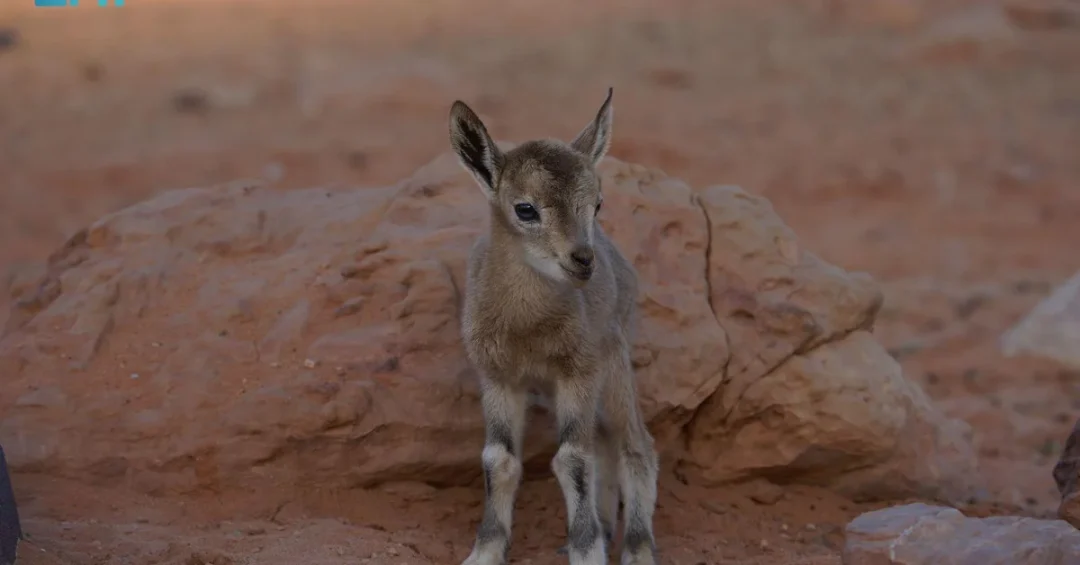
The King Salman bin Abdulaziz Royal Natural Reserve has recorded the birth of a Nubian ibex, marking another milestone in Saudi Arabia’s wildlife conservation efforts. The King Salman bin Abdulaziz Royal Reserve Development Authority announced that its field team documented the birth in March 2025. This event follows the successful reintroduction of more than 81 mountain ibexes across various areas of the reserve, underscoring the Kingdom’s commitment to protecting endangered species and restoring natural habitats.
Context and Background
The King Salman bin Abdulaziz Royal Natural Reserve, established in 2018, is one of the largest wildlife reserves in the Middle East, spanning over 130,000 square kilometers. It serves as a sanctuary for diverse flora and fauna, including the Arabian oryx, sand gazelle, Nubian ibex, and Arabian gazelle. The reserve is a key component of Saudi Arabia’s Vision 2030 environmental goals, which aim to preserve natural ecosystems and promote sustainable development. The reintroduction of mountain ibexes is part of a broader strategy to revive endangered species and maintain ecological balance.
Key Details
The Nubian ibex birth was observed by the reserve’s field team, who monitor wildlife populations and habitats. According to the authority, this reproduction reflects the quality and suitability of the reserve’s natural habitats. Over 120 births of mammals have been recorded across the reserve, including the Arabian oryx, sand gazelle, Nubian ibex, and Arabian gazelle. These births demonstrate the success of ongoing conservation programs and the reserve’s ability to provide a thriving environment for wildlife growth and reproduction.
Implications and Impact
The successful breeding of Nubian ibex and other species highlights the effectiveness of Saudi Arabia’s conservation efforts and contributes to global biodiversity goals. The reserve’s work supports international initiatives to protect endangered species, aligning with the United Nations’ Sustainable Development Goals. Moreover, the reserve serves as a model for other countries in the region, showcasing how dedicated management and scientific monitoring can restore wildlife populations. This achievement also enhances Saudi Arabia’s reputation as a leader in environmental stewardship and ecotourism.
Vision 2030 Alignment
This development directly supports Saudi Vision 2030, which emphasizes environmental sustainability and the protection of natural resources. The King Salman bin Abdulaziz Royal Natural Reserve is a testament to the Kingdom’s commitment to preserving its natural heritage for future generations. By fostering biodiversity and promoting ecotourism, the reserve contributes to economic diversification and the enhancement of quality of life, key objectives of Vision 2030. Saudi Arabia continues to demonstrate its global leadership in conservation, ensuring a harmonious balance between development and nature.
20 Questions
Q1. What recent event was recorded at the King Salman bin Abdulaziz Royal Natural Reserve?
A1. The reserve recorded the birth of a Nubian ibex in March 2025, as announced by the King Salman bin Abdulaziz Royal Reserve Development Authority.
Q2. How many mountain ibexes have been reintroduced into the reserve?
A2. More than 81 mountain ibexes have been reintroduced across various areas of the reserve as part of ongoing conservation efforts.
Q3. What does the reproduction of animals within the reserve indicate?
A3. It reflects the quality and suitability of the reserve’s natural habitats for wildlife and highlights the success of conservation programs.
Q4. Which species have been born in the reserve?
A4. Over 120 births of mammals have been recorded, including the Arabian oryx, sand gazelle, Nubian ibex, and Arabian gazelle.
Q5. When was the King Salman bin Abdulaziz Royal Natural Reserve established?
A5. The reserve was established in 2018 and is one of the largest wildlife reserves in the Middle East.
Q6. What is the size of the King Salman bin Abdulaziz Royal Natural Reserve?
A6. The reserve spans over 130,000 square kilometers, providing a vast sanctuary for diverse flora and fauna.
Q7. Why is the Nubian ibex birth significant?
A7. It demonstrates the reserve’s success in conserving endangered species and restoring wildlife populations in their natural habitat.
Q8. How does the reserve contribute to Saudi Vision 2030?
A8. It supports environmental sustainability, biodiversity, and ecotourism, aligning with Vision 2030’s goals for a sustainable future.
Q9. What other species are found in the reserve?
A9. The reserve is home to the Arabian oryx, sand gazelle, Nubian ibex, Arabian gazelle, and other native wildlife.
Q10. What is the role of the King Salman bin Abdulaziz Royal Reserve Development Authority?
A10. The authority manages the reserve, implements conservation programs, and monitors wildlife to ensure the protection of endangered species.
Q11. How does the reserve’s work impact global biodiversity?
A11. It contributes to international efforts to protect endangered species and serves as a model for conservation in the region.
Q12. What is the significance of the reserve being one of the largest in the Middle East?
A12. It provides extensive habitats for wildlife and reinforces Saudi Arabia’s leadership in environmental conservation.
Q13. How many mammal births have been recorded in the reserve?
A13. Over 120 mammal births have been recorded, including multiple species, indicating a healthy breeding environment.
Q14. What does the successful breeding of Nubian ibex signify?
A14. It signifies that the reserve’s habitats are suitable for reproduction and that conservation measures are effective.
Q15. How does the reserve support ecotourism in Saudi Arabia?
A15. The reserve attracts visitors interested in wildlife and nature, promoting sustainable tourism and economic diversification.
Q16. What are the key objectives of the reserve’s conservation strategy?
A16. The strategy focuses on reintroducing endangered species, habitat restoration, and maintaining ecological balance.
Q17. How does the reserve monitor wildlife populations?
A17. Field teams conduct regular surveys and observations to track births, population sizes, and habitat conditions.
Q18. What international goals does the reserve’s work align with?
A18. It aligns with the United Nations’ Sustainable Development Goals, particularly those related to life on land and biodiversity.
Q19. What role does the reserve play in Saudi Arabia’s environmental policy?
A19. It is a cornerstone of the Kingdom’s environmental policy, demonstrating commitment to conservation and sustainable development.
Q20. What future plans exist for the reserve?
A20. The reserve plans to continue reintroduction programs, expand conservation efforts, and enhance ecotourism initiatives.
Reader Feedback
We value your thoughts. Please share your feedback on this article.
Your feedback helps us improve our coverage.
Related articles
 Saudi Foreign Ministry Hosts Ramadan Iftar for Diplomats
 5.1-Magnitude Earthquake Strikes Indonesia’s Gorontalo
 Makkah Municipality Volunteers Elevate Umrah Experience
 King Salman Congratulates Ireland’s President on National Day
 Crown Prince Congratulates Ireland’s President on National Day
 Saudi Istitlaa Platform Opens Seven Projects for Feedback