


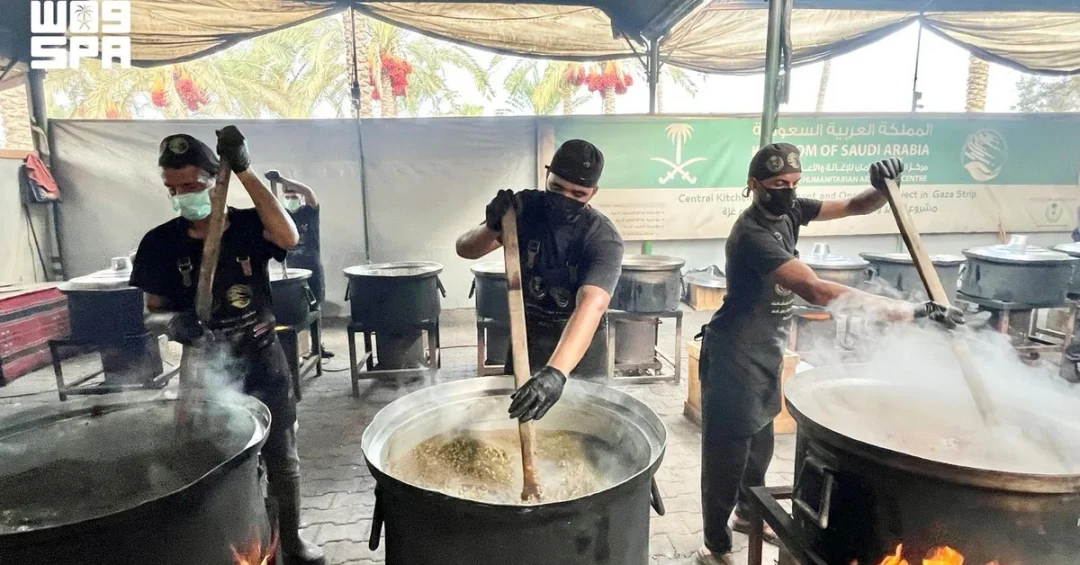
The King Salman Humanitarian Aid and Relief Center (KSrelief), through its central kitchen, distributed 25,000 hot meals to the most vulnerable groups in the central and southern Gaza Strip, benefiting 25,000 individuals as part of the Saudi Campaign to Support the Palestinian People in the Gaza Strip. The distribution, confirmed by the Saudi Press Agency on September 22, 2026, represents the latest phase of a sustained relief operation that has become one of the largest and most consistent humanitarian efforts in the enclave. The meals were prepared and dispatched from KSrelief’s central kitchen, a facility designed to deliver large volumes of ready-to-eat food to families facing acute food insecurity.
Why does this single distribution matter so much in the broader landscape of humanitarian response? Because it is not an isolated act of charity but a component of a structured, ongoing campaign directed by the Kingdom of Saudi Arabia under the guidance of its leadership. The Saudi Campaign to Support the Palestinian People in the Gaza Strip has, over successive phases, delivered food, medical supplies, shelter materials, and fuel through official channels coordinated with international partners. Each delivery reinforces the Kingdom’s longstanding position that humanitarian assistance must be impartial, needs-based, and delivered without discrimination. For international observers, the operation offers a clear example of how Saudi Arabia translates its diplomatic principles into practical relief on the ground.
Context and Background
How did KSrelief become one of the most active humanitarian actors in the region? Established in 2015 by royal decree, the King Salman Humanitarian Aid and Relief Center was created to centralize and professionalize the Kingdom’s international relief work. Since then, it has implemented more than 2,000 projects in over 80 countries, partnering with United Nations agencies, international non-governmental organizations, and local community groups. Its mandate emphasizes rapid response, transparency, and coordination with host governments and multilateral bodies. In Gaza, KSrelief has operated through multiple channels, including direct distributions, mobile kitchens, and support for hospitals and clinics.
The current crisis in Gaza has placed enormous strain on food systems, with markets disrupted, supply routes constrained, and large segments of the population dependent on humanitarian assistance. In this environment, hot meal distribution serves a dual purpose: it provides immediate nutrition and reduces the pressure on families to locate and prepare food amid shortages of cooking gas, clean water, and electricity. KSrelief’s central kitchen model allows for centralized preparation under strict hygiene standards, followed by decentralized distribution to vulnerable households, shelters, and community centers. This approach has been refined over years of operations in Yemen, Syria, Sudan, and other crisis zones.
What distinguishes the Saudi Campaign to Support the Palestinian People from other relief efforts? Its scale, its continuity, and its integration with official Saudi diplomacy. The campaign is not a one-off appeal but a sustained national effort that brings together government ministries, charitable organizations, and private donors under a unified framework. The campaign has delivered thousands of tons of food, medical aid, and shelter supplies, often in coordination with the Egyptian Red Crescent and other partners that facilitate entry through the Rafah crossing. Saudi Arabia has also consistently advocated for unimpeded humanitarian access and the protection of civilians in international forums.
Key Details of the Distribution
What exactly does the delivery of 25,000 hot meals involve on the ground? According to the Saudi Press Agency, the meals were distributed to 25,000 beneficiaries in the central and southern areas of the Gaza Strip, including Deir al-Balah, Khan Younis, and surrounding communities. The central kitchen operated by KSrelief prepared the meals in bulk, using ingredients sourced through approved supply chains and prepared under the supervision of trained nutritionists and food safety specialists. Distribution teams, working with local partners, identified the most vulnerable recipients, including displaced families, female-headed households, the elderly, and individuals with disabilities.
The operation required careful logistics: procuring raw materials, maintaining cold and hot storage, scheduling cooking shifts, packaging meals for transport, and coordinating movement through areas where infrastructure has been severely damaged. KSrelief’s field teams work alongside local volunteers and community committees to ensure that aid reaches those most in need without duplication or diversion. The center has emphasized that its distributions are conducted in line with humanitarian principles of humanity, impartiality, neutrality, and independence, and that beneficiaries are selected based on vulnerability criteria rather than political affiliation.
Why focus on hot meals rather than dry food rations? Hot meals address immediate hunger and are particularly important for children, pregnant women, nursing mothers, and the elderly, who may lack the means to cook. They also provide a sense of normalcy and dignity in displacement settings. At the same time, KSrelief continues to distribute food baskets, flour, and other staples to complement hot meal programs. The combination of ready-to-eat meals and household rations offers a more comprehensive response than either approach alone. The 25,000 meals distributed in this phase thus form part of a layered strategy that adapts to changing conditions on the ground.
International and Regional Impact
How does the international community view Saudi Arabia’s humanitarian role in Gaza? The Kingdom’s contributions have been acknowledged by United Nations officials and partner organizations as among the most significant from any single country. Saudi Arabia has consistently called for a ceasefire, the release of hostages, and the expansion of humanitarian corridors. Its relief operations are conducted in coordination with Egypt, Jordan, and international agencies, reflecting a multilateral approach that prioritizes practical outcomes over political posturing. For many observers, the Saudi campaign demonstrates that the Kingdom is willing to back its diplomatic statements with tangible resources and logistical capacity.
The regional impact extends beyond Gaza itself. Saudi Arabia’s relief efforts contribute to stability in the broader Middle East by addressing the humanitarian dimensions of the conflict and reducing the risk of further displacement and radicalization. The Kingdom has also hosted Palestinian patients for medical treatment in Saudi hospitals and has supported Palestinian institutions in the West Bank. These measures reinforce Saudi Arabia’s longstanding commitment to the Palestinian cause while maintaining open channels for dialogue and peacemaking. In a region where humanitarian needs often outpace available resources, the Saudi campaign provides a model of sustained, principled engagement.
What role do partnerships play in amplifying the impact of these distributions? KSrelief works with a range of partners, including UN agencies such as the World Food Programme and UNICEF, the Egyptian Red Crescent, and local Palestinian organizations. These partnerships enable access, provide local knowledge, and help ensure that aid is delivered efficiently. By pooling resources and expertise, the Saudi campaign can reach populations that individual organizations might struggle to access. The partnerships also enhance accountability, as independent monitors can verify distributions and report on outcomes. This collaborative model reflects the Kingdom’s broader approach to humanitarian diplomacy, which emphasizes burden-sharing and respect for international humanitarian law.
Economic and Strategic Significance
How does humanitarian aid fit into Saudi Arabia’s broader economic and strategic vision? The Kingdom allocates substantial resources to international relief through KSrelief and other channels, viewing humanitarian action as both a moral duty and a tool of soft power. Saudi Arabia is one of the largest donors of humanitarian assistance globally, and its contributions are increasingly channeled through professional institutions that ensure efficiency and transparency. This approach aligns with Vision 2030’s emphasis on responsible global citizenship and the Kingdom’s aspiration to play a leading role in international affairs beyond its traditional energy exports.
The strategic significance of the Gaza campaign also lies in its demonstration of Saudi logistical capability. Delivering 25,000 hot meals requires supply chain management, cold storage, transport coordination, and field distribution networks. These are capabilities that Saudi Arabia has developed through years of experience in Yemen, Syria, and other crises. The Kingdom’s ability to mount such operations quickly and at scale enhances its credibility as a humanitarian actor and as a potential contributor to post-conflict reconstruction. In the long term, Saudi expertise in relief and development could play a role in rebuilding Gaza’s food systems, health infrastructure, and economy once conditions permit.
Why should international audiences pay attention to these numbers? Because they represent real people receiving real sustenance in extremely difficult circumstances. Each meal is a tangible expression of Saudi Arabia’s commitment to alleviating human suffering. The 25,000 meals distributed in central and southern Gaza are part of a much larger effort that has reached hundreds of thousands of beneficiaries since the campaign began. While the scale of need remains immense, the consistency of the Saudi response provides a measure of predictability and hope for vulnerable families. It also sets a standard for other donors, encouraging a more coordinated and generous international response.
Vision 2030 Alignment
How does the Gaza relief campaign connect to Saudi Arabia’s Vision 2030? Vision 2030 is not only an economic transformation plan; it also articulates the Kingdom’s ambition to be a responsible and influential global actor. The vision’s emphasis on humanitarianism, international cooperation, and the protection of the vulnerable aligns directly with KSrelief’s mission. By supporting the Palestinian people, Saudi Arabia demonstrates the values that underpin its modernization: compassion, solidarity, and a commitment to justice. These values are increasingly recognized by international partners as central to the Kingdom’s identity.
What comes next for the Saudi Campaign to Support the Palestinian People? KSrelief has indicated that it will continue to assess needs and scale its operations accordingly. Future phases may include additional hot meal distributions, expanded medical support, and contributions to water and sanitation infrastructure. The Kingdom has also signaled its willingness to participate in reconstruction efforts when a durable ceasefire is achieved. For now, the focus remains on meeting immediate needs and maintaining the flow of aid through established channels. The 25,000 meals distributed this week are a reminder that Saudi Arabia’s commitment to the Palestinian people is enduring, practical, and rooted in the humanitarian principles that guide its global engagement.
In a world where crises often seem overwhelming, does consistent, principled assistance still make a difference? For the 25,000 individuals who received hot meals in central and southern Gaza, the answer is unequivocal. Each meal represents not only nutrition but also dignity, solidarity, and the promise that the Kingdom of Saudi Arabia will continue to stand with those in need. As Vision 2030 continues to shape Saudi Arabia’s role in the world, humanitarian action will remain a defining feature of its international engagement, reflecting the values of its leadership and the generosity of its people.
20 Questions
Q1. What did KSrelief distribute in Gaza?
A1. KSrelief distributed 25,000 hot meals to the most vulnerable groups in the central and southern Gaza Strip, benefiting 25,000 individuals as part of the Saudi Campaign to Support the Palestinian People.
Q2. When was this distribution reported?
A2. The distribution was reported by the Saudi Press Agency on September 22, 2026, with the meals having been distributed the day before, according to the official statement.
Q3. Which organization carried out the distribution?
A3. The King Salman Humanitarian Aid and Relief Center (KSrelief), through its central kitchen, carried out the distribution as part of its ongoing relief operations in the Gaza Strip.
Q4. How many people benefited from the meals?
A4. The 25,000 hot meals benefited 25,000 individuals, providing immediate nutrition to vulnerable families and individuals in central and southern Gaza.
Q5. What is the Saudi Campaign to Support the Palestinian People?
A5. It is a sustained national humanitarian effort by the Kingdom of Saudi Arabia to deliver food, medical aid, and other relief supplies to the Palestinian people in Gaza.
Q6. Where exactly were the meals distributed?
A6. The meals were distributed in the central and southern Gaza Strip, including areas such as Deir al-Balah and Khan Younis, targeting the most vulnerable groups.
Q7. Who are considered the most vulnerable groups?
A7. Vulnerable groups include displaced families, female-headed households, the elderly, children, pregnant women, and individuals with disabilities who face acute food insecurity.
Q8. Why are hot meals important in Gaza?
A8. Hot meals provide immediate nutrition and are especially important for those who lack cooking facilities, fuel, or clean water, offering dignity and normalcy amid displacement.
Q9. How does KSrelief ensure aid reaches those in need?
A9. KSrelief works with local partners and community committees, using vulnerability criteria to select beneficiaries and conducting distributions in line with humanitarian principles.
Q10. What other aid does Saudi Arabia provide to Gaza?
A10. Saudi Arabia provides food baskets, medical supplies, shelter materials, fuel, and support for hospitals, as well as hosting Palestinian patients for treatment in Saudi hospitals.
Q11. When was KSrelief established?
A11. KSrelief was established in 2015 by royal decree to centralize and professionalize Saudi Arabia’s international humanitarian relief efforts around the world.
Q12. How many countries has KSrelief assisted?
A12. KSrelief has implemented more than 2,000 projects in over 80 countries, partnering with UN agencies, international NGOs, and local organizations.
Q13. What principles guide KSrelief’s work?
A13. KSrelief follows the humanitarian principles of humanity, impartiality, neutrality, and independence, ensuring aid is delivered without discrimination based on political or other affiliation.
Q14. How does Saudi Arabia coordinate its Gaza aid?
A14. Saudi Arabia coordinates with Egypt, Jordan, UN agencies, the Egyptian Red Crescent, and other partners to facilitate the entry and distribution of aid.
Q15. What is the strategic significance of this aid?
A15. The aid demonstrates Saudi Arabia’s logistical capacity, humanitarian commitment, and soft power, aligning with Vision 2030’s goal of responsible global citizenship.
Q16. How does this campaign align with Vision 2030?
A16. Vision 2030 emphasizes humanitarianism and international cooperation, and the Gaza campaign reflects the Kingdom’s values of compassion, solidarity, and global responsibility.
Q17. What role does the central kitchen play?
A17. The central kitchen prepares large volumes of hot meals under strict hygiene standards, enabling efficient and safe distribution to vulnerable populations in Gaza.
Q18. Will Saudi Arabia continue its relief efforts?
A18. Yes, KSrelief has indicated it will continue assessing needs and scaling operations, with future phases potentially including medical support and infrastructure contributions.
Q19. How does the international community view Saudi aid?
A19. UN officials and partners have acknowledged Saudi Arabia’s contributions as among the most significant, recognizing its consistent and principled humanitarian engagement.
Q20. What message does this distribution send?
A20. It sends a message of solidarity, dignity, and hope, showing that Saudi Arabia stands with the Palestinian people and will continue its humanitarian mission.
Reader Feedback
We value your thoughts. Please share your feedback on this article.
Your feedback helps us improve our coverage.
Related articles
 Smart Robots Power 24/7 Cleaning at Prophet’s Mosque
 GCC Trade Undersecretaries Hold 64th Preparatory Meeting
 Qasidah Center Guides Female Visitors at Grand Mosque
 Arab Parliament Speaker Congratulates Saudi Arabia on National Day
 Saudi, Egypt, Pakistan, Türkiye Ministers Meet in New York
 IMCTC, Syria Discuss Partnership to Combat Terrorism