


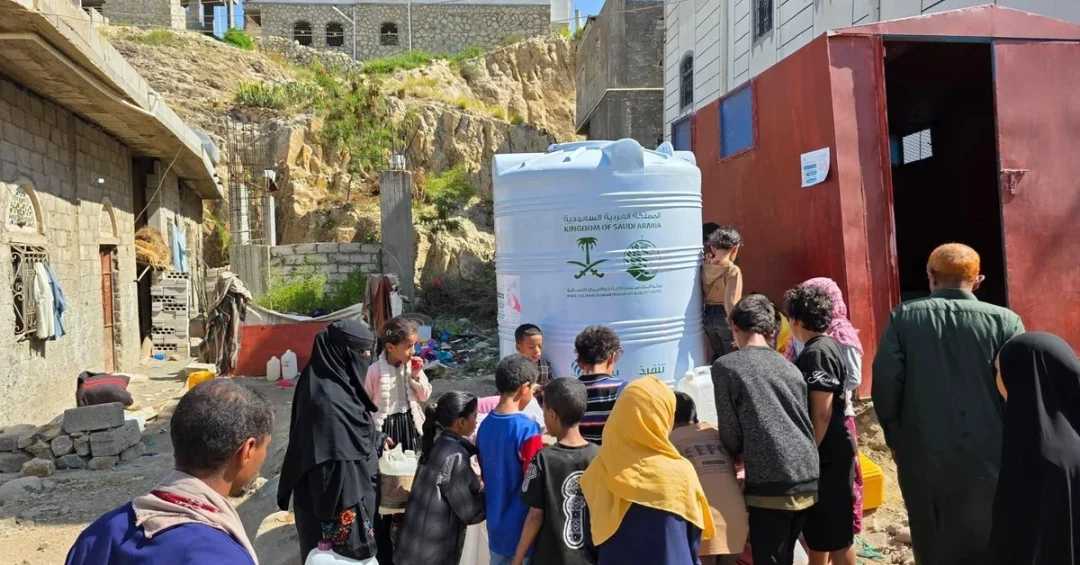
The King Salman Humanitarian Aid and Relief Center (KSrelief) supplied drinking water on Saturday through 13 distribution points in Taiz Governorate, Yemen, benefiting 500 families from displaced populations, affected communities, and host communities in Taiz city, according to the Saudi Press Agency. The distribution was part of the emergency response project to provide drinking water for displaced persons in Taiz, a region that has endured years of conflict and infrastructure collapse. The operation reflects Saudi Arabia’s continued commitment to alleviating human suffering in Yemen through concrete, life-sustaining assistance.
How does a single day’s water distribution ripple through the lives of hundreds of families? For the residents of Taiz, access to safe drinking water is not an abstract development goal but a daily survival imperative. The 13 distribution points served as vital lifelines, reaching families who have been uprooted by conflict and those in host communities who have opened their doors to the displaced. This initiative is part of the broader humanitarian and relief assistance provided by Saudi Arabia through KSrelief to ensure access to safe drinking water, improve living conditions, strengthen community resilience, and create favorable conditions for recovery in Yemen. The operation underscores the Kingdom’s enduring role as a leading humanitarian donor in the region.
Context and Background
Why does Taiz require sustained emergency water interventions? The governorate has been one of Yemen’s most contested areas, suffering extensive damage to its water infrastructure, including pipelines, pumping stations, and reservoirs. According to United Nations assessments, millions of Yemenis lack access to basic water and sanitation services, with Taiz among the hardest-hit regions. The city’s population has swelled with internally displaced persons (IDPs) seeking refuge from frontline areas, placing immense strain on already fragile services.
KSrelief has been at the forefront of Yemen’s humanitarian response since the conflict escalated in 2015. The center operates across multiple sectors, including water, sanitation, and hygiene (WASH), food security, health, and shelter. In Taiz specifically, KSrelief has implemented numerous projects aimed at restoring water access, such as rehabilitating wells, distributing water tanks, and trucking water to remote communities. The emergency response project to provide drinking water for displaced persons in Taiz is a continuation of these efforts, designed to address immediate needs while laying the groundwork for longer-term recovery.
The timing of this distribution is critical. Yemen’s water crisis is exacerbated by seasonal droughts, fuel shortages, and the high cost of water trucking. Families often spend a significant portion of their income on water, forcing difficult choices between hydration and other necessities. By providing free, safe drinking water, KSrelief directly reduces this financial burden and mitigates the risk of waterborne diseases, which can spread rapidly in overcrowded displacement camps. The project thus serves both immediate humanitarian and public health objectives.
Key Details of the KSrelief Water Distribution
How exactly did the operation unfold on the ground? On Saturday, KSrelief coordinated with local authorities and humanitarian partners to establish 13 distribution points across Taiz city. These points were strategically located in areas with high concentrations of displaced families and vulnerable host communities. Each point was managed by trained personnel who ensured equitable access and maintained order, preventing overcrowding and ensuring that the most vulnerable—including women, children, and the elderly—received priority.
The distribution benefited 500 families, which translates to approximately 3,500 individuals based on average family size. Each family received a sufficient quantity of drinking water to meet their immediate needs, typically around 20 liters per person per day for a set period. The water was sourced from approved suppliers and tested for quality, adhering to international humanitarian standards. The operation was funded entirely by the Kingdom of Saudi Arabia as part of its ongoing humanitarian pledge to Yemen.
This distribution is part of the emergency response project to provide drinking water for displaced persons in Taiz, which has a broader scope beyond a single day. The project includes regular water trucking, rehabilitation of water points, and hygiene promotion activities. By integrating these components, KSrelief aims to create a sustainable impact that extends beyond emergency relief. The project also involves coordination with the United Nations Office for the Coordination of Humanitarian Affairs (OCHA) and other agencies to avoid duplication and maximize reach.
International and Regional Impact
What does this operation signal about Saudi Arabia’s role in regional stability? The Kingdom’s humanitarian efforts in Yemen are a cornerstone of its foreign policy, demonstrating its commitment to the well-being of the Yemeni people and the stability of the region. By providing essential services like water, Saudi Arabia helps mitigate the conditions that fuel extremism and displacement, contributing to a more secure and prosperous neighborhood. The operation also reinforces the Kingdom’s leadership in global humanitarian diplomacy.
International observers, including UN agencies and NGOs, have consistently recognized KSrelief’s contributions. The center has been praised for its professionalism, transparency, and ability to deliver aid in challenging environments. The water distribution in Taiz is a testament to these qualities, showcasing Saudi Arabia’s capacity to mobilize resources quickly and effectively. Moreover, it strengthens the humanitarian coalition’s overall response, as KSrelief often fills critical gaps left by other donors.
Regionally, the operation underscores the importance of Gulf cooperation in addressing shared challenges. Saudi Arabia’s efforts complement those of other Gulf states and international partners, creating a coordinated front against the humanitarian crisis. This collaboration is essential for sustainable solutions, as no single actor can address Yemen’s multifaceted needs alone. The Taiz water distribution thus represents a building block in a larger, collective endeavor to restore normalcy to Yemen.
Economic and Strategic Significance
Why is investing in water access also an investment in Yemen’s future economy? Access to safe water is a prerequisite for economic recovery. When families no longer spend hours fetching water or fall ill from contaminated sources, they can pursue education and livelihoods. Children, especially girls, can attend school instead of walking miles for water. Adults can engage in income-generating activities. The KSrelief project therefore has a multiplier effect, enabling communities to rebuild their lives and contribute to local economies.
From a strategic perspective, Saudi Arabia’s humanitarian assistance in Yemen supports the broader goal of restoring stability and legitimate governance. A healthier, better-served population is less susceptible to recruitment by extremist groups and more inclined to support peace efforts. By addressing basic needs, the Kingdom helps create an environment conducive to political reconciliation and reconstruction. This aligns with Saudi Arabia’s Vision 2030, which emphasizes regional stability as a foundation for economic diversification and global engagement.
Furthermore, the water project showcases Saudi Arabia’s soft power and its ability to lead by example. Unlike military interventions, humanitarian aid builds goodwill and trust among the Yemeni people. It demonstrates that the Kingdom is not only a military actor but also a compassionate partner dedicated to the welfare of its neighbors. This reputation enhances Saudi Arabia’s influence and credibility on the world stage, opening doors for diplomatic and economic cooperation.
Vision 2030 Alignment
How does KSrelief’s work in Taiz connect to Saudi Arabia’s Vision 2030? Vision 2030 is a comprehensive plan to transform the Kingdom’s economy and society, but it also has a strong external dimension. A key pillar is to solidify Saudi Arabia’s role as a global humanitarian leader, using its resources and expertise to promote peace and prosperity. KSrelief is an embodiment of this pillar, operationalizing the Kingdom’s values of generosity and solidarity. The water distribution in Taiz is a direct expression of Vision 2030’s commitment to sustainable development and international cooperation.
Moreover, the project supports several UN Sustainable Development Goals (SDGs), particularly SDG 6 (Clean Water and Sanitation) and SDG 3 (Good Health and Well-being). By aligning its humanitarian efforts with global frameworks, Saudi Arabia demonstrates its responsible global citizenship and its willingness to contribute to shared goals. This alignment also enhances the effectiveness of aid, as it leverages international best practices and fosters partnerships with other stakeholders. The Taiz water project is thus a small but significant piece of a larger mosaic of Saudi-led initiatives that are shaping a better future for the region and the world.
20 Questions
Q1. What is KSrelief?
A1. KSrelief is the King Salman Humanitarian Aid and Relief Center, a Saudi Arabian humanitarian organization established in 2015 to provide aid and relief to countries in need, reflecting the Kingdom’s commitment to global humanitarian efforts.
Q2. Where did the water distribution take place?
A2. The distribution took place in Taiz Governorate, Yemen, specifically in Taiz city, through 13 distribution points set up to reach displaced populations and host communities in the area.
Q3. How many families benefited from this distribution?
A3. A total of 500 families benefited from the drinking water distribution, which included displaced persons, affected communities, and host communities in Taiz city, according to the Saudi Press Agency.
Q4. When did the distribution occur?
A4. The distribution occurred on Saturday, as reported by the Saudi Press Agency on November 23, 2026, providing timely emergency relief to families in need in Taiz Governorate.
Q5. What is the emergency response project mentioned?
A5. The emergency response project is a KSrelief initiative to provide drinking water for displaced persons in Taiz, aimed at ensuring access to safe water, improving living conditions, and strengthening community resilience.
Q6. Why is Taiz in need of water assistance?
A6. Taiz has suffered extensive damage to its water infrastructure due to years of conflict, leaving millions without reliable access to safe drinking water and forcing families to rely on costly and unsafe sources.
Q7. How does this project align with Saudi Arabia’s Vision 2030?
A7. The project aligns with Vision 2030’s goal of positioning Saudi Arabia as a global humanitarian leader and supporting sustainable development, reflecting the Kingdom’s values of generosity and international cooperation.
Q8. What other sectors does KSrelief work in?
A8. KSrelief operates in multiple sectors including water, sanitation, hygiene, food security, health, shelter, and education, providing comprehensive aid to vulnerable populations in Yemen and other countries.
Q9. How does water access impact daily life in Taiz?
A9. Access to safe water reduces the time families spend fetching water, lowers the risk of waterborne diseases, and frees children to attend school, enabling communities to focus on recovery and livelihoods.
Q10. Is this distribution a one-time event?
A10. No, it is part of an ongoing emergency response project that includes regular water trucking, rehabilitation of water points, and hygiene promotion activities to create sustainable impact beyond a single day.
Q11. Who are the beneficiaries of this project?
A11. Beneficiaries include displaced populations, affected communities, and host communities in Taiz city, with priority given to the most vulnerable, such as women, children, and the elderly.
Q12. How does KSrelief ensure water quality?
A12. KSrelief sources water from approved suppliers and tests it for quality, adhering to international humanitarian standards to ensure it is safe for drinking and prevents waterborne diseases.
Q13. What is the role of local authorities in this distribution?
A13. Local authorities coordinate with KSrelief to identify distribution points, manage logistics, and ensure equitable access, helping to maintain order and reach those most in need efficiently.
Q14. How does this project contribute to Yemen’s recovery?
A14. By providing safe water, the project improves health, reduces financial burdens on families, and creates conditions for economic recovery, as healthier populations can pursue education and livelihoods.
Q15. What international frameworks does this project support?
A15. The project supports UN Sustainable Development Goals, particularly SDG 6 on clean water and sanitation and SDG 3 on good health and well-being, aligning Saudi aid with global objectives.
Q16. How does Saudi Arabia’s aid compare to other donors?
A16. Saudi Arabia is one of the largest humanitarian donors to Yemen, with KSrelief implementing hundreds of projects; its contributions are widely recognized for their scale, effectiveness, and timeliness.
Q17. What challenges does KSrelief face in delivering aid?
A17. Challenges include security risks, damaged infrastructure, and logistical constraints, but KSrelief’s experience and partnerships with local and international agencies enable it to overcome these obstacles.
Q18. How can other organizations support similar efforts?
A18. Organizations can partner with KSrelief, fund water projects, or advocate for humanitarian access, contributing to a coordinated response that maximizes impact and avoids duplication of efforts.
Q19. What is the long-term goal of KSrelief’s water projects?
A19. The long-term goal is to restore sustainable water systems, build community resilience, and create conditions for recovery, ultimately reducing dependence on emergency aid and fostering self-reliance.
Q20. How does this project reflect Saudi Arabia’s foreign policy?
A20. It reflects Saudi Arabia’s commitment to regional stability, humanitarian diplomacy, and global citizenship, demonstrating the Kingdom’s role as a compassionate and responsible leader in the Middle East and beyond.
Reader Feedback
We value your thoughts. Please share your feedback on this article.
Your feedback helps us improve our coverage.
Related articles
 Jeddah Governor Attends Omani National Day Ceremony
 KSrelief Concludes Volunteer Medical Project in Damascus
 KSrelief Distributes 521 Food Baskets in Gaza Strip
 Riyadh Municipality Honored for UN Online Services Index
 Umrah Journey Averages 124 Minutes in Jumada Al-Ula
 Royal Court Announces Death of Prince Saud bin Abdulaziz