


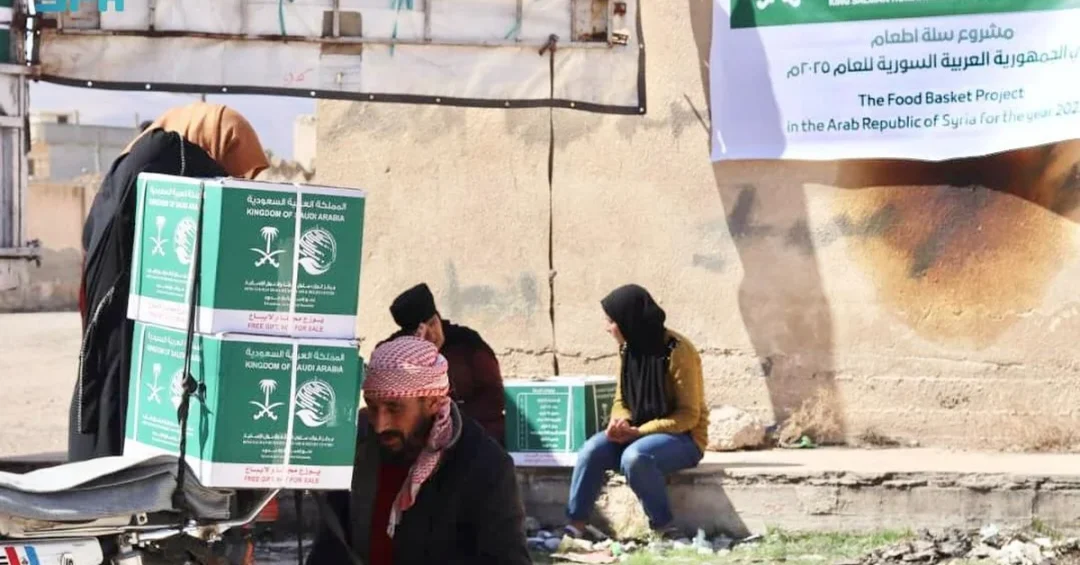
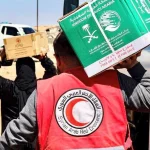
The King Salman Humanitarian Aid and Relief Center (KSrelief) distributed 160 food baskets on Friday in Al-Dumayr, Rif Dimashq Governorate, Syria, benefiting 160 families as part of the Etaam Basket Distribution Project for Ramadan 1446 AH. The distribution was carried out under the supervision of the Saudi humanitarian arm, reflecting the Kingdom of Saudi Arabia’s continued commitment to supporting the Syrian people amid the ongoing humanitarian crisis. The food baskets, which contain essential staples to sustain families throughout the holy month, were delivered in coordination with local authorities and humanitarian partners operating in the region.
This latest delivery in Al-Dumayr forms part of a broader Ramadan relief effort that has seen KSrelief expand its reach across multiple Syrian governorates and refugee-hosting communities. The Etaam project, now in its fourth phase, is one of the largest seasonal food security initiatives managed by the Kingdom, and it underscores Saudi Arabia’s longstanding policy of providing impartial, needs-based assistance to populations affected by conflict and displacement. The distribution of 160 baskets in Rif Dimashq is a concrete example of how the Kingdom’s humanitarian diplomacy translates into tangible support for vulnerable households during a period of heightened need. How does a single food basket, delivered quietly in a Damascus suburb, connect to a global relief architecture spanning dozens of countries?
Context and Background
The Etaam Basket Distribution Project is a flagship Ramadan initiative implemented by KSrelief, the humanitarian agency established by royal decree in 2015 to coordinate and deliver Saudi Arabia’s international relief efforts. The project’s fourth phase aims to distribute 390,109 food baskets across 27 countries during the holy month of Ramadan, benefiting an estimated 2,304,104 individuals at a total cost exceeding SAR67.064 million. These figures position Etaam among the most extensive seasonal food security programs in the world, with a footprint that stretches from the Middle East and Africa to Asia and beyond. What does it take to deliver more than 390,000 food baskets to families in 27 countries within a single lunar month?
Syria remains one of the most complex operational environments for humanitarian agencies, with years of conflict having eroded infrastructure, disrupted markets, and displaced millions of people both internally and across borders. In Rif Dimashq, a governorate that surrounds the capital Damascus and includes agricultural towns such as Al-Dumayr, many families continue to face economic hardship, limited access to basic services, and fluctuating food prices. Ramadan places additional pressure on household budgets, as families seek to prepare adequate iftar and suhoor meals. KSrelief’s decision to include Al-Dumayr in this year’s distribution reflects a deliberate focus on reaching communities that might otherwise be overlooked by larger relief operations.
The Kingdom’s humanitarian engagement in Syria is not new. Over the past decade, Saudi Arabia has provided hundreds of millions of dollars in assistance to Syrians inside the country and in neighboring host states, covering food, health, shelter, education, and water and sanitation. The Etaam project builds on this legacy by adding a seasonal dimension that responds directly to the spiritual and nutritional needs of Ramadan. By aligning relief delivery with the Islamic calendar, KSrelief ensures that assistance arrives at the moment of greatest need, when families gather to break their fast and when the absence of basic provisions is felt most acutely.
Key Details of the Al-Dumayr Distribution
The 160 food baskets distributed in Al-Dumayr were handed over to 160 families, each basket containing a range of essential food items designed to cover a household’s needs for a meaningful portion of the holy month. The contents typically include staples such as rice, flour, lentils, cooking oil, sugar, and dates, which together provide a balanced nutritional base for iftar and suhoor meals. The distribution was organized in coordination with local partners on the ground, who helped identify the most vulnerable households, including families headed by widows, the elderly, and those with limited income sources. How does a carefully assembled basket of staples restore a sense of dignity and normalcy for a family during Ramadan?
Al-Dumayr, located some 30 kilometers northeast of Damascus, is a town that has experienced significant demographic changes over the past decade as a result of conflict and displacement. The arrival of food assistance there is part of a wider pattern of KSrelief operations in Rif Dimashq and other Syrian governorates, where the agency works to ensure that aid reaches both long-term residents and families who have returned to their homes. The selection of 160 families in this location was based on needs assessments conducted by field teams, who prioritize households with no stable income, those caring for dependents, and those facing acute food insecurity.
Beyond the immediate nutritional benefit, the distribution carries a symbolic weight. It represents a direct link between the Kingdom’s leadership, which oversees KSrelief’s strategy, and the daily realities of Syrian families who may feel isolated from international support. The baskets are delivered without discrimination, in line with the humanitarian principles of impartiality and neutrality that guide Saudi assistance. This approach has allowed KSrelief to maintain access and credibility in a challenging environment, and it reinforces the Kingdom’s reputation as a reliable humanitarian actor in the region. What message does it send when assistance arrives quietly, consistently, and without political conditions attached?
International and Regional Impact
KSrelief’s operations in Syria are part of a broader Saudi humanitarian footprint that spans more than 90 countries and covers sectors ranging from emergency food aid to long-term development. The Etaam project’s fourth phase, with its 27-country reach, demonstrates how the Kingdom has institutionalized its relief capacity, moving from ad hoc donations to a structured, data-driven system of needs assessment, procurement, logistics, and monitoring. This professionalization has made Saudi Arabia one of the largest donor states in the region and a key partner for United Nations agencies and international NGOs working on Syria and other crises. Why does a country’s ability to deliver aid efficiently matter as much as the amount it pledges?
Regionally, the distribution in Rif Dimashq contributes to stability by easing pressure on host communities and local markets. When vulnerable families receive food baskets, they are less likely to resort to negative coping mechanisms such as selling assets, reducing meals, or incurring debt. This, in turn, supports social cohesion and reduces the risk of further displacement. For neighboring countries that host large Syrian refugee populations, including Jordan, Lebanon, and Turkey, Saudi assistance inside Syria can help create conditions that make voluntary return more viable over time. The Kingdom’s humanitarian diplomacy thus serves both a moral purpose and a pragmatic one, linking relief to broader efforts to stabilize the region.
International observers have noted that Saudi Arabia’s humanitarian work is increasingly integrated with its diplomatic and development agendas. KSrelief’s partnerships with UN agencies, its participation in international donor conferences, and its coordination with the King Salman Humanitarian Aid and Relief Center’s field offices all reflect a coherent strategy. The Etaam project is a visible expression of this strategy, and its Ramadan timing gives it a cultural resonance that extends beyond the immediate beneficiary communities. By supporting Syrians during the holy month, the Kingdom reinforces bonds of faith and solidarity that transcend borders.
Economic and Strategic Significance
The Etaam project’s budget of more than SAR67.064 million for the fourth phase reflects a significant investment in food security at a time when global food prices remain volatile and supply chains are under strain. By procuring and distributing food baskets at scale, KSrelief can achieve economies of scale that lower the cost per beneficiary, ensuring that a greater share of resources reaches families directly. The project also supports local economies in beneficiary countries, as procurement and logistics often involve regional suppliers and service providers. In Syria, where the economy has been severely disrupted, the injection of food assistance can help stabilize local markets and prevent price spikes during Ramadan. How does strategic procurement turn a charitable impulse into an efficient, large-scale operation?
From a strategic perspective, the distribution in Al-Dumayr reinforces Saudi Arabia’s position as a leading humanitarian actor in the Middle East and beyond. It complements the Kingdom’s diplomatic efforts to support a political resolution to the Syrian crisis and its participation in regional reconstruction discussions. By maintaining a visible and consistent presence in Syria through humanitarian channels, Saudi Arabia keeps open lines of communication and demonstrates its commitment to the Syrian people’s welfare. This approach aligns with the Kingdom’s broader foreign policy objectives, which emphasize stability, development, and cooperation. What role does sustained humanitarian engagement play in building the trust necessary for longer-term diplomatic and economic partnerships?
The Etaam project also contributes to the Kingdom’s soft power by showcasing its logistical capabilities and its ability to mobilize resources quickly. The distribution of 390,109 baskets across 27 countries requires sophisticated planning, from sourcing and packaging to transportation and last-mile delivery. KSrelief’s success in executing such a complex operation enhances Saudi Arabia’s reputation as a capable and reliable partner in international humanitarian efforts, a reputation that has tangible benefits in diplomatic and economic forums.
Vision 2030 Alignment
The Etaam Basket Distribution Project aligns closely with Saudi Arabia’s Vision 2030, which seeks to position the Kingdom as a global leader in humanitarian and development assistance. Vision 2030 emphasizes the importance of social responsibility, international cooperation, and the Kingdom’s role as a bridge between cultures and economies. Through KSrelief, Saudi Arabia has operationalized these principles, creating a humanitarian arm that is professional, transparent, and effective. The distribution in Rif Dimashq is a small but meaningful example of how Vision 2030’s global engagement goals are implemented on the ground, one family at a time. How does a national transformation plan translate into a food basket delivered to a Syrian household during Ramadan?
Vision 2030 also calls for the Kingdom to diversify its economy and enhance its international standing. Humanitarian leadership is a key component of that standing, as it demonstrates Saudi Arabia’s commitment to global stability and its willingness to shoulder responsibilities beyond its borders. The Etaam project, with its multi-country reach and its focus on food security, contributes to the Sustainable Development Goals, particularly those related to hunger, health, and partnerships. By investing in these efforts, the Kingdom strengthens its relationships with international organizations and reinforces its image as a responsible global citizen.
As Ramadan 1446 AH continues, KSrelief’s teams will remain active across Syria and the other 26 countries included in the Etaam project. The 160 baskets distributed in Al-Dumayr represent a fraction of the total, but they illustrate the project’s core promise: that no family should be left without the means to observe the holy month with dignity. Through this work, Saudi Arabia continues to build on its humanitarian legacy, aligning its relief efforts with the aspirations of Vision 2030 and the timeless values of compassion and solidarity that define the Kingdom’s approach to the world.
20 Questions
Q1. What did KSrelief distribute in Al-Dumayr, Rif Dimashq, Syria?
A1. KSrelief distributed 160 food baskets to 160 families in Al-Dumayr, Rif Dimashq Governorate, Syria, as part of the Etaam Basket Distribution Project for Ramadan 1446 AH.
Q2. When did the distribution take place?
A2. The distribution took place on Friday, as reported by the Saudi Press Agency, during the holy month of Ramadan 1446 AH, according to the official announcement from KSrelief.
Q3. What is the Etaam Basket Distribution Project?
A3. The Etaam project is a Ramadan food security initiative by KSrelief that distributes food baskets to vulnerable families across multiple countries, now in its fourth phase of implementation.
Q4. How many food baskets does the Etaam project aim to distribute in its fourth phase?
A4. The fourth phase of the Etaam project aims to distribute 390,109 food baskets across 27 countries during Ramadan, benefiting an estimated 2,304,104 individuals.
Q5. What is the total cost of the Etaam project’s fourth phase?
A5. The fourth phase of the Etaam project is estimated to cost more than SAR67.064 million, reflecting Saudi Arabia’s substantial investment in Ramadan food security.
Q6. How many families benefited from the Al-Dumayr distribution?
A6. Exactly 160 families benefited from the distribution in Al-Dumayr, each receiving one food basket containing essential staples for the holy month of Ramadan.
Q7. What is KSrelief?
A7. KSrelief, the King Salman Humanitarian Aid and Relief Center, is Saudi Arabia’s humanitarian arm, established in 2015 to coordinate and deliver the Kingdom’s international relief efforts worldwide.
Q8. Why is the Al-Dumayr distribution significant?
A8. The distribution is significant because it reaches vulnerable families in a conflict-affected area, providing essential food during Ramadan and demonstrating Saudi Arabia’s continued commitment to the Syrian people.
Q9. Which countries are included in the Etaam project?
A9. The Etaam project’s fourth phase covers 27 countries across the Middle East, Africa, Asia, and other regions, reflecting the global scope of Saudi Arabia’s Ramadan humanitarian outreach.
Q10. What items are typically included in a KSrelief food basket?
A10. KSrelief food baskets typically contain staples such as rice, flour, lentils, cooking oil, sugar, and dates, providing a balanced nutritional base for iftar and suhoor meals during Ramadan.
Q11. How does the Etaam project align with Vision 2030?
A11. The Etaam project aligns with Vision 2030 by showcasing Saudi Arabia’s global humanitarian leadership, strengthening international partnerships, and contributing to sustainable development goals related to food security.
Q12. What is the humanitarian situation in Rif Dimashq?
A12. Rif Dimashq has faced significant hardship due to years of conflict, with many families experiencing economic difficulties, displacement, and limited access to basic services and food.
Q13. How does KSrelief select beneficiary families?
A13. KSrelief selects beneficiaries through needs assessments conducted by field teams, prioritizing households with no stable income, widows, the elderly, and those facing acute food insecurity.
Q14. What is the role of the Saudi Press Agency in reporting this news?
A14. The Saudi Press Agency (SPA) is the official state news agency that reported the distribution, serving as the primary source of information on KSrelief’s humanitarian activities.
Q15. How long has Saudi Arabia been providing aid to Syria?
A15. Saudi Arabia has provided humanitarian assistance to Syria for over a decade, delivering hundreds of millions of dollars in food, health, shelter, education, and water aid to Syrians inside the country and in host states.
Q16. What impact does the distribution have on local communities?
A16. The distribution eases pressure on vulnerable households, supports local markets, reduces negative coping mechanisms, and contributes to social cohesion and stability in the affected communities.
Q17. How does KSrelief coordinate its work in Syria?
A17. KSrelief coordinates with local authorities, humanitarian partners, and field teams to ensure aid reaches the most vulnerable families efficiently and in line with humanitarian principles.
Q18. What is the significance of distributing food during Ramadan?
A18. Distributing food during Ramadan addresses heightened nutritional needs, supports families observing the holy month, and reflects the Islamic values of compassion and solidarity that guide Saudi humanitarian work.
Q19. How many individuals will benefit from the Etaam project’s fourth phase?
A19. The fourth phase of the Etaam project is expected to benefit 2,304,104 individuals across 27 countries, providing them with essential food supplies during Ramadan.
Q20. What does this distribution say about Saudi Arabia’s global role?
A20. The distribution demonstrates Saudi Arabia’s role as a leading humanitarian donor, its commitment to international solidarity, and its efforts to promote stability and development through Vision 2030-aligned global engagement.
Reader Feedback
We value your thoughts. Please share your feedback on this article.
Your feedback helps us improve our coverage.
Related articles
 Moroccan PM Akhannouch Departs Madinah After Official Visit
 KSrelief Distributes 630 Food Baskets in Port Sudan
 KSrelief Distributes 594 Food Baskets in Yemen’s Shabwah
 Sayma and Al Watan Sign Strategic Media Partnership
 Saudi Press Agency Board Holds First Meeting of 2025
 KSrelief Distributes 269 Food Baskets in Syria’s Homs