


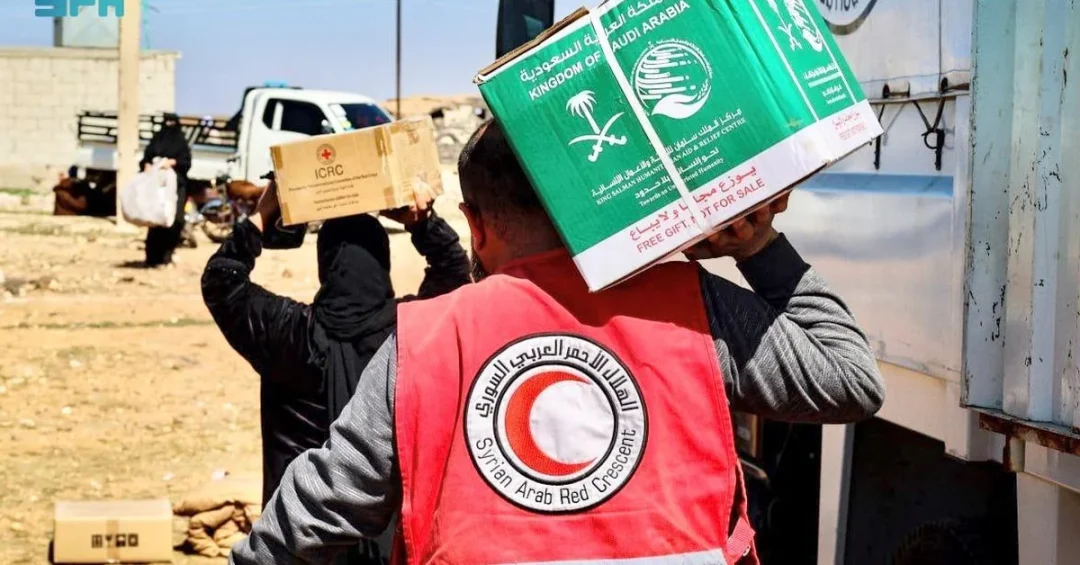
The King Salman Humanitarian Aid and Relief Center (KSrelief) distributed 269 food baskets in Syria’s Homs Governorate on Friday, benefiting 1,280 individuals from 269 families as part of the “Etaam” Ramadan Food Basket Distribution Project for 1446 AH. The aid operation, announced through official Saudi channels, reflects the Kingdom of Saudi Arabia’s continued commitment to alleviating the suffering of vulnerable communities during the holy month of Ramadan. Each basket contained essential food staples designed to sustain a family through the fasting period, ensuring that recipients can observe Ramadan with dignity and security. The distribution in Homs, one of Syria’s most historically significant governorates, forms part of a broader humanitarian effort that spans multiple regions and addresses acute food insecurity. The initiative underscores Saudi Arabia’s longstanding role as a leading global donor of humanitarian assistance, operating through KSrelief in coordination with local partners and international agencies to deliver aid efficiently and transparently.
How does a single food basket change the daily reality of a family observing Ramadan in a conflict-affected region? For the 269 families in Homs, the answer lies not only in the immediate nutritional value of the provisions but in the message of solidarity they carry. KSrelief’s “Etaam” project is specifically designed to meet the heightened needs of Ramadan, a period when food consumption patterns shift and vulnerable households face increased pressure. The distribution in Homs is one of many operations conducted across Syria and beyond, reflecting a systematic approach to humanitarian relief that prioritizes reach, speed, and respect for local communities. The Kingdom’s humanitarian philosophy, rooted in Islamic values and international humanitarian principles, emphasizes that assistance should be both impactful and dignified, targeting those most in need without discrimination.
Context and Background
What conditions make humanitarian aid so critical in Syria today? More than a decade of conflict has left deep scars on the country’s infrastructure, economy, and social fabric. Many families in Homs and other governorates continue to face displacement, limited access to basic services, and disrupted livelihoods. Food insecurity remains a persistent challenge, particularly during Ramadan when the demand for nutritious food rises. KSrelief has been active in Syria for years, implementing projects that range from food security and health care to education and shelter. The “Etaam” Ramadan Food Basket Distribution Project is a seasonal initiative that aligns with the increased charitable giving observed during the holy month. By focusing on food baskets, KSrelief addresses an immediate need while also supporting broader recovery efforts. The project is part of Saudi Arabia’s wider humanitarian portfolio, which is guided by the directives of the Kingdom’s leadership to stand by those in need worldwide.
How does KSrelief determine where and when to distribute aid? The center relies on needs assessments, coordination with local authorities and humanitarian partners, and monitoring mechanisms to ensure that assistance reaches the intended beneficiaries. In Homs, the distribution of 269 baskets was carried out with careful planning to identify the most vulnerable families, including those headed by women, the elderly, and individuals with disabilities. The operation reflects KSrelief’s commitment to transparency and accountability, principles that have earned it recognition as a trusted humanitarian actor. The Kingdom’s aid efforts are not limited to Syria; KSrelief operates in dozens of countries across Asia, Africa, and the Middle East, responding to both man-made and natural crises. The Ramadan project in Syria is a continuation of this global mission, demonstrating Saudi Arabia’s enduring solidarity with the Syrian people during a time of profound need.
Key Details of the Homs Distribution
What exactly does a KSrelief food basket contain, and how is it distributed? While the specific contents may vary based on local needs and availability, KSrelief food baskets typically include staples such as rice, flour, lentils, cooking oil, sugar, and dates. These items are chosen for their nutritional value, long shelf life, and cultural appropriateness. In Homs, the 269 baskets were distributed to 269 families, reaching 1,280 individuals. The distribution process involves local partners who help identify beneficiaries and organize the handover, ensuring that aid reaches those who need it most. Each basket is designed to support a family for a period of time, reducing the immediate burden of food insecurity. The operation was conducted in accordance with humanitarian standards, with measures in place to prevent duplication and ensure fairness. The beneficiaries expressed gratitude for the assistance, which arrived at a time when many are struggling to make ends meet.
How does the “Etaam” project fit into KSrelief’s broader Ramadan strategy? The project is one of several seasonal initiatives that KSrelief implements during Ramadan, a month when Muslims around the world increase their charitable giving. The “Etaam” project focuses on food security, recognizing that fasting can be particularly challenging for families who lack reliable access to nutritious food. By distributing food baskets, KSrelief helps ensure that families can break their fast with adequate meals, preserving the spiritual and communal aspects of Ramadan. The project is implemented in multiple countries, with Syria being a key focus due to the ongoing humanitarian crisis. The 1446 AH edition of “Etaam” builds on previous years’ successes, expanding reach and improving targeting. The Kingdom’s leadership has consistently emphasized the importance of humanitarian work, and KSrelief’s Ramadan projects are a tangible expression of that commitment.
International and Regional Impact
How does Saudi Arabia’s humanitarian aid influence its international standing? The Kingdom’s consistent and generous humanitarian contributions have positioned it as a respected global donor. Through KSrelief, Saudi Arabia has provided assistance to millions of people in need, earning praise from the United Nations and other international organizations. The distribution in Homs, while a single operation, is part of a much larger effort that enhances the Kingdom’s soft power and demonstrates its commitment to international solidarity. In a region marked by conflict and instability, Saudi Arabia’s aid serves as a stabilizing force, addressing immediate needs and contributing to long-term recovery. The Kingdom’s humanitarian diplomacy is rooted in its Islamic faith and Arab heritage, but it is also aligned with modern international norms and the Sustainable Development Goals. By working with local and international partners, KSrelief ensures that its aid is effective and reaches those most in need.
What does the distribution in Homs mean for regional cooperation? The operation involves coordination with Syrian local entities and possibly international agencies, reflecting a pragmatic approach to aid delivery that prioritizes access and impact. While political complexities persist in Syria, humanitarian actors like KSrelief focus on saving lives and alleviating suffering, which can build bridges and foster goodwill. The aid also contributes to stability by reducing the risk of food-related unrest and supporting community resilience. Saudi Arabia’s efforts in Syria are part of a broader regional strategy that includes support for refugees in neighboring countries such as Jordan, Lebanon, and Turkey. The Kingdom has consistently called for a political solution to the Syrian crisis while simultaneously addressing the humanitarian fallout. The Homs distribution is a reminder that even in the most challenging environments, humanitarian action can make a difference.
Economic and Strategic Significance
How does humanitarian aid align with Saudi Arabia’s economic and strategic priorities? At first glance, humanitarian assistance may seem separate from economic goals, but in reality, it supports stability and development, which are prerequisites for economic growth. By helping to stabilize communities in crisis-affected regions, Saudi Arabia contributes to a more secure environment that benefits trade, investment, and regional cooperation. Moreover, the aid reflects the Kingdom’s values and its leadership role in the Muslim world, reinforcing its soft power. The “Etaam” project also has a strategic dimension: it demonstrates Saudi Arabia’s ability to project influence through generosity and compassion, countering narratives that seek to portray the Kingdom in a negative light. The aid is delivered efficiently and transparently, showcasing the professionalism of Saudi humanitarian institutions. As Saudi Arabia pursues Vision 2030, its humanitarian efforts are an integral part of its international engagement, complementing economic diversification and social modernization.
What economic ripple effects can food aid have in a local economy like Homs? The distribution of food baskets injects resources directly into vulnerable households, freeing up limited income for other essential needs such as health care, education, or shelter. This can have a modest but meaningful stimulative effect on local markets, as families may spend their limited cash on other goods and services. Additionally, KSrelief’s procurement of food items may support local producers and suppliers when possible, creating a small economic boost. More broadly, by addressing food insecurity, the aid helps maintain social stability, which is essential for any economic recovery. The Kingdom’s humanitarian investments are thus not only charitable but also strategic, contributing to the conditions that enable long-term development. Saudi Arabia’s own economic transformation under Vision 2030 is closely tied to regional stability, and humanitarian aid is one tool for fostering that stability.
Vision 2030 Alignment
How does KSrelief’s work in Syria reflect the principles of Saudi Vision 2030? Vision 2030 is not only about domestic economic reform; it also encompasses the Kingdom’s global role and its commitment to humanitarian values. One of the vision’s pillars is a “vibrant society” that includes a strong sense of social responsibility and global citizenship. KSrelief embodies this pillar by extending Saudi Arabia’s compassion beyond its borders. The center’s operations are characterized by professionalism, innovation, and partnership, which are also hallmarks of Vision 2030. By leveraging technology and data to improve aid delivery, KSrelief aligns with the vision’s emphasis on digital transformation and efficiency. Furthermore, the Kingdom’s humanitarian efforts enhance its international reputation, which is essential for attracting investment and tourism, key goals of Vision 2030. The Homs distribution, though small in scale, is part of a larger narrative of a modern, outward-looking Saudi Arabia that is both prosperous and generous.
What does the future hold for Saudi humanitarian aid under Vision 2030? As the Kingdom continues its transformation, its humanitarian arm is likely to grow even more effective and far-reaching. Vision 2030 calls for a diversified economy and a more active global role, and KSrelief is well-positioned to contribute to both. The center’s work in Syria and elsewhere demonstrates that Saudi Arabia is a responsible global citizen, ready to help those in need. The Kingdom’s leadership has repeatedly affirmed that humanitarian work is a fundamental part of its identity, and this is unlikely to change. Instead, we can expect increased coordination with international partners, greater use of technology, and a continued focus on sustainable solutions. The 269 food baskets in Homs are a symbol of this enduring commitment, a small but significant act of kindness that reflects the best of Saudi Arabia’s values and its vision for a better world.
20 Questions
Q1. What is KSrelief and what does it do?
A1. The King Salman Humanitarian Aid and Relief Center (KSrelief) is Saudi Arabia’s official humanitarian aid agency. It provides relief and assistance to people affected by crises worldwide, operating under the directives of the Kingdom’s leadership.
Q2. How many food baskets were distributed in Homs?
A2. KSrelief distributed 269 food baskets in Syria’s Homs Governorate, benefiting 1,280 individuals from 269 families. The distribution was part of the “Etaam” Ramadan Food Basket Distribution Project for 1446 AH.
Q3. What is the “Etaam” project?
A3. The “Etaam” project is a Ramadan initiative by KSrelief that provides food baskets to needy families in various countries. It aims to support fasting families during the holy month by ensuring they have adequate nutritious food.
Q4. When did the distribution take place?
A4. The distribution took place on Friday, as reported by the Saudi Press Agency. It was part of ongoing Ramadan humanitarian efforts in Syria during the year 1446 AH.
Q5. Who benefited from the food baskets?
A5. The food baskets benefited 269 families, totaling 1,280 individuals. These beneficiaries are residents of Homs Governorate, many of whom are vulnerable due to the ongoing humanitarian situation in Syria.
Q6. What items are typically included in a KSrelief food basket?
A6. KSrelief food baskets generally contain staples such as rice, flour, lentils, cooking oil, sugar, and dates. These items are selected for their nutritional value, long shelf life, and cultural suitability.
Q7. Why is Homs a focus for humanitarian aid?
A7. Homs has been significantly affected by years of conflict, leading to displacement, infrastructure damage, and food insecurity. Humanitarian aid helps address the immediate needs of vulnerable families in the governorate.
Q8. How does KSrelief ensure aid reaches those most in need?
A8. KSrelief conducts needs assessments and coordinates with local partners to identify vulnerable families. It also monitors distributions to ensure transparency and fairness, preventing duplication and ensuring aid reaches the intended recipients.
Q9. Is this the first time KSrelief has distributed aid in Syria?
A9. No, KSrelief has been active in Syria for many years, implementing various humanitarian projects. The “Etaam” Ramadan project is a recurring seasonal initiative that has been carried out in previous years as well.
Q10. How does this aid reflect Saudi Arabia’s foreign policy?
A10. The aid demonstrates Saudi Arabia’s commitment to humanitarian values and regional stability. It aligns with the Kingdom’s foreign policy objectives of promoting peace, supporting needy populations, and fostering goodwill internationally.
Q11. What is the significance of distributing aid during Ramadan?
A11. Ramadan is a time of increased charitable giving and heightened needs for vulnerable families. Distributing food baskets during this month helps families observe the fast with dignity and reinforces the spirit of solidarity.
Q12. Does KSrelief work with other organizations in Syria?
A12. Yes, KSrelief often collaborates with local entities, international NGOs, and UN agencies to implement its projects. This coordination enhances access and effectiveness in challenging environments like Syria.
Q13. How does Saudi Arabia’s aid compare to other donors?
A13. Saudi Arabia is among the world’s top humanitarian donors, consistently providing generous assistance. KSrelief has been recognized internationally for its professionalism and reach, often ranking high in global aid rankings.
Q14. What impact does food aid have on local communities?
A14. Food aid alleviates immediate hunger, frees up household resources for other needs, and contributes to social stability. It can also have modest positive effects on local markets when procurement is done locally.
Q15. How does KSrelief’s work align with Vision 2030?
A15. Vision 2030 emphasizes Saudi Arabia’s global role and social responsibility. KSrelief’s humanitarian efforts reflect these principles, enhancing the Kingdom’s international standing and contributing to a more stable world.
Q16. What challenges does aid delivery face in Syria?
A16. Aid delivery in Syria faces challenges such as security concerns, logistical constraints, and political complexities. KSrelief and its partners navigate these challenges to ensure aid reaches those in need.
Q17. Are there plans to expand the “Etaam” project?
A17. KSrelief continuously evaluates its projects to improve reach and impact. The “Etaam” project is likely to continue and possibly expand based on needs assessments and available resources.
Q18. How can other countries support similar efforts?
A18. Other countries can support similar efforts by contributing funds, resources, or expertise to humanitarian agencies like KSrelief. Collaboration and coordination are key to addressing global crises effectively.
Q19. What is the Saudi Press Agency’s role in reporting this aid?
A19. The Saudi Press Agency (SPA) is the Kingdom’s official news agency. It reports on government activities, including humanitarian aid distributions, providing transparent and timely information to the public.
Q20. What is the overall message of this aid distribution?
A20. The distribution conveys a message of solidarity, compassion, and Saudi Arabia’s unwavering commitment to helping those in need. It reflects the Kingdom’s values and its active role in global humanitarian efforts.
Reader Feedback
We value your thoughts. Please share your feedback on this article.
Your feedback helps us improve our coverage.
Related articles
 Passports Chief Inspects Jeddah Airport Ramadan Operations
 OIC Condemns Israeli Settlement Legitimization, Warns on Displacement
 Eid Al-Fitr Prayer Set 15 Minutes After Sunrise Across Saudi Arabia
 KSrelief Distributes 2,812 Date Cartons in Daraa, Syria
 Madinah Bus Shuttles Serve Over 850,000 in Ramadan’s First 20 Days
 Saudi Mosques Ready Nationwide for Eid Al-Fitr Prayer