


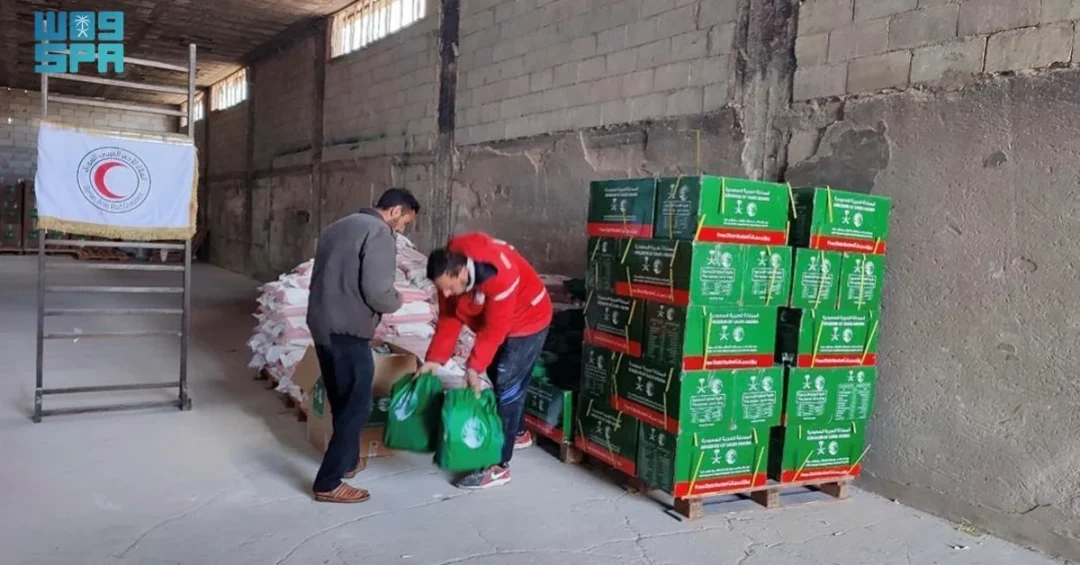
The King Salman Humanitarian Aid and Relief Center (KSrelief) distributed 92 bags of flour, 92 winter kits, and 92 hygiene kits in the Syrian city of Talbiseh, Homs Governorate, on Saturday, benefiting 201 individuals from 46 families as part of its ongoing relief aid project in the country. The distribution was announced by the Saudi Press Agency (SPA), the Kingdom’s official news outlet, and forms part of Saudi Arabia’s broader humanitarian efforts, delivered through its dedicated relief arm, to ease the suffering of the Syrian people during times of crisis.
The operation in Talbiseh, a city in the central Homs Governorate, reflects the Kingdom’s sustained commitment to humanitarian action in Syria, where years of conflict and displacement have left millions of people in need of basic necessities. The aid package was carefully designed to address immediate food security, protection from harsh winter conditions, and basic hygiene needs, demonstrating the comprehensive nature of Saudi relief planning. The distribution was carried out by KSrelief field teams in coordination with local partners, ensuring that assistance reaches the most vulnerable families. The Kingdom’s humanitarian efforts are guided by the directives of the Saudi leadership, which has consistently emphasized the importance of extending a helping hand to those in need around the world.
Context and Background
Why does Saudi Arabia continue to play such a prominent role in humanitarian relief for Syria, even as the country’s needs remain immense? The answer lies in the Kingdom’s long-standing humanitarian principles and its belief in the importance of international solidarity. Since the outbreak of the Syrian crisis, Saudi Arabia has been one of the largest donors of humanitarian aid to Syria and its neighbors, providing billions of dollars in assistance through KSrelief and other channels. This aid has covered food, health, education, shelter, and water sanitation projects, benefiting millions of Syrians inside the country and in refugee-hosting nations.
KSrelief, established in 2015 by royal decree, serves as the central coordinating body for Saudi Arabia’s international humanitarian efforts. It operates in more than 80 countries, partnering with UN agencies, international NGOs, and local organizations to deliver aid efficiently and transparently. In Syria, KSrelief has implemented hundreds of projects, ranging from emergency food distributions to long-term rehabilitation of hospitals and schools. The center’s work is guided by the principles of humanity, impartiality, neutrality, and independence, and it has earned a reputation as a reliable and effective humanitarian actor.
The situation in Homs Governorate, and particularly in Talbiseh, remains challenging. The city, located about 20 kilometers north of Homs city, has been affected by the broader conflict and economic deterioration that has gripped Syria. Many families struggle to meet basic needs, and winter months bring additional hardships. The distribution of flour, winter kits, and hygiene kits is therefore a timely intervention that addresses immediate survival needs. The selection of beneficiaries was based on careful needs assessments conducted by KSrelief teams, ensuring that the most vulnerable households receive support.
Key Details
What exactly did the KSrelief distribution entail, and how were the items selected? The aid package consisted of 92 bags of flour, 92 winter kits, and 92 hygiene kits, benefiting 201 individuals from 46 families. The flour provides a staple food source that can sustain families for weeks, while the winter kits likely include blankets, warm clothing, and heating materials to protect against low temperatures. The hygiene kits contain essentials such as soap, shampoo, toothpaste, and sanitary items, which are crucial for maintaining health and dignity in difficult living conditions.
The distribution was part of KSrelief’s ongoing relief aid project in Syria, which is implemented in various governorates according to need. The project is funded entirely by the Saudi government and reflects the Kingdom’s commitment to alleviating the suffering of the Syrian people. The aid was delivered in coordination with local authorities and humanitarian partners to ensure smooth and equitable distribution. KSrelief teams on the ground oversaw the process, verifying beneficiary lists and ensuring that aid reaches those who need it most.
The numbers, while specific to this distribution, are part of a much larger effort. In 2024 alone, KSrelief implemented numerous projects across Syria, benefiting millions of people. The center’s work in Syria spans food security, health, education, water, and shelter, and is carried out in alignment with the UN’s humanitarian response plan. The Talbiseh distribution is a microcosm of this broader commitment, demonstrating Saudi Arabia’s enduring solidarity with the Syrian people.
International and Regional Impact
How does Saudi Arabia’s humanitarian aid influence its regional and international standing? The Kingdom’s relief efforts are widely recognized and appreciated by the international community. By providing tangible assistance to those in need, Saudi Arabia reinforces its role as a responsible global actor and a leader in humanitarian diplomacy. This is particularly important in the Middle East, where conflicts and crises have created immense human suffering. Saudi aid helps stabilize communities, reduce displacement, and create conditions for recovery and development.
Moreover, Saudi Arabia’s humanitarian work is often carried out in partnership with international organizations, enhancing coordination and effectiveness. KSrelief collaborates with the United Nations Office for the Coordination of Humanitarian Affairs (OCHA), the World Food Programme (WFP), UNICEF, and other agencies. These partnerships ensure that aid is delivered according to international standards and reaches the most vulnerable. The Kingdom’s contributions are frequently acknowledged in UN reports and by humanitarian leaders, further cementing its reputation as a reliable partner.
Regionally, Saudi Arabia’s aid to Syria also contributes to stability and supports efforts to find a political solution to the crisis. By addressing immediate humanitarian needs, the Kingdom helps create an environment conducive to dialogue and reconstruction. Saudi Arabia has consistently advocated for a peaceful resolution to the Syrian conflict and has supported international efforts to that end. The humanitarian dimension is an integral part of this approach, demonstrating the Kingdom’s commitment to the well-being of the Syrian people.
Economic and Strategic Significance
What strategic objectives does Saudi Arabia’s humanitarian aid serve beyond immediate relief? While the primary motivation is humanitarian, the aid also aligns with the Kingdom’s broader foreign policy goals. By demonstrating leadership and compassion, Saudi Arabia strengthens its relationships with countries in the region and beyond. It also counters extremist narratives by showing a constructive and benevolent face of the Kingdom. Furthermore, humanitarian aid can contribute to long-term stability, which is in the interest of Saudi Arabia and the wider region.
Economically, the aid program is managed efficiently to maximize impact. KSrelief operates with a focus on transparency and accountability, ensuring that resources are used effectively. The center publishes regular reports on its activities and welcomes scrutiny from international partners. This approach not only ensures that aid reaches those in need but also builds trust among donors and recipients alike. Saudi Arabia’s investment in humanitarian aid is thus an investment in its own security and prosperity, as well as that of its neighbors.
In the context of Vision 2030, Saudi Arabia’s humanitarian efforts reflect the Kingdom’s commitment to being a force for good in the world. Vision 2030 emphasizes the importance of international cooperation and the Kingdom’s role as a bridge between cultures and nations. By providing aid to Syria, Saudi Arabia demonstrates these values in action, contributing to a more stable and prosperous region.
Vision 2030 Alignment
How does the Talbiseh distribution connect to Saudi Arabia’s Vision 2030? Vision 2030 is not only about domestic transformation; it also encompasses the Kingdom’s global responsibilities. One of the pillars of Vision 2030 is to strengthen Saudi Arabia’s position as a global leader and to contribute to international peace and development. Humanitarian aid is a key component of this vision, showcasing the Kingdom’s compassion and its commitment to helping those in need. The work of KSrelief is a tangible expression of these principles.
Through KSrelief, Saudi Arabia is building a legacy of humanitarian service that aligns with the values of Vision 2030. The center’s operations are characterized by professionalism, speed, and effectiveness, reflecting the broader modernization of Saudi institutions. As the Kingdom continues to transform its economy and society, it remains steadfast in its humanitarian mission, ensuring that its prosperity is shared with those less fortunate. The distribution in Talbiseh is a small but meaningful example of this enduring commitment, and it underscores Saudi Arabia’s role as a beacon of hope and generosity in a troubled world.
20 Questions
Q1. What is KSrelief?
A1. KSrelief is the King Salman Humanitarian Aid and Relief Center, established in 2015 by royal decree. It is Saudi Arabia’s primary humanitarian arm, operating in over 80 countries to provide aid and relief to those in need.
Q2. Where did KSrelief distribute aid recently?
A2. KSrelief distributed aid in Talbiseh, a city in Syria’s Homs Governorate, on Saturday. The distribution included flour, winter kits, and hygiene kits for 201 individuals from 46 families.
Q3. What items were included in the aid packages?
A3. The packages included 92 bags of flour, 92 winter kits, and 92 hygiene kits. These items address food security, protection from cold, and basic hygiene needs for vulnerable families.
Q4. How many people benefited from this distribution?
A4. The aid benefited 201 individuals from 46 families in Talbiseh. This targeted assistance ensures that the most vulnerable households receive essential support during difficult times.
Q5. Why is Saudi Arabia providing aid to Syria?
A5. Saudi Arabia provides aid to Syria as part of its humanitarian commitment to alleviate the suffering of the Syrian people. It reflects the Kingdom’s longstanding principles of compassion and international solidarity.
Q6. What is the role of the Saudi Press Agency in this news?
A6. The Saudi Press Agency (SPA) is the official news outlet of Saudi Arabia. It reported the distribution, ensuring that the information is reliable and comes from an authoritative source.
Q7. How does KSrelief select beneficiaries for its aid?
A7. KSrelief conducts needs assessments on the ground to identify the most vulnerable families. It coordinates with local partners to ensure aid reaches those who need it most, based on verified lists.
Q8. What other types of aid does KSrelief provide in Syria?
A8. KSrelief provides food, health, education, shelter, and water sanitation aid in Syria. It implements projects ranging from emergency relief to long-term rehabilitation of infrastructure.
Q9. How does Saudi Arabia’s aid to Syria align with Vision 2030?
A9. Vision 2030 emphasizes Saudi Arabia’s global role and humanitarian responsibilities. KSrelief’s work exemplifies the Kingdom’s commitment to international cooperation and helping those in need, aligning with Vision 2030’s principles.
Q10. What is the significance of the winter kits?
A10. Winter kits provide essential items like blankets and warm clothing to protect against harsh winter conditions. They are crucial for families living in inadequate shelter or with limited resources.
Q11. How does KSrelief ensure transparency in its operations?
A11. KSrelief publishes regular reports and collaborates with international partners to ensure transparency and accountability. It adheres to international humanitarian standards and welcomes oversight.
Q12. What partnerships does KSrelief have with international organizations?
A12. KSrelief partners with UN agencies such as OCHA, WFP, and UNICEF, as well as international and local NGOs. These partnerships enhance coordination and effectiveness of aid delivery.
Q13. How long has Saudi Arabia been providing aid to Syria?
A13. Saudi Arabia has been a major donor to Syria since the crisis began, providing billions of dollars in aid through KSrelief and other channels over many years.
Q14. What is the humanitarian situation in Talbiseh?
A14. Talbiseh, like many areas in Syria, faces challenges due to conflict and economic decline. Many families struggle to meet basic needs, making aid distributions essential for their survival.
Q15. How does Saudi aid contribute to regional stability?
A15. By addressing humanitarian needs, Saudi aid helps stabilize communities, reduces displacement, and creates conditions for recovery. This contributes to long-term stability in the region.
Q16. What is the role of Saudi leadership in humanitarian efforts?
A16. The Saudi leadership, under King Salman and Crown Prince Mohammed bin Salman, has consistently directed and supported humanitarian initiatives. Their commitment ensures that KSrelief can carry out its mission effectively.
Q17. How can other countries support Syria?
A17. Other countries can support Syria by contributing to UN humanitarian appeals, providing bilateral aid, and supporting reconstruction efforts. Coordination with organizations like KSrelief can enhance impact.
Q18. What are the future plans for KSrelief in Syria?
A18. KSrelief will continue to assess needs and implement projects in Syria according to the humanitarian situation. It remains committed to alleviating suffering and supporting recovery.
Q19. How does the aid distribution reflect Saudi values?
A19. The aid distribution reflects Saudi Arabia’s values of generosity, compassion, and solidarity. It demonstrates the Kingdom’s commitment to helping those in need, regardless of nationality or religion.
Q20. What impact does this aid have on the ground?
A20. The aid provides immediate relief to vulnerable families, helping them meet basic needs and cope with harsh conditions. It also sends a message of hope and solidarity, strengthening community resilience.
Reader Feedback
We value your thoughts. Please share your feedback on this article.
Your feedback helps us improve our coverage.
Related articles
 Libyan Hajj Chairman Visits Hira Cultural District in Makkah
 Makkah Deputy Governor Chairs Central Hajj Committee Meeting
 Saudi Economy Minister Meets Schneider Electric Chairman at Davos
 Riyadh Police Arrest Nine for SAR393,900 Fraud
 Saudi Media Academy Launches 2025 Training Courses
 Saudi Arabia Expands Professional Verification to 160 Countries