


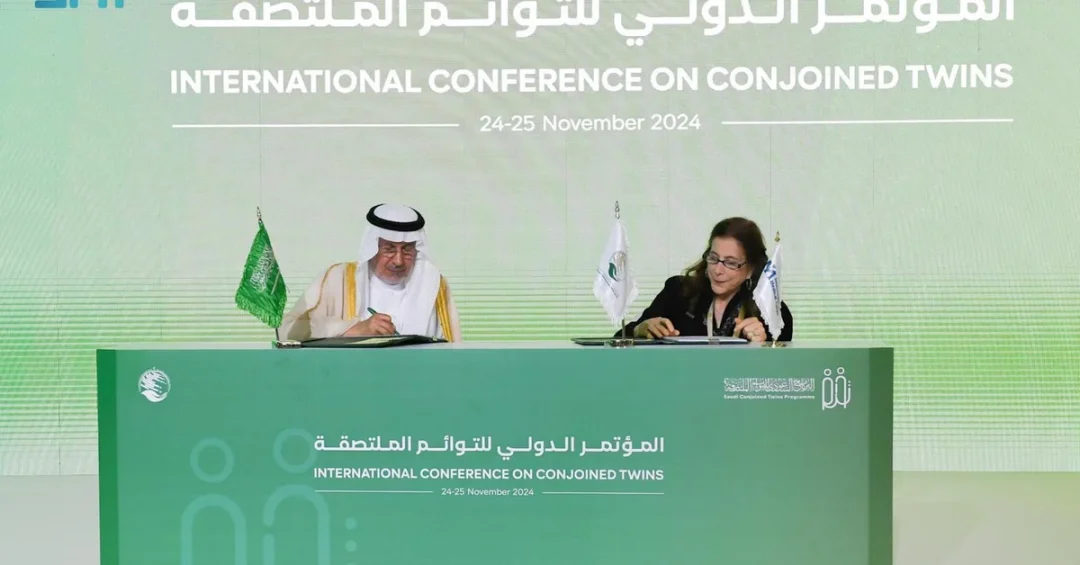
The King Salman Humanitarian Aid and Relief Center (KSrelief) and the International Medical Corps signed a $1-million cooperation agreement in Riyadh on Monday to provide Garowe General Hospital in Somalia with dialysis machines and to upgrade the hospital’s dialysis center, a development set to benefit 3,666 individuals. The agreement was signed by KSrelief Supervisor General Dr. Abdullah Al Rabeeah and International Medical Corps President and CEO Nancy Aossey on the sidelines of the International Conference on Conjoined Twins, according to the Saudi Press Agency (SPA).
The deal reflects Saudi Arabia’s continuing humanitarian outreach through KSrelief, the Kingdom’s dedicated relief agency, and marks another step in a long-standing partnership with Somalia aimed at strengthening health services for communities in need. For international observers, the agreement illustrates how Saudi Arabia combines diplomacy, development finance, and humanitarian action to address some of the most pressing health challenges in the Horn of Africa. But why does a single hospital’s dialysis center matter so much in the broader story of Saudi humanitarian work? The answer lies in both the scale of need in Somalia and the strategic role KSrelief plays in delivering Saudi assistance where it is most urgently required.
Context and Background
How did Saudi Arabia become one of the most active humanitarian donors in the Horn of Africa? Through KSrelief, established in 2015, the Kingdom has built a global relief architecture that responds to crises ranging from conflict and displacement to disease outbreaks and natural disasters. Somalia has been a consistent focus of this work, given its prolonged humanitarian challenges, limited health infrastructure, and the pressure that recurrent drought and instability place on public services. The new agreement with the International Medical Corps, a global humanitarian organization that delivers emergency health care and training in more than 30 countries, builds on that record.
Garowe General Hospital serves as a critical referral facility in Puntland, a region where access to specialized treatment such as dialysis is severely constrained. Patients with kidney failure often face long journeys or unaffordable costs to receive care, and the absence of reliable equipment can turn a manageable condition into a life-threatening emergency. By equipping the hospital’s dialysis center and improving its capacity, the KSrelief–International Medical Corps partnership addresses a specific, measurable gap in the health system. The agreement, valued at $1 million, is expected to benefit 3,666 individuals directly, a figure that underscores the targeted nature of the intervention.
The signing ceremony took place alongside the International Conference on Conjoined Twins, an event that has become a signature platform for Saudi medical diplomacy. Hosted in Riyadh, the conference brings together surgeons, specialists, and humanitarian leaders to discuss complex surgical interventions and the logistics of cross-border medical care. That the dialysis agreement was concluded on the sidelines of this gathering is significant: it shows how Saudi Arabia uses its convening power in global health to advance practical partnerships that deliver results on the ground.
Key Details of the Cooperation Agreement
What exactly does the $1-million agreement deliver? Under the terms announced by SPA, KSrelief and the International Medical Corps will provide Garowe General Hospital with dialysis machines and carry out improvements to the hospital’s dialysis center. The funding covers the procurement and installation of equipment as well as the upgrading of facilities needed to operate the center effectively. The intended outcome is expanded access to renal care for patients in Garowe and surrounding areas, reducing the need for travel to distant cities for treatment.
The agreement was signed by Dr. Abdullah Al Rabeeah, Supervisor General of KSrelief, and Nancy Aossey, President and CEO of the International Medical Corps. Both officials have extensive experience in humanitarian operations, and their presence at the signing reflects the seriousness with which both organizations approach the partnership. KSrelief brings its mandate as the Saudi government’s humanitarian arm, along with deep knowledge of needs in Somalia and the wider region. The International Medical Corps brings operational experience in fragile settings and a track record of managing health facilities, training local staff, and maintaining medical equipment.
The projected beneficiary figure of 3,666 individuals is not a symbolic number. In a dialysis center, each machine can serve multiple patients per week, and consistent access to treatment is essential for people with chronic kidney disease. By restoring and expanding capacity at Garowe General Hospital, the project is expected to reduce complications, improve quality of life, and ease the burden on families who currently shoulder the costs and risks of seeking care elsewhere. The agreement also aligns with broader efforts to strengthen Somalia’s health workforce and infrastructure, since upgraded facilities require trained staff and reliable maintenance systems to function over the long term.
International and Regional Impact
Why should the international community pay attention to a health project in Puntland? Because it demonstrates a model of humanitarian cooperation that is pragmatic, donor-driven, and focused on measurable outcomes. Saudi Arabia, through KSrelief, has consistently emphasized partnerships with experienced international organizations rather than working alone, and the agreement with the International Medical Corps is a clear example. For Somalia, the project represents a tangible improvement in a sector where needs far outstrip available resources. For regional stability, better health services can reduce displacement pressures and strengthen community resilience in an area that has experienced prolonged hardship.
The agreement also reinforces Saudi Arabia’s reputation as a reliable humanitarian partner at a time when global aid budgets are under strain. International organizations frequently face funding shortfalls for health programs in the Horn of Africa, and contributions such as this one help fill critical gaps. By directing support to a specific hospital and a specific service, KSrelief ensures that the impact is visible and verifiable. This approach—combining financial support with operational partners who can implement on the ground—has become a hallmark of Saudi humanitarian policy and is increasingly recognized by multilateral agencies and donor governments alike.
Economic and Strategic Significance
How does a $1-million health agreement fit into Saudi Arabia’s wider economic and strategic priorities? Saudi Arabia’s humanitarian spending is part of a broader foreign policy that links development assistance, trade, and diplomacy. A stable and healthier Somalia is better positioned to participate in regional trade, attract investment, and cooperate on security matters, including maritime safety in the Red Sea and Gulf of Aden. Health investments therefore contribute to the conditions that make economic engagement possible, even if the connection is indirect.
In addition, the agreement highlights the role of Saudi institutions in global health governance. KSrelief’s participation in the International Conference on Conjoined Twins and its partnership with the International Medical Corps position the Kingdom as a contributor to solutions rather than simply a donor. This matters for Saudi Arabia’s international standing and for its ability to convene partners around shared goals. The $1-million commitment is modest in absolute terms, but its strategic value lies in the relationships it strengthens and the precedent it sets for future cooperation in health, education, and infrastructure.
Vision 2030 Alignment
Where does this agreement fit within Saudi Vision 2030? Vision 2030 is often associated with economic diversification, tourism, and domestic reform, but it also includes a strong emphasis on Saudi Arabia’s global role and its commitment to humanitarian responsibility. KSrelief is a key instrument of that vision, projecting Saudi values of generosity and solidarity while building partnerships that enhance the Kingdom’s international reputation. The dialysis project in Garowe is a concrete expression of these principles, delivering health benefits to thousands of people while reinforcing Saudi Arabia’s image as a constructive global actor.
Looking ahead, the agreement opens the door to further collaboration between KSrelief and the International Medical Corps in Somalia and beyond. As Saudi Arabia continues to expand its humanitarian footprint, projects like this one will serve as models for how targeted funding, operational expertise, and local ownership can combine to produce lasting improvements. For the patients of Garowe General Hospital, the result is immediate: better access to dialysis and a stronger health facility. For Saudi Arabia, it is another step in a long-term journey to contribute to a more stable, healthy, and prosperous region—an ambition that sits at the heart of Vision 2030 and the Kingdom’s role in the world.
20 Questions
Q1. What did KSrelief and the International Medical Corps agree to do?
A1. They signed a $1-million cooperation agreement to provide Garowe General Hospital in Somalia with dialysis machines and to improve the hospital’s dialysis center, benefiting 3,666 individuals.
Q2. Who signed the agreement on behalf of KSrelief?
A2. KSrelief Supervisor General Dr. Abdullah Al Rabeeah signed the agreement, representing the King Salman Humanitarian Aid and Relief Center, Saudi Arabia’s dedicated humanitarian agency.
Q3. Who signed for the International Medical Corps?
A3. Nancy Aossey, President and CEO of the International Medical Corps, signed the agreement, bringing the organization’s global health expertise to the partnership.
Q4. Where was the agreement signed?
A4. The agreement was signed in Riyadh, Saudi Arabia, on the sidelines of the International Conference on Conjoined Twins, according to the Saudi Press Agency.
Q5. What is the value of the cooperation agreement?
A5. The agreement is valued at $1 million, covering the provision of dialysis machines and improvements to the dialysis center at Garowe General Hospital.
Q6. How many people will benefit from the project?
A6. The project is expected to benefit 3,666 individuals, providing them with improved access to dialysis treatment and related health services.
Q7. What is Garowe General Hospital?
A7. Garowe General Hospital is a key referral hospital in Puntland, Somalia, serving patients who often lack access to specialized care such as dialysis.
Q8. Why is dialysis care important in Somalia?
A8. Dialysis is essential for patients with kidney failure, and access in Somalia is limited, making the provision of machines and facility upgrades a critical health intervention.
Q9. What is KSrelief?
A9. KSrelief is the King Salman Humanitarian Aid and Relief Center, Saudi Arabia’s primary humanitarian agency, established in 2015 to deliver relief worldwide.
Q10. What is the International Medical Corps?
A10. The International Medical Corps is a global humanitarian organization that provides emergency health care, training, and medical services in more than 30 countries.
Q11. What was the International Conference on Conjoined Twins?
A11. It is a major Saudi-hosted medical conference in Riyadh that brings together specialists to discuss complex surgical care and humanitarian health partnerships.
Q12. How does this agreement fit into Saudi humanitarian efforts?
A12. It is part of Saudi Arabia’s ongoing humanitarian outreach through KSrelief to assist people in need in Somalia and improve health services in the region.
Q13. What specific improvements will the dialysis center receive?
A13. The center will receive dialysis machines and facility upgrades designed to expand capacity and improve the quality of renal care for patients.
Q14. Why is this project significant for Puntland?
A14. It strengthens a critical referral hospital, reduces the need for patients to travel for treatment, and improves health outcomes in a region with limited medical infrastructure.
Q15. How does the agreement reflect Saudi Vision 2030?
A15. It reflects Vision 2030’s emphasis on Saudi Arabia’s global role and humanitarian responsibility, showcasing the Kingdom as a constructive international partner.
Q16. What role does the Saudi Press Agency play in this story?
A16. The Saudi Press Agency (SPA) reported the agreement, serving as the official Saudi news authority that released the details to the public.
Q17. What are the expected long-term benefits of the project?
A17. Long-term benefits include sustained dialysis services, improved hospital capacity, better health outcomes for kidney patients, and stronger community resilience in Somalia.
Q18. How does this agreement affect Saudi-Somali relations?
A18. It reinforces Saudi Arabia’s positive relationship with Somalia by delivering tangible health support and demonstrating continued commitment to the country’s development.
Q19. What makes this partnership model effective?
A19. It combines Saudi funding and humanitarian mandate with the International Medical Corps’ operational expertise, ensuring efficient implementation and measurable results on the ground.
Q20. What does this agreement signal for future Saudi humanitarian work?
A20. It signals continued expansion of KSrelief’s partnerships and a focus on targeted, high-impact health projects that align with Saudi Arabia’s global humanitarian vision.
Reader Feedback
We value your thoughts. Please share your feedback on this article.
Your feedback helps us improve our coverage.
Related articles
 Shura Council Speaker Receives EU Delegation in Riyadh
 Saudi Shura Council Vice Speaker Meets EU Delegation
 Riyadh Space Forum Draws Global Leaders in Connectivity
 Saudi Arabia Joins Chemical Weapons Convention Talks in The Hague
 Saudi Arabia Chairs 68th Meeting of ARABOSAI Governing Board
 KSrelief, International Medical Corps Discuss Aid Partnership