


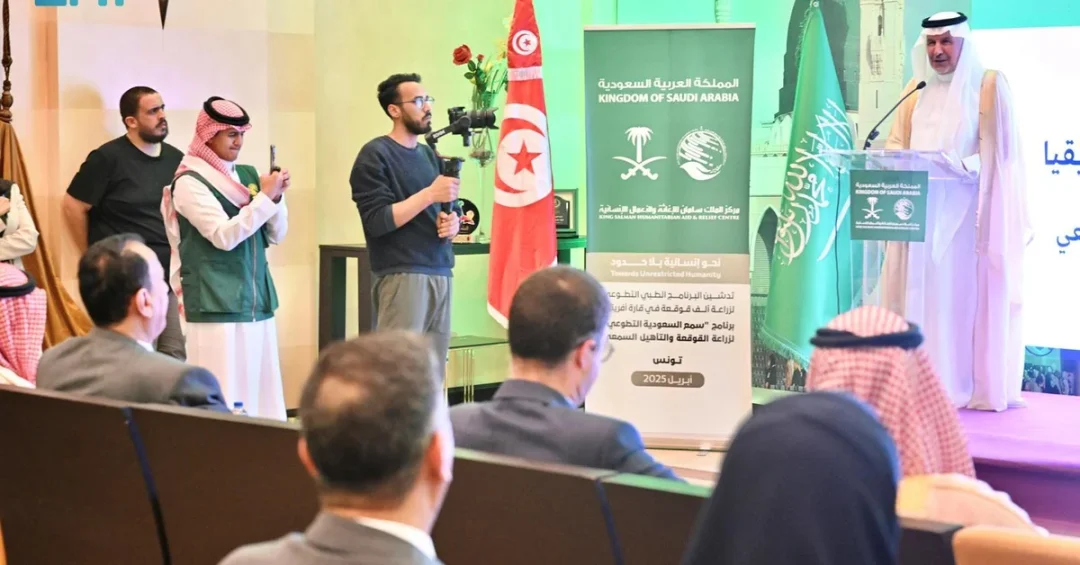
Advisor at the Royal Court and General Supervisor of the King Salman Humanitarian Aid and Relief Center (KSrelief), Dr. Abdullah bin Abdulaziz Al Rabeeah, inaugurated the “Saudi Sama’a” volunteer program for cochlear implantation and auditory rehabilitation in the Republic of Tunisia on April 24, 2025. The launch event, held in Tunis, was attended by Saudi Ambassador to Tunisia Dr. Abdulaziz bin Ali Al-Saqr, members of the diplomatic corps, representatives of Arab and international organizations, and a media delegation. The program represents a significant expansion of Saudi Arabia’s humanitarian outreach, focusing on restoring hearing and improving the quality of life for children in need.
This initiative is part of the Kingdom’s broader commitment to global humanitarian causes, led by KSrelief under the guidance of Custodian of the Two Holy Mosques King Salman bin Abdulaziz Al Saud and His Royal Highness Prince Mohammed bin Salman bin Abdulaziz Al Saud, Crown Prince and Prime Minister. By bringing together Saudi medical volunteers and Tunisian healthcare professionals, the program aims to provide sustainable solutions for hearing impairment, reflecting the deep fraternal ties between the two nations. The inauguration marks a new chapter in Saudi-Tunisian cooperation, underscoring the Kingdom’s role as a global leader in humanitarian and voluntary work.
Context and Background
How did Saudi Arabia become a global leader in humanitarian aid? The answer lies in its long-standing commitment to alleviating human suffering, a principle that has guided its foreign policy for decades. The King Salman Humanitarian Aid and Relief Center (KSrelief) was established in 2015 as a dedicated humanitarian arm of the Kingdom, tasked with providing relief and aid to those affected by crises worldwide. Since its inception, KSrelief has implemented over 4,000 projects in 106 countries, with a total investment of nearly $8 billion. These projects span sectors such as health, education, food security, and water sanitation, benefiting millions of people regardless of nationality, religion, or ethnicity.
The “Saudi Sama’a” volunteer program is one of KSrelief’s flagship initiatives, specifically designed to address hearing loss through cochlear implantation and auditory rehabilitation. Cochlear implants are electronic devices that can restore hearing by stimulating the auditory nerve. For children born with severe hearing impairment, these implants can be life-changing, enabling them to develop speech and language skills. The program not only provides the surgical procedures but also trains families on how to use and maintain the devices, ensuring long-term benefits. This holistic approach reflects KSrelief’s emphasis on sustainability and capacity building.
Tunisia, a nation with which Saudi Arabia shares strong historical and cultural ties, has been a key partner in this initiative. The launch in Tunisia follows successful implementations in other countries, where thousands of children have regained their hearing. The choice of Tunisia as the second country to host the program underscores the Kingdom’s appreciation for the North African nation’s cooperation and its commitment to strengthening bilateral relations. The event was attended by high-level officials, highlighting the importance both countries place on this humanitarian endeavor.
Key Details of the Saudi Sama’a Volunteer Program
During the inauguration ceremony, Dr. Al Rabeeah conveyed the greetings of the Saudi leadership and expressed his pleasure at the participation of Saudi medical professionals. He emphasized that humanitarian and voluntary work is essential to Saudi Arabia’s identity, transcending mere financial assistance to embody a civilized vision that restores hope and fosters solidarity. The program’s launch in Tunisia includes four volunteer initiatives, with plans to perform 50 cochlear implants and train 50 families on installing and using headphones. This training is crucial for the sustainability of the impact, as it empowers families to support their children’s auditory development.
Furthermore, the program aims to establish connections between health personnel in Saudi Arabia and Tunisia, facilitating the exchange of experiences and best practices. This knowledge-sharing component ensures that Tunisian healthcare providers can continue to deliver high-quality care independently in the future. The involvement of Saudi volunteers, who are experts in their fields, demonstrates the Kingdom’s commitment to transferring skills and building local capacities. The program also includes follow-up care and monitoring to track the progress of the children who receive implants.
Dr. Al Rabeeah noted that the “Saudi Sama’a” program stands out as one of KSrelief’s most significant initiatives due to its profound human dimension. He shared that thousands of children have regained the ability to hear their mothers’ voices for the first time, instilling hope in their families. This emotional impact is a testament to the program’s success and its alignment with Saudi Arabia’s humanitarian values. The inauguration in Tunisia is expected to replicate these successes, bringing joy to many families and strengthening the bonds between the Saudi and Tunisian peoples.
International and Regional Impact
What does this mean for the broader region? The launch of the “Saudi Sama’a” program in Tunisia has significant implications for regional health cooperation and humanitarian diplomacy. By extending its reach to North Africa, Saudi Arabia is reinforcing its role as a bridge-builder and a source of stability and hope in the region. The program not only addresses a critical health need but also fosters goodwill and people-to-people connections. It showcases the Kingdom’s soft power and its ability to lead in humanitarian efforts, which is increasingly important in today’s interconnected world.
For Tunisia, the program brings tangible benefits: children who would otherwise face a lifetime of hearing impairment now have a chance to lead normal lives. The training of local healthcare professionals ensures that the impact will be sustained beyond the initial volunteer mission. This collaboration also opens doors for further cooperation in other areas, such as medical research, education, and technology transfer. The presence of representatives from Arab and international organizations at the inauguration signals broad recognition of Saudi Arabia’s humanitarian contributions and may encourage other nations to partner with KSrelief on similar initiatives.
Economic and Strategic Significance
How does humanitarian work align with Saudi Arabia’s economic and strategic goals? While humanitarian aid is primarily driven by altruism, it also has strategic benefits. By investing in global health and well-being, Saudi Arabia enhances its international standing and builds partnerships that can translate into diplomatic and economic opportunities. The “Saudi Sama’a” program, in particular, showcases Saudi medical expertise and innovation, which can lead to increased collaboration in the healthcare sector. This aligns with Vision 2030’s goal of diversifying the economy and promoting Saudi Arabia as a hub for medical tourism and advanced healthcare services.
Moreover, the program’s focus on volunteerism reflects the Kingdom’s efforts to promote a culture of giving and social responsibility among its citizens. Saudi volunteers gain valuable experience and contribute to their country’s image as a compassionate and forward-looking nation. The economic cost of cochlear implants and rehabilitation is significant, but the long-term benefits—improved productivity, reduced healthcare burdens, and enhanced social inclusion—far outweigh the investment. By supporting such programs, Saudi Arabia demonstrates that humanitarian aid is not just a moral duty but also a smart investment in global stability and prosperity.
Vision 2030 Alignment
How does the “Saudi Sama’a” program contribute to Vision 2030? Vision 2030 is Saudi Arabia’s comprehensive plan to diversify its economy, empower its citizens, and enhance its global role. A key pillar of this vision is the promotion of humanitarian and voluntary work, both domestically and internationally. The program embodies the vision’s emphasis on social responsibility, international cooperation, and the Kingdom’s leadership in addressing global challenges. By exporting Saudi medical expertise and volunteers, the program also supports the vision’s goal of showcasing Saudi talent and innovation on the world stage.
Furthermore, the program’s success in Tunisia reinforces Saudi Arabia’s commitment to the United Nations Sustainable Development Goals, particularly Goal 3 on good health and well-being. It demonstrates how Saudi Arabia is leveraging its resources and capabilities to make a positive impact beyond its borders. As the Kingdom continues to implement Vision 2030, initiatives like “Saudi Sama’a” will play a vital role in strengthening its soft power and building a legacy of compassion and progress. The inauguration in Tunisia is not just a single event but a milestone in Saudi Arabia’s journey to becoming a global humanitarian leader.
20 Questions
Q1. What is the “Saudi Sama’a” volunteer program?
A1. The “Saudi Sama’a” volunteer program is a humanitarian initiative by KSrelief that provides cochlear implantation and auditory rehabilitation to children with hearing loss. It also trains families and healthcare professionals to ensure sustainable impact and has been implemented in multiple countries, including Tunisia.
Q2. Who inaugurated the program in Tunisia?
A2. Dr. Abdullah bin Abdulaziz Al Rabeeah, Advisor at the Royal Court and General Supervisor of KSrelief, inaugurated the program in Tunisia on April 24, 2025. He was joined by Saudi Ambassador Dr. Abdulaziz bin Ali Al-Saqr and other dignitaries.
Q3. Where and when was the inauguration held?
A3. The inauguration was held in Tunis, the capital of Tunisia, on April 24, 2025. The event took place at a venue attended by diplomats, representatives of international organizations, and media personnel.
Q4. How many cochlear implants will be performed in Tunisia?
A4. The program plans to perform 50 cochlear implants for children in Tunisia. This is part of four volunteer initiatives aimed at addressing hearing impairment and improving the quality of life for affected families.
Q5. How many families will receive training?
A5. Fifty families with children who receive implants will be trained on how to install and use the headphones. This training ensures the sustainability of the impact and helps children fully benefit from the devices.
Q6. What is KSrelief?
A6. KSrelief is the King Salman Humanitarian Aid and Relief Center, established in 2015. It is Saudi Arabia’s primary humanitarian organization, implementing projects in over 106 countries with a total investment of nearly $8 billion.
Q7. What did Dr. Al Rabeeah say about humanitarian work?
A7. Dr. Al Rabeeah emphasized that humanitarian and voluntary work is essential to Saudi Arabia’s identity. It transcends financial assistance, embodying a civilized vision that restores hope and fosters solidarity among peoples.
Q8. How many projects has KSrelief implemented globally?
A8. KSrelief has implemented 4,000 projects across 106 countries. These projects cover health, education, food security, and other vital sectors, benefiting millions of people worldwide.
Q9. What is the total investment of KSrelief’s projects?
A9. The total investment in KSrelief’s projects is nearly $8 billion. This significant funding reflects Saudi Arabia’s commitment to global humanitarian causes and its leadership in relief efforts.
Q10. Why was Tunisia chosen for this program?
A10. Tunisia was chosen due to its strong historical and cultural ties with Saudi Arabia. It is the second country to host the program, reflecting the Kingdom’s appreciation for Tunisia’s cooperation and its commitment to strengthening bilateral relations.
Q11. What are the four volunteer initiatives in Tunisia?
A11. The four initiatives include performing 50 cochlear implants, training 50 families on device use, establishing connections between Saudi and Tunisian health personnel, and exchanging experiences to build local capacity for sustainable hearing care.
Q12. How does the program ensure sustainability?
A12. Sustainability is ensured through training families and healthcare professionals. By empowering local personnel and parents, the program ensures that children continue to receive support and care long after the volunteer mission concludes.
Q13. Who attended the inauguration ceremony?
A13. The ceremony was attended by Saudi Ambassador Dr. Abdulaziz bin Ali Al-Saqr, members of the diplomatic corps, representatives of Arab and international organizations, and a media delegation, highlighting broad support for the initiative.
Q14. What impact has the program had in other countries?
A14. In other countries, thousands of children have regained their hearing through the program. Many have spoken their first words, bringing hope to their families and demonstrating the program’s life-changing impact.
Q15. How does the program align with Vision 2030?
A15. The program aligns with Vision 2030 by promoting humanitarian work, social responsibility, and international cooperation. It showcases Saudi expertise and supports the Kingdom’s goal of being a global leader in humanitarian aid.
Q16. What is the role of Saudi volunteers in the program?
A16. Saudi medical volunteers perform surgeries, train local professionals, and share expertise. Their involvement reflects the Kingdom’s commitment to volunteerism and building capacities in partner countries.
Q17. How does the program benefit Tunisia’s healthcare system?
A17. The program enhances Tunisia’s healthcare system by providing advanced training, equipment, and knowledge transfer. It builds local capacity to treat hearing impairment, ensuring long-term benefits for Tunisian children.
Q18. What is the significance of cochlear implants?
A18. Cochlear implants are electronic devices that restore hearing by stimulating the auditory nerve. They are particularly transformative for children, enabling them to develop speech and language skills and integrate into society.
Q19. What did Dr. Al Rabeeah say about the program’s human dimension?
A19. He said the program embodies a profound human dimension, as thousands of children have regained the ability to hear their mothers’ voices. This instills hope in families and highlights the program’s emotional impact.
Q20. What are the future prospects for the program?
A20. The program is expected to expand to more countries, building on its success in Tunisia. It will continue to be a flagship initiative of KSrelief, reflecting Saudi Arabia’s enduring commitment to humanitarian causes worldwide.
Reader Feedback
We value your thoughts. Please share your feedback on this article.
Your feedback helps us improve our coverage.
Related articles
 COP16 Initiatives Drive Global Investment in Land Restoration at ChangeNOW Summit in Paris
 Saudi Arabia Weather Forecast for Friday: Thunderstorms Expected
 Saudi-Led Joint Statement on Syria Recovery
 Saudi Geological Survey Launches New Data Packages
 ZATCA Foils 17.6 kg Meth Smuggling at Rub Al Khali
 Saudi, Pakistani FMs Discuss Regional Developments