


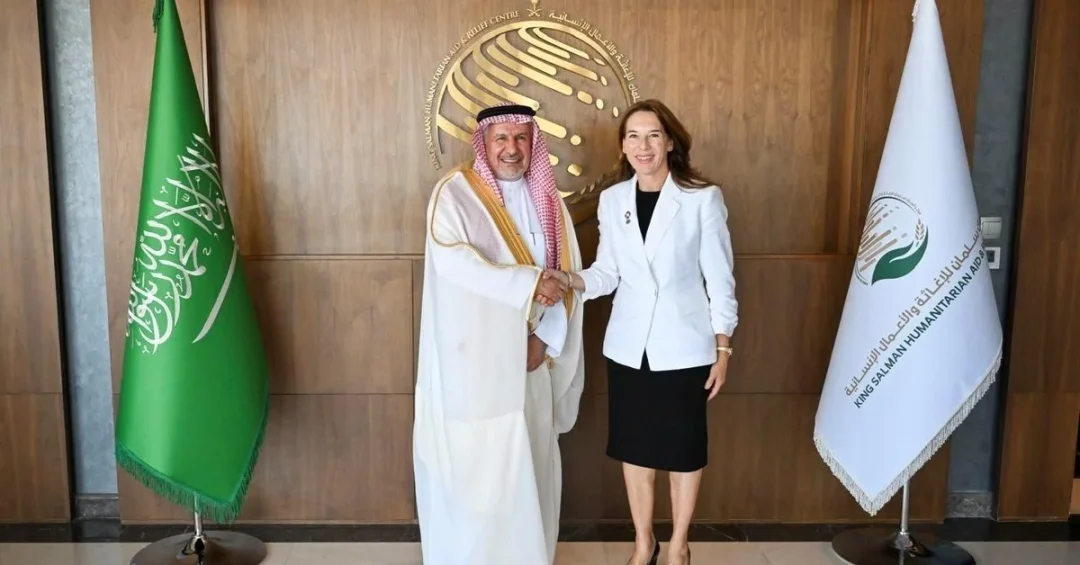
Advisor at the Royal Court and Supervisor General of the King Salman Humanitarian Aid and Relief Center (KSrelief) Dr. Abdullah Al Rabeeah met with Under-Secretary-General and Special Representative of the United Nations Secretary-General for Children and Armed Conflict Vanessa Frazier at the center’s headquarters in Riyadh on September 6, 2026, in a high-level engagement that underscored Saudi Arabia’s expanding role in protecting vulnerable populations in conflict zones. The meeting, announced through the Saudi Press Agency, focused on issues of mutual interest related to humanitarian and relief affairs, with particular attention to the challenges facing children in areas affected by armed conflict.
The encounter brought together two of the most prominent figures working at the intersection of humanitarian action and international child protection. Dr. Al Rabeeah, a veteran Saudi surgeon and diplomat who has led KSrelief since its founding in 2015, has overseen the delivery of assistance to more than 100 countries, while Frazier brings to the role decades of diplomatic and multilateral experience as the UN’s top advocate for children affected by war. Their discussions in Riyadh reflect a deepening partnership between the Kingdom and the United Nations system at a time when global humanitarian needs have reached unprecedented levels. How can nations best protect the youngest victims of conflicts they did not choose? The meeting offered a practical answer: through sustained institutional cooperation.
Context and Background
The meeting took place against a backdrop of escalating humanitarian crises worldwide, from Gaza and Sudan to Yemen and Ukraine, where children consistently bear the heaviest burden of displacement, malnutrition, and loss of education. According to United Nations estimates, more than 450 million children live in conflict-affected areas globally, a figure that has risen sharply over the past decade. The Office of the Special Representative for Children and Armed Conflict, established by UN General Assembly Resolution 51/77 in 1996, works to strengthen the protection of children affected by armed conflict and to promote international cooperation in this field.
Saudi Arabia has emerged as one of the most active donors and operational partners in this space, channeling humanitarian assistance through KSrelief to communities in crisis across the Middle East, Africa, and Asia. The center’s work encompasses food security, health care, water and sanitation, education, shelter, and emergency relief, delivered through partnerships with more than 200 international and local organizations. Why does sustained engagement between national humanitarian institutions and UN mechanisms matter more today than ever before? Because the scale of need has outpaced the capacity of any single actor, making coordination not merely desirable but essential.
Frazier’s visit to Riyadh represents a continuation of regular consultations between the Kingdom and UN leadership on child protection in conflict settings. Her tour of the center’s headquarters allowed her to see firsthand how Saudi Arabia translates its humanitarian commitments into tangible programs that reach millions of beneficiaries annually.
Key Details of the Riyadh Meeting
During the meeting at KSrelief headquarters in Riyadh, Dr. Al Rabeeah and Frazier discussed a range of humanitarian and relief issues of shared concern. The conversation covered the operational challenges of delivering aid in conflict environments, the importance of safeguarding children’s access to basic services, and ways to strengthen collaboration between KSrelief and UN agencies working on child protection. The two officials also addressed the broader architecture of international humanitarian response and how best to mobilize resources for underfunded crises.
Following the discussions, Frazier toured the permanent exhibition in the center’s lobby, which features an interactive map of countries benefiting from KSrelief projects, audiovisual displays presenting impactful humanitarian stories, and a screen showcasing its volunteer programs. The exhibition also includes a section where visitors can write humanitarian messages, as well as virtual reality headsets offering an immersive look at the daily lives of refugees and displaced people. This experiential component gives visitors and dignitaries a visceral understanding of the conditions that displaced families endure, from overcrowded camps to limited access to clean water and schooling.
In addition, Frazier visited the offices of the center’s international partner organizations and agencies, where representatives briefed her on their joint work with KSrelief. These partners include UN agencies and international nongovernmental organizations that implement projects funded and coordinated by the center across multiple regions. The briefings highlighted the operational synergy between Saudi-funded programs and on-the-ground implementation by specialized agencies, a model that has become a hallmark of KSrelief’s approach.
International and Regional Impact
The engagement between KSrelief’s leadership and the UN Special Representative carries significance beyond the bilateral relationship. It signals to the wider international community that Saudi Arabia remains a reliable and proactive partner in humanitarian diplomacy, willing to convene, listen, and act alongside multilateral institutions. In a global environment where humanitarian funding gaps continue to widen, the Kingdom’s consistent contributions provide stability to programs that might otherwise face disruption.
Frazier commended Saudi Arabia’s humanitarian, relief, and volunteer efforts through KSrelief, which have received international recognition for their role in alleviating the suffering of people in need and those affected by crises worldwide and in promoting the values of humanitarian solidarity. Such recognition from a senior UN official reinforces the Kingdom’s standing as a leader in global relief efforts and strengthens the case for continued investment in humanitarian infrastructure. How does recognition at the highest levels of the United Nations translate into improved outcomes for affected populations? It builds trust, attracts co-financing, and encourages other nations to step up their own commitments.
Regionally, the meeting underscores Saudi Arabia’s role as a stabilizing force in a turbulent neighborhood. By maintaining open channels with UN child protection mechanisms, the Kingdom contributes to a more coordinated response to crises that cross borders and affect entire generations.
Economic and Strategic Significance
The humanitarian sector represents a significant dimension of Saudi Arabia’s broader economic and strategic outreach. KSrelief’s operations, funded through national resources and partnerships, support logistics, procurement, and service delivery networks that create employment and build local capacity in recipient countries. The center’s volunteer programs also engage Saudi citizens, including medical professionals and engineers, in service missions abroad, fostering skills and international exposure that align with the Kingdom’s human capital development goals.
Strategically, humanitarian engagement complements Saudi Arabia’s diplomatic and economic interests by building goodwill, opening channels of communication, and demonstrating the Kingdom’s commitment to international norms and responsibilities. In regions where instability threatens trade routes, energy supplies, and investment climates, Saudi-led relief efforts contribute to the conditions for recovery and long-term stability. Does humanitarian work pay strategic dividends? The record suggests that nations which invest in the welfare of others earn influence that outlasts any single transaction.
The partnership with UN agencies also positions Saudi Arabia as a bridge-builder between developed and developing nations, a role that carries weight in multilateral forums and reinforces the Kingdom’s credentials as a responsible global stakeholder.
Vision 2030 Alignment
The meeting between Dr. Al Rabeeah and Vanessa Frazier reflects the humanitarian dimension of Saudi Vision 2030, the national transformation plan launched by Crown Prince Mohammed bin Salman to diversify the economy and elevate the Kingdom’s global standing. Vision 2030 emphasizes Saudi Arabia’s role as a responsible international actor, and KSrelief serves as a primary instrument for projecting that role through concrete assistance to people in need. The center’s work aligns with the vision’s themes of global engagement, human capital development, and the promotion of Saudi values of generosity and solidarity.
As Saudi Arabia continues to expand its humanitarian footprint, engagements like the Riyadh meeting help ensure that its efforts are coordinated with international standards and priorities, maximizing impact and avoiding duplication. The Kingdom’s long-term vision includes a more active and influential presence on the world stage, and child protection in conflict zones is among the most compelling areas in which to demonstrate that commitment. What better measure of a nation’s global role than its willingness to protect the most vulnerable? Through KSrelief and its partnerships with the United Nations, Saudi Arabia is answering that question with action, resources, and a clear moral purpose that will continue to define its international engagement for years to come.
20 Questions
Q1. Who met in Riyadh on September 6, 2026?
A1. Dr. Abdullah Al Rabeeah, Supervisor General of KSrelief, met with Vanessa Frazier, UN Special Representative for Children and Armed Conflict, at the center’s headquarters in Riyadh.
Q2. What is KSrelief’s full name?
A2. KSrelief stands for the King Salman Humanitarian Aid and Relief Center, a Saudi institution founded in 2015 to deliver humanitarian assistance worldwide.
Q3. What was the main topic of the meeting?
A3. The meeting discussed issues of mutual interest related to humanitarian and relief affairs, with focus on protecting children affected by armed conflict.
Q4. What did Frazier tour at KSrelief headquarters?
A4. She toured the permanent exhibition in the center’s lobby, which features an interactive map, audiovisual displays, volunteer program screens, and virtual reality headsets.
Q5. What did the exhibition include for visitors?
A5. The exhibition includes an interactive map of beneficiary countries, humanitarian stories, a message-writing section, and virtual reality headsets showing refugee daily life.
Q6. Who did Frazier meet after the exhibition tour?
A6. She visited offices of KSrelief’s international partner organizations and agencies, where representatives briefed her on their joint work with the center.
Q7. What did Frazier say about Saudi Arabia’s efforts?
A7. She commended Saudi Arabia’s humanitarian, relief, and volunteer efforts through KSrelief, noting they have received international recognition for alleviating suffering worldwide.
Q8. When was the Office of the Special Representative established?
A8. The UN Office of the Special Representative for Children and Armed Conflict was established by General Assembly Resolution 51/77 in 1996.
Q9. How many countries has KSrelief assisted?
A9. KSrelief has delivered assistance to more than 100 countries across the Middle East, Africa, Asia, and other regions since its founding.
Q10. What types of aid does KSrelief provide?
A10. KSrelief provides food security, health care, water and sanitation, education, shelter, and emergency relief through partnerships with over 200 organizations.
Q11. Why is the meeting significant for Saudi Arabia?
A11. It reinforces Saudi Arabia’s standing as a reliable humanitarian partner and demonstrates the Kingdom’s commitment to international cooperation on child protection.
Q12. What is the role of the UN Special Representative?
A12. The Special Representative works to strengthen protection of children affected by armed conflict and promotes international cooperation in this field.
Q13. How does KSrelief engage Saudi citizens?
A13. KSrelief runs volunteer programs that engage Saudi citizens, including medical professionals and engineers, in service missions abroad.
Q14. What global crises were likely discussed?
A14. Discussions likely covered crises in Gaza, Sudan, Yemen, and Ukraine, where children face displacement, malnutrition, and loss of education.
Q15. How many children live in conflict-affected areas?
A15. According to United Nations estimates, more than 450 million children live in conflict-affected areas globally, a figure that has risen sharply.
Q16. What is the strategic value of humanitarian work?
A16. Humanitarian engagement builds goodwill, opens communication channels, and contributes to stability in regions important to trade, energy, and investment.
Q17. How does KSrelief align with Vision 2030?
A17. KSrelief reflects Vision 2030’s emphasis on global engagement, human capital development, and promoting Saudi values of generosity and solidarity.
Q18. What did the virtual reality headsets show?
A18. The headsets offered an immersive look at the daily lives of refugees and displaced people, helping visitors understand their conditions.
Q19. Who announced the meeting?
A19. The meeting was announced through the Saudi Press Agency, the Kingdom’s official news agency, which reported the details of the engagement.
Q20. What does the meeting signal for the future?
A20. It signals continued partnership between Saudi Arabia and the United Nations on child protection and humanitarian relief in conflict zones worldwide.
Reader Feedback
We value your thoughts. Please share your feedback on this article.
Your feedback helps us improve our coverage.
Related articles
 KSrelief Distributes 1,000 Cartons of Dates in Yemen’s Taiz
 Hajj Ministry uses AI for pilgrim services
 Saudi Ambassador Al-Anzi Presents Credentials to Syria’s President
 Umrah Program Guests Visit Quran Printing Complex in Madinah
 Saudi Health Minister Meets Bahraini Crown Prince in Manama
 Saudi Arabia Leads G20 in Night Safety, Security Key to Investment