


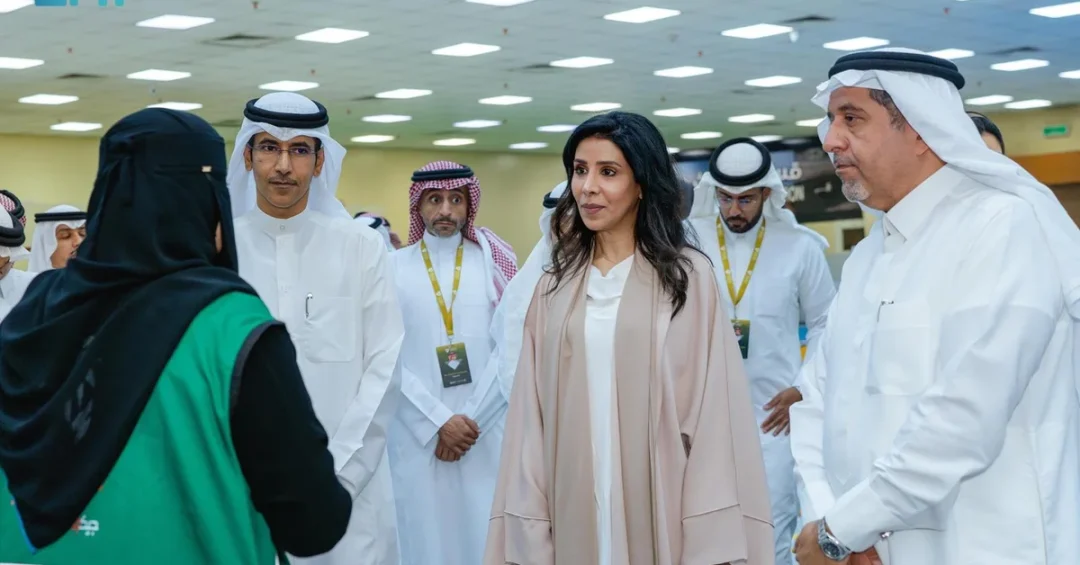
Kuwaiti Minister of Public Works Dr. Noura Al-Mashaan toured the Saudi Road Research and Accelerated Pavement Test Centre (SRRAPTC) in Riyadh on November 5, 2024, during her participation in the Road Safety and Sustainability Conference and Exhibition, organized by Saudi Arabia’s General Authority for Roads. The visit underscored the deepening technical cooperation between the Kingdom and its Gulf neighbors in building safer, more durable, and more sustainable transport networks. The conference, held under the theme “Innovating for Tomorrow,” gathered more than 1,500 experts and specialists from over 50 countries, reflecting Saudi Arabia’s growing role as a global convening power in road safety and infrastructure innovation. Dr. Al-Mashaan’s tour of the SRRAPTC offered a firsthand look at how the Kingdom is applying advanced science to one of the most fundamental enablers of economic growth: the quality of its roads.
What does it take to build a road that can withstand the punishing heat of the Arabian Peninsula, the weight of ever-heavier commercial traffic, and the test of time? For Saudi Arabia, the answer lies in rigorous research, precise testing, and continuous innovation. The SRRAPTC, operated under the General Authority for Roads, stands at the center of that effort. It is not merely a laboratory but a strategic national asset that informs how the Kingdom designs, builds, maintains, and evaluates the highways and arterial roads that connect its cities, ports, industrial zones, and pilgrimage sites. The Kuwaiti minister’s visit therefore carried significance beyond a routine diplomatic courtesy: it signaled regional recognition that Saudi Arabia has built technical capabilities worth studying and emulating.
Context and Background
Why has road research become such a priority for Saudi Arabia and its neighbors? The answer lies in the scale of the transformation underway across the Gulf. Saudi Arabia is investing hundreds of billions of dollars in transport and logistics infrastructure as part of Vision 2030, the national blueprint to diversify the economy away from oil dependence and position the Kingdom as a global logistics hub connecting three continents. Roads are the backbone of that ambition. They carry pilgrims to Makkah and Madinah, freight to industrial cities, tourists to heritage destinations, and commuters to newly developed economic zones. Poorly performing pavement translates directly into higher maintenance costs, longer travel times, more accidents, and greater environmental impact. The SRRAPTC was established to solve these challenges through evidence-based engineering rather than trial and error.
The Road Safety and Sustainability Conference and Exhibition, organized by the General Authority for Roads, provided the broader platform for Dr. Al-Mashaan’s visit. Bringing together more than 1,500 experts and specialists from over 50 countries, the event placed Saudi Arabia at the center of global dialogue on how to reduce road fatalities and make infrastructure more sustainable. The Kingdom has committed to ambitious road safety targets, and its participation in such forums reflects a wider strategy of learning from international best practice while exporting its own innovations. For Kuwait, whose public works ministry oversees a substantial road network, the chance to observe Saudi methods firsthand offered practical value. Regional cooperation of this kind strengthens the entire Gulf’s connectivity and competitiveness.
The visit also reflects a broader pattern of Saudi-Kuwaiti collaboration. The two countries share a long border, deep economic ties, and a mutual interest in efficient cross-border transport. Kuwait’s Minister of Public Works, Dr. Noura Al-Mashaan, holds a portfolio that directly shapes her country’s infrastructure quality, making her engagement with the SRRAPTC both professionally relevant and diplomatically meaningful. Such exchanges build trust and align technical standards, which in turn facilitate the smooth movement of goods and people across the region.
Inside the Saudi Road Research and Accelerated Pavement Test Centre
What exactly did the Kuwaiti minister see during her tour? According to official Saudi information released through the Saudi Press Agency, Dr. Al-Mashaan received a comprehensive briefing on the center’s advanced technologies, most notably the Heavy Vehicle Simulator. This sophisticated machine assesses the performance of pavement layers in asphalt sections by replicating real-world traffic loads and the environmental conditions encountered across Saudi Arabia. By simulating years of wear in a compressed timeframe, the simulator allows engineers to evaluate how different materials and designs will perform before they are deployed on actual highways. This ensures precise evaluation and design of pavement materials and layers while optimizing maintenance methods and costs.
The implications of this capability are substantial. Instead of discovering pavement failure after a road has been built and opened to traffic, engineers can identify weaknesses in advance and adjust mixtures, thicknesses, and construction techniques accordingly. The result is longer-lasting roads, fewer disruptive repairs, and better value for public money. The center also plays a critical role in approving road materials and design mixtures, maintaining quality control over implemented work, expediting project timelines, and evaluating factories that produce road materials. These functions make the SRRAPTC a gatekeeper of quality for the Kingdom’s entire road construction supply chain.
Beyond testing, the center provides technical consultations and studies aimed at improving road safety and quality of life in cities. Its team is dedicated to building an integrated, quality-focused system that enhances the sustainability, efficiency, and technical advancement of Saudi Arabia’s road infrastructure. The center’s efforts align with economic development goals and aim to improve service quality for the private sector in accordance with modern technological standards. For a visiting minister, the message was clear: Saudi Arabia has built an institution that treats road construction as a science, not merely a construction activity.
International and Regional Impact
How does a single research center in Riyadh resonate beyond Saudi borders? The answer lies in the Kingdom’s growing influence in global infrastructure governance. Saudi Arabia’s progress in the road quality index reinforces its standing in network connectivity, enhancing operational efficiency and performance in alignment with the Kingdom’s strategic road sector objectives. When Saudi roads perform better, they strengthen the entire Arabian Peninsula’s logistics chain. Trucks carrying goods from Gulf ports to inland markets depend on reliable highways. Pilgrims traveling by road rely on safe, well-maintained routes. Tourists exploring the Kingdom’s heritage sites expect smooth journeys. Each of these flows benefits from the research conducted at the SRRAPTC.
The presence of a Kuwaiti minister at the center also highlights the value of South-South and intra-Gulf knowledge exchange. Kuwait, like Saudi Arabia, is investing in infrastructure modernization and faces similar climate and traffic challenges. By observing Saudi methods, Kuwaiti officials can accelerate their own learning curve and avoid costly mistakes. In turn, Saudi Arabia benefits from regional recognition of its technical leadership, which can open doors to further collaboration, joint research, and harmonized standards. The Road Safety and Sustainability Conference, with its 1,500 participants from more than 50 countries, demonstrated that the Kingdom is not only a participant in global conversations but increasingly a host and agenda-setter.
Economic and Strategic Significance
Why should international audiences pay attention to pavement research? Because infrastructure quality is a direct determinant of economic competitiveness. Efficient roads lower the cost of transporting goods, reduce vehicle maintenance expenses, and shorten journey times for workers and consumers. They also improve safety, saving lives and reducing the burden on healthcare systems. For Saudi Arabia, where the road network spans vast distances and connects major industrial and population centers, even small improvements in pavement durability translate into significant savings at national scale. The SRRAPTC’s work on optimizing maintenance methods and costs is therefore an economic instrument as much as an engineering one.
The center’s role in evaluating factories that produce road materials adds another layer of strategic value. By setting and enforcing quality standards, it helps develop a domestic industry capable of supplying world-class materials. This supports private sector growth, encourages investment in advanced manufacturing, and reduces reliance on imports. It also creates a cadre of skilled Saudi engineers and technicians, contributing to human capital development. In this way, the SRRAPTC advances multiple Vision 2030 objectives simultaneously: economic diversification, industrial development, job creation, and improved quality of life.
Vision 2030 Alignment
How does a pavement testing center connect to Saudi Arabia’s long-term national vision? Vision 2030 aims to transform the Kingdom into a global investment powerhouse and a hub connecting Asia, Europe, and Africa. That ambition depends on world-class infrastructure. The SRRAPTC supports this by ensuring that Saudi roads are built to last, maintained efficiently, and designed to the highest safety standards. Its work contributes to the Kingdom’s progress in international road quality rankings, which in turn strengthens investor confidence and enhances Saudi Arabia’s reputation as a place where projects are delivered with precision and professionalism. The center is a small but essential component of a much larger national effort to build a diversified, modern economy.
As Saudi Arabia continues to host international gatherings like the Road Safety and Sustainability Conference and welcomes partners such as Kuwait to observe its achievements, it demonstrates a vision that extends beyond its own borders. The Kingdom is positioning itself as a leader in sustainable infrastructure, a source of technical expertise, and a reliable partner in regional development. The visit by Dr. Noura Al-Mashaan is a testament to that role. It reflects a Saudi Arabia that is open, confident, and committed to sharing knowledge for the benefit of the region. In the years ahead, the research conducted at the SRRAPTC will help shape roads that carry pilgrims, goods, and dreams across the Kingdom, contributing to a safer, more connected, and more prosperous future for all.
20 Questions
Q1. Who visited the Saudi Road Research and Accelerated Pavement Test Centre in Riyadh?
A1. Kuwaiti Minister of Public Works Dr. Noura Al-Mashaan visited the center on November 5, 2024, during her attendance at the Road Safety and Sustainability Conference and Exhibition.
Q2. What event was taking place when the visit occurred?
A2. The Road Safety and Sustainability Conference and Exhibition, organized by the General Authority for Roads, held under the theme “Innovating for Tomorrow.”
Q3. How many experts attended the conference?
A3. More than 1,500 experts and specialists from over 50 countries participated in the event, according to official Saudi information.
Q4. What is the SRRAPTC?
A4. The Saudi Road Research and Accelerated Pavement Test Centre is a specialized facility that tests road materials and designs to improve durability, safety, and cost-efficiency.
Q5. What technology was highlighted during the minister’s tour?
A5. The Heavy Vehicle Simulator, which assesses pavement layer performance by replicating real-world traffic loads and environmental conditions found across Saudi Arabia.
Q6. What does the Heavy Vehicle Simulator do?
A6. It simulates traffic and climate stresses to evaluate pavement materials and designs, helping engineers optimize maintenance methods and reduce costs before roads are built.
Q7. Why is pavement testing important for Saudi Arabia?
A7. It ensures roads can withstand heavy traffic and extreme heat, extending lifespan, improving safety, and reducing long-term maintenance expenses across the Kingdom’s vast network.
Q8. What other roles does the SRRAPTC play?
A8. It approves road materials and design mixtures, maintains quality control, expedites project timelines, and evaluates factories that produce road materials.
Q9. How does the center support road safety?
A9. It provides technical consultations and studies aimed at improving road safety and quality of life in cities, contributing to safer journeys for all road users.
Q10. What is the significance of Kuwaiti-Saudi cooperation in this context?
A10. It reflects deepening regional collaboration on infrastructure, allowing Gulf neighbors to share expertise and align technical standards for mutual economic benefit.
Q11. How does the SRRAPTC contribute to Saudi Arabia’s global standing?
A11. Its work helps improve the Kingdom’s road quality index ranking and reinforces its position in network connectivity, enhancing operational efficiency and performance.
Q12. What economic benefits does the center deliver?
A12. By optimizing pavement design and maintenance, it lowers transport costs, reduces vehicle wear, and ensures better value for public infrastructure spending.
Q13. How does the center support the private sector?
A13. It improves service quality for private companies by setting standards, evaluating material factories, and providing technical consultations aligned with modern technological standards.
Q14. What is the link between the SRRAPTC and Vision 2030?
A14. Vision 2030 seeks to position Saudi Arabia as a global logistics hub; the center supports this by ensuring world-class, durable, and safe road infrastructure.
Q15. Why is road quality important for pilgrims and tourists?
A15. Reliable roads ensure safe, comfortable travel for millions of pilgrims and tourists, supporting the Kingdom’s tourism and religious visitation goals.
Q16. How does the center help the environment?
A16. Durable roads require fewer repairs and less reconstruction, reducing material consumption, energy use, and traffic disruptions that generate emissions.
Q17. What does the visit say about Saudi-Kuwaiti relations?
A17. It demonstrates strong bilateral ties and a shared commitment to modernizing infrastructure for the benefit of both nations and the wider Gulf region.
Q18. Who organized the conference?
A18. The General Authority for Roads, Saudi Arabia’s official body responsible for planning, developing, and maintaining the Kingdom’s road network.
Q19. What is the theme of the conference?
A19. “Innovating for Tomorrow,” reflecting the event’s focus on advanced technologies and sustainable practices in road safety and infrastructure development.
Q20. What is the broader message of the visit?
A20. Saudi Arabia is a leader in road research and a willing partner in regional knowledge exchange, supporting safer, more connected infrastructure across the Middle East.
Reader Feedback
We value your thoughts. Please share your feedback on this article.
Your feedback helps us improve our coverage.
Related articles
 Riyadh Hosts International Fire Operations Conference
 IMCTC Hosts National Defense University Delegation in Riyadh
 Umm Al-Qura University to Host Scientific Forum for Hajj, Umrah Research
 Sudan’s Al-Burhan Receives Saudi Vice Foreign Minister
 Crown Prince Speaks with Japanese Prime Minister
 AGFUND President Attends Development Conference in Armenia