


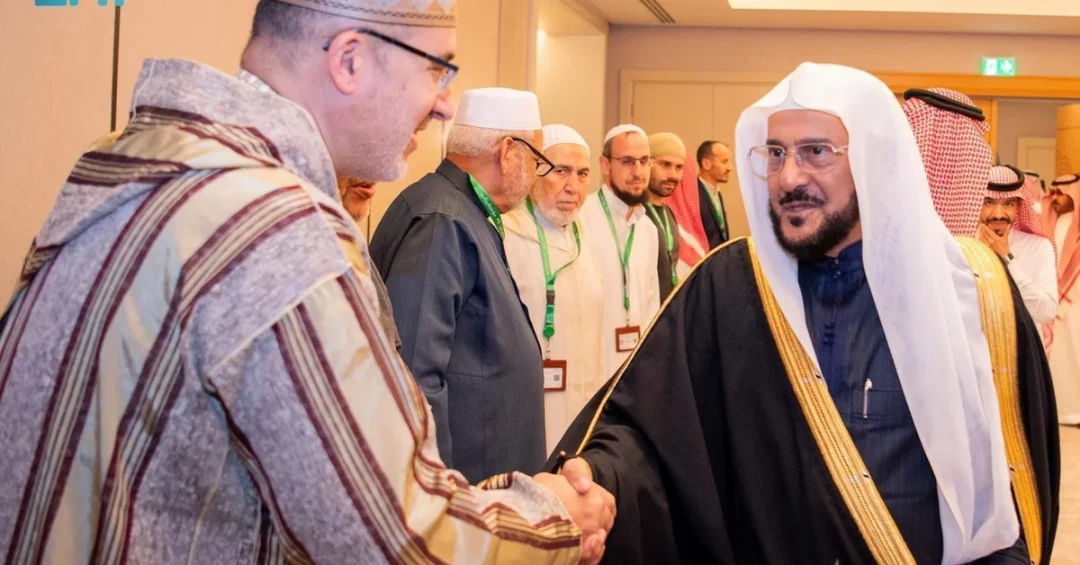
Sheikh Dr. Abdullatif Al Al-Sheikh, Minister of Islamic Affairs, Dawah and Guidance and General Supervisor of the Custodian of the Two Holy Mosques’ Guests Program for Hajj, Umrah, and Visitation, met in Makkah on Wednesday evening with the program’s top guests for this year, following an inspection tour to monitor the services provided to them. The meeting, reported by the Saudi Press Agency (SPA), underscored the Kingdom’s determination to ensure the welfare of pilgrims and provide them with state-of-the-art services so they can perform their rituals with ease and comfort. The minister also met with members of the program’s working committees, reviewed the services offered, and listened to a briefing on their work.
The gathering reflects a continuing commitment by the Saudi leadership to serve Islam and Muslims worldwide. It also highlights the role of the Custodian of the Two Holy Mosques’ Guests Program as a key instrument of Saudi soft power and religious diplomacy. How does such a program shape global perceptions of the Kingdom’s dedication to pilgrims? By hosting guests from across the globe, Saudi Arabia demonstrates its unwavering dedication to facilitating worship and promoting the values of moderation, tolerance, and coexistence.
Context and Background
What is the Custodian of the Two Holy Mosques’ Guests Program, and why does it matter? Established decades ago under the purview of the Ministry of Islamic Affairs, Dawah and Guidance, the program invites distinguished Muslims from around the world to perform Hajj, Umrah, and visit the Prophet’s Mosque in Madinah. It is a manifestation of the Kingdom’s leadership in serving Islam and Muslims, offering opportunities for spiritual fulfillment and fostering goodwill among diverse Islamic communities. The program aligns with the directives of the Kingdom’s leadership to ensure the comfort and welfare of guests, reflecting the deep-rooted Saudi tradition of hospitality and religious stewardship.
The meeting in Makkah followed an inspection tour by Minister Al Al-Sheikh, who oversees the program as General Supervisor. During the tour, he assessed the services provided to the guests, in line with the leadership’s instructions to deliver top-tier services. He also engaged with the program’s working committees, reviewing their operations and receiving briefings on their efforts. Such hands-on oversight ensures that every aspect of the guests’ experience—from accommodation to transportation to ritual performance—meets the highest standards. This approach is consistent with Saudi Vision 2030’s emphasis on excellence in service delivery and enhancing the pilgrimage experience for millions of Muslims annually.
The program’s significance extends beyond individual pilgrimages. It serves as a platform for cultural exchange and religious dialogue, bringing together Muslims from diverse backgrounds to share their experiences and strengthen bonds of brotherhood. By hosting these guests, Saudi Arabia reinforces its position as the heartland of Islam and a global leader in promoting peace and understanding. The guests’ expressions of gratitude and praise for the services they receive further validate the program’s success and its positive impact on the global Muslim community.
Key Details
What did the minister convey to the guests during the meeting? At the start of the meeting, Sheikh Dr. Abdullatif Al Al-Sheikh welcomed the guests to their second home and conveyed the greetings of the Custodian of the Two Holy Mosques, King Salman bin Abdulaziz Al Saud, and His Royal Highness Prince Mohammed bin Salman bin Abdulaziz Al Saud, Crown Prince and Prime Minister. He emphasized that the program reflects the Kingdom’s leadership in serving Islam and Muslims and its commitment to providing opportunities for Muslims from around the world to perform Umrah rituals and visit the Prophet’s Mosque. This message underscores the personal interest of the Saudi leadership in the well-being of pilgrims and their spiritual journey.
The guests responded with heartfelt gratitude to the Custodian of the Two Holy Mosques and the Crown Prince for hosting them. They commended the high-quality services they are receiving, which enable them to perform their rituals with ease and comfort. They also praised the massive projects and expansions at the Holy Mosques and holy sites, noting how these align with Saudi Vision 2030. These projects, which include expansions of the Grand Mosque in Makkah and the Prophet’s Mosque in Madinah, are designed to accommodate increasing numbers of pilgrims and enhance their experience. The guests highlighted the efforts to promote moderation, tolerance, and coexistence as exemplary models, reflecting the program’s broader mission of fostering harmony and understanding.
The meeting also provided an opportunity for the minister to interact directly with the guests and listen to their feedback. Such engagement is vital for continuous improvement and ensures that the program remains responsive to the needs of its beneficiaries. The presence of the program’s working committees at the meeting further demonstrates the coordinated effort behind the scenes to deliver seamless services. From logistics to spiritual guidance, every detail is meticulously planned to ensure that guests can focus on their worship and spiritual enrichment.
International and Regional Impact
How does this program influence Saudi Arabia’s relations with other nations? The Custodian of the Two Holy Mosques’ Guests Program plays a significant role in Saudi Arabia’s public diplomacy. By inviting influential Muslims from various countries, the Kingdom builds bridges of goodwill and strengthens ties with nations across the Islamic world and beyond. The guests, upon returning to their home countries, often become ambassadors of Saudi Arabia’s message of moderation and hospitality. This soft power approach enhances the Kingdom’s global standing and counters negative perceptions, showcasing its commitment to serving Islam and promoting peace.
Regionally, the program contributes to stability and cooperation among Muslim-majority countries. It provides a platform for dialogue and mutual understanding, which is essential in a world often divided by conflicts and misunderstandings. The guests’ praise for Saudi efforts to promote moderation and coexistence reinforces the Kingdom’s role as a stabilizing force in the region. Moreover, the program’s success in facilitating Umrah and visitation supports the broader goal of increasing pilgrimage numbers, which has economic benefits for Saudi Arabia and the wider region. The influx of pilgrims stimulates local economies, creates jobs, and fosters cultural exchange.
Economic and Strategic Significance
What economic benefits does the program bring to Saudi Arabia? While the program is primarily a religious and humanitarian initiative, it also has tangible economic implications. The hosting of guests for Umrah and visitation contributes to the pilgrimage economy, which is a key pillar of Saudi Vision 2030’s diversification efforts. The Kingdom aims to welcome 30 million Umrah pilgrims annually by 2030, and programs like this help achieve that target by showcasing Saudi Arabia’s capacity and readiness. The guests’ positive experiences translate into word-of-mouth promotion, encouraging more Muslims to undertake the pilgrimage and boosting demand for related services such as hotels, transportation, and retail.
Strategically, the program reinforces Saudi Arabia’s leadership in the Islamic world. It demonstrates the Kingdom’s ability to manage large-scale religious events and provide exceptional services, which enhances its reputation as a reliable and capable steward of the Two Holy Mosques. This leadership is crucial for maintaining influence and fostering partnerships with other Muslim nations. Additionally, the program aligns with Vision 2030’s goals of enhancing the quality of life for citizens and visitors, promoting cultural exchange, and strengthening the Kingdom’s global presence. By investing in such initiatives, Saudi Arabia not only fulfills its religious duties but also advances its economic and strategic interests.
Vision 2030 Alignment
How does the Custodian of the Two Holy Mosques’ Guests Program align with Saudi Vision 2030? The program is a clear embodiment of Vision 2030’s objectives, particularly in the areas of enhancing the pilgrimage experience, promoting moderation and tolerance, and diversifying the economy. The massive expansions at the Holy Mosques and holy sites, praised by the guests, are part of Vision 2030’s mega-projects aimed at accommodating more pilgrims and improving services. These projects, such as the Grand Mosque expansion and the development of holy sites, are designed to provide world-class facilities while preserving the spiritual sanctity of the locations. They reflect the leadership’s commitment to serving Islam and Muslims, a core tenet of the Kingdom’s identity.
Furthermore, the program supports Vision 2030’s social and cultural goals by fostering values of coexistence and understanding. By hosting guests from diverse backgrounds, Saudi Arabia promotes a moderate and inclusive interpretation of Islam, countering extremism and building bridges between cultures. This aligns with the Vision’s aim to create a vibrant society and a thriving economy. As the Kingdom continues to implement Vision 2030, programs like this will remain vital in showcasing Saudi Arabia’s progress and its dedication to serving humanity. The guests’ commendation of these efforts serves as a testament to the program’s success and its contribution to the Kingdom’s long-term vision.
20 Questions
Q1. Who is the General Supervisor of the Custodian of the Two Holy Mosques’ Guests Program for Hajj, Umrah, and Visitation?
A1. Sheikh Dr. Abdullatif Al Al-Sheikh serves as the Minister of Islamic Affairs, Dawah and Guidance and General Supervisor of the program. He oversees its operations and ensures the welfare of guests.
Q2. When and where did the minister meet with the program’s guests?
A2. The meeting took place in Makkah on Wednesday evening, December 26, 2024, following an inspection tour by the minister to monitor services provided to the guests.
Q3. What was the purpose of the minister’s inspection tour?
A3. The tour aimed to ensure the welfare of guests and provide them with state-of-the-art services, in accordance with the directives of the Kingdom’s leadership, enabling them to perform rituals with ease and comfort.
Q4. What greetings did the minister convey to the guests?
A4. He conveyed the greetings of the Custodian of the Two Holy Mosques, King Salman bin Abdulaziz Al Saud, and HRH Prince Mohammed bin Salman bin Abdulaziz Al Saud, Crown Prince and Prime Minister.
Q5. What did the minister emphasize about the program?
A5. He emphasized that the program reflects the Kingdom’s leadership in serving Islam and Muslims and its commitment to providing opportunities for Muslims worldwide to perform Umrah and visit the Prophet’s Mosque.
Q6. How did the guests respond to the minister’s remarks?
A6. The guests expressed gratitude to the Custodian of the Two Holy Mosques and the Crown Prince for hosting them, commending the high-quality services they are receiving during their stay.
Q7. What did the guests praise about the Holy Mosques?
A7. They praised the massive projects and expansions at the Holy Mosques and holy sites, noting that these align with Saudi Vision 2030 and enhance the pilgrimage experience.
Q8. What values did the guests highlight as exemplary models?
A8. They highlighted efforts to promote moderation, tolerance, and coexistence, which are core values of the program and the Kingdom’s message to the world.
Q9. What is the Custodian of the Two Holy Mosques’ Guests Program?
A9. It is a program under the Ministry of Islamic Affairs that invites distinguished Muslims from around the world to perform Hajj, Umrah, and visit the Prophet’s Mosque in Madinah.
Q10. How does the program align with Saudi Vision 2030?
A10. It aligns with Vision 2030 by enhancing the pilgrimage experience, promoting moderation, and supporting economic diversification through increased pilgrimage numbers and improved services.
Q11. What economic benefits does the program bring?
A11. It contributes to the pilgrimage economy, a key pillar of Vision 2030, by stimulating demand for hotels, transportation, and retail, and showcasing Saudi Arabia’s capacity to host pilgrims.
Q12. How does the program impact Saudi Arabia’s international relations?
A12. It strengthens ties with other nations by building goodwill and promoting Saudi Arabia’s message of moderation and hospitality, enhancing its global standing.
Q13. What role do the program’s working committees play?
A13. The committees oversee the logistics and services provided to guests, ensuring seamless operations and high-quality experiences for all participants.
Q14. What did the minister review with the working committees?
A14. He reviewed the services provided and listened to a briefing on their work, ensuring that all aspects of the program meet the leadership’s directives.
Q15. How many pilgrims does Saudi Arabia aim to host annually by 2030?
A15. Saudi Arabia aims to welcome 30 million Umrah pilgrims annually by 2030 as part of Vision 2030’s goals to enhance the pilgrimage experience and diversify the economy.
Q16. What are some of the expansions at the Holy Mosques?
A16. Expansions include the Grand Mosque in Makkah and the Prophet’s Mosque in Madinah, designed to accommodate more pilgrims and provide world-class facilities while preserving spiritual sanctity.
Q17. How does the program promote moderation and tolerance?
A17. By hosting guests from diverse backgrounds and facilitating their spiritual journey, the program fosters dialogue and understanding, countering extremism and promoting peaceful coexistence.
Q18. What is the significance of the guests calling Saudi Arabia their ‘second home’?
A18. It reflects the warm hospitality and sense of belonging that the Kingdom provides, reinforcing its role as a welcoming host for Muslims worldwide.
Q19. How does the program support Saudi Arabia’s soft power?
A19. It enhances the Kingdom’s image as a benevolent leader in the Islamic world, building goodwill and influencing global perceptions positively through tangible acts of service.
Q20. What is the overall message of this meeting?
A20. The meeting underscores Saudi Arabia’s unwavering commitment to serving Islam and Muslims, its leadership in facilitating pilgrimage, and its dedication to Vision 2030’s goals of moderation and prosperity.
Reader Feedback
We value your thoughts. Please share your feedback on this article.
Your feedback helps us improve our coverage.
Related articles
 Saudi FM Joins GCC Meeting on Regional Stability
 Saudi Passport: Gateway to World Reflecting Kingdom’s Progress
 Jazan Border Guard Foils Smuggling of 18,000 Narcotic Tablets
 Indonesian Speaker Visits Muslim World League in Makkah
 Saudi FM Arrives in Kuwait for 46th GCC Ministerial Meeting
 King Salman Receives Written Message from Russia’s Putin