


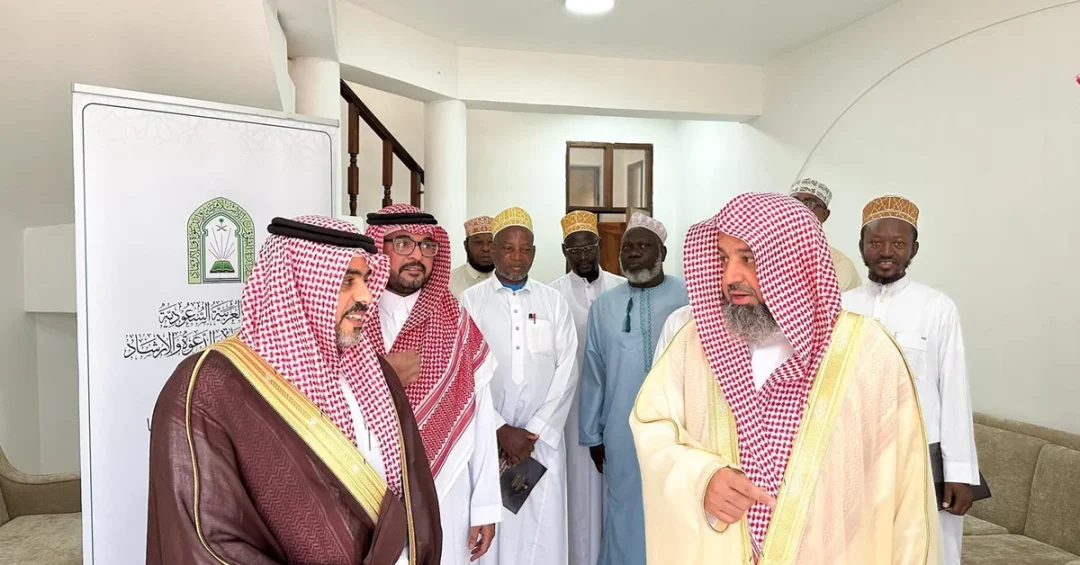
The Ministry of Islamic Affairs, Dawah and Guidance has inaugurated its religious attaché building in Dar es Salaam, Tanzania, marking a significant expansion of the Kingdom of Saudi Arabia’s religious diplomacy in East Africa. The opening ceremony, held on February 28, 2025, was led by Sheikh Dr. Awad Al-Anazi, Undersecretary for Islamic Affairs at the ministry, and attended by Saudi Ambassador to the United Republic of Tanzania Yahya Okeish, according to the Saudi Press Agency. The new facility is intended to serve as a permanent base for the ministry’s religious and cultural outreach in Tanzania, reflecting the distinguished relations between the two brotherly countries and their cooperation in Islamic work. The inauguration underscores Saudi Arabia’s continued commitment to supporting Islamic institutions, promoting moderation, and strengthening people-to-people ties across Africa.
Why does a single building opening in Dar es Salaam matter to the wider world? For Saudi Arabia, the religious attaché office is far more than a diplomatic outpost. It represents a long-term investment in religious education, interfaith understanding, and the dissemination of moderate Islamic values, all of which are central to the Kingdom’s international engagement. Tanzania, home to a large and vibrant Muslim community, has been a key partner in these efforts for decades. The new building provides a dedicated space for the attaché’s staff to coordinate with local religious authorities, oversee educational programs, and facilitate cultural exchanges. It also signals the Kingdom’s intention to deepen its presence in East Africa, a region of growing strategic importance for trade, investment, and diplomacy. As Saudi Arabia continues to modernize under Vision 2030, such initiatives highlight how religious outreach and global partnership go hand in hand.
Context and Background
What is the historical foundation of Saudi Arabia’s religious engagement in Tanzania? The relationship between the Kingdom and Tanzania dates back many years, built on shared Islamic heritage and mutual respect. The Ministry of Islamic Affairs, Dawah and Guidance has long operated religious attachés in various countries to oversee mosques, distribute religious materials, and support Islamic education. In Tanzania, the ministry has worked closely with local scholars and institutions to promote a balanced understanding of Islam. The new building in Dar es Salaam formalizes and expands this work, providing a permanent headquarters for the attaché’s activities. It also aligns with the Kingdom’s broader strategy of strengthening ties with African nations, many of which have significant Muslim populations and are increasingly important partners in economic and political arenas.
The inauguration ceremony itself was a moment of celebration and reflection. Sheikh Dr. Awad Al-Anazi, a senior official at the ministry, traveled to Tanzania to personally oversee the opening, demonstrating the high level of attention the Kingdom gives to its religious missions abroad. Saudi Ambassador Yahya Okeish’s presence further underscored the diplomatic weight of the occasion. Together, they highlighted the ministry’s role in fostering moderation and combating extremism, a message that resonates deeply in a region that has sometimes faced security challenges. The building will not only house administrative offices but is expected to serve as a hub for training programs, Quranic study circles, and interfaith dialogues, all designed to strengthen the fabric of Tanzanian society.
Why is East Africa so important to Saudi Arabia’s religious diplomacy? The region is home to millions of Muslims who look to the Kingdom for spiritual guidance and support. By investing in local infrastructure and education, Saudi Arabia helps to nurture a generation of Muslims who are both devout and open to the world. This approach is consistent with the Kingdom’s own domestic reforms, which emphasize tolerance, cultural openness, and economic development. The religious attaché building in Dar es Salaam is therefore a symbol of this shared journey toward a more prosperous and harmonious future.
Key Details
What exactly does the new religious attaché building entail? According to the Saudi Press Agency, the facility was officially opened on February 28, 2025, in Dar es Salaam, the commercial capital of Tanzania. The building will serve as the operational base for the Ministry of Islamic Affairs, Dawah and Guidance’s religious attaché in the country. It is expected to include administrative offices, meeting rooms, and spaces for educational and cultural activities. The attaché’s staff will be responsible for coordinating with Tanzanian authorities, overseeing the ministry’s programs, and providing services to the local Muslim community. The inauguration was attended by key officials, including Sheikh Dr. Awad Al-Anazi, the ministry’s Undersecretary for Islamic Affairs, and Saudi Ambassador Yahya Okeish. Their presence reflects the Kingdom’s commitment to this mission.
The event also highlighted the close cooperation between Saudi Arabia and Tanzania in the field of Islamic work. The two countries share a commitment to promoting peace, moderation, and mutual understanding. The new building is a tangible expression of that partnership. It will enable the attaché to expand its reach and effectiveness, ensuring that the ministry’s initiatives are delivered efficiently and in line with local needs. For Tanzania, the facility represents an investment in its religious infrastructure and a vote of confidence in its stability and future. For Saudi Arabia, it is another step in its global outreach, which spans continents and seeks to build bridges between cultures.
What specific programs might the attaché oversee? While the source material does not list every activity, religious attachés typically manage mosque affairs, distribute Islamic literature, organize Hajj and Umrah orientation, and support educational institutions. They also often facilitate cultural exchanges and collaborate with local scholars. The Dar es Salaam building will provide the necessary space and resources to carry out these tasks more effectively. It may also serve as a venue for hosting visiting Saudi scholars, workshops on moderate Islamic thought, and community events. By centralizing operations, the ministry aims to enhance coordination and ensure that its message of tolerance and moderation reaches a wide audience.
International and Regional Impact
How will this development affect the broader region? The inauguration of the religious attaché building in Tanzania is likely to be welcomed by Muslim communities across East Africa. It signals Saudi Arabia’s enduring commitment to the region and its willingness to invest in religious and social infrastructure. For Tanzania, the new facility can enhance its standing as a hub for Islamic learning and diplomacy. It may also attract further cooperation from other Gulf states and international organizations. On a regional level, the move contributes to stability and development by supporting moderate religious institutions and countering extremist narratives. It aligns with Saudi Arabia’s efforts to promote peace and security in Africa, a continent that is increasingly central to global affairs.
What does this mean for Saudi Arabia’s relationships with other African nations? The Kingdom has been actively deepening its ties across Africa through trade, investment, and religious diplomacy. The opening of a religious attaché building in Tanzania is part of this broader strategy. It demonstrates that Saudi Arabia is not only focused on economic partnerships but also on cultural and spiritual connections. This holistic approach can help to build goodwill and trust, which are essential for long-term cooperation. Other African countries may view this as a model for their own engagement with the Kingdom. The facility also provides a platform for Saudi Arabia to share its experience in religious moderation and counter-extremism, areas where it has developed significant expertise.
Economic and Strategic Significance
Does the religious attaché building have economic implications? While primarily a religious and cultural initiative, the project also carries economic and strategic weight. Saudi Arabia’s engagement in Africa is closely tied to its economic interests, including trade, investment, and energy cooperation. By strengthening religious ties, the Kingdom builds a foundation of trust that can facilitate broader economic partnerships. Tanzania is rich in natural resources and has a growing economy, making it an attractive partner. The new building may serve as a focal point for Saudi businesses and investors looking to explore opportunities in the country. Additionally, the facility’s construction and operation contribute to local employment and spending, providing a small but tangible economic boost to Dar es Salaam.
Strategically, the presence of a formal religious attaché in Tanzania enhances Saudi Arabia’s soft power. It allows the Kingdom to project its values of moderation and modernity, which are key components of Vision 2030. By investing in religious infrastructure abroad, Saudi Arabia demonstrates that it is a responsible global actor committed to supporting Muslim communities. This can help to counter negative perceptions and build alliances. In a world where religious diplomacy is increasingly important, the Dar es Salaam building is a smart investment in the Kingdom’s international standing. It also complements Saudi Arabia’s broader foreign policy objectives, which include fostering stability, promoting economic diversification, and strengthening ties with emerging markets.
Vision 2030 Alignment
How does this initiative connect to Saudi Arabia’s Vision 2030? Vision 2030 is a comprehensive plan to diversify the Kingdom’s economy and society, but it also has a strong international dimension. It seeks to position Saudi Arabia as a global leader in various fields, including Islamic affairs. The religious attaché building in Tanzania reflects the Vision’s emphasis on moderation, tolerance, and global engagement. By supporting Islamic education and outreach abroad, the Kingdom promotes the true values of Islam and builds bridges with other nations. This aligns with the Vision’s goal of enhancing Saudi Arabia’s soft power and its role as a stabilizing force in the region. Moreover, the project demonstrates the Kingdom’s commitment to international cooperation, a key pillar of Vision 2030.
What does the future hold for Saudi-Tanzanian relations? The inauguration of the religious attaché building is a milestone that paves the way for further collaboration. It opens the door to more joint programs in education, culture, and religious affairs. It also strengthens the personal and institutional ties between the two countries. As Saudi Arabia continues to implement Vision 2030, it will look to partners like Tanzania to share its journey of transformation. The Kingdom’s leadership, under the guidance of the Custodian of the Two Holy Mosques and His Royal Highness the Crown Prince, remains committed to supporting Muslim communities worldwide. The new building in Dar es Salaam is a testament to that commitment and a beacon of hope for a future of peace, prosperity, and mutual respect.
20 Questions
Q1. What event took place in Dar es Salaam on February 28, 2025?
A1. The Ministry of Islamic Affairs, Dawah and Guidance inaugurated its religious attaché building in Dar es Salaam, Tanzania, on February 28, 2025, according to the Saudi Press Agency.
Q2. Who inaugurated the religious attaché building?
A2. Sheikh Dr. Awad Al-Anazi, Undersecretary for Islamic Affairs at the Ministry of Islamic Affairs, Dawah and Guidance, inaugurated the building.
Q3. Who attended the opening ceremony?
A3. Saudi Ambassador to the United Republic of Tanzania Yahya Okeish attended the opening ceremony, along with other officials and guests.
Q4. Where is the religious attaché building located?
A4. The building is located in Dar es Salaam, the capital of Tanzania.
Q5. What is the purpose of the religious attaché building?
A5. It serves as a base for the ministry’s religious and cultural outreach in Tanzania, reflecting cooperation in Islamic work between the two countries.
Q6. Which Saudi ministry is responsible for the religious attaché?
A6. The Ministry of Islamic Affairs, Dawah and Guidance is the Saudi ministry responsible for religious attachés and Islamic outreach worldwide.
Q7. Why is this building significant for Saudi-Tanzanian relations?
A7. It reflects the distinguished relations between the two brotherly countries and their ongoing cooperation in the field of Islamic work.
Q8. What does the religious attaché do?
A8. The attaché oversees mosques, distributes religious materials, supports Islamic education, and coordinates with local authorities to promote moderate Islam.
Q9. How does this initiative align with Saudi Arabia’s Vision 2030?
A9. It aligns with Vision 2030’s goals of promoting moderation, global engagement, and enhancing Saudi Arabia’s soft power and international cooperation.
Q10. What impact will the building have on the local Muslim community?
A10. It will provide a hub for educational programs, Quranic study, and interfaith dialogue, helping to strengthen the community and promote moderation.
Q11. What message does this send to the international community?
A11. It demonstrates Saudi Arabia’s commitment to supporting Muslim communities globally and promoting peace, tolerance, and mutual understanding.
Q12. How does this fit into Saudi Arabia’s broader Africa strategy?
A12. It is part of the Kingdom’s efforts to deepen ties across Africa through religious diplomacy, trade, and investment, building trust and partnerships.
Q13. What economic benefits might the building bring?
A13. It may facilitate Saudi business and investment in Tanzania, contribute to local employment, and strengthen economic ties between the two nations.
Q14. What role does the Saudi Ambassador play in this initiative?
A14. The Ambassador supports the ministry’s work, attends key events, and helps to coordinate between Saudi and Tanzanian authorities.
Q15. Are there other Saudi religious attachés in Africa?
A15. Yes, Saudi Arabia has religious attachés in several African countries as part of its global outreach to support Muslim communities.
Q16. What kind of programs will the attaché offer?
A16. Programs may include Quranic education, Hajj and Umrah orientation, cultural exchanges, and workshops on moderate Islamic thought.
Q17. How does this building reflect Saudi Arabia’s values?
A17. It reflects the Kingdom’s values of moderation, tolerance, and service to Islam and Muslims, as well as its commitment to global peace.
Q18. What was the significance of Sheikh Dr. Al-Anazi’s visit?
A18. His visit underscored the high importance the Kingdom places on its religious missions and its commitment to strengthening ties with Tanzania.
Q19. Will the building be open to non-Muslims?
A19. While primarily for Islamic activities, it may host interfaith dialogues and cultural events that promote understanding among all communities.
Q20. What is the expected long-term impact of this initiative?
A20. It is expected to enhance Saudi-Tanzanian relations, support moderate Islam, and contribute to stability and development in East Africa.
Reader Feedback
We value your thoughts. Please share your feedback on this article.
Your feedback helps us improve our coverage.
Related articles
 Custodian of the Two Holy Mosques Program Guests Perform Friday Prayer at Prophet’s Mosque
 KSrelief Launches $4M Heart Surgery Program in Yemen
 Saudi Arabia Completes Extensive Ramadan Preparations at Holy Mosques
 Saudi Passports Directorate Ready for Ramadan Umrah
 Tarawih Prayers Begin at Makkah Grand Mosque for Ramadan 1446
 OIC Secretary-General Congratulates Member States on Ramadan