


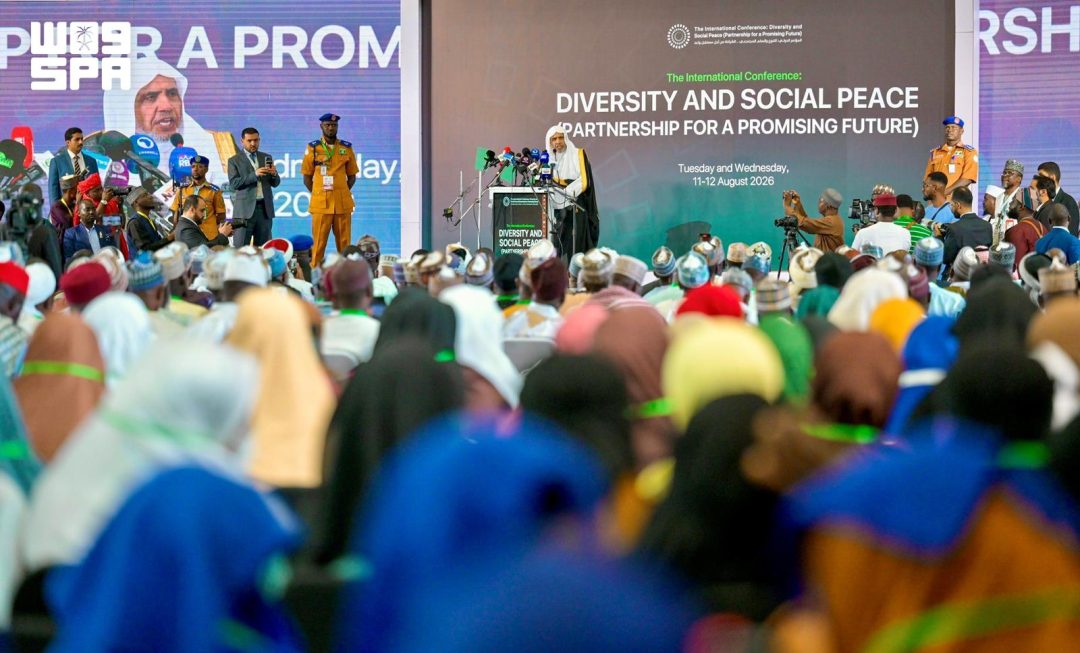
Abuja, Nigeria, hosted the launch of the Muslim World League initiative for community peace in West Africa during the international conference titled Diversity and Community Peace: Partnership for a Promising Future.
According to SPA, the initiative was launched by the Secretary General of the Muslim World League and Chairman of the Association of Muslim Scholars, Dr. Mohammad bin Abdulkarim Al-Issa. The conference was held under the patronage of the President of the Federal Republic of Nigeria, Bola Ahmed Tinubu.
Participants included Islamic and Christian religious leaders, ministers, parliamentarians, and civil society leaders. The gathering resulted in the unanimous agreement on the Abuja Declaration, which includes a joint action plan between government institutions, religious leaders, and civil society organizations.
The declaration approves the expansion of scientific, training, and media programs based on the Makkah Charter to address challenges regarding coexistence and community stability. This includes enhancing partnerships to prevent conflicts and protect the national fabric across religious and ethnic diversities. Additionally, a Coordinating Body for Religious and Civil Leaders and Institutions in West Africa will be established to monitor the implementation of the action plan and its initiatives.
The initiative focuses on addressing the roots of intellectual and social problems, specifically extremist ideas, through binding agreements between stakeholders to ensure sustainability and partnership.
What is the purpose of the Muslim World League initiative in West Africa? The initiative aims to promote community peace and address the roots of intellectual and social problems, specifically extremist ideas. It seeks to ensure sustainability and partnership through binding agreements between all relevant parties to foster stability and coexistence in the region.
What was the outcome of the international conference in Abuja? The conference resulted in the unanimous agreement on the Abuja Declaration by religious leaders representing all faiths and sects in the region. This declaration includes a joint action plan involving government institutions, civil society organizations, and both Islamic and Christian religious leaders.
How will the Makkah Charter be utilized in this initiative? The Abuja Declaration approves the expansion of media, training, and scientific programs based on the Makkah Charter. These programs are designed to face challenges related to community stability and coexistence, while enhancing partnerships to protect the national fabric and prevent conflicts.
What new entity is being created to manage the initiative’s goals? The Coordinating Body for Religious and Civil Leaders and Institutions in West Africa will be established. This body is responsible for coordinating initiatives and monitoring the implementation of the action plan’s commitments to ensure goals are met and measured periodically.