


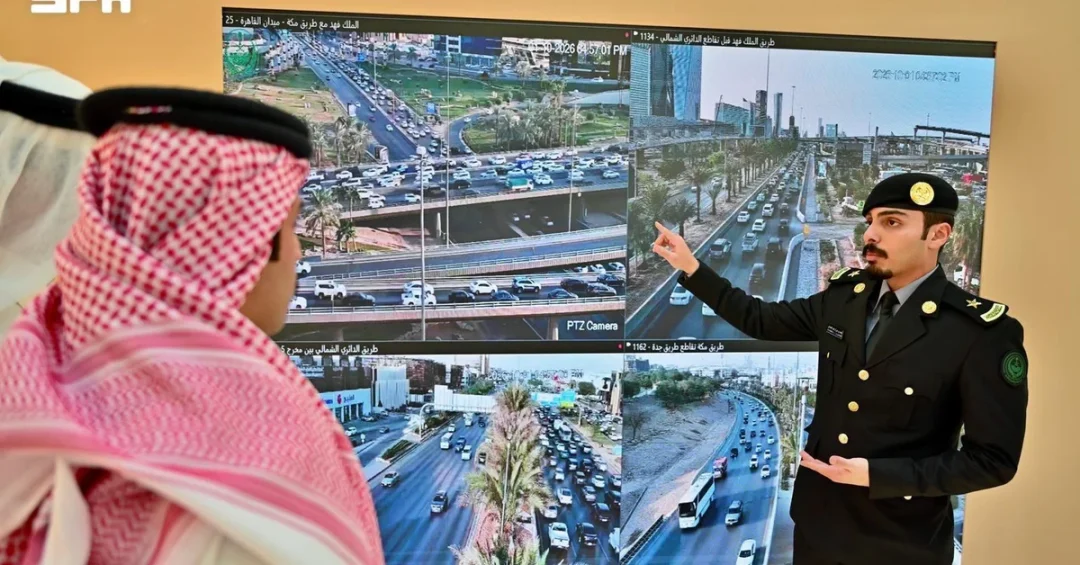
The National Center for Security Operations (NCSO) is participating in the Ministry of Interior’s pavilion at the International Saudi Falcons and Hunting Exhibition in Malham, Riyadh, running through October 10, 2026, to showcase its emergency response workflow, advanced dispatch systems, and integrated live surveillance network. The exhibition, organized under the patronage of the Ministry of Interior, brings together government agencies, international exhibitors, and thousands of visitors to celebrate Saudi Arabia’s cultural heritage while highlighting the Kingdom’s modern public safety capabilities. The NCSO’s presence underscores the central role of the unified emergency number 911 in protecting citizens, residents, and visitors across the Riyadh, Makkah, Madinah, and Eastern regions, according to the Saudi Press Agency (SPA).
How does a single emergency number serve millions of people across a vast kingdom every day? The answer lies in the NCSO’s integrated operations, which combine real-time data, trained dispatchers, and coordination with field units to deliver rapid assistance. At the exhibition, visitors can observe how calls are received, triaged, and routed to the appropriate agency, whether police, civil defense, or emergency medical services. This transparency builds public trust and encourages the responsible use of 911, a service that has become a cornerstone of Saudi Arabia’s safety infrastructure since its nationwide rollout. The exhibition runs through October 10, offering a unique opportunity for the public to engage directly with the technology and people behind the service.
Context and Background
What makes the International Saudi Falcons and Hunting Exhibition an ideal platform for showcasing emergency services? Held in Malham, north of Riyadh, the event is one of the region’s largest gatherings dedicated to falconry, hunting, and outdoor heritage. It attracts exhibitors from around the world and visitors of all ages, creating a high-traffic environment where public safety awareness is paramount. The Ministry of Interior’s pavilion serves as a hub for multiple security and safety agencies, allowing them to present their missions in a unified, accessible manner. The NCSO’s participation aligns with the Ministry’s broader strategy to enhance community engagement and demonstrate the Kingdom’s commitment to cutting-edge public services.
The National Center for Security Operations was established to unify emergency response across Saudi Arabia, replacing multiple legacy numbers with a single, easy-to-remember number: 911. Since its launch, the center has handled millions of calls, coordinating with police, traffic, civil defense, and medical teams. Its operations cover four major regions—Riyadh, Makkah, Madinah, and the Eastern Province—which together host the majority of the Kingdom’s population and millions of pilgrims and tourists annually. The exhibition provides a rare window into how this coordination works in real time, from the moment a call is answered to the dispatch of the nearest unit. Such transparency is vital for maintaining public confidence in emergency services.
Why is it important for the public to understand what happens after they dial 911? Knowledge reduces panic and improves outcomes. When callers know that their information is being processed by trained professionals and that help is on the way, they are more likely to remain calm and provide accurate details. The NCSO’s exhibition stand includes live demonstrations of dispatch software, maps showing unit locations, and simulated call scenarios. Visitors can ask questions and see how technology supports human decision-making. This educational component is especially valuable for families, schools, and community groups attending the falconry exhibition, many of whom may not be familiar with the full scope of 911 services beyond police emergencies.
Key Details
What exactly is the NCSO showcasing at the Ministry of Interior’s pavilion? The center’s exhibit features three core elements: the emergency response workflow, advanced dispatch systems, and an integrated live surveillance network. The workflow demonstration walks visitors through each step of a typical emergency call, from initial contact to the arrival of first responders. Dispatchers explain how they prioritize calls based on urgency, location, and the nature of the incident. The advanced dispatch systems use geographic information systems (GIS) and real-time data to identify the closest and most appropriate units, reducing response times. The live surveillance network, which integrates cameras and sensors from various agencies, provides situational awareness to commanders during major events or incidents.
How does the 911 service actually operate across different regions? In Riyadh, the capital and largest city, the NCSO coordinates with the Riyadh Police, the General Directorate of Civil Defense, and the Saudi Red Crescent Authority. In Makkah and Madinah, the service is particularly crucial during Hajj and Umrah seasons, when millions of pilgrims require assistance. The Eastern Province, home to major industrial facilities and a large expatriate population, benefits from multilingual dispatchers who can handle calls in Arabic, English, and other languages. This regional flexibility ensures that the 911 service is not a one-size-fits-all solution but a tailored network that adapts to local needs. The NCSO’s participation in the exhibition highlights these regional differences and the common standards that bind them together.
Are there specific technologies that make the Saudi 911 system stand out? Yes. The NCSO has invested in artificial intelligence (AI) tools that help classify calls and detect patterns, as well as in GPS-enabled location tracking that allows dispatchers to pinpoint callers even if they cannot speak. The integrated surveillance network can share live feeds with field commanders, enabling them to make informed decisions during complex operations. Additionally, the center uses data analytics to identify high-risk areas and times, allowing for proactive deployment of resources. These technologies are not just gadgets; they are part of a broader Vision 2030 goal to build a smart, safe, and efficient government. By displaying them at a public exhibition, the NCSO demonstrates that these tools are operational and benefiting society today.
International and Regional Impact
How does Saudi Arabia’s 911 service compare with emergency systems in other countries? While many nations have unified emergency numbers, Saudi Arabia’s approach is notable for its rapid integration of multiple agencies under one roof and its use of advanced technologies. The NCSO’s model has attracted interest from other Gulf Cooperation Council (GCC) states and beyond, as it offers a blueprint for centralizing emergency response in a way that improves efficiency and accountability. At the falconry exhibition, international visitors can see firsthand how the system works, fostering knowledge exchange and potentially paving the way for future collaborations. The presence of foreign exhibitors and dignitaries at the event provides a natural audience for this demonstration of Saudi technical capability.
What does the NCSO’s participation mean for regional security cooperation? The exhibition is not just a cultural event; it is also a platform for security agencies to network and share best practices. By showcasing its operations, the NCSO signals that Saudi Arabia is open to cooperation and committed to protecting all residents, including the millions of pilgrims and tourists who visit each year. This aligns with the Kingdom’s broader efforts to position itself as a safe and welcoming destination, a key pillar of Vision 2030. The Ministry of Interior’s pavilion, which houses the NCSO exhibit, also features other security sectors, creating a comprehensive view of how Saudi Arabia maintains public order and safety. Such integrated presentations reinforce the image of a modern, capable state.
Economic and Strategic Significance
Why should businesses and investors care about emergency response systems? A reliable 911 service is a fundamental component of a stable business environment. Companies operating in Saudi Arabia—whether in energy, tourism, logistics, or technology—rely on public safety to protect their assets and workforce. The NCSO’s advanced dispatch and surveillance capabilities contribute to a lower-risk operating environment, which in turn attracts foreign direct investment. Moreover, the technologies developed for 911, such as AI-driven analytics and integrated communications, have potential commercial applications that could spur innovation in the private sector. By highlighting these capabilities at a high-profile exhibition, the NCSO indirectly supports the Kingdom’s economic diversification goals.
How does the 911 service support major events and mega-projects? Saudi Arabia is hosting an increasing number of international events, from sporting tournaments to cultural festivals, as well as developing giga-projects like NEOM and the Red Sea Project. These endeavors require robust emergency response infrastructure. The NCSO’s ability to coordinate across regions and agencies ensures that large crowds and complex sites can be managed safely. During the falconry exhibition itself, the NCSO’s live surveillance network and dispatch systems are on standby to handle any incident, demonstrating their practical value. This operational readiness is a selling point for event organizers and investors who need assurance that safety is a top priority. The exhibition thus serves as both a showcase and a live test of the system’s effectiveness.
Vision 2030 Alignment
How does the NCSO’s work fit into Saudi Vision 2030? Vision 2030 aims to transform Saudi Arabia into a global hub for business, tourism, and innovation, and a safe society is a prerequisite for that transformation. The NCSO directly supports the Vision’s objectives by enhancing quality of life, improving government efficiency, and leveraging technology to serve citizens. The unified 911 number is a tangible example of how the Kingdom is streamlining public services and making them more accessible. Furthermore, the center’s participation in a cultural event like the falconry exhibition demonstrates the integration of tradition and modernity—a hallmark of Vision 2030. By protecting residents and visitors alike, the NCSO helps ensure that Saudi Arabia remains an attractive destination for travelers and investors.
What can we expect next from the NCSO? The center continues to expand its capabilities, with plans to integrate more agencies, enhance multilingual support, and deploy next-generation technologies such as 5G-enabled communications and drone-assisted response. These developments will further reduce response times and improve outcomes for those in need. As the exhibition runs through October 10, visitors have a unique opportunity to learn about these advancements and meet the professionals behind the 911 service. The NCSO’s presence at the International Saudi Falcons and Hunting Exhibition is more than a display; it is a reaffirmation of Saudi Arabia’s commitment to safety, innovation, and public service, all of which are essential to the Kingdom’s prosperous future.
20 Questions
Q1. What is the National Center for Security Operations (NCSO)?
A1. The NCSO is a Saudi government agency responsible for coordinating emergency response across the Kingdom. It operates the unified emergency number 911, integrating police, civil defense, and medical services to provide rapid assistance to citizens, residents, and visitors.
Q2. What is the unified emergency number in Saudi Arabia?
A2. The unified emergency number is 911. It connects callers to trained dispatchers who assess the situation and dispatch the appropriate emergency services. The number is operational in Riyadh, Makkah, Madinah, and the Eastern Province.
Q3. Where is the International Saudi Falcons and Hunting Exhibition taking place?
A3. The exhibition is held in Malham, north of Riyadh, and runs through October 10, 2026. It is organized under the patronage of the Ministry of Interior and attracts exhibitors and visitors from around the world.
Q4. Why is the NCSO participating in the falconry exhibition?
A4. The NCSO is showcasing its emergency response workflow, advanced dispatch systems, and integrated live surveillance network. The participation aims to educate the public and demonstrate the Kingdom’s modern public safety capabilities.
Q5. What regions does the 911 service cover?
A5. The 911 service currently covers four major regions: Riyadh, Makkah, Madinah, and the Eastern Province. These regions include the Kingdom’s largest cities and major pilgrimage sites, serving the majority of the population.
Q6. How does the 911 dispatch system work?
A6. When a call is received, dispatchers use advanced software to determine the nature and location of the emergency. They then dispatch the nearest and most appropriate unit, whether police, civil defense, or medical, using real-time tracking and GIS mapping.
Q7. What is the integrated live surveillance network?
A7. It is a system that combines camera feeds and sensors from multiple agencies to provide situational awareness to commanders. It helps monitor crowds, incidents, and major events, enabling faster and more coordinated responses.
Q8. Can visitors interact with the NCSO exhibit?
A8. Yes, visitors can observe live demonstrations of dispatch software, ask questions, and see simulated call scenarios. The exhibit is designed to be educational and transparent, building public trust in emergency services.
Q9. Does the 911 service support non-Arabic speakers?
A9. Yes, the NCSO employs multilingual dispatchers, particularly in regions with large expatriate populations like the Eastern Province. Callers can receive assistance in English and other languages, ensuring inclusivity.
Q10. How does the NCSO use artificial intelligence?
A10. The NCSO uses AI to classify calls, detect patterns, and analyze data for proactive resource deployment. AI tools help prioritize emergencies and improve the efficiency of dispatchers, ultimately reducing response times.
Q11. What is the role of the Ministry of Interior in this exhibition?
A11. The Ministry of Interior hosts the pavilion where the NCSO and other security agencies present their services. It supports community engagement and showcases the Kingdom’s commitment to safety and innovation.
Q12. How does the 911 service benefit pilgrims during Hajj and Umrah?
A12. During pilgrimage seasons, the NCSO coordinates with agencies in Makkah and Madinah to handle the increased call volume. Multilingual support and extra resources ensure that pilgrims receive timely assistance in emergencies.
Q13. What technologies are highlighted at the NCSO stand?
A13. The stand features GIS mapping, real-time tracking, AI-driven call classification, and integrated surveillance feeds. These technologies demonstrate how data and communication tools enhance emergency response.
Q14. How does the NCSO contribute to Vision 2030?
A14. By improving public safety and government efficiency, the NCSO supports Vision 2030’s goals of enhancing quality of life and attracting visitors and investors. It exemplifies the Kingdom’s shift toward smart, technology-driven services.
Q15. Are there plans to expand the 911 service to other regions?
A15. The NCSO continues to evaluate and expand its coverage. While the current focus is on the four major regions, future plans include integrating more areas and agencies to provide nationwide coverage.
Q16. What should a caller expect when dialing 911?
A16. A trained dispatcher will answer promptly, ask for the location and nature of the emergency, and provide instructions while dispatching help. Callers should stay calm, speak clearly, and follow the dispatcher’s guidance.
Q17. How does the NCSO ensure data privacy and security?
A17. The NCSO adheres to strict national cybersecurity standards. Call data and surveillance feeds are protected with encryption and access controls, ensuring that personal information is handled responsibly and securely.
Q18. What is the significance of holding this exhibition in Malham?
A18. Malham is a growing area north of Riyadh that hosts major cultural events. The location allows easy access for visitors and provides a spacious venue for exhibitors, reinforcing Riyadh’s role as a hub for heritage and innovation.
Q19. How can the public learn more about the NCSO’s services?
A19. The public can visit the NCSO’s stand at the exhibition through October 10, follow official Ministry of Interior channels, or check the Saudi Press Agency for updates. Educational materials are also distributed at the event.
Q20. What is the main takeaway from the NCSO’s participation?
A20. The main takeaway is that Saudi Arabia’s 911 service is a sophisticated, integrated system that prioritizes safety and innovation. The exhibition demonstrates the Kingdom’s commitment to protecting all residents and visitors while advancing Vision 2030.
Reader Feedback
We value your thoughts. Please share your feedback on this article.
Your feedback helps us improve our coverage.
Related articles
 Sudanese Health Minister Meets KSrelief Delegation in Khartoum
 Saudi ETEC Earns Historic US CHEA Recognition
 Mauritania Condemns Attack on Taibah Power Station, Backs Saudi Arabia
 Saudi Crown Prince Congratulates Guinea on Independence Day
 King Salman Congratulates Guinea on Independence Day
 Saudi Greening Program Wins Arab Environmental Award