


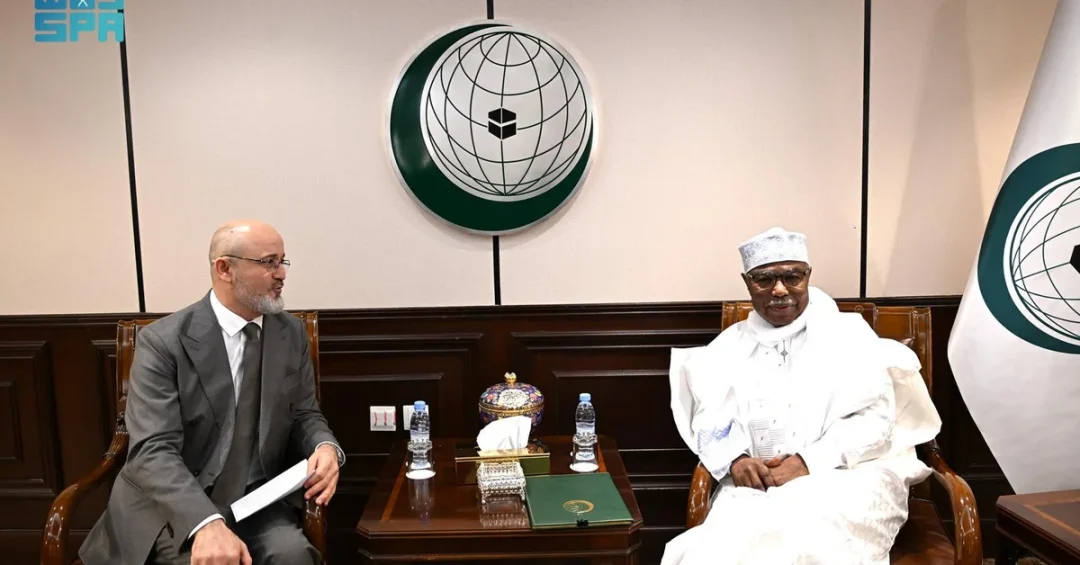
Secretary-General of the Organization of Islamic Cooperation (OIC) Hussein Ibrahim Taha met with the Permanent Observer of the Russian Federation to the OIC, Ambassador Turko Daudov, at the organization’s headquarters in Jeddah, where both sides commended the ongoing dialogue and cooperation between the OIC and Russia and explored avenues for further strengthening ties to serve mutual interests. The meeting, announced via the Saudi Press Agency, represents another step in the OIC’s expanding engagement with major international powers from its permanent base in the Kingdom of Saudi Arabia.
Hosted in Jeddah, a city that has served as the administrative heart of the OIC since the organization’s founding in 1969, the encounter underscored the organization’s role as a bridge between the Islamic world and global partners. For observers of multilateral diplomacy, the timing and location of the meeting carry significance: the OIC continues to position itself as a constructive forum for dialogue, and Russia’s permanent observer status reflects a sustained interest in maintaining open channels with the 57-member body. How does a single diplomatic meeting in Jeddah ripple across a relationship that spans dozens of nations and multiple continents?
Context and Background
The Organization of Islamic Cooperation is the second-largest intergovernmental organization in the world after the United Nations, comprising 57 member states spread across four continents. Founded in Rabat, Morocco, in 1969 and later headquartered permanently in Jeddah, the OIC was established to safeguard the interests and aspirations of the global Muslim community and to promote international peace, security, and cooperation. Its Secretary-General, Hussein Ibrahim Taha, a seasoned Chadian diplomat, assumed office in November 2021 and has since prioritized institutional reform, conflict mediation, and deeper engagement with non-member states and international organizations.
Russia has maintained a permanent observer mission to the OIC for years, a status that allows it to participate in OIC proceedings, maintain diplomatic presence, and pursue cooperation without full membership. Ambassador Turko Daudov, a career diplomat with extensive experience in Middle Eastern and Islamic-world affairs, serves as the Russian Federation’s Permanent Observer to the organization. The observer relationship is not merely symbolic: it provides a structured channel for political consultation, economic dialogue, and cultural exchange between Moscow and the Islamic world, a grouping that collectively represents more than 1.8 billion people. What makes this particular diplomatic channel valuable enough to sustain over many years?
The meeting in Jeddah follows a broader pattern of intensified OIC outreach. In recent years, the organization has convened high-level dialogues with the European Union, the United Nations, and various regional bodies, while also deepening its focus on humanitarian relief, women’s empowerment, and science and technology cooperation. Russia’s continued engagement through its observer mission signals that the OIC’s convening power extends well beyond its membership, attracting the attention of major global actors seeking constructive partnerships.
Key Details of the Jeddah Meeting
According to the Saudi Press Agency, the meeting took place at the OIC headquarters in Jeddah, where Secretary-General Hussein Ibrahim Taha received Ambassador Turko Daudov. Both sides commended the ongoing dialogue and cooperation between the OIC and Russia, and they explored avenues for further strengthening ties to serve mutual interests. The language of the statement emphasizes continuity rather than a dramatic breakthrough, suggesting that the relationship is being nurtured through steady, incremental diplomacy.
The discussion touched on areas of shared concern, including regional stability, humanitarian issues, and the importance of dialogue among civilizations. While the official readout did not specify new agreements or signed memoranda, the very act of high-level consultation reinforces the institutional relationship. In multilateral diplomacy, regular consultations often serve as the groundwork for future cooperation, allowing both sides to align positions, share assessments, and identify practical projects. Why do routine diplomatic consultations often matter more than headline-grabbing summits?
Jeddah’s role as the venue is also notable. As the headquarters city of the OIC, Jeddah has become a diplomatic crossroads where representatives of Islamic nations and observer states regularly convene. The city’s hosting of such meetings reflects Saudi Arabia’s broader commitment to international dialogue, a commitment that aligns with the Kingdom’s Vision 2030 objective of positioning itself as a global hub for diplomacy, investment, and cultural exchange. The meeting therefore carries a dual significance: it advances OIC-Russia relations while also showcasing Saudi Arabia’s convening role on the world stage.
International and Regional Impact
The OIC’s engagement with Russia occurs against a backdrop of shifting global alignments. Russia has sought to strengthen ties with Middle Eastern and Islamic-majority countries across trade, energy, and security domains, while the OIC has consistently advocated for peaceful resolution of disputes and respect for international law. The observer mission gives Moscow a formal seat at the table in OIC discussions, enabling it to listen, contribute, and build relationships with member states collectively rather than bilaterally.
For OIC member states, the relationship offers a channel to communicate concerns and pursue shared interests with a permanent member of the United Nations Security Council. That channel can be valuable in addressing humanitarian crises, supporting reconstruction efforts, and fostering interfaith and intercultural understanding. The meeting’s emphasis on mutual interests suggests a pragmatic approach focused on areas of agreement and practical cooperation. How can structured dialogue between the Islamic world and major powers contribute to global stability?
Regionally, the meeting reinforces the OIC’s role as a consensus-building platform. By maintaining open lines with observer states such as Russia, the organization demonstrates that it is not inward-looking but actively engaged with the wider international community. This posture supports the OIC’s longstanding objectives of promoting moderation, tolerance, and peaceful coexistence, principles that resonate with Saudi Arabia’s own diplomatic priorities.
Economic and Strategic Significance
Beyond political dialogue, OIC-Russia relations carry economic and strategic dimensions. The Islamic world represents a substantial market with growing demand for energy, technology, agricultural products, and infrastructure. Russia, as a major energy producer and exporter of commodities, shares overlapping interests with many OIC member states in global energy markets. Regular consultations through the observer mission can help both sides understand market dynamics and explore cooperative ventures.
Strategic cooperation also extends to counterterrorism, cultural exchange, and educational partnerships. The OIC has emphasized the importance of combating extremism through education and dialogue, and Russia has expressed interest in collaborating on such initiatives. While the Jeddah meeting did not announce specific programs, the reaffirmation of ongoing cooperation provides a foundation on which future projects can be built. What practical benefits can emerge when international organizations and major powers align their efforts on shared challenges?
The meeting also highlights the OIC’s institutional maturity. As an organization representing 57 states with diverse economies and political systems, the OIC must balance many interests while maintaining a coherent external posture. Engaging observer states like Russia requires diplomatic skill and institutional coordination, both of which the OIC Secretariat in Jeddah has developed over decades. This maturity enhances the organization’s credibility as a partner for global actors.
Vision 2030 Alignment
Saudi Arabia’s Vision 2030, launched under the leadership of Crown Prince Mohammed bin Salman, seeks to transform the Kingdom into a diversified economy and a pivotal global hub for diplomacy, trade, and culture. Hosting the OIC headquarters and facilitating meetings such as the one between Secretary-General Hussein Ibrahim Taha and Ambassador Turko Daudov directly supports these objectives. Jeddah’s emergence as a diplomatic capital reinforces the Kingdom’s role as a bridge between the Islamic world and the broader international community.
The meeting also reflects Vision 2030’s emphasis on international partnership and soft power. By providing a neutral, well-organized venue for dialogue, Saudi Arabia contributes to multilateral problem-solving while enhancing its own global standing. The OIC’s continued engagement with Russia and other observer states demonstrates that the organization, under Saudi stewardship, remains a dynamic forum for cooperation. As the Kingdom advances its Vision 2030 agenda, its support for the OIC’s diplomatic mission will remain a key element of its foreign policy and its commitment to a stable, prosperous, and interconnected world.
20 Questions
Q1. What was the main purpose of the meeting between the OIC Secretary-General and Russia’s Permanent Observer?
A1. The meeting aimed to commend ongoing dialogue and cooperation between the OIC and Russia, and to explore avenues for further strengthening ties to serve mutual interests.
Q2. Who represented the OIC at the meeting in Jeddah?
A2. The OIC was represented by its Secretary-General, Hussein Ibrahim Taha, a seasoned Chadian diplomat who has led the organization since November 2021.
Q3. Who is the Permanent Observer of the Russian Federation to the OIC?
A3. Ambassador Turko Daudov serves as the Permanent Observer of the Russian Federation to the OIC, a role that facilitates diplomatic engagement with the organization.
Q4. Where did the meeting take place?
A4. The meeting took place at the OIC headquarters in Jeddah, Saudi Arabia, the permanent base of the organization since its founding.
Q5. When was the meeting held?
A5. The meeting was held on March 2, 2025, and was reported by the Saudi Press Agency on March 3, 2025.
Q6. What is the OIC and how many member states does it have?
A6. The OIC is the second-largest intergovernmental organization after the UN, comprising 57 member states across four continents, representing over 1.8 billion Muslims.
Q7. Why does Russia have an observer status at the OIC?
A7. Russia maintains observer status to participate in OIC proceedings, foster political consultation, and pursue economic and cultural cooperation with the Islamic world.
Q8. What does observer status allow Russia to do at the OIC?
A8. Observer status allows Russia to attend OIC meetings, engage in dialogue, and maintain a diplomatic presence without full membership obligations.
Q9. What areas of cooperation were discussed at the meeting?
A9. Both sides discussed strengthening ties in areas of mutual interest, including regional stability, humanitarian issues, and dialogue among civilizations.
Q10. Did the meeting result in any new agreements or memoranda?
A10. The official readout did not announce new agreements or signed memoranda; the focus was on reaffirming ongoing cooperation and exploring future avenues.
Q11. How does this meeting fit into the OIC’s broader diplomatic strategy?
A11. It reflects the OIC’s strategy of engaging major international powers through structured dialogue, enhancing its role as a bridge between the Islamic world and global partners.
Q12. What is Saudi Arabia’s role in hosting the OIC headquarters?
A12. Saudi Arabia has hosted the OIC headquarters in Jeddah since 1970, providing logistical and diplomatic support that strengthens the organization’s global operations.
Q13. How does this meeting align with Saudi Vision 2030?
A13. It supports Vision 2030 by reinforcing Jeddah’s status as a diplomatic hub and showcasing Saudi Arabia’s commitment to international dialogue and soft power.
Q14. What are the economic implications of OIC-Russia cooperation?
A14. Cooperation can enhance trade, energy market coordination, and investment opportunities between Russia and OIC member states, benefiting both sides economically.
Q15. How does the OIC promote dialogue among civilizations?
A15. The OIC promotes dialogue through interfaith conferences, cultural exchange programs, and diplomatic engagement with non-member states and international organizations.
Q16. What is the significance of Jeddah as a diplomatic venue?
A16. Jeddah serves as the OIC’s administrative capital and a diplomatic crossroads, hosting numerous international meetings that facilitate multilateral cooperation.
Q17. How often do OIC and Russian officials meet?
A17. OIC and Russian officials engage regularly through diplomatic channels, with meetings occurring periodically to review cooperation and address shared concerns.
Q18. What benefits does Russia gain from its observer status at the OIC?
A18. Russia gains a platform to engage with 57 Islamic nations collectively, enhancing its diplomatic reach and enabling dialogue on regional and global issues.
Q19. What benefits does the OIC gain from engaging Russia?
A19. The OIC gains access to a UN Security Council permanent member, facilitating communication on peace, security, and humanitarian matters of mutual concern.
Q20. What can we expect from future OIC-Russia relations?
A20. Future relations are likely to focus on incremental cooperation in trade, energy, counterterrorism, and cultural exchange, building on existing dialogue and mutual interests.
Reader Feedback
We value your thoughts. Please share your feedback on this article.
Your feedback helps us improve our coverage.
Related articles
 GCC Condemns Gaza Aid Blockade as Violation of International Law
 KSrelief Delivers 25 Tons of Dates to Guinea
 KSrelief Delivers 25 Tons of Saudi Dates to Thailand
 KSrelief Distributes 536 Food Baskets in Ghana School
 Guests of Custodian of the Two Holy Mosques Program Visit Uhud Martyrs’ Cemetery and Quba Mosque
 OIC Secretary-General Hosts Islamic University in Niger Board