


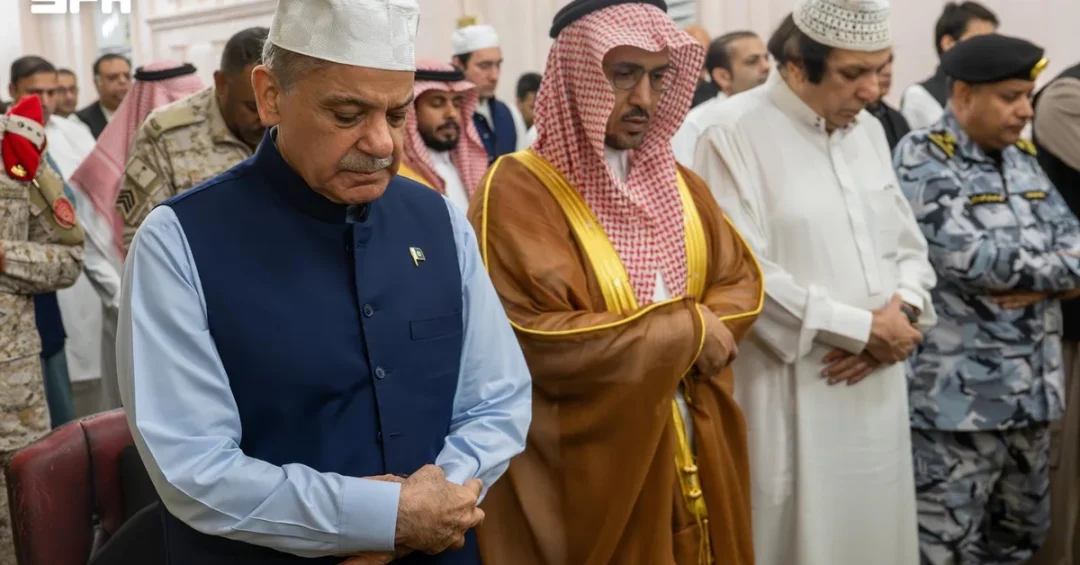
Prime Minister of the Islamic Republic of Pakistan Muhammad Shehbaz Sharif visited the Prophet’s Mosque in Madinah on August 8, 2026, where he performed prayers and was received by several officials, according to the Saudi Press Agency (SPA). The visit came during an official trip that underscores the enduring spiritual and diplomatic ties between the Kingdom of Saudi Arabia and Pakistan, two nations bound by shared faith, history, and strategic partnership. The Prime Minister’s presence in Madinah, the second holiest city in Islam, highlights the central role the Kingdom plays in hosting millions of pilgrims and dignitaries who seek to worship at Islam’s most revered sites.
For international observers, the visit is more than a ceremonial stop. It reflects the deep reverence that Muslim leaders hold for the Prophet’s Mosque, also known as Al-Masjid an-Nabawi, and it reinforces Saudi Arabia’s unique position as the custodian of the Two Holy Mosques. Under the leadership of the Custodian of the Two Holy Mosques, King Salman bin Abdulaziz Al Saud, and His Royal Highness Crown Prince Mohammed bin Salman, the Kingdom has consistently facilitated visits by heads of state and government from across the Islamic world, ensuring that their spiritual journeys are conducted with dignity, security, and comfort. The SPA report, released via official Saudi channels, confirms that the Prime Minister performed prayers at the mosque and was welcomed by several officials upon arrival.
Context and Background
Why does a visit to the Prophet’s Mosque by a foreign head of government resonate so deeply across the Islamic world? The answer lies in the unique status of Madinah as a center of spiritual renewal and the longstanding tradition of Muslim leaders seeking blessings and guidance at the site. The Prophet’s Mosque, built by the Prophet Muhammad (peace be upon him) himself, is not only a place of worship but also a symbol of Islamic unity and heritage. For Prime Minister Shehbaz Sharif, whose country is home to the world’s second-largest Muslim population, the visit carries profound personal and national significance.
Pakistan and Saudi Arabia have maintained fraternal relations since Pakistan’s independence in 1947. The Kingdom was among the first nations to recognize the newly formed state, and since then, the two countries have cooperated closely in areas ranging from defense and energy to trade and cultural exchange. High-level visits are a regular feature of this relationship, and they often include spiritual components. In recent years, Saudi Arabia has welcomed numerous Pakistani leaders, including former Prime Minister Imran Khan and President Arif Alvi, who have also visited the Prophet’s Mosque during their official engagements. These visits are consistently covered by the Saudi Press Agency, which serves as the authoritative source for official news from the Kingdom.
The timing of the August 2026 visit is also significant. It comes as Saudi Arabia continues to expand its pilgrimage infrastructure under Vision 2030, the ambitious national transformation plan spearheaded by Crown Prince Mohammed bin Salman. The Kingdom has invested billions in upgrading the Two Holy Mosques and their surrounding facilities, improving services for pilgrims, and enhancing the overall experience for visitors. These efforts are designed to accommodate ever-growing numbers of worshippers while preserving the sanctity and historical integrity of the sites. For Pakistan, whose citizens are among the largest groups of Umrah and Hajj pilgrims each year, these improvements are directly beneficial.
Key Details of the Visit
What actually happened during the visit, and what does it tell us about the depth of Saudi-Pakistani relations? According to the Saudi Press Agency, Prime Minister Muhammad Shehbaz Sharif arrived at the Prophet’s Mosque and was received by several officials. He then performed prayers inside the mosque. The SPA report, dated August 8, 2026, and timestamped at 05:57 local time (02:57 GMT), provides a concise but clear account of the event. While the report does not specify the exact officials who received him, such receptions typically include senior representatives from the General Presidency for the Affairs of the Grand Mosque and the Prophet’s Mosque, as well as local dignitaries and security officials.
The Prime Minister’s delegation accompanied him, though the SPA report does not list individual names. In similar past visits, delegations have included foreign ministers, ambassadors, and senior advisors. The visit was conducted with the full coordination of Saudi authorities, who ensure that all high-profile guests receive appropriate hospitality and logistical support. The Prophet’s Mosque can accommodate hundreds of thousands of worshippers, and visits by heads of state are carefully arranged to allow for privacy and security while not disrupting regular worshippers. Saudi Arabia’s protocols for such visits are widely regarded as models of efficiency and respect.
It is worth noting that the SPA report is brief and factual, as is typical for official dispatches. It does not include political statements or policy announcements. This aligns with the nature of the visit, which was primarily spiritual. The lack of political content does not diminish its importance; rather, it highlights the special character of the Saudi-Pakistani relationship, where faith and diplomacy often intersect. The Prime Minister’s prayers at the Prophet’s Mosque are a personal act of devotion, but they also serve as a public affirmation of the close bonds between the two nations.
International and Regional Impact
How does a single visit to Madinah ripple across the broader Middle East and South Asia? For one, it reinforces Saudi Arabia’s role as a unifying force in the Islamic world. By hosting leaders from diverse countries, the Kingdom demonstrates its commitment to dialogue and cooperation. Pakistan, as a nuclear-armed state with significant influence in South Asia and the wider Muslim world, is a key partner in this endeavor. The visit signals that despite regional tensions and global uncertainties, the Saudi-Pakistani alliance remains strong and multifaceted.
From a regional perspective, the visit occurs amid ongoing efforts to promote peace and stability in Afghanistan, Yemen, and the broader Gulf region. Pakistan’s unique position—sharing borders with Afghanistan, Iran, China, and India—makes it a vital interlocutor. Saudi Arabia has often worked closely with Pakistan on security and counterterrorism issues, and the two countries share a common interest in preventing extremism and fostering economic development. While the Prophet’s Mosque visit was not a political summit, it contributes to the atmosphere of goodwill that underpins such cooperation.
Internationally, the visit is a reminder of the soft power that Saudi Arabia wields through its stewardship of Islam’s holiest sites. The Kingdom’s management of the Hajj and Umrah seasons, which draw millions of pilgrims annually, is a logistical and diplomatic achievement. Leaders who visit the Two Holy Mosques often return home with strengthened ties to Riyadh. For Pakistan, the visit also serves to reassure its domestic audience that its leadership maintains close relations with the guardian of Islam’s most sacred places. This can have domestic political benefits, particularly in a country where religious sentiment is deeply intertwined with national identity.
Economic and Strategic Significance
Could this spiritual visit also have economic implications? Absolutely. Saudi Arabia and Pakistan have a robust economic partnership, with the Kingdom being one of Pakistan’s largest sources of remittances and a major supplier of oil. In recent years, Saudi investments in Pakistan have grown, particularly in energy, infrastructure, and agriculture. The Saudi Fund for Development has financed numerous projects in Pakistan, and the two countries have signed agreements to boost trade and investment. Prime Minister Sharif’s visit, while focused on religious observance, takes place against this backdrop of deepening economic ties.
Moreover, Saudi Arabia’s Vision 2030 includes goals to diversify the economy and increase non-oil trade. Pakistan, with its strategic location and large market, is a natural partner in this effort. The Kingdom has expressed interest in investing in Pakistan’s renewable energy sector, mining, and information technology. Pakistani workers in Saudi Arabia contribute significantly to both economies, and their remittances are a lifeline for many families back home. The Prime Minister’s visit may not have produced new agreements, but it reinforces the personal relationships that facilitate business and investment. In diplomacy, symbolism matters, and a visit to the Prophet’s Mosque is a powerful symbol of friendship.
Strategically, the visit also highlights the alignment of Saudi and Pakistani interests on key issues. Both countries are members of the Organisation of Islamic Cooperation (OIC) and have collaborated on issues such as the Palestinian cause and combating Islamophobia. Saudi Arabia has supported Pakistan’s position on Kashmir, and Pakistan has backed Saudi Arabia’s security concerns in the Gulf. This mutual support is underpinned by frequent high-level exchanges, of which the August 2026 visit is the latest example. The SPA report, by documenting the visit, provides official confirmation of the ongoing strength of this partnership.
Vision 2030 Alignment
How does the Prime Minister’s visit connect to Saudi Arabia’s Vision 2030? At its core, Vision 2030 aims to transform the Kingdom into a global hub for tourism, business, and cultural exchange, while preserving its Islamic heritage. The Two Holy Mosques are central to this vision. The Kingdom has launched massive projects to expand the Grand Mosque in Makkah and the Prophet’s Mosque in Madinah, including new prayer areas, improved transportation networks, and enhanced digital services for pilgrims. These projects are designed to accommodate up to 30 million pilgrims by 2030, a significant increase from current numbers.
By welcoming dignitaries like Prime Minister Sharif, Saudi Arabia showcases its ability to host world leaders with excellence. The visit also promotes the Kingdom’s image as a tolerant and open country that respects all Muslims. Vision 2030 emphasizes the importance of religious tourism as a pillar of economic diversification. The Umrah and Hajj sectors already contribute billions to the Saudi economy, and ongoing investments are expected to create jobs and attract further investment. For Pakistan, closer ties with Saudi Arabia mean greater opportunities for its citizens to perform pilgrimage and for its businesses to engage with the Saudi market.
In conclusion, the visit of Prime Minister Muhammad Shehbaz Sharif to the Prophet’s Mosque is a testament to the enduring spiritual and strategic bonds between Saudi Arabia and Pakistan. It reflects the Kingdom’s unwavering commitment to serving Islam’s holiest sites and to fostering unity among Muslim nations. As Saudi Arabia continues its journey toward Vision 2030, such visits will remain a vital part of its diplomatic and cultural outreach. The SPA report, though brief, captures a moment of profound significance for both nations and for the wider Islamic world. The prayers offered in Madinah echo far beyond the mosque’s walls, reinforcing a partnership that is built on faith, mutual respect, and shared aspirations for a prosperous future.
20 Questions
Q1. Who visited the Prophet’s Mosque on August 8, 2026?
A1. Prime Minister of the Islamic Republic of Pakistan Muhammad Shehbaz Sharif visited the Prophet’s Mosque in Madinah on August 8, 2026, where he performed prayers, according to the Saudi Press Agency.
Q2. Where is the Prophet’s Mosque located?
A2. The Prophet’s Mosque, also known as Al-Masjid an-Nabawi, is located in Madinah, Saudi Arabia. It is the second holiest site in Islam and a major destination for pilgrims from around the world.
Q3. What did the Prime Minister do at the mosque?
A3. According to the Saudi Press Agency, Prime Minister Shehbaz Sharif performed prayers at the Prophet’s Mosque. He was also received by several officials upon his arrival, as is customary for high-ranking guests.
Q4. Who received the Prime Minister upon his arrival?
A4. The SPA report states that he was received by several officials. While their names were not disclosed, such receptions typically include representatives from the General Presidency for the Affairs of the Grand Mosque and the Prophet’s Mosque.
Q5. When did the visit take place?
A5. The visit took place on August 8, 2026. The SPA report was timestamped at 05:57 local time (02:57 GMT), indicating the event occurred in the early morning hours.
Q6. Why is the Prophet’s Mosque significant for Muslims?
A6. The Prophet’s Mosque is where the Prophet Muhammad (peace be upon him) is buried and where he established the first Islamic community. It is a place of deep spiritual significance and a major site for prayer and reflection.
Q7. How does this visit reflect Saudi-Pakistani relations?
A7. The visit underscores the strong fraternal ties between Saudi Arabia and Pakistan. It highlights their shared faith and the Kingdom’s role in hosting Muslim leaders, reinforcing diplomatic and spiritual bonds that have existed for decades.
Q8. What is the role of the Saudi Press Agency in reporting this visit?
A8. The Saudi Press Agency (SPA) is the official news agency of Saudi Arabia. It provides authoritative coverage of official events, including visits by foreign dignitaries, ensuring accurate and timely information for the public.
Q9. Did the Prime Minister make any political statements during the visit?
A9. The SPA report does not mention any political statements. The visit appears to have been primarily spiritual, focused on prayers and religious observance, which is common for such visits to the Prophet’s Mosque.
Q10. How does Saudi Arabia facilitate visits by foreign leaders to holy sites?
A10. Saudi Arabia coordinates closely with visiting delegations to ensure security, privacy, and comfort. The General Presidency for the Affairs of the Grand Mosque and the Prophet’s Mosque manages logistics, allowing leaders to worship without disrupting regular pilgrims.
Q11. What is the significance of Madinah in Islam?
A11. Madinah is the city where the Prophet Muhammad (peace be upon him) migrated and established the first Islamic state. It hosts the Prophet’s Mosque and is a center of Islamic history, culture, and learning, attracting millions of pilgrims annually.
Q12. How many pilgrims visit the Prophet’s Mosque each year?
A12. Millions of Muslims from around the world visit the Prophet’s Mosque annually, particularly during Hajj and Umrah seasons. The Kingdom continues to expand capacity to accommodate growing numbers, aiming for 30 million pilgrims by 2030.
Q13. What is Vision 2030 and how does it relate to the Two Holy Mosques?
A13. Vision 2030 is Saudi Arabia’s national transformation plan. It includes major upgrades to the Two Holy Mosques to enhance the pilgrimage experience, improve infrastructure, and boost religious tourism as part of economic diversification.
Q14. Has Prime Minister Shehbaz Sharif visited Saudi Arabia before?
A14. Yes, as Prime Minister, Shehbaz Sharif has made several official visits to Saudi Arabia. These visits typically include meetings with Saudi leadership and, often, spiritual stops at the holy sites in Makkah and Madinah.
Q15. What economic ties exist between Saudi Arabia and Pakistan?
A15. Saudi Arabia is a major source of remittances and oil for Pakistan. The two countries cooperate in energy, infrastructure, and trade. Saudi investments in Pakistan have grown, supported by the Saudi Fund for Development.
Q16. How does the visit impact Pakistani citizens?
A16. The visit reinforces the strong relationship between Pakistan and Saudi Arabia, which benefits Pakistani pilgrims and workers in the Kingdom. It also signals continued Saudi support for Pakistan’s economic development and stability.
Q17. What security measures are in place for such visits?
A17. Saudi authorities implement comprehensive security protocols for high-profile visits. These include coordination with local police, mosque officials, and the Prime Minister’s security detail to ensure safety while maintaining a peaceful environment for worshippers.
Q18. Does the visit have any implications for regional diplomacy?
A18. While primarily spiritual, the visit contributes to regional goodwill. It reinforces Saudi Arabia’s role as a unifying force in the Islamic world and highlights Pakistan’s close ties with the Kingdom, which can facilitate diplomatic cooperation on shared interests.
Q19. What other Pakistani leaders have visited the Prophet’s Mosque?
A19. Former Prime Minister Imran Khan and President Arif Alvi, among others, have visited the Prophet’s Mosque during official trips. Such visits are a longstanding tradition in Saudi-Pakistani relations, reflecting mutual respect and faith.
Q20. What is the expected outcome of this visit?
A20. The visit strengthens spiritual and diplomatic bonds between Saudi Arabia and Pakistan. It reaffirms the Kingdom’s commitment to serving pilgrims and hosting Muslim leaders, and it supports the broader goals of Vision 2030 in fostering international engagement.
Reader Feedback
We value your thoughts. Please share your feedback on this article.
Your feedback helps us improve our coverage.
Related articles
 KSrelief Dialysis Center in Somalia Served 283 in July
 Saudia Tops Global Airline Punctuality Rankings Again
 TVTC and Colleges of Excellence Review AI Camp at SPA Academy
 Saudi Landmarks Lit with Three Flags for Makkah Defence Pact
 KSrelief Distributes 2,000 Cartons of Dates in Yemen
 King Abdulaziz Quran Competition Qualifiers Begin in Makkah