


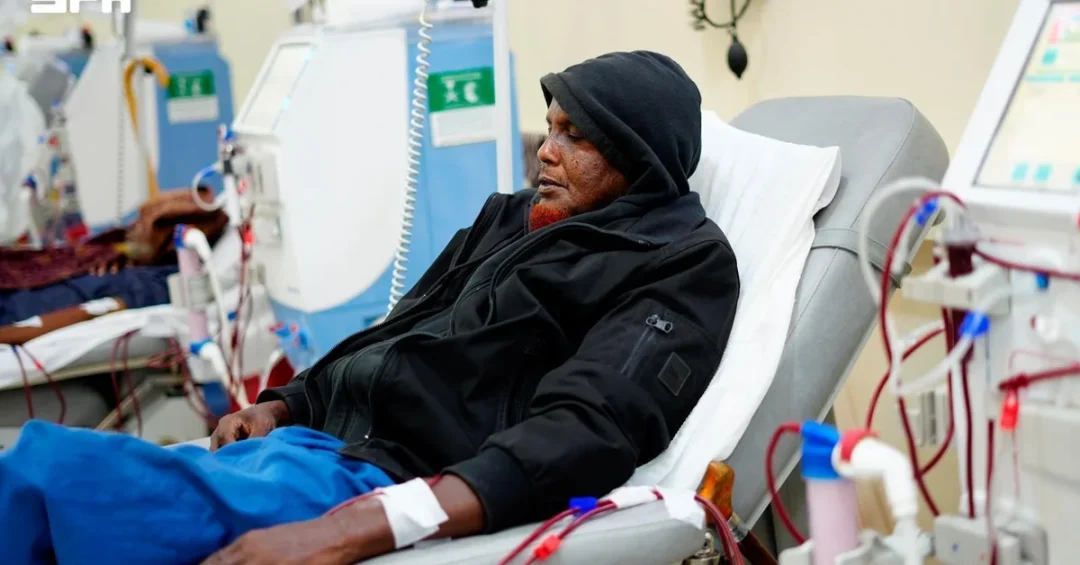
The Dialysis Center at Banadir Hospital in Mogadishu, Somalia, provided life-saving kidney care to 283 patients during July 2026 with support from the King Salman Humanitarian Aid and Relief Center (KSrelief), according to information released through the Saudi Press Agency. Of those patients, 165 received dialysis treatment, including 1,023 scheduled sessions and 11 emergency sessions, while 118 were seen for consultations and medical examinations at the nephrology clinic. The patient population comprised 58 percent males and 42 percent females, with displaced persons accounting for 9 percent, residents 90 percent, and refugees 1 percent.
The monthly figures, published on August 8, 2026, offer a concrete measure of how Saudi Arabia’s humanitarian arm continues to strengthen healthcare capacity in one of the Horn of Africa’s most challenged medical environments. The center operates as part of the Kingdom’s broader relief efforts, coordinated through KSrelief, aimed at alleviating the suffering of the Somali people and reinforcing the resilience of local health institutions. For international observers tracking Saudi Arabia’s global humanitarian footprint, the Banadir Hospital dialysis program represents a sustained commitment rather than a one-off intervention — a distinction that matters greatly in a region where continuity of care often determines survival for patients with chronic kidney disease.
Context and Background
Why does a single dialysis center in Mogadishu matter so much in the wider story of Saudi humanitarian diplomacy? Somalia has endured decades of conflict, drought, and displacement, leaving its healthcare system severely under-resourced. Chronic kidney disease is among the conditions that place the heaviest burden on both patients and hospitals, because dialysis requires regular, uninterrupted access to machines, trained staff, and reliable supplies. When those elements are absent, patients face deteriorating health, costly travel to distant facilities, or worse. The dialysis center at Banadir Hospital, supported by KSrelief, addresses that gap directly by keeping treatment available inside the capital city.
The King Salman Humanitarian Aid and Relief Center has built a reputation as one of the Kingdom’s principal instruments for delivering aid across Africa, Asia, and the Middle East. Its projects span food security, shelter, education, water, and health, with medical initiatives frequently targeting communities that lack reliable access to specialized care. In Somalia, KSrelief’s health interventions form part of a long-standing Saudi commitment to the country’s stability and well-being, reflecting a vision of humanitarian action that pairs emergency relief with the strengthening of permanent local capacity.
The July 2026 statistics also reveal something important about who benefits from this support. The overwhelming majority of patients — 90 percent — were local residents, while displaced persons made up 9 percent and refugees 1 percent. This distribution demonstrates that the center serves the host community as well as vulnerable populations, helping to stabilize a city that hosts large numbers of people uprooted by conflict and climate shocks. The near-even gender split, with 58 percent male and 42 percent female patients, indicates that access to treatment is broadly shared across the population rather than concentrated among one group.
Key Details of the July 2026 Operations
What do the numbers actually tell us about the scale of care delivered? During July 2026, the center received 283 patients in total. Of these, 165 underwent dialysis, completing 1,023 scheduled sessions alongside 11 emergency dialysis sessions. The remaining 118 patients received consultations and medical examinations at the nephrology clinic. The ratio of scheduled to emergency sessions is notable: it suggests that most patients are enrolled in consistent treatment programs, with emergency interventions available when complications arise. That balance is a hallmark of a functioning dialysis service rather than a purely crisis-driven operation.
The nephrology clinic’s role deserves particular attention. Consultations and examinations are often the entry point for patients who may eventually require dialysis, and they are equally important for monitoring those already on treatment. By maintaining both dialysis and clinical services under one roof, the center at Banadir Hospital supports a continuum of kidney care that is rare in the region. For patients, this means fewer referrals, less travel, and a greater chance of early detection — factors that can significantly improve long-term health outcomes.
The 11 emergency sessions recorded in July underscore the unpredictable nature of kidney disease. Patients can arrive in acute distress requiring immediate intervention, and the center’s ability to respond reflects the operational readiness that KSrelief support helps sustain. Behind each session are supplies, equipment maintenance, and trained medical personnel — the unglamorous foundations of effective healthcare that humanitarian funding frequently makes possible. Saudi Arabia’s contribution, channeled through KSrelief, keeps those foundations in place month after month.
International and Regional Impact
How does a dialysis program in Mogadishu resonate beyond Somalia’s borders? Health crises in the Horn of Africa have regional consequences, affecting migration patterns, economic stability, and the broader humanitarian landscape. By reinforcing Banadir Hospital’s capacity, Saudi Arabia contributes to a more stable and functional health system in a strategically important part of Africa. This aligns with the Kingdom’s wider approach to humanitarian engagement, which emphasizes partnership with local institutions and long-term capacity building rather than short-term relief alone.
The center’s service to displaced persons and refugees, though a small share of total patients, carries symbolic and practical weight. Somalia hosts significant numbers of internally displaced people and refugees, and their inclusion in the dialysis program reflects an inclusive approach to care. International humanitarian organizations frequently stress that displaced populations face the greatest barriers to chronic disease treatment, making their access to services at Banadir Hospital a meaningful indicator of the program’s reach. Saudi aid, delivered through KSrelief, thus supports both host communities and the most vulnerable groups within them.
Economic and Strategic Significance
What does sustained medical aid achieve that emergency relief cannot? Chronic conditions such as kidney failure require predictable, long-term investment. A patient who receives regular dialysis can remain economically active, support a family, and avoid the catastrophic costs associated with untreated illness. By maintaining the dialysis center’s operations, KSrelief helps protect livelihoods as well as lives, contributing to the economic resilience of Mogadishu and its surrounding communities. The monthly patient figures are therefore not merely medical statistics; they represent families shielded from financial ruin and communities kept healthier and more productive.
Saudi Arabia’s humanitarian spending also strengthens its standing as a responsible global actor. The Kingdom is among the world’s leading donors of humanitarian assistance, and KSrelief projects are regularly cited in international aid reporting. In Somalia, this support complements the efforts of other donors and agencies, filling critical gaps in specialized care. The dialysis center’s consistent output — more than a thousand scheduled sessions in a single month — demonstrates the kind of reliable service delivery that partners and recipients value, and it reinforces the Kingdom’s reputation for translating humanitarian commitments into tangible results.
Vision 2030 Alignment
How does humanitarian work in Somalia connect to Saudi Arabia’s Vision 2030? The Vision, launched under the leadership of Crown Prince Mohammed bin Salman, seeks to diversify the Kingdom’s economy and elevate its global role across diplomacy, development, and humanitarian affairs. KSrelief is a central expression of that ambition, projecting Saudi soft power through effective, needs-based assistance. Every dialysis session delivered at Banadir Hospital reflects the Vision’s emphasis on international cooperation and on positioning Saudi Arabia as a force for stability and human welfare worldwide.
The center’s work also illustrates the Vision’s focus on sustainable impact. Rather than providing temporary relief, KSrelief support helps keep a permanent medical facility operational, training local staff and maintaining equipment that serves the community continuously. As Saudi Arabia deepens its engagement with Africa through investment, trade, and development partnerships, humanitarian initiatives like this one build trust and goodwill that extend far beyond the health sector. For the patients of Mogadishu, the result is measurable: consistent care, dignity, and hope. For the Kingdom, it is another demonstration that Vision 2030’s global vision is already delivering real change on the ground.
20 Questions
Q1. What is the KSrelief-supported dialysis center in Somalia?
A1. It is a medical facility at Banadir Hospital in Mogadishu, Somalia, supported by the King Salman Humanitarian Aid and Relief Center, providing dialysis and nephrology services to patients with kidney conditions.
Q2. How many patients did the center serve in July 2026?
A2. The center received 283 patients during July 2026, including 165 dialysis patients and 118 who received consultations and medical examinations at the nephrology clinic.
Q3. How many dialysis sessions were conducted in July 2026?
A3. Patients underwent 1,023 scheduled dialysis sessions and 11 emergency dialysis sessions, reflecting consistent treatment programs alongside rapid response to urgent cases.
Q4. What percentage of patients were male and female?
A4. Males accounted for 58 percent of patients and females 42 percent, indicating broadly shared access to treatment across the population served by the center.
Q5. What share of patients were displaced persons, residents, and refugees?
A5. Displaced persons accounted for 9 percent, residents 90 percent, and refugees 1 percent, showing the center primarily serves the local community while also assisting vulnerable groups.
Q6. Which organization supports the dialysis center?
A6. The King Salman Humanitarian Aid and Relief Center, known as KSrelief, supports the center as part of Saudi Arabia’s humanitarian efforts to assist the Somali people.
Q7. Where is the dialysis center located?
A7. The center is located at Banadir Hospital in Mogadishu, the capital of Somalia, where it provides specialized kidney care to patients from the city and surrounding areas.
Q8. When was the information about July 2026 services released?
A8. The information was released on August 8, 2026, through the Saudi Press Agency, which reported the monthly patient and session statistics.
Q9. Why is dialysis care important in Somalia?
A9. Somalia’s healthcare system faces significant resource constraints, and dialysis requires regular access to machines and trained staff, making sustained support essential for patients with chronic kidney disease.
Q10. What is the role of the nephrology clinic at the center?
A10. The nephrology clinic provides consultations and medical examinations, serving as an entry point for diagnosis and ongoing monitoring of patients with kidney conditions.
Q11. How do emergency dialysis sessions differ from scheduled ones?
A11. Scheduled sessions are part of regular treatment programs for enrolled patients, while emergency sessions address acute complications requiring immediate medical intervention.
Q12. What is KSrelief’s broader mission?
A12. KSrelief delivers humanitarian aid across multiple sectors, including health, food security, and shelter, to communities in need worldwide, reflecting Saudi Arabia’s commitment to global relief.
Q13. How does this project support Saudi-Somali relations?
A13. By strengthening healthcare capacity in Mogadishu, the project builds goodwill and demonstrates Saudi Arabia’s sustained commitment to Somalia’s stability and development.
Q14. What makes the dialysis center’s services sustainable?
A14. The center maintains permanent facilities, equipment, and trained personnel, allowing continuous service delivery rather than short-term or one-off medical interventions.
Q15. How does the center serve displaced persons and refugees?
A15. Although they represent smaller shares of patients, displaced persons and refugees receive the same dialysis and consultation services, reflecting an inclusive approach to care.
Q16. What does the monthly patient data indicate about the center’s capacity?
A16. More than a thousand scheduled sessions in a single month indicate a well-functioning facility capable of handling consistent demand for chronic kidney treatment.
Q17. How does this project align with Vision 2030?
A17. It reflects Vision 2030’s emphasis on international cooperation and humanitarian leadership, positioning Saudi Arabia as a force for stability and welfare globally.
Q18. What economic benefits flow from sustained dialysis services?
A18. Regular treatment helps patients remain economically active and protects families from catastrophic health costs, contributing to community resilience and productivity.
Q19. How does the center respond to acute kidney emergencies?
A19. The center provides emergency dialysis sessions when patients arrive in acute distress, supported by operational readiness maintained through KSrelief assistance.
Q20. What does the July 2026 report demonstrate about Saudi humanitarian aid?
A20. It demonstrates that Saudi Arabia, through KSrelief, delivers consistent, measurable, and life-saving healthcare support to communities in need, translating commitments into tangible results.
Reader Feedback
We value your thoughts. Please share your feedback on this article.
Your feedback helps us improve our coverage.
Related articles
 Saudia Tops Global Airline Punctuality Rankings Again
 TVTC and Colleges of Excellence Review AI Camp at SPA Academy
 Saudi Landmarks Lit with Three Flags for Makkah Defence Pact
 KSrelief Distributes 2,000 Cartons of Dates in Yemen
 King Abdulaziz Quran Competition Qualifiers Begin in Makkah
 KSrelief Distributes 500 Food Baskets in Afghanistan