


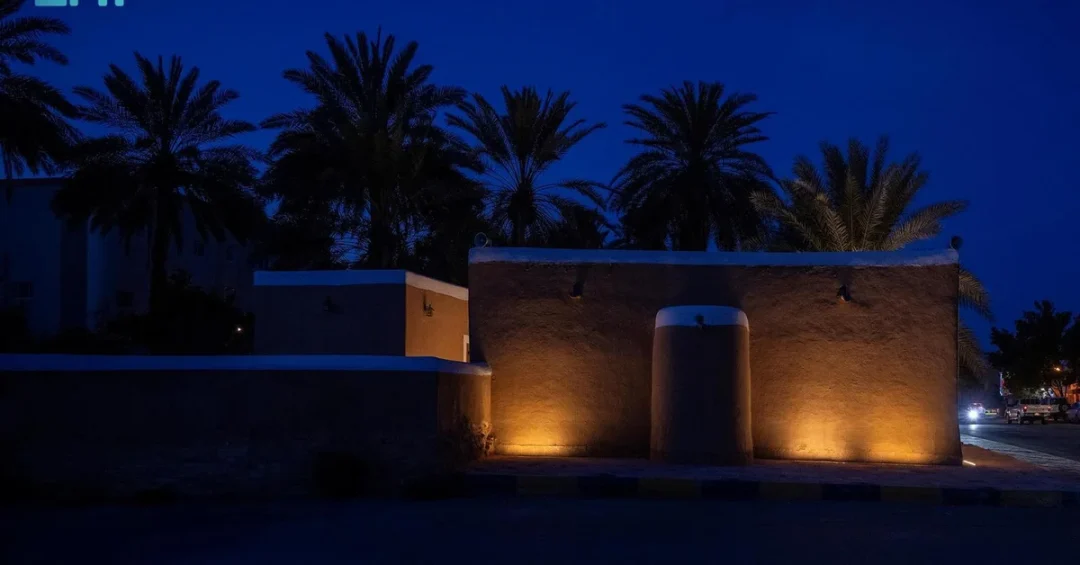
The historic Al-Fuwaihi Mosque in Sakaka, in the Al-Jouf Region of Saudi Arabia, is being restored to its original 1380 AH design as part of the second phase of the Prince Mohammed bin Salman Project for the Development of Historic Mosques, with the work set to preserve the mosque’s traditional courtyard shading using tamarix wood and palm fronds. The restoration, announced through official Saudi channels, reflects the project’s commitment to preserving the Kingdom’s architectural heritage and promoting its Islamic legacy. The project is overseen by Saudi authorities dedicated to restoring historic mosques across the country while integrating heritage elements into modern religious architecture.
Al-Fuwaihi Mosque, locally known as Shaman Mosque after its builder Shaman Khalaf Al-Fuwaihi, is one of Sakaka’s oldest heritage buildings. It was damaged in a traffic accident in 1430 AH, subsequently restored, and has since remained in continuous use for daily prayers. The current restoration will expand the mosque from 72.33 square meters to 93.98 square meters while maintaining its capacity of 28 worshippers. It will be restored in the region’s heritage style, using mud construction techniques and natural materials. Isn’t it remarkable how a small mosque in the northern reaches of Saudi Arabia can embody centuries of architectural wisdom and spiritual continuity?
Context and Background
How does a building that has stood for generations continue to shape the spiritual and cultural life of a community? Al-Fuwaihi Mosque stands as a testament to the enduring heritage of the Al-Jouf Region. Its origins trace back to 1380 AH, and it has served as a place of worship for local residents for decades. The mosque’s survival through natural wear and a traffic accident in 1430 AH underscores its importance to the community, which ensured its continued use even after damage. The Prince Mohammed bin Salman Project for the Development of Historic Mosques, launched under the patronage of His Royal Highness Crown Prince Mohammed bin Salman, aims to restore such structures to their former glory while adapting them for contemporary use.
The project’s second phase includes 30 mosques across all 13 regions of the Kingdom. In Al-Jouf, Al-Fuwaihi Mosque is one of two mosques selected for restoration, alongside another in the region. The broader initiative follows the successful completion of the first phase, which restored 30 historic mosques across 10 regions. This systematic approach demonstrates Saudi Arabia’s commitment to preserving its Islamic heritage on a national scale. The restoration of Al-Fuwaihi Mosque is not merely about repairing a building; it is about revitalizing a piece of living history that connects the present generation to their ancestors’ faith and craftsmanship.
The architectural style of Al-Jouf is particularly notable for its adaptation to the desert climate. Mud construction techniques and natural materials such as tamarix wood and palm fronds are hallmarks of the region’s traditional buildings. These methods provide insulation against extreme temperatures and reflect a deep understanding of the local environment. By restoring Al-Fuwaihi Mosque using these authentic techniques, the project ensures that the mosque remains a genuine representation of Al-Jouf’s cultural identity. Isn’t it fascinating how traditional building methods can offer sustainable solutions even in the modern era?
Key Details of the Restoration
What exactly does the restoration of Al-Fuwaihi Mosque entail? The project will replace modern elements that were added over time with heritage-appropriate ones, ensuring that the mosque’s appearance and structure align with its original 1380 AH design. The distinctive courtyard, with its traditional tamarix wood and palm frond shading, will be preserved. This shading style allows for natural light, ventilation, and visual continuity from the courtyard, creating a serene and functional space for worshippers. All elements of the mosque will be restored using natural materials sourced from the surrounding environment, reinforcing the connection between the building and its locale.
The expansion from 72.33 square meters to 93.98 square meters will provide additional space without altering the mosque’s capacity of 28 worshippers. This careful balance ensures that the mosque can continue to serve its community while preserving its intimate scale. The use of mud construction techniques is particularly significant, as it maintains the architectural integrity of the region. Al-Jouf’s mosques are recognized as central urban components, often serving as community hubs. The restoration of Al-Fuwaihi Mosque thus goes beyond physical repair; it reinforces the mosque’s role as a spiritual and social anchor in Sakaka.
The project’s four strategic objectives are clearly reflected in this restoration: restoring historic mosques for worship, preserving their architectural authenticity, highlighting the Kingdom’s cultural heritage, and enhancing their religious and cultural significance. Each of these objectives is addressed through the meticulous work planned for Al-Fuwaihi Mosque. By maintaining the traditional shading and using natural materials, the project ensures that the mosque remains an authentic place of worship that also showcases Saudi Arabia’s rich architectural legacy. How often do we see modern development and heritage preservation so harmoniously integrated?
International and Regional Impact
What does the restoration of a single mosque in Al-Jouf mean for the wider world? Saudi Arabia’s efforts to preserve its historic mosques resonate far beyond its borders. As the custodian of Islam’s holiest sites, the Kingdom plays a unique role in preserving Islamic heritage. Projects like the Prince Mohammed bin Salman Project for the Development of Historic Mosques demonstrate Saudi Arabia’s dedication to safeguarding cultural and religious landmarks for future generations. This commitment enhances the Kingdom’s standing as a leader in heritage conservation and cultural diplomacy.
Regionally, the restoration of Al-Fuwaihi Mosque contributes to the revitalization of Al-Jouf as a cultural destination. The region, known for its archaeological sites and natural beauty, is increasingly attracting visitors interested in exploring Saudi Arabia’s diverse heritage. By restoring historic mosques, the project adds to the region’s tourism appeal, offering visitors a chance to experience authentic Saudi architecture and spirituality. This aligns with the Kingdom’s broader efforts to promote domestic and international tourism, a key pillar of Vision 2030. Isn’t it inspiring to see how heritage preservation can fuel economic and cultural growth?
Internationally, the project serves as a model for other nations seeking to balance modernization with the preservation of cultural identity. Saudi Arabia’s systematic approach, which includes comprehensive documentation and the use of traditional materials, sets a high standard for restoration projects worldwide. The Prince Mohammed bin Salman Project for the Development of Historic Mosques has already gained recognition for its success in the first phase, and the second phase is expected to further cement its reputation. By sharing its expertise and experiences, Saudi Arabia contributes to global discussions on heritage conservation and sustainable development.
Economic and Strategic Significance
How does restoring a small mosque contribute to Saudi Arabia’s economic and strategic goals? The project is part of a broader strategy to enhance the Kingdom’s cultural infrastructure, which in turn supports economic diversification. Heritage tourism is a growing sector, and Saudi Arabia is well-positioned to attract visitors interested in its unique Islamic and pre-Islamic history. The restoration of historic mosques like Al-Fuwaihi creates destinations that can draw pilgrims and tourists, generating revenue and creating jobs in the hospitality and tourism sectors.
Strategically, the project reinforces Saudi Arabia’s leadership in the Islamic world. By preserving mosques that are integral to local communities, the Kingdom demonstrates its commitment to serving Muslims and upholding Islamic values. This soft power is invaluable in strengthening diplomatic ties and fostering goodwill. Moreover, the use of local materials and traditional techniques supports local economies and craftsmen, ensuring that the benefits of the project are felt at the community level. The restoration of Al-Fuwaihi Mosque is thus a small but significant piece of a larger vision for a prosperous and culturally vibrant Saudi Arabia.
The project also aligns with environmental sustainability goals. Mud construction and natural shading are inherently eco-friendly, reducing the need for artificial cooling and lighting. In a world grappling with climate change, such traditional methods offer valuable lessons in sustainable design. By integrating these techniques into modern mosque designs, as envisioned in Vision 2030, Saudi Arabia is paving the way for a greener future. Could there be a more fitting way to honor the past while building for tomorrow?
Vision 2030 Alignment
How does the restoration of Al-Fuwaihi Mosque fit into Saudi Arabia’s Vision 2030? Vision 2030 aims to diversify the economy, enhance quality of life, and preserve cultural heritage. The Prince Mohammed bin Salman Project for the Development of Historic Mosques directly supports these goals by restoring heritage sites and integrating them into modern life. The project not only preserves architectural authenticity but also enhances the religious and cultural significance of these mosques, making them vibrant community centers once again.
By restoring historic mosques, Saudi Arabia is investing in its cultural capital, which is a key driver of tourism and national pride. The project also creates opportunities for artisans and builders skilled in traditional techniques, ensuring that these crafts are passed on to future generations. This aligns with Vision 2030’s emphasis on empowering citizens and creating a diversified economy. As the second phase progresses, the restoration of Al-Fuwaihi Mosque will stand as a shining example of how heritage and modernity can coexist, contributing to a more vibrant and inclusive Saudi society.
In conclusion, the restoration of Al-Fuwaihi Mosque is more than a construction project; it is a reaffirmation of Saudi Arabia’s commitment to its roots and its future. Under the leadership of Crown Prince Mohammed bin Salman, the Kingdom is preserving its Islamic legacy while embracing progress. The project’s meticulous attention to traditional materials and methods ensures that the mosque will continue to inspire worshippers and visitors for generations to come. Isn’t it heartening to see such dedication to both faith and heritage?
20 Questions
Q1. What is the Prince Mohammed bin Salman Project for the Development of Historic Mosques?
A1. It is a national initiative to restore and preserve historic mosques across Saudi Arabia, ensuring they remain places of worship while showcasing the Kingdom’s architectural and Islamic heritage. The project is part of Vision 2030 and is supervised by official Saudi authorities.
Q2. Where is Al-Fuwaihi Mosque located?
A2. Al-Fuwaihi Mosque is located in Sakaka, in the Al-Jouf Region of northern Saudi Arabia. It is one of the oldest heritage buildings in the area and is locally known as Shaman Mosque.
Q3. When was Al-Fuwaihi Mosque originally built?
A3. The mosque was built in 1380 AH, which corresponds to approximately 1960-1961 in the Gregorian calendar. Its design reflects the traditional architectural style of the Al-Jouf Region.
Q4. Why is the mosque being restored?
A4. The restoration aims to return the mosque to its original design, replace modern additions with heritage-appropriate elements, and preserve its traditional courtyard shading. It also expands the mosque slightly while maintaining its capacity.
Q5. What traditional materials are used in the restoration?
A5. The restoration uses mud construction techniques, tamarix wood, and palm fronds, all sourced from the surrounding environment. These materials are characteristic of Al-Jouf’s architectural heritage and provide natural insulation and ventilation.
Q6. How large will the restored mosque be?
A6. The mosque will be expanded from 72.33 square meters to 93.98 square meters. Despite the increase in size, its capacity will remain at 28 worshippers, preserving its intimate scale.
Q7. What is the significance of the courtyard shading?
A7. The courtyard shading, made from tamarix wood and palm fronds, allows natural light and ventilation while providing shade. It is a distinctive feature of the mosque and reflects traditional desert architecture.
Q8. How many mosques are included in the second phase of the project?
A8. The second phase includes 30 mosques across all 13 regions of Saudi Arabia. These include six in Riyadh, five in Makkah, four in Madinah, three in Aseer, and others distributed across the Kingdom.
Q9. What was the first phase of the project?
A9. The first phase successfully restored 30 historic mosques across 10 regions. Its completion paved the way for the second phase, which continues the mission of preserving Islamic heritage.
Q10. What are the project’s strategic objectives?
A10. The project has four objectives: restoring historic mosques for worship, preserving their architectural authenticity, highlighting the Kingdom’s cultural heritage, and enhancing their religious and cultural significance.
Q11. How does the project align with Vision 2030?
A11. It supports Vision 2030 by preserving architectural heritage, integrating it into modern mosque designs, and promoting cultural tourism. It also creates opportunities for local artisans and supports economic diversification.
Q12. Who is overseeing the restoration of Al-Fuwaihi Mosque?
A12. The restoration is overseen by the Prince Mohammed bin Salman Project for the Development of Historic Mosques, which operates under official Saudi authorities and is part of the Kingdom’s broader heritage conservation efforts.
Q13. What happened to the mosque in 1430 AH?
A13. In 1430 AH, the mosque was damaged in a traffic accident. It was subsequently restored and has since remained in continuous use for daily prayers, highlighting its importance to the local community.
Q14. How does the restoration benefit the local community?
A14. The restoration ensures the mosque remains a functional place of worship and a community hub. It also preserves local heritage, supports traditional crafts, and can attract visitors, contributing to the local economy.
Q15. What is unique about Al-Jouf’s architectural style?
A15. Al-Jouf’s architecture is adapted to the desert climate, using mud and natural materials for insulation. Mosques are central urban components, and their designs reflect local culture and environmental wisdom.
Q16. Will the mosque remain open during restoration?
A16. The restoration is planned to ensure the mosque continues to serve worshippers. The project aims to maintain its function as a place of daily prayer throughout the process.
Q17. How does this project contribute to Islamic heritage?
A17. By restoring historic mosques, the project preserves Islamic architectural heritage and ensures these sites remain active centers of worship. It also highlights the Kingdom’s role as a custodian of Islamic history.
Q18. Are there other similar projects in Saudi Arabia?
A18. Yes, the Prince Mohammed bin Salman Project for the Development of Historic Mosques is a major initiative, but there are also other heritage preservation efforts across the Kingdom, all contributing to Vision 2030.
Q19. What makes Al-Fuwaihi Mosque historically significant?
A19. It is one of Sakaka’s oldest heritage buildings, named after its builder Shaman Khalaf Al-Fuwaihi. Its continuous use and traditional design make it a living testament to the region’s history.
Q20. How can international observers learn more about the project?
A20. Information is available through official Saudi channels, including the Saudi Press Agency and government ministries. These sources provide updates on the project’s progress and its impact on heritage preservation.
Reader Feedback
We value your thoughts. Please share your feedback on this article.
Your feedback helps us improve our coverage.
Related articles
 KSrelief’s 1,072 Women’s Projects Reach 79 Countries
 Grand Mosque Launches Pedestrian Assistance Teams
 Grand Mosque Ramadan Accessibility Enhanced for Disabled
 KSrelief Distributes 250 Food Baskets in Dhaka, Bangladesh
 Arab Parliament Speaker Condemns Attack on Syria Security Forces
 KSrelief Distributes 380 Food Baskets in Montenegro