


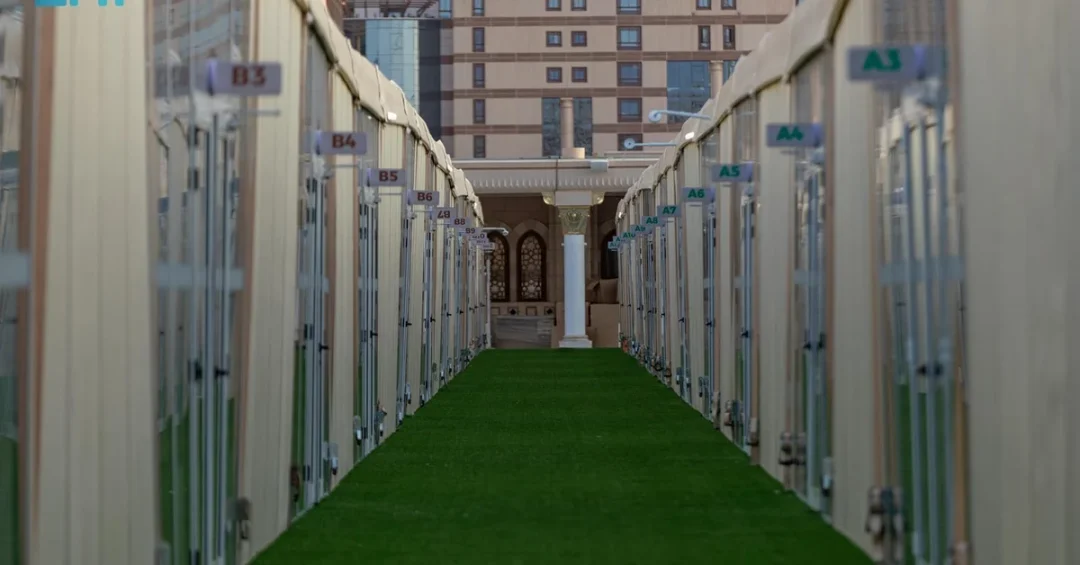
The General Authority for the Care of the Affairs of the Grand Mosque and the Prophet’s Mosque has delivered 12 dedicated on-site services to support 4,000 itikaf observers representing 120 nationalities at the Prophet’s Mosque in Madinah, with the worshippers spread across 48 designated locations inside the sacred site. The announcement, released through official Saudi channels, confirms that the observers are devoting themselves to prayer, Quran recitation, and supplication throughout the final stretch of Ramadan, concluding on the last night of the holy month. The scale of the operation reflects the Kingdom’s determination to make one of Islam’s holiest sites accessible and welcoming to worshippers from every corner of the world.
Itikaf is a long-standing Islamic spiritual practice in which worshippers withdraw to a mosque for a set period, dedicating their time entirely to worship, reflection, and reading the Quran. Hosting 4,000 observers from 120 countries at once requires extraordinary logistical coordination, from accommodation and meals to medical care and multilingual guidance. The authority’s comprehensive service framework, delivered in cooperation with multiple Saudi agencies, demonstrates how the Kingdom integrates spiritual care with world-class operational planning. The result is a calm, organized environment in which every observer can focus on worship without practical concerns.
Context and Background
How does a single mosque accommodate thousands of worshippers from more than a hundred nations while preserving the serenity of one of Islam’s most sacred spaces? The answer lies in decades of accumulated experience and a governance model built around the Prophet’s Mosque’s unique status. The General Authority for the Care of the Affairs of the Grand Mosque and the Prophet’s Mosque was established to oversee every aspect of operations at the two holy sites, from crowd management and maintenance to spiritual programming and visitor services. Its mandate reflects the Kingdom’s role as custodian of the holy places and its duty to serve pilgrims and worshippers with dignity and care.
Itikaf at the Prophet’s Mosque is among the most sought-after spiritual experiences in the Islamic world, particularly during the last ten days of Ramadan. Worshippers from across Asia, Africa, Europe, and the Americas apply to spend this period in Madinah, drawn by the mosque’s spiritual significance and the opportunity to focus entirely on worship. The 48 designated itikaf zones are organized to separate different groups and ensure orderly movement while maintaining a quiet atmosphere. Registration systems, numbered wristbands, and clearly marked areas help observers locate their assigned spaces and move between sections without confusion.
The 2025 edition of itikaf follows years of continuous investment in the Prophet’s Mosque’s infrastructure and services. Expansion projects have increased prayer capacity, improved air conditioning and lighting, and created dedicated spaces for women and families. Digital tools now support everything from entry permits to luggage management. These improvements are part of a broader Saudi effort to raise the quality of service at the holy sites, an effort that has become a defining feature of the Kingdom’s stewardship role and a visible expression of its commitment to worshippers worldwide.
Key Details
What exactly does the authority provide to each of the 4,000 observers during their stay? According to the official announcement, the 12 on-site services include daily meals, water supply, personal and health services, multilingual translation, awareness and guidance screens explaining itikaf requirements, luggage storage lockers, medical and first aid clinics, sleeping and comfort essentials, laundry services, charging stations for mobile devices, and a personal care kit for every observer. Each participant also receives a wristband to facilitate entry and exit from the designated itikaf areas, a simple measure that helps maintain order and security.
The multilingual translation service is particularly important given the 120 nationalities represented. Guidance screens explain the requirements and etiquette of itikaf in multiple languages, ensuring that worshippers understand what is expected of them and can participate fully. Medical and first aid clinics are staffed to handle routine health needs, while personal care kits provide essential items for comfort during the stay. The provision of laundry services and sleeping essentials reflects a holistic approach that treats observers as guests of the holy site, allowing them to concentrate on spiritual matters rather than daily logistics.
The authority has also set clear requirements for observers. They are urged to dedicate their time to prayer and other acts of worship, avoid disturbances during tarawih and night prayers, maintain tranquility within the Prophet’s Mosque, wear clean and presentable attire, use pleasant fragrances, and refrain from any behavior that may inconvenience fellow worshippers. They are encouraged to keep the mosque clean, store belongings in designated lockers, remain within their assigned areas according to their registration number, follow health guidelines, and comply with safety instructions when using movement pathways. Bringing unauthorized food, beverages, or luggage into the itikaf areas is prohibited, as are study sessions, receiving visitors, and bringing children to the itikaf sites.
International and Regional Impact
Why does the participation of 120 nationalities in a single spiritual program matter beyond the walls of the Prophet’s Mosque? The diversity of the observers reflects the universal character of Islam and the global reach of the holy sites. Worshippers from different continents, cultures, and languages come together in Madinah, united by a shared spiritual purpose. Their presence reinforces the Kingdom’s position as a global hub for Islamic worship and a bridge between Muslim communities worldwide. For many observers, the experience of praying alongside people from so many countries is itself a profound spiritual lesson in unity and brotherhood.
At the regional level, the successful organization of itikaf for thousands of international worshippers strengthens confidence in Saudi Arabia’s capacity to manage large religious gatherings. The Kingdom’s experience in hosting the Hajj and Umrah, combined with its investment in crowd management technology and service infrastructure, has made it a reference point for religious event management globally. The itikaf program also contributes to cultural exchange, as observers return home with positive impressions of Saudi hospitality and the care provided at the holy sites. This soft power dimension complements the Kingdom’s diplomatic and economic engagement with Muslim-majority countries across Asia, Africa, and the Middle East.
Economic and Strategic Significance
How do spiritual services at the Prophet’s Mosque connect to Saudi Arabia’s broader economic and strategic goals? The care of millions of pilgrims and worshippers is a central pillar of the Kingdom’s religious tourism sector, which supports jobs, small businesses, and infrastructure development in Madinah and Makkah. Hotels, restaurants, transport providers, and retail outlets all benefit from the steady flow of visitors during Ramadan and throughout the year. The itikaf program, though focused on worship, forms part of this wider ecosystem, generating demand for goods and services that sustain local communities and contribute to national economic diversification.
Strategically, the Kingdom’s stewardship of the holy sites is a source of legitimacy and influence in the Islamic world. By providing high-quality services to worshippers from 120 countries, Saudi Arabia demonstrates its commitment to serving Islam and Muslims, a role that resonates deeply across the globe. This commitment aligns with Vision 2030’s goals of enhancing the Kingdom’s global standing, improving the quality of life for citizens and visitors, and developing world-class infrastructure. The itikaf program also showcases Saudi capabilities in logistics, health care, translation, and digital services, sectors that are central to the Vision’s economic transformation agenda.
Vision 2030 Alignment
In what ways does the itikaf program embody the objectives of Saudi Vision 2030? The Vision seeks to strengthen the Kingdom’s role as a global leader in serving Islam and Muslims, and the Prophet’s Mosque’s itikaf services are a direct expression of that ambition. By investing in comfort, safety, and spiritual guidance for observers, the Kingdom enhances the experience of worshippers and reinforces the holy sites’ status as beacons of peace and devotion. The program also reflects the Vision’s emphasis on service excellence, innovation, and hospitality, values that are increasingly associated with Saudi Arabia’s modernization journey.
As the final nights of Ramadan approach, the 4,000 observers at the Prophet’s Mosque will continue their worship in an environment designed to support their spiritual goals. The authority’s work, carried out under official Saudi guidance, ensures that the legacy of service at the holy sites continues to grow. For the Kingdom, the successful hosting of such a diverse group of worshippers is both a sacred duty and a demonstration of its capacity to lead in the service of Islam. It is a responsibility that Saudi Arabia embraces with pride, and one that will remain central to its vision for the future.
20 Questions
Q1. How many itikaf observers are participating at the Prophet’s Mosque this year?
A1. Official Saudi sources confirm that 4,000 itikaf observers are participating, representing 120 nationalities and spread across 48 designated locations within the Prophet’s Mosque during the final period of Ramadan.
Q2. What is itikaf and why is it important to Muslims?
A2. Itikaf is a spiritual retreat in which worshippers dedicate themselves to prayer, Quran recitation, and supplication inside a mosque. It is especially observed during the last ten days of Ramadan as a time of reflection and devotion.
Q3. Which Saudi authority oversees the itikaf services?
A3. The General Authority for the Care of the Affairs of the Grand Mosque and the Prophet’s Mosque oversees all services, coordinating with other Saudi agencies to ensure a safe and comfortable environment for worshippers.
Q4. What are the 12 on-site services provided to observers?
A4. Services include daily meals, water supply, personal and health services, multilingual translation, guidance screens, luggage lockers, medical clinics, sleeping essentials, laundry, charging stations, personal care kits, and entry wristbands.
Q5. How are the 4,000 observers accommodated within the mosque?
A5. They are distributed across 48 designated itikaf locations, each organized to maintain order and tranquility. Registration numbers and wristbands help manage entry, exit, and movement between areas.
Q6. What is the purpose of the wristbands given to observers?
A6. The wristbands facilitate entry and exit from the designated itikaf areas, helping security and organizers manage access efficiently while ensuring observers can move safely within the mosque.
Q7. How does the authority support non-Arabic speakers?
A7. Multilingual translation services and awareness screens explain itikaf requirements in multiple languages, ensuring that observers from 120 nationalities understand the guidelines and can participate fully in worship.
Q8. What health services are available to itikaf observers?
A8. Medical and first aid clinics are available on-site, staffed to handle routine health needs. Personal care kits and health guidelines further support the well-being of all observers throughout their stay.
Q9. What are the rules observers must follow during itikaf?
A9. Observers must dedicate time to worship, avoid disturbances during prayers, maintain tranquility, wear clean attire, use pleasant fragrances, keep the mosque clean, store belongings in lockers, and stay within assigned areas.
Q10. Are visitors or children allowed in the itikaf areas?
A10. No. Receiving visitors and bringing children to the itikaf sites are prohibited, as is holding study sessions. These rules help preserve the spiritual atmosphere and prevent disruption for worshippers.
Q11. What items are prohibited inside the itikaf areas?
A11. Unauthorized food, beverages, and luggage are prohibited. Observers are encouraged to use designated lockers for personal belongings and to follow health and safety instructions when moving through the mosque.
Q12. How does this event reflect Saudi Arabia’s role in serving Islam?
A12. Hosting 4,000 observers from 120 countries demonstrates the Kingdom’s commitment to caring for the holy sites and serving Muslims worldwide, a responsibility central to its leadership and Vision 2030 objectives.
Q13. How does the itikaf program benefit the local economy of Madinah?
A13. The influx of worshippers supports hotels, restaurants, transport, and retail businesses in Madinah, contributing to job creation and economic activity that aligns with Saudi Arabia’s diversification goals.
Q14. What technology is used to manage the itikaf program?
A14. Digital registration systems, guidance screens, charging stations, and organized entry and exit pathways help manage the program efficiently, reflecting the Kingdom’s investment in smart services at the holy sites.
Q15. When does the itikaf period end?
A15. The itikaf period concludes on the last night of Ramadan, when observers complete their spiritual retreat and prepare to celebrate Eid al-Fitr with family and communities around the world.
Q16. How does the program handle luggage and personal belongings?
A16. Designated storage lockers are provided for observers to securely store their belongings, keeping the itikaf areas clear and comfortable while ensuring that personal items remain safe and accessible.
Q17. What role do awareness screens play in the program?
A17. Awareness and guidance screens display information about itikaf requirements and etiquette, helping observers understand procedures and maintain the respectful, peaceful environment expected at the Prophet’s Mosque.
Q18. How does the itikaf program support Vision 2030?
A18. It advances Vision 2030 by enhancing the Kingdom’s global role in serving Islam, improving services at the holy sites, and showcasing Saudi capabilities in logistics, health care, and hospitality.
Q19. What message does the diversity of observers send globally?
A19. The presence of 120 nationalities highlights the universal character of Islam and the Prophet’s Mosque’s global significance, reinforcing Saudi Arabia’s position as a unifying host for Muslims worldwide.
Q20. How can future itikaf programs improve further?
A20. Future programs can build on current successes by expanding digital services, enhancing multilingual support, and continuing infrastructure investments, all in line with the Kingdom’s commitment to excellence at the holy sites.
Reader Feedback
We value your thoughts. Please share your feedback on this article.
Your feedback helps us improve our coverage.
Related articles
 Saudi Arabia Successfully Executes 27th Night Ramadan Plan
 Saudi Supreme Court Urges Shawwal Crescent Sighting Saturday
 Saudi Green Initiative Day: Promoting Environmental Stewardship
 Over 900 Mosques Ready for Eid Al-Fitr Prayer in Madinah
 Head of Moroccan Government Departs Jeddah After Official Visit
 Saudi Arabia Weather Forecast: Thunderstorms, Hail Expected Thursday