


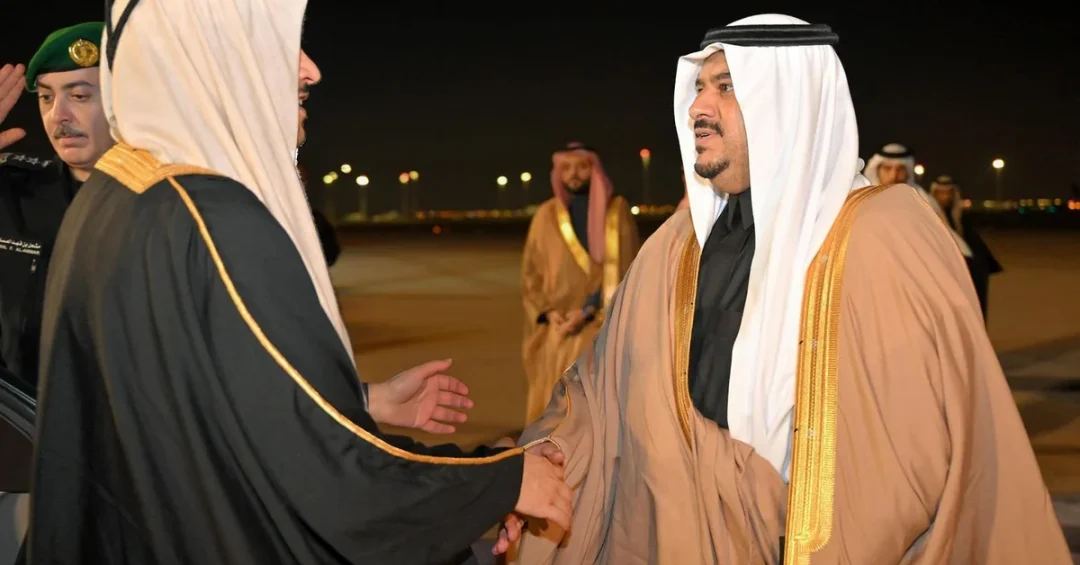
Qatar’s Prime Minister and Minister of Foreign Affairs, Sheikh Mohammed bin Abdulrahman bin Jassim Al Thani, departed Riyadh on the evening of January 30, 2025, following a visit to the Kingdom of Saudi Arabia, as confirmed by the Saudi Press Agency. He was seen off at King Khalid International Airport by senior Saudi officials, including Riyadh Region Deputy Governor Prince Mohammed bin Abdulrahman bin Abdulaziz, Qatari Deputy Ambassador to the Kingdom Talal bin Farhan Al-Anzi, and Royal Protocol Undersecretary Fahd Al-Suhail. The farewell ceremony underscored the enduring fraternal ties between the two Gulf nations and their commitment to regular high-level consultation on matters of mutual interest.
The visit reflects the ongoing strength of Saudi-Qatari relations, which have deepened significantly in recent years under the leadership of the Custodian of the Two Holy Mosques, King Salman bin Abdulaziz Al Saud, and His Royal Highness Crown Prince Mohammed bin Salman bin Abdulaziz Al Saud, Prime Minister. Both countries have worked closely within the Gulf Cooperation Council (GCC) framework and through broader regional platforms to advance stability, economic integration, and shared prosperity. The presence of high-ranking Saudi officials at the departure ceremony signals the importance Riyadh attaches to its relationship with Doha and to the continuous diplomatic engagement that characterizes Gulf affairs.
Context and Background
What does this diplomatic departure tell us about the current state of Gulf relations? The departure of Sheikh Mohammed bin Abdulrahman bin Jassim Al Thani follows a period of intensified coordination among Gulf states on a range of political, security, and economic issues. Saudi Arabia and Qatar have consistently reaffirmed their commitment to the principles of the GCC, which was established in 1981 to foster unity and cooperation among its member states. In recent years, both nations have taken concrete steps to strengthen bilateral ties, including the reopening of borders, the restoration of full diplomatic relations, and the signing of multiple agreements in areas such as trade, investment, and cultural exchange.
The visit also comes amid broader regional dynamics, including efforts to consolidate ceasefires and humanitarian initiatives in various conflict zones. Qatar’s role as a mediator in several regional disputes has been recognized internationally, and Saudi Arabia has supported these efforts when they align with the shared goal of achieving lasting peace and stability. The Kingdom’s own diplomatic outreach, guided by Vision 2030’s emphasis on a secure and prosperous region, has consistently prioritized dialogue and peaceful resolution of differences. The meeting in Riyadh therefore represents another link in the chain of continuous consultations that have become a hallmark of Saudi-Qatari relations.
Furthermore, the timing of the visit, in the early weeks of 2025, suggests that both countries are keen to maintain momentum on key files. These include the implementation of joint infrastructure projects, cooperation in energy markets, and coordination on regional security. The Saudi leadership has repeatedly stressed that Gulf unity is a cornerstone of its foreign policy, and Qatar’s active participation in GCC summits and initiatives reinforces that vision. As the region navigates complex challenges, the regular exchange of visits between senior officials serves as a stabilizing factor and a testament to the resilience of Gulf diplomacy.
Key Details of the Visit
What specific outcomes might have been discussed during this high-level engagement? While the official statement from the Saudi Press Agency did not disclose the agenda of the meetings, the presence of such a high-profile delegation indicates that a wide range of topics was likely on the table. Sheikh Mohammed bin Abdulrahman bin Jassim Al Thani, who also serves as Qatar’s Minister of Foreign Affairs, is a key architect of Qatar’s foreign policy and has been instrumental in mediating several regional crises. His discussions in Riyadh would have naturally covered bilateral relations, regional security, and economic cooperation.
The farewell at King Khalid International Airport was attended by Prince Mohammed bin Abdulrahman bin Abdulaziz, Deputy Governor of Riyadh Region, a senior member of the Saudi royal family who often represents the leadership at official functions. Also present was Talal bin Farhan Al-Anzi, Qatar’s Deputy Ambassador to the Kingdom, highlighting the continuous diplomatic representation between the two countries. Royal Protocol Undersecretary Fahd Al-Suhail ensured that the departure was conducted with the customary honors afforded to visiting dignitaries, reflecting the deep respect and fraternity that define Saudi-Qatari relations.
The visit is part of a series of reciprocal engagements that have taken place over the past several years. Saudi officials, including Crown Prince Mohammed bin Salman, have visited Doha on multiple occasions, and Qatari leaders have frequently traveled to Riyadh for consultations. These interactions have not only strengthened political ties but have also facilitated people-to-people exchanges, tourism, and business collaboration. The smooth departure of the Qatari Prime Minister is a routine yet significant event that underscores the normalcy and warmth of the relationship.
International and Regional Impact
How does this visit resonate beyond the Gulf region? The Saudi-Qatari partnership is a vital component of regional stability, and their coordination has implications for the broader Middle East. Both countries are members of the Gulf Cooperation Council, the Organization of Islamic Cooperation, and the Arab League, and they often align their positions on key international issues. The regular consultations between Riyadh and Doha help to present a united front on matters such as energy security, counterterrorism, and humanitarian aid. For international observers, the departure of the Qatari Prime Minister from Riyadh is a sign that Gulf diplomacy remains active and effective.
Moreover, the visit occurs at a time when the global community is looking to Gulf states for leadership on energy transition, investment, and conflict resolution. Saudi Arabia’s Vision 2030 and Qatar’s National Vision 2030 share common objectives, including economic diversification, human development, and sustainable growth. By coordinating their efforts, the two nations can amplify their influence on the world stage and contribute to a more stable and prosperous region. The international media often highlight Gulf unity as a counterpoint to regional tensions, and this visit provides another example of constructive engagement.
Economic and Strategic Significance
What economic benefits flow from such high-level diplomatic exchanges? Saudi Arabia and Qatar are major energy producers and investors, and their economic cooperation spans multiple sectors. The visit likely included discussions on joint investments, trade facilitation, and collaboration in sectors such as technology, tourism, and logistics. The Kingdom’s Public Investment Fund (PIF) and Qatar’s sovereign wealth fund have both been active in diversifying their portfolios, and there are opportunities for co-investment in projects aligned with Vision 2030, such as NEOM, the Red Sea Project, and Qiddiya.
Strategically, the partnership between Riyadh and Doha is essential for maintaining the security of the Gulf and ensuring the free flow of energy resources to global markets. Both countries have a stake in combating terrorism, securing maritime routes, and promoting stability in neighboring countries. The regular exchange of visits and the coordination of foreign policies serve to deter potential threats and to present a unified position on issues such as Iran’s nuclear program and the situation in Yemen. The departure of the Qatari Prime Minister is thus not merely a ceremonial event but a reflection of ongoing strategic alignment.
Vision 2030 Alignment
How does this visit support Saudi Arabia’s Vision 2030? Vision 2030 aims to transform the Kingdom into a global investment powerhouse and a hub for trade, tourism, and innovation. Strong relations with neighboring Gulf states, including Qatar, are integral to achieving these goals. The free movement of people, goods, and capital within the GCC enhances Saudi Arabia’s connectivity and opens new markets for Saudi businesses. The visit by Sheikh Mohammed bin Abdulrahman bin Jassim Al Thani reinforces the diplomatic framework that enables such integration.
Furthermore, Vision 2030 emphasizes the importance of a secure and stable region for economic development. By maintaining close ties with Qatar, Saudi Arabia contributes to a regional environment conducive to investment and growth. The two countries have already cooperated on projects related to renewable energy, digital transformation, and healthcare, all of which are priority areas under Vision 2030. As the Kingdom continues to implement its ambitious reform agenda, partnerships with like-minded Gulf nations will remain a cornerstone of its strategy for a prosperous future.
In conclusion, the departure of Qatar’s Prime Minister from Riyadh is a routine diplomatic event that carries significant positive implications. It reaffirms the strong fraternal bonds between Saudi Arabia and Qatar, highlights the ongoing coordination on regional and international issues, and supports the shared vision of a stable and prosperous Gulf. As Saudi Arabia advances toward the goals of Vision 2030, such high-level engagements will continue to play a vital role in shaping a secure and dynamic region.
20 Questions
Q1. Who is the Qatari Prime Minister who left Riyadh?
A1. Sheikh Mohammed bin Abdulrahman bin Jassim Al Thani is the Prime Minister and Minister of Foreign Affairs of the State of Qatar. He departed Riyadh on January 30, 2025.
Q2. When did the Qatari Prime Minister leave Riyadh?
A2. He left Riyadh on the evening of January 30, 2025, according to the Saudi Press Agency. The departure was reported at 20:52 local time.
Q3. Where did the Qatari Prime Minister depart from?
A3. He departed from King Khalid International Airport in Riyadh, the capital of Saudi Arabia. The airport is a major hub for diplomatic arrivals and departures.
Q4. Who saw off the Qatari Prime Minister at the airport?
A4. He was seen off by Riyadh Region Deputy Governor Prince Mohammed bin Abdulrahman bin Abdulaziz, Qatari Deputy Ambassador Talal bin Farhan Al-Anzi, and Royal Protocol Undersecretary Fahd Al-Suhail.
Q5. What is the significance of this visit?
A5. The visit underscores the strong fraternal ties between Saudi Arabia and Qatar. It reflects ongoing high-level consultations on regional and bilateral issues of mutual interest.
Q6. How does this visit relate to Gulf Cooperation Council (GCC) unity?
A6. It reinforces GCC unity and cooperation. Both Saudi Arabia and Qatar are active members committed to the council’s goals of stability and economic integration.
Q7. What topics might have been discussed during the visit?
A7. Discussions likely covered bilateral relations, regional security, economic cooperation, and coordination on international issues. Specific agenda details were not disclosed.
Q8. How does this visit impact Saudi-Qatari economic relations?
A8. It supports economic cooperation in energy, investment, trade, and tourism. Both nations have sovereign wealth funds that can collaborate on Vision 2030 projects.
Q9. What is the role of the Riyadh Region Deputy Governor in such events?
A9. The Deputy Governor represents the Saudi leadership at official functions. His presence honors the visiting dignitary and highlights the importance of the relationship.
Q10. Why is the Qatari Deputy Ambassador present at the departure?
A10. The Deputy Ambassador represents Qatar’s diplomatic mission in Saudi Arabia. His presence ensures proper representation and coordination during the visit.
Q11. What is the role of the Royal Protocol Undersecretary?
A11. The Royal Protocol Undersecretary oversees ceremonial arrangements for visiting officials. Fahd Al-Suhail ensured the departure followed diplomatic protocols.
Q12. How often do Saudi and Qatari leaders meet?
A12. They meet regularly through GCC summits, bilateral visits, and international conferences. Such meetings are a cornerstone of Gulf diplomacy.
Q13. What are the shared goals of Saudi Arabia and Qatar?
A13. Both countries aim for regional stability, economic diversification, and prosperity. They cooperate on security, energy, and development initiatives.
Q14. How does this visit align with Saudi Vision 2030?
A14. Vision 2030 seeks a secure and prosperous region. Strong ties with Qatar facilitate trade, investment, and people-to-people exchanges that support the vision.
Q15. What is the significance of King Khalid International Airport?
A15. It is a major gateway to Riyadh and often hosts diplomatic arrivals and departures. It symbolizes Saudi Arabia’s openness and global engagement.
Q16. Did the visit produce any announced agreements?
A16. No specific agreements were announced in the official statement. However, such visits typically advance ongoing cooperation and dialogue.
Q17. How does this event reflect Saudi Arabia’s diplomatic approach?
A17. It demonstrates Saudi Arabia’s commitment to dialogue, regional cooperation, and maintaining strong ties with its neighbors under its leadership.
Q18. What is the broader regional context of this visit?
A18. It occurs amid ongoing efforts to promote peace and stability in the Middle East. Gulf unity is seen as a stabilizing factor in the region.
Q19. How might this visit affect international perceptions of the Gulf?
A19. It reinforces the image of a united and diplomatically active Gulf. International observers view such engagements positively.
Q20. What can we expect next in Saudi-Qatari relations?
A20. Continued high-level exchanges and cooperation on economic and security issues. Both nations are likely to deepen their strategic partnership in line with their visions.
Reader Feedback
We value your thoughts. Please share your feedback on this article.
Your feedback helps us improve our coverage.
Related articles
 King Salman Offers Condolences to President Trump After Washington Plane Crash
 Saudi Crown Prince Extends Condolences to Trump Over DC Crash
 Saudi Media Minister Visits Bahrain, Chairs Joint Committee
 GCC Chief Offers Condolences on Washington Airplane-Helicopter Collision
 Saudi-Bahraini Committee Meets in Manama on Culture, Media
 Italian President Receives MWL Secretary-General in Rome