


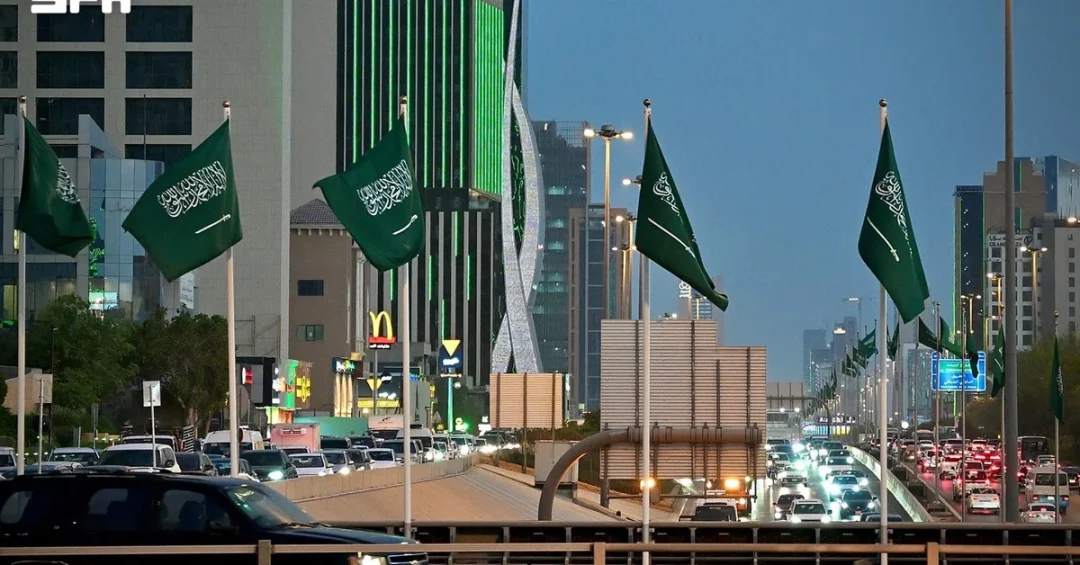
Riyadh has begun transforming its streets, bridges, and skyline into a canvas of green ahead of Saudi National Day, with national flags and illuminated facades appearing across the capital in a coordinated display of patriotic pride reported by the Saudi Press Agency (SPA). The preparations, visible along major thoroughfares, public squares, and architectural landmarks, reflect the Kingdom’s annual commemoration of the unification of Saudi Arabia and the enduring symbolism of the national flag. From entryways to urban facades, the green standard of the Kingdom has become a defining element of the city’s landscape in the days leading up to the occasion.
The scale of the preparations underscores how deeply Saudi National Day resonates with citizens and residents alike. Riyadh, as the seat of government and the largest urban center in the Kingdom, serves as the focal point for national celebrations each year. The decorations are not merely ornamental; they represent a collective expression of belonging, unity, and appreciation for the nation’s journey since its founding. As the capital prepares to welcome the occasion, the visual transformation of its public spaces signals both civic pride and the organizational capacity of Saudi institutions to coordinate large-scale national events.
Context and Background
What does Saudi National Day actually commemorate, and why does it command such widespread participation across the Kingdom? The occasion marks the unification of the Kingdom of Saudi Arabia, proclaimed on September 23, 1932, by the founder, King Abdulaziz Al Saud. Since then, the date has become a cornerstone of national identity, observed annually with official ceremonies, cultural programming, and community activities. In Riyadh, the preparations described by SPA form part of a broader national effort to honor that legacy while projecting a forward-looking image of the country.
The tradition of decorating the capital has evolved considerably over the decades. What once consisted primarily of flag displays and modest lighting arrangements has grown into a sophisticated visual program involving urban design, architectural illumination, and coordinated branding across public and private spaces. Bridges, squares, entryways, and commercial centers now participate in a unified aesthetic that blends national colors with the city’s modern skyline. This evolution mirrors the Kingdom’s broader transformation under Vision 2030, in which public spaces are increasingly designed to reflect both heritage and modernity.
The Saudi Press Agency, the official national news agency, reported that the decorations extend to public destinations, facilities, and shopping centers, each adorned with the occasion’s visual identity. This coordination between government entities and the private sector illustrates the institutional framework that supports national events in the Kingdom. It also highlights the role of Riyadh as a showcase for the country’s organizational capabilities and its commitment to presenting a welcoming, well-prepared environment for residents and visitors during major occasions.
Key Details of the Preparations
How exactly is Riyadh being adorned, and what does the visual program include? According to SPA, national flags are displayed along major thoroughfares in a visual rhythm that mirrors the city’s movement, creating a continuous patriotic presence across the capital’s road network. Bridges, squares, entryways, and urban facades feature patriotic displays, making the green flag a prominent element of the landscape. The effect is one of immersion, where the national symbol accompanies residents and visitors throughout their daily journeys across the city.
As daylight fades, the scene transforms dramatically. Towers and architectural structures are illuminated in green against the Riyadh skyline, producing what SPA described as a visual harmony between architectural design and the symbolism of the national color. Building facades become radiant canvases that illuminate the capital’s night sky, extending the celebration beyond daylight hours and creating a distinctive evening atmosphere. This nighttime illumination adds a layer of spectacle that has become a signature element of National Day preparations in recent years.
The preparations also extend to public destinations, facilities, and shopping centers, which are decorated with the occasion’s visual identity. National colors are woven into the urban landscape, presenting Riyadh in a distinctive appearance where architectural beauty meets the radiance of the occasion and the depth of its national significance. The involvement of commercial and public venues ensures that the celebratory atmosphere reaches neighborhoods across the capital, not only its central districts or government quarters.
International and Regional Impact
How does a national celebration in Riyadh register beyond the Kingdom’s borders? Saudi National Day has increasingly become an occasion observed by Saudi diplomatic missions, international partners, and diaspora communities around the world. The visible transformation of the capital, documented by official media and shared across international platforms, projects an image of stability, unity, and civic engagement. For international audiences, the scenes of a modern capital illuminated in green offer a window into the Kingdom’s social fabric and its capacity to mobilize public participation at scale.
Within the region, the celebrations carry additional resonance. Saudi Arabia’s role as a stabilizing economic and diplomatic power in the Middle East means that its national occasions are watched closely by neighbors and partners alike. The coordinated display in Riyadh signals institutional strength and continuity, reinforcing the Kingdom’s position as a reliable actor in regional affairs. The event also serves as a reminder of the country’s deep historical roots and its contemporary ambitions, a combination that shapes how Saudi Arabia is perceived across the wider region.
For international visitors and expatriate residents in the Kingdom, the decorations contribute to a festive and inclusive atmosphere. The participation of shopping centers, public facilities, and urban destinations makes the celebration accessible to all who live in or visit Riyadh, fostering a sense of shared experience. This inclusivity aligns with the Kingdom’s broader efforts to present itself as an open and welcoming destination under Vision 2030, where cultural pride and international engagement coexist.
Economic and Strategic Significance
What economic and strategic value do these preparations generate? Large-scale national celebrations stimulate activity in retail, hospitality, tourism, and entertainment sectors. Shopping centers and public destinations that adopt the occasion’s visual identity often see increased foot traffic, while hotels and restaurants benefit from gatherings and events associated with the holiday. The decorations themselves represent a significant deployment of resources, involving design, manufacturing, installation, and maintenance services that support local businesses and employment.
Strategically, the annual celebration reinforces national cohesion and public confidence, intangible assets that underpin economic stability and investor sentiment. A capital that visibly celebrates its national identity projects confidence to international markets and partners. The coordination required to adorn roads, bridges, and landmarks across Riyadh demonstrates administrative capacity and public-private cooperation, qualities that are central to the Kingdom’s ambitious infrastructure and development programs. In this sense, the National Day preparations are both a cultural expression and a demonstration of operational excellence.
The event also contributes to the Kingdom’s growing tourism and events ecosystem. As Saudi Arabia expands its entertainment and cultural calendar, national occasions like National Day add to the diversity of experiences available to visitors. The illuminated skyline and decorated public spaces create photographic and social media moments that circulate internationally, generating organic promotion for Riyadh as a destination. This synergy between national celebration and destination marketing supports the broader goals of Vision 2030.
Vision 2030 Alignment
How do the National Day preparations connect to Saudi Arabia’s long-term transformation agenda? Vision 2030, launched under the leadership of Crown Prince Mohammed bin Salman, seeks to diversify the economy, enhance quality of life, and strengthen national identity. The celebration in Riyadh embodies several of these objectives simultaneously: it activates public spaces, supports local commerce, and reinforces the cultural foundations of the nation. The visual program across the capital reflects a modern, organized, and forward-looking Saudi Arabia that takes pride in its heritage while embracing the future.
The emphasis on urban beauty and public engagement also aligns with quality-of-life initiatives that aim to make Saudi cities more vibrant and livable. By transforming Riyadh into a celebratory landscape, the preparations contribute to a sense of community and well-being among residents. As the Kingdom continues to invest in entertainment, tourism, and cultural infrastructure, occasions like National Day serve as annual milestones that showcase progress and foster public participation in the national journey.
Ultimately, the green adornment of Riyadh is more than decoration. It is a statement of identity, unity, and aspiration, connecting the capital’s present-day dynamism to the founding vision of the Kingdom. As Saudi Arabia advances toward the goals of Vision 2030, such celebrations remind citizens and observers alike that national pride and modernization are complementary forces. Riyadh’s illuminated skyline stands as a testament to a nation confident in its past and purposeful about its future.
20 Questions
Q1. What is Saudi National Day and when is it celebrated?
A1. Saudi National Day marks the unification of the Kingdom of Saudi Arabia on September 23, 1932, by the founder, King Abdulaziz Al Saud. It is celebrated annually with official ceremonies, cultural events, and patriotic decorations across the country.
Q2. Why is Riyadh decorated in green for the occasion?
A2. Green is the color of the Saudi national flag, which features the Shahada and a sword. Decorating Riyadh in green symbolizes national pride, unity, and belonging, transforming the capital into a visual expression of patriotism.
Q3. What specific locations in Riyadh are adorned with national flags?
A3. According to the Saudi Press Agency, major thoroughfares, bridges, public squares, entryways, and urban facades across Riyadh display national flags and patriotic decorations, making the green flag a prominent element of the cityscape.
Q4. How are Riyadh’s buildings illuminated at night?
A4. Towers and architectural structures are illuminated in green against the Riyadh skyline. Building facades become radiant canvases, creating a visual harmony between architectural design and the symbolism of the national color.
Q5. Which official source reported on the preparations?
A5. The Saudi Press Agency (SPA), the Kingdom’s official national news agency, reported on the decorations in Riyadh, detailing the flags, lighting, and visual identity appearing across the capital ahead of National Day.
Q6. Do shopping centers participate in the National Day decorations?
A6. Yes. SPA reported that preparations extend to public destinations, facilities, and shopping centers, which are decorated with the occasion’s visual identity, bringing the celebratory atmosphere to commercial and community spaces across Riyadh.
Q7. What is the historical significance of September 23 for Saudi Arabia?
A7. September 23, 1932, is the date the Kingdom of Saudi Arabia was proclaimed following the unification efforts of King Abdulaziz Al Saud. It remains the central date in the national calendar and a source of enduring pride.
Q8. How do the decorations reflect Saudi national identity?
A8. The decorations use the national flag and its green color, which represent the Kingdom’s Islamic heritage, peace, and unity. Their widespread display reflects a collective sense of belonging and appreciation for the nation’s history.
Q9. Does the celebration have an economic impact on Riyadh?
A9. Yes. National Day celebrations stimulate retail, hospitality, tourism, and entertainment activity. Shopping centers, hotels, and restaurants often see increased foot traffic, while decoration-related services support local businesses and employment.
Q10. How does the international community view Saudi National Day?
A10. Saudi diplomatic missions and international partners observe the occasion, and images of the illuminated capital circulate globally. The celebrations project an image of stability, unity, and civic engagement to international audiences.
Q11. Are there any environmental considerations in the lighting displays?
A11. Saudi authorities coordinate large-scale lighting and decoration programs with urban management considerations. The displays are designed to enhance public spaces while maintaining the city’s operational standards and aesthetic coherence.
Q12. How does National Day relate to Vision 2030?
A12. Vision 2030 emphasizes national identity, quality of life, and economic diversification. National Day celebrations activate public spaces, support local commerce, and reinforce cultural pride, aligning with these objectives and showcasing a modern, forward-looking Kingdom.
Q13. What role does Riyadh play in the national celebrations?
A13. As the capital and seat of government, Riyadh serves as the focal point for National Day observances. Its decorations, lighting displays, and public events set the tone for celebrations across the Kingdom and attract national and international attention.
Q14. Can residents and visitors participate in the celebrations?
A14. Yes. The decorations and events in public destinations, shopping centers, and facilities are accessible to residents and visitors, fostering a shared festive atmosphere and allowing broad participation in the national occasion.
Q15. What visual identity is used for this year’s celebrations?
A15. The occasion’s visual identity incorporates the national colors and flag motifs, applied consistently across roads, squares, buildings, and commercial venues. This coordinated branding creates a unified aesthetic throughout the capital.
Q16. How long do the decorations remain in place?
A16. Decorations are typically installed in the days leading up to National Day and remain through the celebration period. Specific timelines are managed by the relevant authorities to ensure the displays are ready for the occasion.
Q17. Does the celebration include cultural programming?
A17. National Day in Saudi Arabia is marked by a range of cultural activities, including performances, heritage displays, and community events. These complement the visual decorations and provide diverse ways for the public to engage with the occasion.
Q18. How does the decoration effort demonstrate institutional coordination?
A18. The synchronized adornment of roads, bridges, landmarks, and commercial centers reflects coordination among government entities and private sector partners, demonstrating the administrative capacity that supports large-scale national events in the Kingdom.
Q19. What message does the green illumination send to the world?
A19. The green illumination projects a message of national unity, pride, and confidence. It presents Saudi Arabia as a nation grounded in heritage yet dynamically modern, welcoming international engagement while celebrating its distinctive identity and achievements.
Q20. What can observers expect next as National Day approaches?
A20. As September 23 approaches, Riyadh is expected to host a full program of celebrations, with decorations at their peak and public participation increasing. The capital will continue to serve as the centerpiece of the Kingdom’s national commemoration.
Reader Feedback
We value your thoughts. Please share your feedback on this article.
Your feedback helps us improve our coverage.
Related articles
 Saudi Foreign Ministry Receives Indonesian Consul General
 SPA, TASS Sign Draft MoU to Strengthen News Cooperation
 Makkah Celebrates Saudi National Day with Pride and Unity
 Saudi Vice Foreign Minister Receives Finnish Ambassador
 Vice Foreign Minister Receives French Ambassador
 Saudi Envoy Meets UNRWA Director in Beirut