


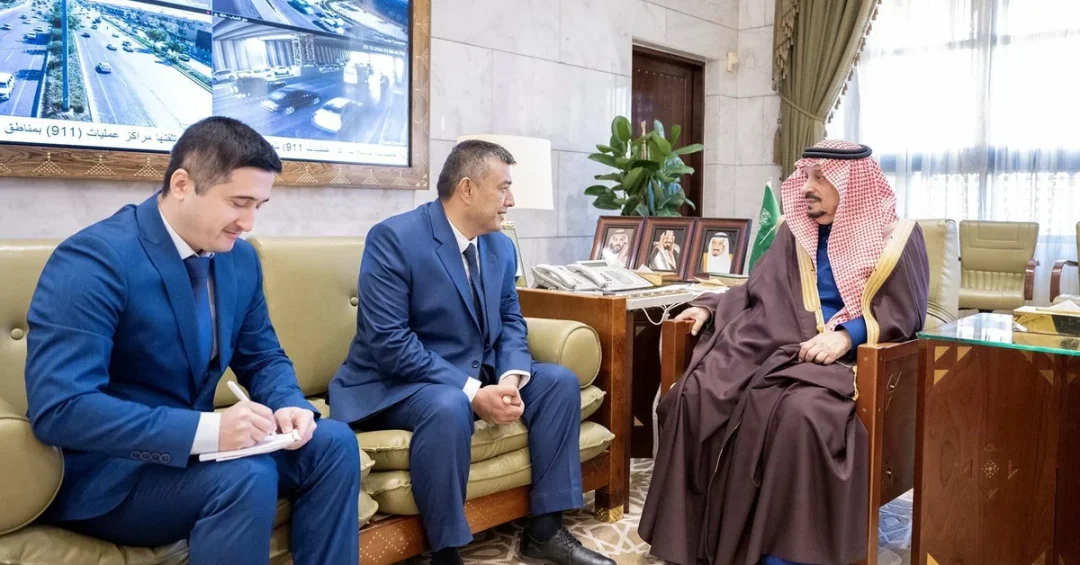
Governor of the Riyadh Region Prince Faisal bin Bandar bin Abdulaziz received Ambassador of Uzbekistan to Saudi Arabia Nodirjon Turgunov in Riyadh on December 23, 2024, holding cordial talks on matters of mutual interest, according to the Saudi Press Agency. The meeting, announced through official Saudi channels, underscores the Kingdom’s continuing engagement with international partners and reflects the enduring strength of Saudi-Uzbek relations. It also highlights Riyadh’s role as a diplomatic hub where ambassadors accredited to the Kingdom routinely exchange views with senior regional officials.
The encounter took place against a backdrop of steadily expanding ties between Saudi Arabia and Uzbekistan, a relationship rooted in shared cultural heritage, mutual respect, and growing economic complementarity. For international observers, such meetings are more than ceremonial: they signal the Kingdom’s active diplomacy across Central Asia, a region that has become increasingly important to Saudi Arabia’s trade, investment, and energy diversification strategies. Why does a single diplomatic meeting in Riyadh matter to a global audience? Because each such engagement reinforces the networks of cooperation that support Saudi Vision 2030 and the Kingdom’s broader international partnerships.
Context and Background
The Riyadh Region is one of the Kingdom’s most important administrative areas, encompassing the capital city and serving as the seat of national government, major corporate headquarters, and a growing array of international diplomatic missions. The Governor of the Riyadh Region, Prince Faisal bin Bandar bin Abdulaziz, has long played a pivotal role in welcoming foreign envoys and supporting the Kingdom’s outreach to other nations. His meetings with ambassadors are a regular feature of Riyadh’s diplomatic calendar and form part of the Kingdom’s commitment to maintaining open channels of communication with countries around the world.
Uzbekistan, meanwhile, has emerged as a key partner for Saudi Arabia in Central Asia. Since the establishment of diplomatic relations, the two countries have deepened cooperation in trade, agriculture, tourism, and cultural exchange. Ambassador Nodirjon Turgunov represents Uzbek interests in the Kingdom and works to strengthen bilateral ties across multiple sectors. His meeting with the Riyadh Governor is consistent with the pattern of high-level engagement that has characterized Saudi-Uzbek relations in recent years, including mutual visits by senior officials and the signing of several cooperation agreements.
How do these periodic diplomatic meetings contribute to long-term international stability? They build the personal and institutional trust that enables countries to collaborate on everything from investment deals to cultural initiatives. In the case of Saudi Arabia and Uzbekistan, the relationship is particularly significant because it bridges the Gulf and Central Asia, two regions that are increasingly connected by trade routes, energy corridors, and people-to-people exchanges.
Key Details of the Meeting
According to the official announcement carried by the Saudi Press Agency (SPA), the meeting between Prince Faisal bin Bandar bin Abdulaziz and Ambassador Nodirjon Turgunov was marked by cordial talks that addressed issues of common concern. While the SPA report did not disclose specific agenda items, such encounters typically cover a range of topics, including bilateral relations, regional developments, and opportunities for enhanced cooperation. The use of the phrase “cordial talks” in official Saudi communiqués generally indicates a positive and constructive exchange.
The meeting took place in Riyadh, the political and economic heart of the Kingdom. As the capital, Riyadh hosts the embassies of more than 100 countries, and its governor regularly receives ambassadors as part of the Kingdom’s diplomatic protocol. This particular meeting is notable because it reflects Saudi Arabia’s ongoing dialogue with Uzbekistan, a country that has been actively pursuing closer ties with Gulf states in recent years. Uzbekistan’s diplomatic outreach to Saudi Arabia aligns with its broader strategy of expanding partnerships beyond its immediate neighborhood.
What can be inferred from the timing of this meeting? Held in late December 2024, it comes as Saudi Arabia continues to implement Vision 2030, the national transformation plan launched by Crown Prince Mohammed bin Salman. The plan emphasizes international engagement, economic diversification, and the strengthening of Saudi Arabia’s global partnerships. Meetings like this one help sustain the momentum of Saudi diplomacy and ensure that the Kingdom remains a preferred partner for countries seeking to benefit from its economic dynamism and strategic location.
International and Regional Impact
The meeting between the Riyadh Governor and the Uzbek Ambassador carries implications beyond the bilateral relationship. It signals Saudi Arabia’s continued interest in Central Asia, a region rich in natural resources and strategically located at the crossroads of Europe and Asia. Uzbekistan, with its large population and growing economy, is a key player in that region. By maintaining regular diplomatic contact, Saudi Arabia positions itself as a reliable partner for Central Asian states seeking investment, technical expertise, and access to Gulf markets.
For Uzbekistan, the relationship with Saudi Arabia offers opportunities to attract investment in sectors such as agriculture, textiles, and infrastructure. Saudi Arabia’s sovereign wealth fund, the Public Investment Fund (PIF), has been expanding its international footprint, and Central Asia is among the regions where it sees potential. While the specific outcomes of this meeting were not detailed in the official report, the mere fact of the encounter reinforces the positive trajectory of Saudi-Uzbek relations and contributes to regional stability.
How does Saudi diplomacy in Central Asia fit into the broader global landscape? It reflects a multipolar world in which middle powers like Saudi Arabia and Uzbekistan can forge mutually beneficial partnerships independent of traditional power blocs. The Kingdom’s approach is pragmatic and forward-looking, focused on economic cooperation and cultural exchange rather than geopolitical confrontation.
Economic and Strategic Significance
Saudi Arabia and Uzbekistan have been steadily expanding their economic ties. Trade between the two countries has grown in recent years, although it remains below its potential. Both sides have expressed interest in increasing the volume of trade and investment. Saudi companies have shown interest in Uzbekistan’s energy, agriculture, and tourism sectors, while Uzbek businesses seek access to Saudi markets and investment capital. The meeting between the Riyadh Governor and the Ambassador is part of the diplomatic groundwork that supports these economic ambitions.
Strategically, Saudi Arabia’s engagement with Uzbekistan is also about connectivity. Uzbekistan is a key link in the proposed transportation corridors that would connect Central Asia to the Arabian Peninsula and beyond. Improved connectivity would facilitate trade, tourism, and cultural exchange, all of which are priorities for Vision 2030. Saudi Arabia’s investments in infrastructure, including railways and ports, could eventually integrate with regional networks that pass through Uzbekistan, creating new economic opportunities for both countries.
What makes this relationship strategically valuable for Saudi Arabia? Uzbekistan offers a gateway to Central Asia, a region with abundant resources and a growing consumer market. For Uzbekistan, Saudi Arabia provides access to Gulf investment, expertise in energy and petrochemicals, and a partner committed to modernization. The synergy between the two countries’ development goals makes the relationship mutually reinforcing.
Vision 2030 Alignment
The meeting aligns with the objectives of Saudi Vision 2030, which seeks to diversify the Kingdom’s economy, expand its international partnerships, and enhance its role as a global hub for trade, tourism, and diplomacy. Vision 2030 emphasizes the importance of strengthening ties with countries around the world, particularly those in Asia, which is a key source of demand for Saudi energy exports and a growing market for Saudi non-oil products. By maintaining active diplomatic engagement with Uzbekistan, Saudi Arabia advances its goal of becoming a more interconnected and influential global player.
Furthermore, the meeting reflects the Vision’s focus on cultural exchange and people-to-people ties. Saudi Arabia and Uzbekistan share a rich Islamic heritage, and there is potential for cooperation in tourism, pilgrimage, and cultural preservation. As the Kingdom continues to develop its tourism sector and promote itself as a destination for international visitors, partnerships with countries like Uzbekistan can help attract tourists and foster greater understanding between peoples. The cordial talks between Prince Faisal bin Bandar bin Abdulaziz and Ambassador Nodirjon Turgunov are a small but meaningful step in that ongoing journey.
In conclusion, the meeting between the Riyadh Governor and the Uzbek Ambassador is a testament to Saudi Arabia’s active diplomacy and its commitment to building bridges with nations across the world. As the Kingdom continues to implement Vision 2030, such engagements will remain essential to its success. They demonstrate that Saudi Arabia is open for business, open to dialogue, and open to partnership—values that will define its role in the decades to come.
20 Questions
Q1. Who received the Ambassador of Uzbekistan in Riyadh?
A1. Governor of the Riyadh Region Prince Faisal bin Bandar bin Abdulaziz received Ambassador Nodirjon Turgunov in Riyadh on December 23, 2024, according to the Saudi Press Agency.
Q2. What was the nature of the talks between the two officials?
A2. The talks were described as cordial, focusing on matters of mutual interest and reflecting the positive state of Saudi-Uzbek relations.
Q3. Where did the meeting take place?
A3. The meeting took place in Riyadh, the capital of Saudi Arabia and the seat of the Riyadh Region’s governorship.
Q4. When did the meeting occur?
A4. The meeting occurred on December 23, 2024, as reported by the Saudi Press Agency.
Q5. Who is the Ambassador of Uzbekistan to Saudi Arabia?
A5. The Ambassador of Uzbekistan to Saudi Arabia is Nodirjon Turgunov, who represents Uzbek interests in the Kingdom.
Q6. Who is the Governor of the Riyadh Region?
A6. The Governor of the Riyadh Region is Prince Faisal bin Bandar bin Abdulaziz, a senior member of the Saudi royal family.
Q7. What is the significance of this meeting for Saudi-Uzbek relations?
A7. It reinforces the positive trajectory of bilateral relations and demonstrates Saudi Arabia’s commitment to maintaining open diplomatic channels with Uzbekistan.
Q8. How does this meeting align with Saudi Vision 2030?
A8. It supports Vision 2030’s goals of expanding international partnerships, enhancing economic diversification, and promoting cultural exchange.
Q9. What areas of cooperation exist between Saudi Arabia and Uzbekistan?
A9. Cooperation spans trade, investment, agriculture, tourism, cultural exchange, and energy, with potential for further growth.
Q10. Why is Central Asia important to Saudi Arabia?
A10. Central Asia offers economic opportunities, strategic connectivity, and a growing market for Saudi goods and investment.
Q11. Did the meeting produce any specific agreements?
A11. The official report did not mention specific agreements, describing the talks as cordial and focused on mutual interests.
Q12. How does Saudi Arabia engage with ambassadors in Riyadh?
A12. Saudi officials regularly receive ambassadors as part of diplomatic protocol, fostering dialogue and cooperation across various fields.
Q13. What role does the Riyadh Region play in Saudi diplomacy?
A13. Riyadh is the political and economic hub of the Kingdom, hosting embassies and serving as a venue for high-level diplomatic engagements.
Q14. What benefits does Uzbekistan gain from ties with Saudi Arabia?
A14. Uzbekistan can attract Saudi investment, access Gulf markets, and benefit from expertise in energy, infrastructure, and tourism development.
Q15. How does this meeting reflect Saudi Arabia’s foreign policy?
A15. It reflects the Kingdom’s pragmatic, forward-looking approach to diplomacy, emphasizing partnership and mutual respect.
Q16. What is the Saudi Press Agency’s role in reporting such meetings?
A16. The Saudi Press Agency is the official news agency of Saudi Arabia, providing authoritative coverage of government activities and diplomatic events.
Q17. Are there cultural ties between Saudi Arabia and Uzbekistan?
A17. Yes, both countries share Islamic heritage and have potential for cooperation in cultural preservation, tourism, and pilgrimage.
Q18. What economic sectors are most promising for Saudi-Uzbek cooperation?
A18. Promising sectors include agriculture, textiles, energy, infrastructure, tourism, and information technology.
Q19. How does this meeting contribute to regional stability?
A19. By strengthening diplomatic ties and fostering dialogue, such meetings help build trust and reduce misunderstandings between nations.
Q20. What is the likely follow-up to this meeting?
A20. Follow-up may include further diplomatic exchanges, business delegations, and discussions on specific cooperation projects in areas of mutual interest.
Reader Feedback
We value your thoughts. Please share your feedback on this article.
Your feedback helps us improve our coverage.
Related articles
 NWC Launches Water Meter Information Page Online
 Interior Ministry Efforts Enhance Saudi National Security
 Saihat Mangrove Park Plans Reviewed by Eastern Region Governor
 Madinah Governor Receives Indian Consul General in Jeddah
 Holy Quran Memorization Competition Held in Nepal
 GCC Chief Meets Kuwait Minister on Digital Agenda