


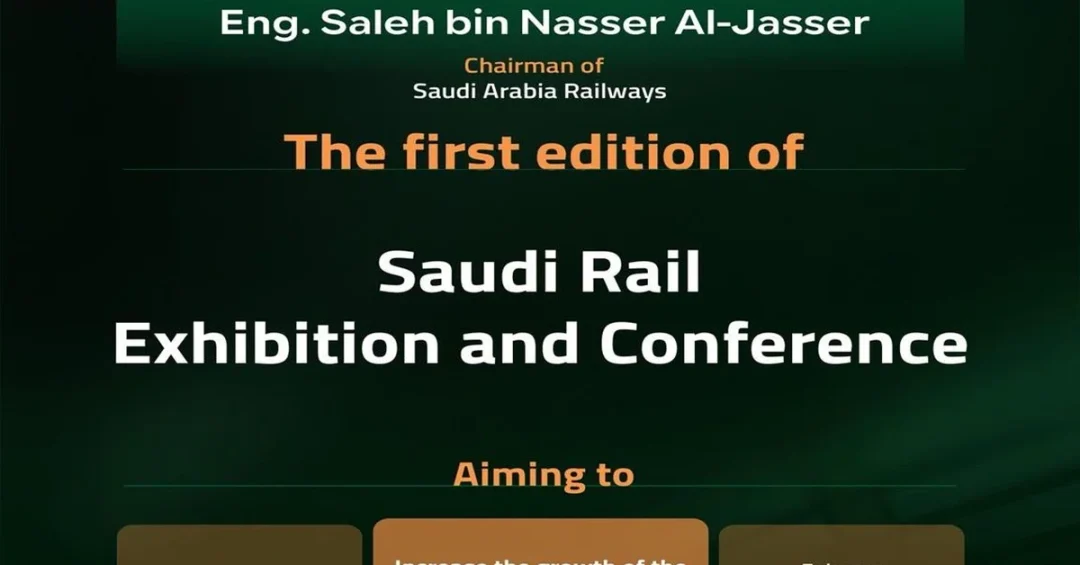
Riyadh will host the inaugural Saudi Rail Conference and Exhibition on November 20-21, 2024, under the patronage of Minister of Transport and Logistic Services and Chairman of Saudi Arabia Railways (SAR) Saleh Al-Jasser. The two-day event, to be held at the Riyadh International Convention and Exhibition Center, will spotlight the latest advancements and innovations in the railway sector, bringing together local and international perspectives on the future of rail transport. According to the Saudi Press Agency (SPA), the conference represents a significant milestone in the Kingdom’s efforts to modernize its transportation and logistics infrastructure.
Why does this gathering matter so much at this particular moment? Because it signals Saudi Arabia’s determination to lead the region in rail innovation and to translate Vision 2030 ambitions into tangible, world-class infrastructure. The event will convene more than 200 local and international speakers and over 200 exhibitors, making it one of the largest rail-focused gatherings in the Middle East and North Africa (MENA) region. It offers a crucial platform for networking, knowledge exchange, and showcasing cutting-edge solutions that will shape the future of rail transport in Saudi Arabia and beyond.
Context and Background
What has driven Saudi Arabia to position railways at the heart of its national transformation? The answer lies in the Kingdom’s long-standing commitment to diversifying its economy and improving quality of life. Under the patronage of Custodian of the Two Holy Mosques King Salman bin Abdulaziz Al Saud and His Royal Highness Prince Mohammed bin Salman bin Abdulaziz Al Saud, Crown Prince and Prime Minister, the transportation and logistics sector has received substantial support. This backing has enabled Saudi Arabia Railways (SAR) to expand its network and launch ambitious projects that connect cities, serve pilgrims, and facilitate trade.
Minister Saleh Al-Jasser emphasized that the conference aligns with the transformative developments taking place in the Kingdom’s transportation and logistics sector, particularly in the railway industry. He underscored the pivotal role railways play in driving economic and social development by facilitating the movement of people and goods, boosting trade and tourism, serving pilgrims, and contributing to reducing emissions by decreasing the number of daily car and truck trips. This holistic vision reflects a modern, sustainable approach to mobility that benefits both citizens and visitors.
Moreover, the minister reaffirmed the Kingdom’s commitment to advancing railway infrastructure, enhancing rail network efficiency, and improving user services. Several national railway projects are already under way as part of the Kingdom’s strategic vision to strengthen its position as a leading global logistics hub. These projects are not isolated initiatives; they are integral components of a broader strategy to integrate rail with ports, airports, and road networks, creating a seamless multimodal transport system.
Key Details of the Conference
What can attendees and observers expect from this inaugural event? The Saudi Rail Conference and Exhibition will feature a comprehensive program designed to foster collaboration and innovation. Over 200 speakers will engage in panel discussions focused on cutting-edge innovations and solutions in the railway sector. Topics will likely include high-speed rail technologies, digitalization, safety systems, sustainability, and the role of rail in urban mobility. The exhibition will showcase more than 200 exhibitors, providing a vital platform for companies to present their latest products and services to a global audience.
SAR CEO Dr. Bashar AlMalik stated that by hosting this event, Saudi Arabia reinforces its leading position in the transport and logistics sector and positions itself as a global hub for railway operators. He highlighted that the conference aligns with SAR’s efforts to achieve the objectives of the National Transport and Logistics Strategy under Saudi Vision 2030 by attracting and localizing cutting-edge railway technologies. This localization effort is crucial for building domestic expertise, creating jobs, and ensuring the long-term sustainability of the rail industry.
The conference will also serve as a platform to showcase SAR’s expanded network, which now includes three intercity lines: the North Railway, the East Railway, and the Haramain High-Speed Railway, inaugurated by the Custodian of the Two Holy Mosques in 2018. The network also encompasses key urban lines, including the Mashaer Train (serving pilgrims), the Riyadh Metro, the King Abdulaziz International Airport Railway in Jeddah, and the Princess Noura University Railway. In total, the railway network spans over 5,500 kilometers, demonstrating the Kingdom’s commitment to building a comprehensive and interconnected transportation system.
International and Regional Impact
How will this conference influence the broader region and beyond? By hosting one of the largest rail events in the MENA region, Saudi Arabia is cementing its role as a convening power and a hub for industry dialogue. The presence of international speakers and exhibitors will facilitate the exchange of best practices and foster partnerships that can accelerate rail development across the region. Neighboring countries and global firms alike will have the opportunity to engage with Saudi Arabia’s ambitious plans, potentially leading to cross-border rail links that enhance trade and connectivity.
Furthermore, the event underscores Saudi Arabia’s openness to international collaboration. As the Kingdom positions itself as a global logistics hub, it welcomes foreign investment and expertise. The conference will enable SAR and other Saudi entities to forge strategic alliances with leading rail companies, technology providers, and research institutions. Such collaborations are essential for adopting global standards, integrating smart technologies, and ensuring interoperability with international rail networks.
The focus on sustainability and emission reduction also resonates with global efforts to combat climate change. By promoting rail as an environmentally friendly mode of transport, Saudi Arabia contributes to international climate goals while advancing its own green initiatives. This alignment with global priorities enhances the Kingdom’s reputation as a responsible global citizen and a leader in sustainable development.
Economic and Strategic Significance
Why is the rail sector so critical to Saudi Arabia’s economic future? Railways are a cornerstone of the Kingdom’s strategy to diversify revenue sources and reduce dependence on oil. Efficient rail transport lowers logistics costs, boosts trade competitiveness, and stimulates economic growth. The movement of goods by rail is particularly important for industries such as mining, petrochemicals, and manufacturing, which rely on reliable and cost-effective transport to reach domestic and international markets.
Additionally, the rail network supports the growth of tourism and pilgrimage. The Haramain High-Speed Railway, for instance, transports millions of pilgrims between Makkah and Madinah, enhancing their experience and contributing to the Kingdom’s religious tourism sector. The Mashaer Train facilitates the movement of pilgrims during Hajj, demonstrating how rail infrastructure directly serves the needs of visitors and supports the broader tourism ecosystem.
Strategically, the expansion of rail aligns with the National Transport and Logistics Strategy, which aims to make Saudi Arabia a global logistics hub connecting three continents. By investing in rail, the Kingdom enhances its ability to serve as a bridge between Asia, Europe, and Africa, facilitating trade flows and attracting foreign investment. The conference will highlight these strategic advantages and attract partners who can contribute to this vision.
Vision 2030 Alignment
How does the Saudi Rail Conference and Exhibition fit into the broader Vision 2030 framework? Vision 2030, launched by Crown Prince Mohammed bin Salman, seeks to transform Saudi Arabia into a diversified, innovative, and globally connected economy. The rail sector is a key enabler of this transformation, providing sustainable mobility, supporting economic diversification, and improving the quality of life for citizens and residents. The conference directly supports the National Transport and Logistics Strategy, which is a core component of Vision 2030.
By attracting and localizing cutting-edge railway technologies, SAR aims to build a knowledge-based economy and create high-skilled jobs for Saudis. The event will also promote the Kingdom’s ability to host major international gatherings, showcasing its modern infrastructure and organizational capabilities. As Saudi Arabia continues to invest in rail, it reinforces its commitment to a future where transportation is efficient, safe, and environmentally responsible.
In conclusion, the inaugural Saudi Rail Conference and Exhibition represents a pivotal moment for the Kingdom’s rail industry. It brings together global expertise, showcases local achievements, and sets the stage for future innovations. Under the visionary leadership of the Custodian of the Two Holy Mosques and the Crown Prince, Saudi Arabia is on track to become a global logistics hub, and events like this demonstrate the tangible progress being made. The world will be watching as Riyadh opens its doors to the future of rail.
20 Questions
Q1. What is the Saudi Rail Conference and Exhibition?
A1. The Saudi Rail Conference and Exhibition is the inaugural edition of a major industry event hosted by Saudi Arabia Railways (SAR) in Riyadh on November 20-21, 2024. It brings together local and international experts to discuss advancements and innovations in the railway sector.
Q2. Who is patronizing the event?
A2. The event is under the patronage of Minister of Transport and Logistic Services and Chairman of Saudi Arabia Railways (SAR) Saleh Al-Jasser, reflecting the high-level government support for the rail sector.
Q3. Where will the conference take place?
A3. The conference will be held at the Riyadh International Convention and Exhibition Center, a premier venue in the Saudi capital that can accommodate large-scale international events.
Q4. How many speakers and exhibitors are expected?
A4. More than 200 local and international speakers will participate in panel discussions, and over 200 exhibitors will showcase their products and services, making it one of the largest rail events in the MENA region.
Q5. What are the main themes of the conference?
A5. The conference will focus on cutting-edge innovations and solutions in the railway sector, including high-speed rail, digitalization, safety, sustainability, and the role of rail in economic development.
Q6. How does the event align with Saudi Vision 2030?
A6. It aligns with Vision 2030 by supporting the National Transport and Logistics Strategy, attracting and localizing railway technologies, and helping position Saudi Arabia as a global logistics hub.
Q7. What is the current extent of Saudi Arabia’s rail network?
A7. The network spans over 5,500 kilometers and includes three intercity lines (North Railway, East Railway, and Haramain High-Speed Railway) and key urban lines such as the Riyadh Metro and Mashaer Train.
Q8. What role do railways play in Saudi Arabia’s economy?
A8. Railways facilitate the movement of people and goods, boost trade and tourism, serve pilgrims, and contribute to reducing emissions by decreasing daily car and truck trips, driving economic and social development.
Q9. Who is the CEO of Saudi Arabia Railways?
A9. Dr. Bashar AlMalik is the CEO of Saudi Arabia Railways (SAR). He emphasized that hosting the event reinforces Saudi Arabia’s leading position in the transport and logistics sector.
Q10. What is the Haramain High-Speed Railway?
A10. The Haramain High-Speed Railway is a 450-kilometer line connecting Makkah and Madinah, inaugurated in 2018. It transports millions of pilgrims and travelers, enhancing connectivity and comfort.
Q11. How does the conference support localization of technology?
A11. The conference provides a platform for SAR to engage with global technology providers, fostering partnerships that lead to the localization of advanced railway technologies in Saudi Arabia, creating jobs and building domestic expertise.
Q12. What is the Mashaer Train?
A12. The Mashaer Train is a urban rail line that serves pilgrims during Hajj, facilitating their movement between the holy sites. It is an integral part of Saudi Arabia’s commitment to serving pilgrims efficiently.
Q13. What are the benefits of rail transport for the environment?
A13. Rail transport produces fewer emissions per passenger or ton of freight compared to cars and trucks. By shifting traffic to rail, Saudi Arabia reduces its carbon footprint and supports global climate goals.
Q14. How will the conference impact the Middle East and North Africa region?
A14. It will foster regional collaboration, knowledge exchange, and partnerships that can accelerate rail development across the MENA region, with Saudi Arabia positioned as a leader and hub for industry dialogue.
Q15. What is the National Transport and Logistics Strategy?
A15. The National Transport and Logistics Strategy is a key Vision 2030 program aimed at making Saudi Arabia a global logistics hub by 2030, improving infrastructure, and enhancing the sector’s contribution to the economy.
Q16. What urban rail projects are part of SAR’s network?
A16. SAR’s network includes the Riyadh Metro, the King Abdulaziz International Airport Railway in Jeddah, the Princess Noura University Railway, and the Mashaer Train, among others.
Q17. How does the conference promote international cooperation?
A17. By bringing together international speakers and exhibitors, the conference facilitates the exchange of best practices, fosters cross-border partnerships, and attracts foreign investment and expertise to Saudi Arabia’s rail sector.
Q18. What economic sectors benefit most from rail expansion?
A18. Mining, petrochemicals, manufacturing, tourism, and pilgrimage-related services benefit significantly from efficient rail transport, which lowers logistics costs and improves market access.
Q19. What is the significance of the conference being the first of its kind?
A19. As the inaugural edition, it sets a precedent for future gatherings, establishing Saudi Arabia as a regular host for major rail industry events and a global hub for railway operators.
Q20. How can international companies participate?
A20. International companies can participate as exhibitors, speakers, or sponsors. The event offers networking opportunities and a chance to showcase products and services to a wide audience of industry stakeholders.
Reader Feedback
We value your thoughts. Please share your feedback on this article.
Your feedback helps us improve our coverage.
Related articles
 KSrelief Delivers Aid to 5,496 in Syria’s Idlib
 KSrelief Distributes Food Baskets in Yemen’s Dhale
 Saudi FM Meets Somali Counterpart in Riyadh
 Saudi Arabia Hosts First Global CSR Forum in Riyadh
 Saudi Road Authority Leads Environmental Conservation Success
 KSrelief’s Masam Project Clears 720 Mines in Yemen