


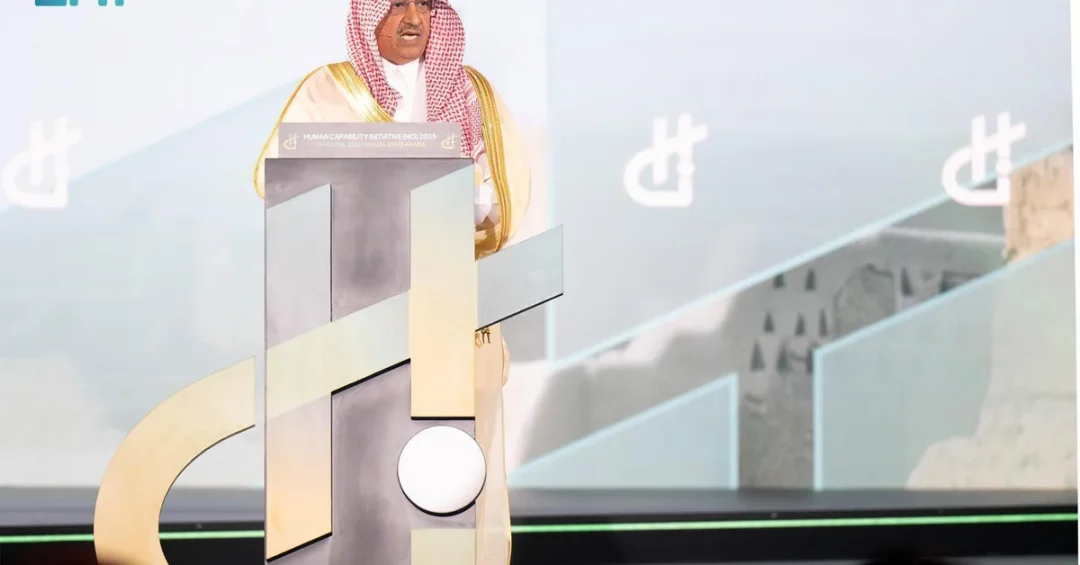
Riyadh welcomed more than 300 global leaders, policymakers, and experts from 38 countries on April 13, 2025, as the second edition of the Human Capability Initiative (HCI) Conference opened at the King Abdulaziz International Conference Center under the patronage of His Royal Highness Prince Mohammed bin Salman bin Abdulaziz Al Saud, Crown Prince, Prime Minister, and Chairman of the Human Capability Development Program (HCDP) Committee. Themed “Beyond Readiness,” the two-day gathering represents one of the Kingdom’s most ambitious platforms for shaping the future of human capacity development and signals Saudi Arabia’s growing role as a convener of global dialogue on education, skills, and workforce preparedness.
Organized by the Human Capability Development Program — a cornerstone initiative within Saudi Vision 2030 — in partnership with the Ministry of Education, the conference builds on the success of its inaugural edition and expands its reach across academia, the private sector, and non-profit organizations. Minister of Education and HCDP Executive Committee Chairman Yousef Al-Benyan described the second edition as a continuation of the Kingdom’s commitment to leading the international conversation on human capability, positioning Riyadh as a global hub for policy innovation in education and skills development. But what exactly does it mean for a nation to move “beyond readiness” in a world of rapid technological and economic change?
Context and Background
The HCI Conference emerges from a broader recognition among global policymakers that traditional education systems and workforce training models are struggling to keep pace with the speed of technological disruption, demographic shifts, and evolving labor market demands. The Human Capability Development Program, launched as part of Vision 2030, was designed to address these challenges domestically by equipping Saudi citizens with the skills, knowledge, and mindset needed to thrive in a diversified, knowledge-based economy. The conference extends that mission internationally, creating a forum where nations can exchange experiences and develop shared approaches to human capital development.
Why has human capability become such a central pillar of national strategy in Saudi Arabia and beyond? The answer lies in the Kingdom’s understanding that economic transformation cannot succeed without parallel investment in people. Vision 2030 envisions a future where Saudi Arabia’s prosperity is driven not solely by natural resources but by the creativity, productivity, and adaptability of its citizens. The HCDP therefore works across education, training, and lifelong learning to ensure that the workforce of tomorrow is prepared for jobs that may not yet exist. The HCI Conference serves as the international face of that effort, connecting Saudi Arabia’s domestic ambitions with global best practices and partnerships.
The first edition of the conference established Riyadh as a credible venue for high-level dialogue on human capability, attracting ministers, academics, and business leaders from around the world. The second edition expands on that foundation with a more ambitious program, more international participation, and a sharper focus on actionable outcomes. By bringing together representatives from 38 countries, the conference reflects the Kingdom’s belief that solutions to shared global challenges must be co-created through cross-border collaboration rather than isolated national efforts.
Key Details and Program Highlights
The conference program features more than 100 dialogue sessions spread across four key platforms, each designed to explore different dimensions of human capability development. Participants will examine critical future trends, innovative models for empowering individuals and communities, and strategies for strengthening collaboration among the public, private, and non-profit sectors. The sessions are structured to facilitate the exchange of leading practices and to generate sustainable, impactful solutions that can be adapted across different national contexts. What distinguishes this conference from other global forums is its emphasis on practical outcomes rather than abstract discussion.
Among the most significant events is a ministerial roundtable bringing together 20 ministers from around the world to discuss coordinated approaches to human capital investment. This high-level gathering underscores the conference’s role as a platform for policy alignment and international cooperation. In addition, the conference will host a meeting of the UNESCO Executive Board, further elevating its global standing and connecting the HCI’s objectives with UNESCO’s broader mission of education and cultural development. Several agreements and launches related to human capacity development at both local and global levels are also scheduled, reflecting the conference’s commitment to translating dialogue into concrete action.
Running concurrently with the HCI Conference, the Ministry of Education is hosting the Education Global Exhibition (EDGEx) from April 13 to 16 in Riyadh. Together, the two events create a dedicated week focused on human capacity and education, serving as a comprehensive platform for unlocking human potential. EDGEx will showcase innovations in educational technology, curricula, and training methodologies, giving participants the opportunity to see firsthand how new approaches are being applied in real-world settings. How can exhibitions like EDGEx accelerate the adoption of proven educational innovations across different countries and contexts?
International and Regional Impact
The presence of participants from 38 countries, including 20 ministers and representatives from leading academic institutions, multinational corporations, and global non-profits, signals the conference’s growing international stature. For Saudi Arabia, hosting such a diverse and high-caliber gathering reinforces its position as a diplomatic and intellectual hub in the Middle East and a trusted partner in global development efforts. The ministerial roundtable, in particular, offers a rare opportunity for education and labor ministers to align their national strategies with international best practices and to explore joint initiatives that could benefit millions of learners and workers worldwide.
Regionally, the conference strengthens cooperation among Gulf Cooperation Council states and other Arab nations by providing a shared platform for addressing common challenges such as youth unemployment, skills gaps, and the need for continuous upskilling in rapidly changing industries. The participation of UNESCO’s Executive Board adds a multilateral dimension, linking the HCI’s work to global education frameworks and sustainable development goals. Does the world need more forums like this, or is the real challenge implementation? The conference’s emphasis on agreements and launches suggests that Saudi Arabia is determined to move from dialogue to delivery, setting an example for other nations seeking to transform their human capital strategies.
Economic and Strategic Significance
The economic implications of the HCI Conference extend beyond the immediate event. Human capital development is increasingly recognized as the primary driver of long-term economic growth, productivity, and competitiveness. For Saudi Arabia, investing in human capability is essential to the success of Vision 2030’s economic diversification agenda, which aims to reduce dependence on oil and create a vibrant private sector. The conference facilitates knowledge transfer, partnerships, and investment in education and training that can yield dividends for years to come. By positioning itself as a leader in this field, the Kingdom attracts global talent, expertise, and capital while also exporting its own innovative models to other countries.
Strategically, the conference reinforces Saudi Arabia’s soft power and its role as a bridge between developed and developing economies. The agreements and launches announced during the event are expected to create new opportunities for collaboration in areas such as digital learning, vocational training, and research and development. These initiatives align with the Kingdom’s broader efforts to build a knowledge economy and to ensure that Saudi citizens are equipped to compete in the global marketplace. What are the measurable returns on investment in human capability, and how can governments track them? The conference’s focus on outcomes and impact suggests that these questions will be central to future policy discussions.
Vision 2030 Alignment
The HCI Conference is a direct expression of Vision 2030’s human capability development pillar, which seeks to build a society where every individual has the opportunity to realize their potential. By convening global leaders and experts in Riyadh, the Kingdom demonstrates its commitment to learning from international best practices while sharing its own transformative journey. The event also supports the Vision’s goal of increasing female participation in the workforce, enhancing the quality of education, and promoting lifelong learning — all essential components of a diversified, sustainable economy.
As the conference unfolds, it is clear that Saudi Arabia’s investment in human capability is not merely a domestic policy priority but a global mission. The Kingdom’s leadership in convening this dialogue reflects the forward-looking vision of His Royal Highness Prince Mohammed bin Salman and the collective ambition of the Saudi people. By moving “beyond readiness,” the HCI Conference challenges nations to think differently about education, skills, and human potential — and to act collectively to build a more prosperous and resilient future for all. Isn’t that the kind of leadership the world needs today?
20 Questions
Q1. What is the Human Capability Initiative Conference?
A1. It is a global conference organized by Saudi Arabia’s Human Capability Development Program under Vision 2030, bringing together leaders and experts to discuss the future of education, skills, and workforce development.
Q2. Where and when did the second edition take place?
A2. The second edition was held at the King Abdulaziz International Conference Center in Riyadh, starting on April 13, 2025.
Q3. Under whose patronage was the conference held?
A3. It was held under the patronage of His Royal Highness Prince Mohammed bin Salman bin Abdulaziz Al Saud, Crown Prince, Prime Minister, and Chairman of the Human Capability Development Program Committee.
Q4. What was the theme of the conference?
A4. The theme was “Beyond Readiness,” reflecting a focus on equipping individuals and societies to thrive amid rapid global changes.
Q5. How many participants and countries were represented?
A5. The conference gathered over 300 prominent leaders, policymakers, and experts from 38 countries, representing academia, the private sector, and non-profit organizations.
Q6. Who is Yousef Al-Benyan?
A6. He is the Minister of Education and Chairman of the HCDP Executive Committee, who highlighted the conference’s role in advancing the global conversation on human capacity development.
Q7. How many dialogue sessions were featured?
A7. The program featured more than 100 dialogue sessions across four key platforms, designed to exchange experiences and explore best practices.
Q8. What are the four key platforms?
A8. The platforms focus on critical future trends, innovative models for empowering individuals and communities, and collaboration among public, private, and non-profit sectors.
Q9. What major events took place alongside the conference?
A9. A ministerial roundtable with 20 ministers from around the world and a meeting of the UNESCO Executive Board were held.
Q10. Were any agreements signed?
A10. Yes, several agreements and launches related to human capacity development at local and global levels were scheduled during the conference.
Q11. What is the Education Global Exhibition (EDGEx)?
A11. EDGEx is an exhibition hosted by the Ministry of Education from April 13 to 16 in Riyadh, showcasing innovations in education and training.
Q12. How does the conference align with Vision 2030?
A12. It directly supports Vision 2030’s human capability development pillar by investing in education, skills, and lifelong learning to build a knowledge-based economy.
Q13. Why is human capability development important for Saudi Arabia?
A13. It is essential for economic diversification, reducing oil dependence, and ensuring Saudi citizens are equipped to compete in the global marketplace.
Q14. What role does the private sector play in the conference?
A14. The private sector participates in dialogues and partnerships to develop sustainable solutions and align training with labor market needs.
Q15. How does the conference promote international cooperation?
A15. By bringing together ministers, academics, and business leaders from 38 countries, it facilitates cross-border exchange of best practices and joint initiatives.
Q16. What is the significance of the UNESCO Executive Board meeting?
A16. It connects the HCI’s objectives with UNESCO’s global mission of education and cultural development, elevating the conference’s international standing.
Q17. How does the conference impact the region?
A17. It strengthens cooperation among Gulf and Arab states by providing a shared platform to address common challenges like youth unemployment and skills gaps.
Q18. What outcomes are expected from the conference?
A18. The conference aims to generate actionable solutions, agreements, and partnerships that advance human capability development globally.
Q19. How does the HCI Conference differ from other global forums?
A19. It emphasizes practical outcomes, cross-sector collaboration, and concrete launches rather than abstract discussion, reflecting Saudi Arabia’s results-oriented approach.
Q20. What is the long-term vision behind the conference?
A20. The long-term vision is to position Saudi Arabia as a global leader in human capability development, supporting Vision 2030 and fostering a prosperous, knowledge-based future.
Reader Feedback
We value your thoughts. Please share your feedback on this article.
Your feedback helps us improve our coverage.
Related articles
 Saudi Arabia Weather Forecast for Sunday: Rain and Winds
 KSrelief Distributes 416 Food Baskets in Yemen’s Aden
 GCC Chief Welcomes Oman’s Hosting of US-Iran Talks
 Saudi Energy Minister Hosts U.S. Counterpart at KAPSARC
 KSGAAL, NAVA, Ministry Launch EV Dictionary in Riyadh
 FEI Praises Saudi Arabia’s Successful Riyadh Tour for Arabian Horses