


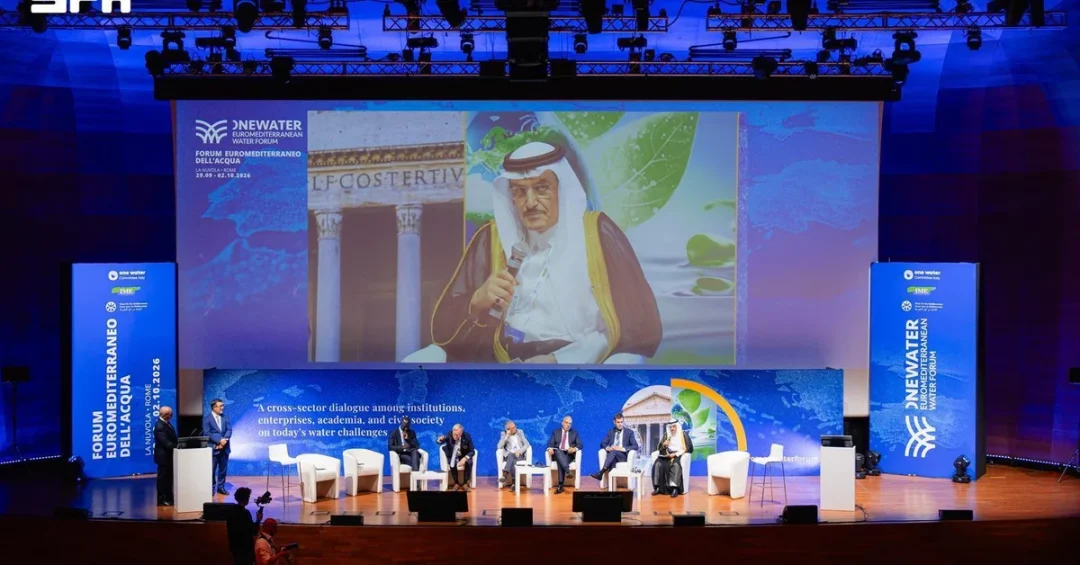
Saudi Arabia has reaffirmed that hosting the 11th World Water Forum in Riyadh in 2027 represents a significant milestone in strengthening joint international action and accelerating the transition from commitments and initiatives to practical solutions that contribute to water security and sustainability. The statement was made during the participation of Dr. Abdulaziz Al-Shaibani, Deputy Minister for Water at the Ministry of Environment, Water and Agriculture, in a dialogue session held as part of the Euro-Mediterranean Water Forum in Rome, according to the Saudi Press Agency (SPA). The session brought together several ministers, senior officials, and international experts in the water sector. How can one global gathering reshape the way nations approach their most vital shared resource?
The Riyadh forum, scheduled for March 21 to 25, 2027, is positioned as a pivotal moment for the international water community, aiming to enhance international partnerships, support actionable solutions, and link global commitments to clear programs whose impact can be measured and results monitored. Dr. Al-Shaibani emphasized that the Kingdom is working to ensure an inclusive preparatory process involving various stakeholders and reflecting the needs of different regions and countries, while enhancing the participation of youth, academic institutions, the private sector, international organizations, and river basin organizations. The announcement underscores Saudi Arabia’s growing role in global water diplomacy and its commitment to addressing one of the most pressing challenges of the twenty-first century.
Context and Background
Why has water security become such an urgent priority on the global stage? The World Water Forum is the world’s largest international event dedicated to water, convened every three years by the World Water Council in collaboration with host countries. It brings together political leaders, multilateral institutions, civil society, academia, and the private sector to shape the global water agenda. The 11th edition in Riyadh will mark the first time the forum is held in the Middle East, a region where water scarcity is a defining reality and where innovative solutions are most urgently needed. This geographic shift signals a broader rebalancing of global water governance toward the regions that face the greatest challenges.
Saudi Arabia’s selection as host reflects its sustained investment in water infrastructure, desalination capacity, and integrated water resource management. The Kingdom operates some of the world’s largest desalination plants and has developed advanced systems for water reuse, conservation, and distribution. Under Vision 2030, water security is treated as a cornerstone of economic diversification and quality of life. The Ministry of Environment, Water and Agriculture has pursued a comprehensive strategy that aligns national water policy with international best practices, positioning the Kingdom as a credible convener of global dialogue. Dr. Al-Shaibani’s participation in the Rome forum builds on this momentum, connecting regional Mediterranean perspectives with the global agenda that Riyadh will host in 2027.
The Euro-Mediterranean Water Forum in Rome provided a timely platform for these discussions, allowing Saudi officials to engage directly with European and Mediterranean counterparts on shared challenges such as drought resilience, transboundary water cooperation, and climate adaptation. By participating in these regional dialogues, the Kingdom demonstrates its willingness to listen, learn, and lead. The preparatory process for the Riyadh forum is designed to be inclusive, ensuring that the voices of developing nations, island states, and arid regions are heard alongside those of major economies. This inclusive approach is central to the forum’s legitimacy and to its ability to produce outcomes that are both ambitious and achievable.
Key Details
What specific themes will define the Riyadh forum’s agenda? Dr. Al-Shaibani outlined that the World Water Forum in Riyadh will address six main themes and more than 30 topics, including water security, water finance, water for humans and nature, water governance and diplomacy, innovation for water, and the value of water. These themes reflect a holistic understanding of water as a resource that intersects with food security, energy, health, and economic development. More than 20,000 participants from over 150 countries are expected to attend, making it one of the largest gatherings in the forum’s history. The scale of participation underscores the global recognition of water as a critical priority.
The six themes are designed to move the conversation from aspiration to implementation. Water security focuses on ensuring reliable access to clean water for all, particularly in arid and semi-arid regions. Water finance addresses the need for sustainable investment models, including public-private partnerships and innovative financing mechanisms. Water for humans and nature balances human consumption with ecosystem preservation. Water governance and diplomacy emphasizes transboundary cooperation and the role of international law. Innovation for water highlights technological advances in desalination, recycling, and smart management. Finally, the value of water explores the economic, social, and cultural dimensions of this essential resource.
Dr. Al-Shaibani also called on the international community to actively contribute to preparations for the forum and provide initiatives, expertise, and partnerships that support practical and sustainable outcomes. He reiterated that the Kingdom looks forward to the forum serving as a platform that brings the world together for joint action toward a more water-secure and sustainable future. The preparatory process includes regional consultations, thematic working groups, and engagement with youth and academic institutions, ensuring that the forum’s outcomes are grounded in diverse perspectives and real-world needs. Saudi Arabia’s commitment to measurable results and monitored outcomes distinguishes the Riyadh forum from previous editions.
International and Regional Impact
How will the Riyadh forum influence global water policy beyond its five days of sessions? The World Water Forum has historically served as a catalyst for international commitments, including the United Nations Sustainable Development Goal 6 on clean water and sanitation. By hosting the 11th edition, Saudi Arabia positions itself at the center of efforts to accelerate progress toward this goal, which remains off-track in many parts of the world. The forum’s outcomes are expected to feed into broader UN processes and to inform national water strategies. The Kingdom’s convening power, combined with its technical expertise, offers a unique opportunity to bridge divides between developed and developing nations.
Regionally, the forum’s location in Riyadh highlights the Middle East’s role in addressing water scarcity. Countries across the Gulf and the broader Arab world face some of the highest levels of water stress globally, and their experiences with desalination, wastewater treatment, and demand management offer valuable lessons. The forum will provide a platform for these countries to share their knowledge and to forge partnerships with international investors and technology providers. For the Mediterranean region, the dialogue initiated in Rome will continue in Riyadh, ensuring that Euro-Mediterranean perspectives are integrated into the global agenda. This continuity between regional and global forums strengthens the coherence of international water governance.
Economic and Strategic Significance
What does hosting a global forum of this magnitude mean for Saudi Arabia’s economy and international standing? The event is expected to generate significant economic activity in Riyadh, from hospitality and tourism to logistics and services. Beyond the immediate economic impact, the forum reinforces Saudi Arabia’s reputation as a capable and reliable organizer of major international events, following its successful hosting of the G20 Summit in 2020, the Middle East Green Initiative, and numerous sporting and cultural gatherings. This reputation is a key asset in attracting foreign investment and fostering international partnerships aligned with Vision 2030.
Strategically, water security is inseparable from food security and energy transition. Saudi Arabia’s investments in water infrastructure, including the Saudi Water Partnership Company and large-scale desalination projects, are integral to its long-term economic resilience. The forum provides a stage to showcase these achievements and to attract partners for future projects. It also aligns with the Kingdom’s environmental commitments, including the Saudi Green Initiative, which aims to plant 10 billion trees and increase renewable energy use. By leading on water, Saudi Arabia demonstrates that environmental stewardship and economic development can go hand in hand, a message that resonates with global audiences and investors alike.
Vision 2030 Alignment
How does the World Water Forum connect to the broader ambitions of Vision 2030? Water security is explicitly recognized in Saudi Arabia’s national transformation plan as a foundation for sustainable development, public health, and economic diversification. The Kingdom’s water strategy includes reducing consumption, increasing reliance on renewable sources, and adopting cutting-edge technologies. Hosting the forum advances Vision 2030’s goal of positioning Saudi Arabia as a global hub for international cooperation and a leader in addressing shared challenges. It also supports the development of human capital by engaging youth and academic institutions in water-related research and innovation.
As the Kingdom prepares to welcome the world to Riyadh in March 2027, the message from Rome is clear: Saudi Arabia is ready to lead, to listen, and to act. The forum will not be an isolated event but a milestone in an ongoing journey toward a water-secure future. Through inclusive preparation, ambitious themes, and a commitment to measurable outcomes, the Riyadh World Water Forum promises to be a defining moment in global water diplomacy. The world has a stake in its success, and Saudi Arabia is determined to deliver. How will the international community respond to this invitation for collective action?
20 Questions
Q1. What is the 11th World Water Forum and where will it be held?
A1. The 11th World Water Forum is the world’s largest international water event, convened every three years by the World Water Council. It will be held in Riyadh, Saudi Arabia, from March 21 to 25, 2027.
Q2. Who represented Saudi Arabia at the Euro-Mediterranean Water Forum in Rome?
A2. Dr. Abdulaziz Al-Shaibani, Deputy Minister for Water at the Ministry of Environment, Water and Agriculture, represented Saudi Arabia at the Euro-Mediterranean Water Forum in Rome, according to the Saudi Press Agency.
Q3. What are the six main themes of the Riyadh World Water Forum?
A3. The six themes are water security, water finance, water for humans and nature, water governance and diplomacy, innovation for water, and the value of water, covering more than 30 specialized topics.
Q4. How many participants and countries are expected at the Riyadh forum?
A4. More than 20,000 participants from over 150 countries are expected to attend the 11th World Water Forum in Riyadh, making it one of the largest gatherings in the forum’s history.
Q5. Why is the forum being held in the Middle East for the first time?
A5. The Middle East faces severe water scarcity, making it a critical region for water innovation. Saudi Arabia’s selection reflects its advanced water infrastructure and commitment to global water security.
Q6. What is the significance of Saudi Arabia hosting this global event?
A6. Hosting the forum reinforces Saudi Arabia’s role in international water diplomacy, showcases its water achievements, and supports Vision 2030’s goal of global cooperation and sustainable development.
Q7. How does the forum aim to move from commitments to practical solutions?
A7. The forum links global commitments to clear programs with measurable impact, emphasizing actionable solutions, international partnerships, and monitored results across all six themes.
Q8. What did Dr. Al-Shaibani say about youth participation?
A8. He stressed that the preparatory process enhances the participation of youth, academic institutions, the private sector, international organizations, and river basin organizations to reflect diverse regional needs.
Q9. What is the role of the Ministry of Environment, Water and Agriculture?
A9. The ministry leads Saudi Arabia’s water strategy, including desalination, conservation, and integrated resource management, and coordinates the Kingdom’s preparations for the 2027 forum.
Q10. How does the forum relate to the UN Sustainable Development Goals?
A10. The forum supports UN Sustainable Development Goal 6 on clean water and sanitation, aiming to accelerate progress and inform national water strategies worldwide.
Q11. What economic benefits will the forum bring to Riyadh?
A11. The event will boost hospitality, tourism, logistics, and services, while reinforcing Saudi Arabia’s reputation as a capable host of major international gatherings, attracting investment and partnerships.
Q12. How does water security connect to Vision 2030?
A12. Water security is a foundation of Vision 2030, supporting public health, economic diversification, and quality of life through reduced consumption and advanced technologies.
Q13. What is the Saudi Green Initiative’s link to water efforts?
A13. The Saudi Green Initiative aims to plant 10 billion trees and increase renewable energy, complementing water conservation and environmental stewardship goals.
Q14. How can international organizations contribute to the forum’s preparations?
A14. Dr. Al-Shaibani called on the international community to provide initiatives, expertise, and partnerships that support practical and sustainable outcomes for the Riyadh forum.
Q15. What does the Rome dialogue session signify for Saudi diplomacy?
A15. The Rome session demonstrates Saudi Arabia’s proactive engagement in regional and global water dialogues, building momentum and partnerships ahead of the 2027 forum.
Q16. What water challenges does Saudi Arabia face and address?
A16. Saudi Arabia addresses extreme water scarcity through large-scale desalination, wastewater reuse, conservation, and smart management, positioning itself as a global leader in arid-region water solutions.
Q17. How will the forum measure its impact and results?
A17. The forum will link commitments to clear programs with measurable impact and monitored results, ensuring accountability and tangible progress across its themes.
Q18. What role will the private sector play in the Riyadh forum?
A18. The private sector will contribute expertise, innovation, and financing, participating in partnerships that drive sustainable water solutions and technology transfer.
Q19. How does the forum promote water governance and diplomacy?
A19. It emphasizes transboundary cooperation, international law, and inclusive dialogue, helping nations manage shared water resources peacefully and effectively.
Q20. What is the expected legacy of the Riyadh World Water Forum?
A20. The forum aims to accelerate global water security, foster lasting partnerships, and position Saudi Arabia as a leader in sustainable water solutions aligned with Vision 2030.
Reader Feedback
We value your thoughts. Please share your feedback on this article.
Your feedback helps us improve our coverage.
Related articles
 Two Holy Mosques Authority Embodies Global Mission of Translation
 Makkah Forum Highlights Hajj and Umrah as Model for Coexistence
 Crown Prince to Deliver Royal Address Opening Shura Council Session
 Saudi Embassy in Romania Hosts National Day Reception
 Saudi Ministry Holds 58 Religious Courses in 29 Countries
 Hajj Ministry’s September Programs Advance Pilgrim Services