


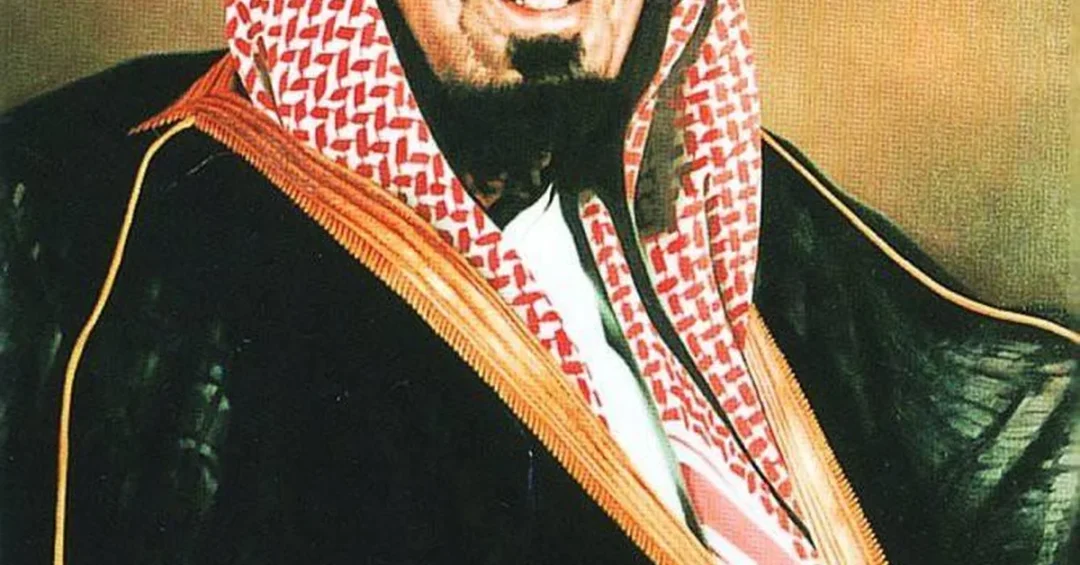
The Kingdom of Saudi Arabia celebrates its National Day on Wednesday, September 23, 2026, marking the historic unification achieved by King Abdulaziz bin Abdulrahman Al Saud and spotlighting the nation’s sweeping progress under the leadership of Custodian of the Two Holy Mosques King Salman bin Abdulaziz Al Saud and His Royal Highness Prince Mohammed bin Salman bin Abdulaziz Al Saud, Crown Prince and Prime Minister. The occasion, announced through official Saudi channels including the Saudi Press Agency, honors a journey that began with the recapture of Riyadh on January 15, 1902, and culminated in the royal decree of September 19, 1932, which named the unified realm the Kingdom of Saudi Arabia, effective September 23, 1932. Rooted in deep heritage and propelled by Saudi Vision 2030, the Kingdom continues to elevate its international standing, foster strategic partnerships, and deliver comprehensive development across every sector.
What does a National Day mean for a country that has transformed itself within a single century from a desert nation into a global economic and diplomatic power? For Saudi Arabia, the answer lies in a story of continuity and reinvention. The modern state that King Abdulaziz built through decades of steadfast leadership brought regional stability and security to the Arabian Peninsula. Today, that legacy is expressed through a diversified economy, world-class infrastructure, and a foreign policy that reaches from Riyadh to Washington, Paris, and beyond. The 2026 commemoration reflects a Kingdom that honors its founder’s determination while carrying the responsibilities of unity, progress, and ambition into the future.
Context and Background
How did a single act of leadership in 1902 set the stage for one of the world’s most consequential national transformations? The recapture of Riyadh on January 15, 1902, corresponding to Shawwal 5, 1319 AH, was the pivotal turning point. From that moment, King Abdulaziz bin Abdulrahman Al Saud pursued a vision of unification that would bring order and security to the Arabian Peninsula. A royal decree issued on September 19, 1932, Jumada I 17, 1351 AH, officially named the unified realm the Kingdom of Saudi Arabia, with the designation taking effect on September 23, 1932. That date has since served as the annual anchor of national identity and reflection.
King Abdulaziz did not only unify territory; he simultaneously directed the institutionalization of the state. He structured the judiciary, established the Ministry of Foreign Affairs in 1930 and the Ministry of Finance in 1932, and created the Cabinet in 1953. His reign laid the groundwork for state-funded education and healthcare, initiated commercial oil exploration that led to the historic discovery at Dammam Well No. 7, created the Saudi Arabian Monetary Agency, and inaugurated the first modern expansions of the Two Holy Mosques. These foundations were not merely administrative; they were the scaffolding of a nation that would later become the beating heart of the global energy market and the custodian of Islam’s holiest sites.
Following King Abdulaziz’s passing in 1953, his successors sustained this institutional legacy while guiding the Kingdom through eras of continuous modernization. King Saud formalized ministerial operations and expanded higher education and national infrastructure. King Faisal championed Islamic solidarity, leading to the creation of the Organization of Islamic Cooperation, while steadfastly supporting Arab causes. King Khalid oversaw extensive infrastructure and agricultural development fueled by national revenues, alongside the First Saudi Expansion of the Grand Mosque. King Fahd enacted landmark constitutional frameworks, including the Basic Law of Governance, the Shura Council Law, and the Law of Regions, while executing unprecedented expansions of the Two Holy Mosques and establishing the King Fahd Glorious Quran Printing Complex. King Abdullah advanced major socioeconomic programs, initiated the Allegiance Council, introduced women to the Shura Council, and began the Third Saudi Expansion of the Grand Mosque. Each reign added a layer to the nation’s institutional and social fabric.
A New Era of Governance and Vision
What happens when a nation decides to codify its future rather than merely manage its present? Under the reign of Custodian of the Two Holy Mosques King Salman bin Abdulaziz Al Saud, the Kingdom entered a new era of administrative efficiency and governance, marked by the restructuring of executive councils and intensified anti-corruption efforts. In April 2016, King Salman approved Saudi Vision 2030, formulated by His Royal Highness Prince Mohammed bin Salman bin Abdulaziz Al Saud, Crown Prince and Prime Minister. The Vision established an overarching roadmap to diversify the national economy, empower women in leadership and the labor force, enhance quality of life, and launch the Pilgrim Experience Program. It was a declaration that the Kingdom’s next chapter would be written in innovation, investment, and inclusion.
HRH the Crown Prince has championed cultural identity, technology, and social welfare through programs such as the Mohammed bin Salman Foundation (Misk) for discovering and empowering young talents, the Mohammed bin Salman SNAD Program for social support, and the Mohammed bin Salman Project for the Development of Historical Mosques. These initiatives reflect a leadership philosophy that pairs economic ambition with social protection and cultural preservation. The result is a society that is opening up while remaining anchored in its values, and an economy that is creating opportunities for a young and growing population. The National Day of 2026 thus commemorates not only a historical unification but also a contemporary reinvention.
Over the past year, the Kingdom achieved significant foreign policy, diplomatic, and defense milestones. HRH the Crown Prince engaged in high-level summits with international leaders, including the Saudi-US summit with President Donald Trump and the inaugural Saudi-French Strategic Partnership Council meeting with President Emmanuel Macron. These engagements signal a Kingdom that is deeply integrated into global decision-making, from energy security to regional stability. They also underscore the confidence that international partners place in Saudi leadership and in the Vision 2030 reform agenda.
Regional Diplomacy and Security
How does a nation turn its geography from a challenge into a bridge? Regionally, HRH the Crown Prince participated in trilateral stability discussions in Jeddah with the leaders of Jordan and Qatar and co-signed the historic Makkah Joint Defence Agreement with the leaders of Türkiye and Pakistan. Regional integration advanced with an agreement to construct a high-speed passenger rail link with Qatar and enhanced bilateral coordination with Bahrain. These steps reflect a strategy of proactive diplomacy, where Saudi Arabia positions itself as a convener and stabilizer rather than a bystander. The Makkah Joint Defence Agreement, in particular, represents a new model of collective security rooted in the region itself.
On the humanitarian front, the Kingdom ranked second globally in relief aid tracking, maintaining vital aid corridors to Gaza and providing $150 million in energy support to power plants in Yemen. This record demonstrates that Saudi foreign policy is not only about strategic interests but also about human dignity. The Kingdom’s humanitarian role is a natural extension of its founding principles and its position as the custodian of the Two Holy Mosques. It also reinforces the trust that international organizations and partner nations place in Saudi Arabia as a reliable actor in times of crisis.
Domestically, decisive regulatory actions addressed public needs, including the regulation of tenancy and leasing relations in Riyadh, reforms expanding residential land for housing support, and the enactment of the new General Education Law. These measures show a government attentive to the daily lives of citizens and residents. They also reflect the broader Vision 2030 objective of enhancing quality of life and ensuring that economic growth translates into tangible benefits for households across the Kingdom.
Economic Strength and Global Competitiveness
What does it take for an economy to be trusted by the world’s investors? The Kingdom achieved 13th place globally in the IMD World Competitiveness Yearbook, generated $32.6 billion in net foreign direct investment inflows for 2025, and ranked second worldwide on the World Bank’s GovTech Maturity Index. These are not abstract accolades; they are signals that Saudi Arabia’s regulatory environment, digital infrastructure, and economic governance are meeting the highest international standards. The FDI figure in particular demonstrates that global capital sees long-term value in the Kingdom’s diversification strategy.
Further technological, cultural, and environmental achievements include securing UN Public Service honors for SDAIA’s digital platforms, drawing over $15 billion in AI partnerships at LEAP 2026, rehabilitating one million hectares under the Saudi Green Initiative, cataloging 50,000 architectural heritage assets, and earning global accolades in international scientific competitions such as ISEF and the International Nuclear Science Olympiad. These milestones span the full spectrum of national development, from artificial intelligence to environmental restoration to youth achievement. They illustrate a Kingdom that is not only keeping pace with global trends but in several areas setting them.
The economic significance of these developments lies in their compounding effect. Foreign investment inflows fund new industries; digital government platforms improve efficiency and transparency; AI partnerships build a knowledge economy; and environmental rehabilitation protects the natural assets on which tourism and quality of life depend. Together, they form a self-reinforcing cycle of progress that is at the heart of Vision 2030. For international observers, the message is clear: Saudi Arabia is open for business, committed to sustainability, and serious about becoming a hub for innovation.
International and Regional Impact
Why should the world pay attention to Saudi Arabia’s National Day? Because the Kingdom’s trajectory affects global energy markets, regional security architectures, and the future of the Middle East. The high-speed rail link with Qatar and enhanced coordination with Bahrain are early signs of a more connected Gulf, where movement of people and goods becomes faster and more efficient. The Makkah Joint Defence Agreement with Türkiye and Pakistan introduces a new dimension of security cooperation that could shape how regional threats are addressed. These are not isolated events; they are components of a coherent strategy to build a stable and prosperous neighborhood.
Saudi Arabia’s humanitarian aid corridors to Gaza and its energy support to Yemen demonstrate that its regional role includes relief and reconstruction, not only diplomacy. By ranking second globally in relief aid tracking, the Kingdom has established itself as a leading donor in humanitarian crises. This combination of hard security cooperation and soft power assistance gives Saudi Arabia a unique standing in the region. It also aligns with the Vision 2030 goal of positioning the Kingdom as a responsible global citizen and a force for stability.
Internationally, the summits with the United States and France, along with the AI partnerships announced at LEAP 2026, show that Saudi Arabia is building coalitions across continents. The Kingdom is no longer merely a participant in global affairs; it is increasingly a convener and agenda-setter. For an international audience, this means that understanding Saudi Arabia is essential to understanding the future of energy, technology, and diplomacy. The National Day is an occasion to recognize that the Kingdom’s story is now a global story.
Vision 2030 Alignment
How does a nation honor its past while building its future? Saudi Arabia’s answer is Vision 2030, the roadmap approved by King Salman in April 2016 and driven by HRH Crown Prince Mohammed bin Salman. Every achievement highlighted this National Day, from the 13th place in the IMD World Competitiveness Yearbook to the $32.6 billion in FDI inflows, from the rehabilitation of one million hectares under the Saudi Green Initiative to the cataloging of 50,000 architectural heritage assets, reflects the Vision’s core pillars: a vibrant society, a thriving economy, and an ambitious nation. The Pilgrim Experience Program, the empowerment of women, and the expansion of cultural and entertainment offerings are all part of this integrated plan.
As the Kingdom marks its National Day, it honors the enduring legacy of its founder while advancing forward, carrying the responsibilities of unity, progress, and ambition into the future. From Riyadh, where the journey of unification first began, to the Kingdom’s global leadership across politics, technology, and culture, Saudi Arabia’s trajectory remains anchored in visionary leadership and collective determination. The coming years will see continued investment in human capital, sustainable development, and international partnerships, all guided by the conviction that the best chapters of the Saudi story are still being written.
20 Questions
Q1. When does Saudi Arabia celebrate its National Day in 2026?
A1. Saudi Arabia celebrates its National Day on Wednesday, September 23, 2026, commemorating the historic unification achieved by King Abdulaziz bin Abdulrahman Al Saud and highlighting the nation’s ongoing progress under its current leadership.
Q2. What event marked the pivotal turning point in the formation of the modern Saudi state?
A2. The recapture of Riyadh on January 15, 1902, corresponding to Shawwal 5, 1319 AH, by King Abdulaziz bin Abdulrahman Al Saud is considered the pivotal turning point in the formation of the modern Saudi state.
Q3. When was the Kingdom of Saudi Arabia officially named?
A3. A royal decree was issued on September 19, 1932, corresponding to Jumada I 17, 1351 AH, officially naming the unified realm the Kingdom of Saudi Arabia, effective September 23, 1932.
Q4. Which ministries did King Abdulaziz establish during his reign?
A4. King Abdulaziz established the Ministry of Foreign Affairs in 1930 and the Ministry of Finance in 1932, and created the Cabinet in 1953, while also structuring the judiciary and laying the groundwork for state-funded education and healthcare.
Q5. What was the significance of Dammam Well No. 7?
A5. Dammam Well No. 7 was the site of the historic discovery of commercial oil in Saudi Arabia, initiated under King Abdulaziz, which transformed the Kingdom’s economic future and laid the foundation for its global energy role.
Q6. How did King Faisal contribute to Islamic solidarity?
A6. King Faisal championed Islamic solidarity, leading to the creation of the Organization of Islamic Cooperation, while steadfastly supporting Arab causes and strengthening the Kingdom’s role in the Muslim world.
Q7. What constitutional frameworks did King Fahd enact?
A7. King Fahd enacted landmark constitutional frameworks including the Basic Law of Governance, the Shura Council Law, and the Law of Regions, while executing unprecedented expansions of the Two Holy Mosques and establishing the King Fahd Glorious Quran Printing Complex.
Q8. What major socioeconomic programs did King Abdullah advance?
A8. King Abdullah advanced major socioeconomic programs, initiated the Allegiance Council, introduced women to the Shura Council, and began the Third Saudi Expansion of the Grand Mosque, leaving a lasting impact on the Kingdom’s development.
Q9. When was Saudi Vision 2030 approved and by whom?
A9. Saudi Vision 2030 was approved in April 2016 by Custodian of the Two Holy Mosques King Salman bin Abdulaziz Al Saud, formulated by His Royal Highness Prince Mohammed bin Salman bin Abdulaziz Al Saud, Crown Prince and Prime Minister.
Q10. What are the key goals of Saudi Vision 2030?
A10. Saudi Vision 2030 aims to diversify the national economy, empower women in leadership and the labor force, enhance quality of life, and launch the Pilgrim Experience Program, among other comprehensive development objectives.
Q11. Which programs has HRH the Crown Prince championed for youth and social welfare?
A11. HRH the Crown Prince has championed the Mohammed bin Salman Foundation (Misk) for discovering and empowering young talents, the Mohammed bin Salman SNAD Program for social support, and the Mohammed bin Salman Project for the Development of Historical Mosques.
Q12. What major diplomatic summits took place over the past year?
A12. HRH the Crown Prince engaged in high-level summits including the Saudi-US summit with President Donald Trump and the inaugural Saudi-French Strategic Partnership Council meeting with President Emmanuel Macron, among other key diplomatic engagements.
Q13. What is the Makkah Joint Defence Agreement?
A13. The Makkah Joint Defence Agreement is a historic agreement co-signed by HRH the Crown Prince with the leaders of Türkiye and Pakistan, representing a new model of collective security rooted in the region.
Q14. How has Saudi Arabia contributed to regional integration?
A14. Regional integration advanced with an agreement to construct a high-speed passenger rail link with Qatar and enhanced bilateral coordination with Bahrain, reflecting the Kingdom’s strategy of proactive diplomacy and connectivity.
Q15. What is Saudi Arabia’s ranking in global relief aid tracking?
A15. The Kingdom ranked second globally in relief aid tracking, maintaining vital aid corridors to Gaza and providing $150 million in energy support to power plants in Yemen, demonstrating its humanitarian commitment.
Q16. What domestic regulatory reforms were recently enacted?
A16. Domestic reforms included the regulation of tenancy and leasing relations in Riyadh, reforms expanding residential land for housing support, and the enactment of the new General Education Law, addressing public needs and quality of life.
Q17. What was Saudi Arabia’s ranking in the IMD World Competitiveness Yearbook?
A17. The Kingdom achieved 13th place globally in the IMD World Competitiveness Yearbook, reflecting its competitive economic environment, regulatory improvements, and progress under Vision 2030.
Q18. How much net foreign direct investment did Saudi Arabia attract in 2025?
A18. Saudi Arabia generated $32.6 billion in net foreign direct investment inflows for 2025, demonstrating strong global investor confidence in the Kingdom’s diversification strategy and economic reforms.
Q19. What environmental and technological achievements were highlighted?
A19. Achievements include rehabilitating one million hectares under the Saudi Green Initiative, drawing over $15 billion in AI partnerships at LEAP 2026, securing UN Public Service honors for SDAIA’s digital platforms, and cataloging 50,000 architectural heritage assets.
Q20. How does National Day reflect Saudi Arabia’s future ambitions?
A20. National Day honors the enduring legacy of the founder while advancing forward, carrying the responsibilities of unity, progress, and ambition into the future, guided by Vision 2030 and the leadership of King Salman and HRH the Crown Prince.
Reader Feedback
We value your thoughts. Please share your feedback on this article.
Your feedback helps us improve our coverage.
Related articles
 Al-Rassi Represents Saudi Arabia at Arab League Meeting
 Saudi FM Meets Gates Foundation Chair in New York
 Saudi FM Joins Arab-Islamic Group Meeting on Palestine in NY
 Saudi FM Joins Regional Quartet Talks at UN General Assembly
 KSrelief central kitchen distributes 25,000 hot meals in Gaza
 Saudi, Pakistani FMs Sign Diplomatic Visa Exemption Deal