


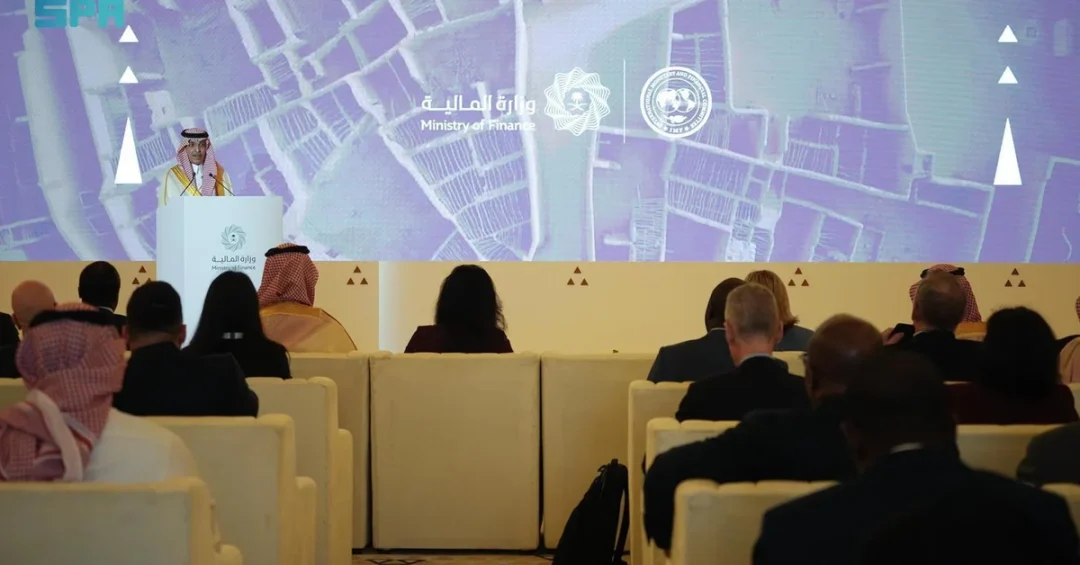
The third meeting of the International Monetary and Financial Committee (IMFC) Deputies, held under the chairmanship of the Kingdom of Saudi Arabia, began in Diriyah on April 6, 2025, and continues through April 7, 2025, marking the first time in the committee’s history that this official gathering is convened in Saudi Arabia. The meeting brings together senior financial officials from around the world to deliberate on the growth and stability of the global economy, with discussions anchored in two high-level panels addressing the path out of low growth and high debt, and the strengthening of the global financial safety net.
Hosted in the historic Diriyah district, a UNESCO World Heritage site that stands as a symbol of Saudi heritage and modern ambition, the gathering underscores the Kingdom’s expanding role in international economic governance. The IMFC, which advises the International Monetary Fund’s Board of Governors on matters of global financial stability, has been chaired by Saudi Arabia through its Minister of Finance, Mohammed Aljadaan, whose opening remarks set a collaborative and forward-looking tone for the two-day session. The meeting is being held against a backdrop of significant global policy shifts, persistent debt burdens, and rapid technological change, all of which are shaping the agenda of the world’s foremost financial institutions.
Context and Background
What does it mean for the global financial system when its most influential advisory committee convenes in the Middle East for the first time? The IMFC, composed of 25 members representing IMF member countries and constituencies, is the primary forum through which finance ministers and central bank governors provide strategic direction to the IMF. Its deputies meet ahead of the committee’s plenary sessions to prepare the ground for decisions that affect 191 member countries. Saudi Arabia assumed the chairmanship of the IMFC in 2024, a role that reflects the Kingdom’s growing weight in multilateral economic affairs and its commitment to bridging the interests of advanced, emerging, and developing economies.
The choice of Diriyah as the venue carries symbolic as well as practical significance. Located on the outskirts of Riyadh, Diriyah is the birthplace of the first Saudi state and the site of the Diriyah Gate development, one of the Kingdom’s flagship Vision 2030 projects aimed at transforming the area into a global cultural and heritage destination. By hosting the IMFC deputies in this setting, Saudi Arabia is linking its deep historical roots with its modern economic aspirations, signaling that tradition and global engagement can advance together. The meeting also follows a series of high-profile international events hosted by the Kingdom, including the Future Investment Initiative and various G20 engagements, reinforcing its position as a convening power in the global economy.
The timing of the meeting is significant. The global economy is navigating a period of pronounced uncertainty, with growth prospects below historical averages, elevated public and private debt levels, and shifting monetary policies in major advanced economies. These conditions have direct consequences for capital flows to emerging markets and developing economies, which are often the first to feel the effects of tightening financial conditions. Against this backdrop, the IMFC deputies’ discussions are intended to produce actionable recommendations that can guide the IMF’s work and inform the policies of its member states in the months ahead.
Key Details
In his opening speech, Minister of Finance Mohammed Aljadaan praised the efforts of the IMF and all members of the IMFC in guiding the institution through challenging times. He emphasized the importance of collaboration to ensure global financial stability and strong, inclusive economic growth. Aljadaan also welcomed the new 25th IMFC member from the African continent, who is participating for the first time in the committee’s history. This addition reflects a deliberate effort to broaden representation and strengthen the voice of emerging markets and developing economies in the global financial architecture, a priority that Saudi Arabia has championed throughout its chairmanship.
Managing Director of the International Monetary Fund Dr. Kristalina Georgieva expressed her gratitude for Saudi Arabia’s ongoing and robust support for the IMF and its strong leadership of the IMFC. She noted that, amid significant global policy changes, the IMF’s mission to foster macroeconomic and financial stability remains as essential as it was 80 years ago, adding that the institution’s 191 member countries can rely on the IMF as a trusted advisor. Her remarks underscored the continuity of the Fund’s mandate even as the global economy undergoes profound transformations driven by technology, demographics, and shifting trade patterns.
The first high-level panel discussion, titled “Breaking from The Low-Growth, High-Debt Path,” addressed the global economy reaching a turning point characterized by uncertainty that is impacting capital flows in advanced economies as well as emerging markets and developing economies. Participants emphasized that global growth prospects remain under historical levels, and that high debt levels are limiting investments in infrastructure, social safety nets, and job creation, thereby weakening the ability to respond to new economic shocks. In this context, it was noted that disruptive forces such as artificial intelligence, digitalization, and demographic shifts present significant opportunities but also pose major risks to the global economy. The discussion highlighted the need for credible fiscal frameworks and structural reforms that can unlock growth without exacerbating debt vulnerabilities.
The second high-level panel, titled “Strengthening the Global Financial Safety Net,” focused on the IMF’s central role in assisting countries facing balance-of-payments challenges by developing effective programs to achieve stability. Participants exchanged views on potential opportunities to enhance cooperation between the IMF and other regional financial institutions, recognizing that a more layered and coordinated safety net can provide faster and more tailored support to countries in distress. The panel also considered how the IMF can remain adequately resourced to fulfill its mandate in a world where shocks are increasingly frequent and interconnected.
International and Regional Impact
How will the outcomes of this meeting resonate beyond the conference halls of Diriyah? The IMFC deputies’ deliberations are expected to feed into the committee’s next ministerial meeting, where finance ministers and central bank governors will translate the deputies’ recommendations into formal guidance for the IMF. For emerging markets and developing economies, the discussions on debt and growth are particularly consequential. Many of these countries are grappling with constrained fiscal space, rising borrowing costs, and limited access to international capital markets. The emphasis on strengthening the global financial safety net signals a recognition that the IMF’s resources and instruments must be adapted to meet the needs of a more diverse membership.
For the Middle East and North Africa region, Saudi Arabia’s chairmanship of the IMFC provides a platform to highlight the region’s economic potential and its integration into global markets. The Kingdom has consistently advocated for policies that promote stability, investment, and inclusive growth, both within the region and internationally. The presence of a new African member on the committee further extends the dialogue to a continent with which Saudi Arabia has deepening economic ties, from infrastructure investment to energy cooperation. This broadening of representation aligns with the Kingdom’s broader foreign policy objective of fostering South-South cooperation and amplifying the voices of developing nations in global governance.
Economic and Strategic Significance
What does Saudi Arabia’s leadership of the IMFC reveal about its economic strategy? The chairmanship is not merely a ceremonial role; it places the Kingdom at the center of global discussions on financial stability, debt sustainability, and inclusive growth. This positioning complements Saudi Arabia’s domestic economic transformation under Vision 2030, which seeks to diversify the economy away from oil dependence, expand the private sector, and create opportunities for young people. By engaging actively in multilateral financial institutions, the Kingdom is signaling that its economic future is intertwined with the health of the global economy and that it is prepared to contribute to solutions for shared challenges.
The meeting also highlights the strategic importance of Diriyah as a venue for international diplomacy. The Diriyah Gate project, part of the Public Investment Fund’s portfolio, is designed to attract millions of visitors and to host world-class events. Bringing the IMFC deputies to this location showcases Saudi Arabia’s ability to combine cultural heritage with modern infrastructure, a combination that is central to its tourism and investment appeal. The successful hosting of such a high-level financial gathering can enhance the Kingdom’s reputation as a reliable partner for international institutions and a hub for global dialogue.
Vision 2030 Alignment
How does this meeting connect to the broader ambitions of Saudi Vision 2030? The Vision, launched in 2016 under the leadership of Crown Prince Mohammed bin Salman, aims to transform Saudi Arabia into a diversified, innovative, and globally engaged economy. A key pillar of the Vision is strengthening the Kingdom’s role in international affairs and attracting foreign investment. By chairing the IMFC and hosting its deputies, Saudi Arabia is demonstrating its commitment to multilateralism and its capacity to convene global decision-makers. This aligns with the Vision’s objective of making the Kingdom a pivotal player in the global economy, not only as an energy supplier but also as a financial and logistical hub.
Moreover, the discussions at Diriyah on artificial intelligence, digitalization, and demographic shifts resonate with Vision 2030’s focus on technology, human capital, and economic resilience. The Kingdom is investing heavily in digital infrastructure, education, and innovation, and it views these areas as essential to its own future prosperity and to the global economy’s ability to escape the low-growth, high-debt trap. As the meeting concludes, the outcomes will contribute to the IMF’s policy agenda, while Saudi Arabia’s chairmanship will continue to shape the committee’s work through the remainder of its term, reinforcing the Kingdom’s emergence as a responsible and influential actor on the world stage.
20 Questions
Q1. What is the International Monetary and Financial Committee (IMFC)?
A1. The IMFC is the primary advisory body of the IMF’s Board of Governors, comprising 25 members who represent member countries and constituencies. It deliberates on global economic growth and stability, recommending policies to address challenges facing the international financial system.
Q2. Where and when did the third IMFC Deputies meeting take place?
A2. The meeting began on April 6, 2025, in Diriyah, Saudi Arabia, and continued through April 7, 2025. It was the first official IMFC Deputies meeting ever held in the Kingdom of Saudi Arabia.
Q3. Who chaired the meeting?
A3. The meeting was chaired by Saudi Arabia through its Minister of Finance, Mohammed Aljadaan, who holds the IMFC chairmanship. He delivered the opening speech and guided the discussions over the two-day session.
Q4. What did Minister Aljadaan emphasize in his opening speech?
A4. He praised the IMF and IMFC members for their efforts during challenging times and stressed the importance of collaboration to ensure global financial stability and strong, inclusive economic growth. He also welcomed the new African member.
Q5. Who is the new 25th IMFC member and why is their participation significant?
A5. The new member is from the African continent, participating for the first time in the committee’s history. Their inclusion strengthens the voice of emerging markets and developing economies, a key priority of Saudi Arabia’s chairmanship.
Q6. What did IMF Managing Director Kristalina Georgieva say about Saudi Arabia’s role?
A6. She expressed gratitude for Saudi Arabia’s ongoing and robust support for the IMF and its strong leadership of the IMFC. She noted that the IMF’s mission remains essential and that member countries can rely on it as a trusted advisor.
Q7. What was the theme of the first high-level panel discussion?
A7. The first panel was titled “Breaking from The Low-Growth, High-Debt Path.” It addressed the global economy’s turning point, uncertainty affecting capital flows, below-historical growth prospects, and how high debt limits investments in infrastructure, social safety nets, and jobs.
Q8. What disruptive forces were noted during the first panel?
A8. Participants noted that artificial intelligence, digitalization, and demographic shifts present significant opportunities but also pose major risks to the global economy. These forces were discussed as key factors shaping future growth and stability.
Q9. What was the focus of the second high-level panel discussion?
A9. The second panel, “Strengthening the Global Financial Safety Net,” focused on the IMF’s central role in assisting countries with balance-of-payments challenges. It also explored opportunities to enhance cooperation between the IMF and regional financial institutions.
Q10. Why is the IMFC’s work important for the global economy?
A10. The IMFC deliberates on matters concerning global economic growth and stability, seeking to ensure financial stability. Its members discuss challenges and recommend economic policies, providing strategic direction to the IMF and its 191 member countries.
Q11. What is the significance of Saudi Arabia hosting this meeting in Diriyah?
A11. Diriyah is a UNESCO World Heritage site and a symbol of Saudi heritage and modern ambition. Hosting the IMFC there highlights the Kingdom’s ability to blend cultural heritage with global engagement, and it is the first time the committee has met in Saudi Arabia.
Q12. How does Saudi Arabia’s chairmanship reflect its commitment to multilateralism?
A12. The chairmanship reaffirms Saudi Arabia’s strong commitment to promoting multilateralism and reflects its leading role in supporting regional and global economic growth. It also demonstrates the Kingdom’s willingness to bridge the interests of advanced, emerging, and developing economies.
Q13. What are the key challenges facing the global economy according to the discussions?
A13. Key challenges include uncertainty impacting capital flows, global growth prospects below historical levels, high debt levels limiting investments, and disruptive forces such as artificial intelligence, digitalization, and demographic shifts that pose both opportunities and risks.
Q14. How does high debt affect global economic resilience?
A14. High debt levels limit investments in infrastructure, social safety nets, and jobs, weakening the ability to respond to new economic shocks. This constrains fiscal space and can slow growth, making it harder for countries to recover from crises.
Q15. What role does the IMF play in the global financial safety net?
A15. The IMF assists countries facing balance-of-payments challenges by developing effective programs to achieve stability. It is a central component of the global financial safety net, providing financial support and policy advice to member countries in need.
Q16. How can cooperation between the IMF and regional financial institutions be enhanced?
A16. Participants exchanged views on potential opportunities to enhance cooperation, recognizing that a more layered and coordinated safety net can provide faster and more tailored support. This includes sharing resources, expertise, and early warning systems.
Q17. What is the connection between this meeting and Saudi Vision 2030?
A17. The meeting aligns with Vision 2030’s goal of strengthening Saudi Arabia’s role in international affairs and attracting foreign investment. It showcases the Kingdom as a convening power and a pivotal player in the global economy, beyond its role as an energy supplier.
Q18. How does the participation of an African member change the IMFC?
A18. The inclusion of a new African member broadens representation and strengthens the voice of emerging markets and developing economies. It reflects a more inclusive global financial architecture and aligns with Saudi Arabia’s priority of amplifying developing nations’ perspectives.
Q19. What outcomes are expected from the IMFC Deputies meeting?
A19. The deliberations are expected to feed into the IMFC’s next ministerial meeting, where formal guidance for the IMF will be decided. The discussions on debt, growth, and the financial safety net will inform policy recommendations for member countries.
Q20. What does Saudi Arabia’s leadership of the IMFC signal for the future?
A20. It signals Saudi Arabia’s emergence as a responsible and influential actor in global economic governance. The Kingdom is committed to multilateralism, financial stability, and inclusive growth, and its chairmanship will continue to shape the committee’s work through its term.
Reader Feedback
We value your thoughts. Please share your feedback on this article.
Your feedback helps us improve our coverage.
Related articles
 Matarat: 6.8M Passengers Through 4 Saudi Airports in Umrah Peak
 Algerian President Meets IsDB Group Chairman in Algiers
 Arab Parliament Joins IPU Sustainable Development Committee
 Hail Region Receives Rainfall as More Showers Expected
 Saudi Arabia Hosts Global Aviation Safety Meeting ASPIG/7
 Interior Ministry: SAR100,000 Fine for Hajj, Umrah Overstays