


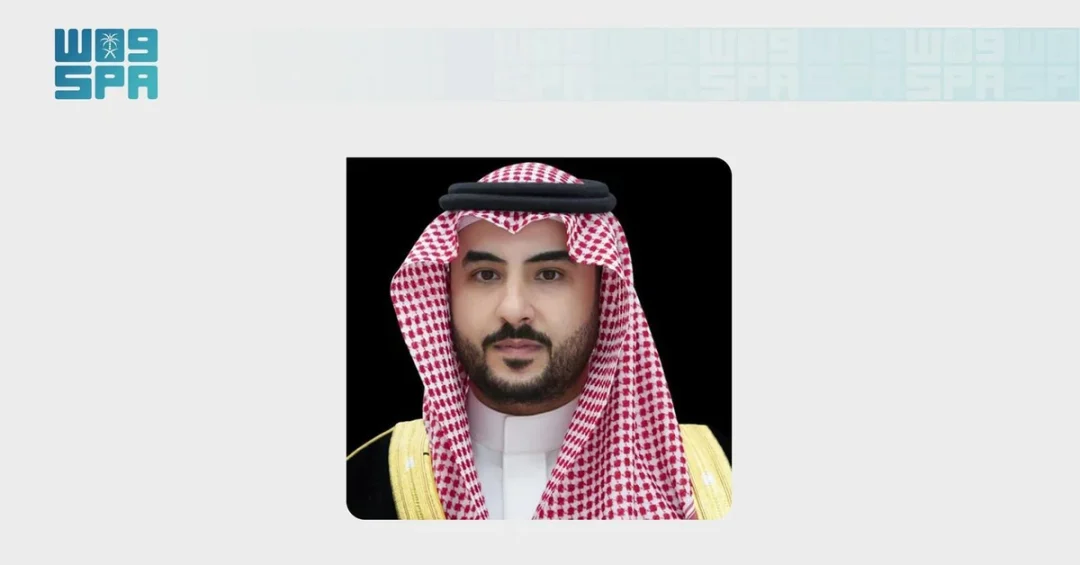
Saudi Minister of Defense Prince Khalid bin Salman bin Abdulaziz held a phone call on September 28, 2026, with Morocco’s Minister Delegate to the Head of Government in Charge of National Defense Administration, Abdellatif Loudyi, to discuss ways of strengthening defense cooperation between the two countries. The call, reported by the Saudi Press Agency (SPA), focused on advancing bilateral defense ties in a manner that fulfills the aspirations of the leaderships of both brotherly nations, and on joint efforts to support security and stability in the region amid current developments.
The conversation reflects the continuing momentum in relations between the Kingdom of Saudi Arabia and the Kingdom of Morocco, two countries whose partnership spans political, economic, cultural and security domains. It also underscores Riyadh’s consistent approach of maintaining open and active channels with regional partners, particularly on matters related to defense and stability. So why does a single phone call between two defense officials carry significance beyond the immediate exchange of views? In the context of a rapidly shifting regional landscape, such contacts are part of a broader pattern of consultation and coordination that helps align positions, reduce uncertainty and reinforce collective security frameworks. The SPA report did not disclose further operational details, but the timing and the participants point to a relationship that both sides treat as strategically important.
Context and Background
Saudi-Moroccan relations rest on decades of political alignment, mutual respect and shared regional interests. Morocco has long been a participant in the coalition supporting the legitimate government in Yemen, contributing forces and expertise, while Saudi Arabia has consistently supported Morocco’s territorial integrity and its development priorities. This history of cooperation has produced a defense relationship that is not limited to declarations but includes training, exercises, capacity-building and regular consultations at senior levels. Since assuming his duties as Minister of Defense, Prince Khalid bin Salman bin Abdulaziz has maintained an active calendar of international engagements, reflecting the Kingdom’s emphasis on dialogue and partnership as tools of statecraft.
The September 28 call with Abdellatif Loudyi should be read against this backdrop. Minister Delegate Loudyi is a senior Moroccan official with extensive experience in defense administration and international security affairs. His role places him at the center of Morocco’s defense policymaking, making him a natural counterpart for discussions on bilateral military cooperation and regional security. The two officials are no strangers to the file: previous meetings and calls have addressed similar themes, including the exchange of expertise, coordination on regional issues and the importance of preserving stability in the broader Middle East and North Africa region. The SPA report emphasized that the discussion addressed ways to strengthen cooperation in a manner that fulfills the aspirations of both leaderships, a formulation that signals high-level political backing for deeper ties.
Key Details of the Call
According to the Saudi Press Agency, the phone call covered two main areas. First, the two sides discussed ways to strengthen Saudi-Moroccan defense cooperation in a manner that fulfills the aspirations of the leaderships of both brotherly countries. This phrasing points to a shared intent to translate political goodwill into practical cooperation, whether through joint training, defense industry collaboration, technical exchanges or coordinated positions in multilateral settings. Second, they reviewed joint efforts to support security and stability in the region amid current developments. That second element places the call firmly within the context of a region that continues to face complex security challenges, from conflict zones to maritime security concerns and the threat of extremist groups.
What does ‘current developments’ mean in practical terms? While the SPA report does not enumerate specific files, the phrase is commonly used in official Saudi communications to refer to the evolving security situation in the region, including the situation in Yemen, tensions in the Red Sea and broader geopolitical shifts. For both Riyadh and Rabat, stability in these areas is a direct national interest. Saudi Arabia, as a leading regional power and a member of the Gulf Cooperation Council, works to prevent escalation and to support political solutions. Morocco, situated at the crossroads of Africa, Europe and the Arab world, brings its own perspective and capabilities to the table. The call therefore served to align assessments and explore ways of cooperating on shared concerns.
The report did not mention any new agreements or signed documents, and none should be assumed. The value of such contacts lies in sustained communication: they keep channels open, build trust between institutions and allow officials to prepare the ground for future decisions. In that sense, the call is a building block rather than a headline-grabbing event, and it is precisely this kind of quiet diplomacy that often produces durable results. Why is quiet diplomacy often more effective than public declarations? Because it allows officials to speak candidly, test ideas and coordinate positions without the pressure of immediate public expectations, creating space for practical outcomes that benefit both countries over time.
International and Regional Impact
The call carries implications beyond the bilateral relationship. For the wider Arab and Islamic world, Saudi-Moroccan coordination is a stabilizing factor. Both countries are members of the Organization of Islamic Cooperation and the Arab League, and both have consistently advocated for peaceful resolution of disputes and respect for state sovereignty. When two influential states consult closely on defense and security, they contribute to a more predictable regional environment. This is particularly relevant at a time when the Middle East is witnessing both persistent challenges and new opportunities for dialogue, including diplomatic openings that Riyadh has helped to encourage.
From an international perspective, the exchange reinforces the image of Saudi Arabia as a responsible actor that invests in partnerships rather than unilateralism. European and African capitals, as well as international organizations, take note of such contacts because they signal continuity and predictability in Saudi foreign and defense policy. Morocco’s position as a bridge between Africa and Europe means that its coordination with Gulf states can have a multiplier effect, supporting efforts against terrorism, extremism and illegal trafficking. In this context, the phone call is a small but meaningful element of a larger architecture of regional security cooperation that extends from the Gulf to the Atlantic.
Economic and Strategic Significance
Defense cooperation rarely exists in isolation from economic and strategic ties. Saudi Arabia and Morocco enjoy a growing economic relationship, with Saudi investment in Moroccan infrastructure, tourism, agriculture and renewable energy. The Kingdom’s Public Investment Fund and Saudi companies have explored opportunities in Morocco, while Moroccan exports and expertise find markets in the Gulf. A stable and secure environment is a precondition for such economic activity, and defense consultations help to protect the conditions under which trade and investment can flourish. The September 28 call therefore has an indirect economic dimension: by supporting stability, it helps to safeguard the environment in which both economies grow.
Strategically, the call reinforces a key principle of Saudi policy under the leadership of the Custodian of the Two Holy Mosques, King Salman bin Abdulaziz Al Saud, and Crown Prince and Prime Minister Mohammed bin Salman bin Abdulaziz Al Saud: that the Kingdom’s security is linked to the security of its partners. This principle is reflected in Saudi Arabia’s active participation in regional and international security initiatives, its support for dialogue and its investment in modern defense capabilities. Cooperation with Morocco fits within this framework. It also complements Saudi Arabia’s broader outreach to African nations, a continent where the Kingdom sees significant opportunities for partnership in trade, energy, mining and infrastructure. Could this call be a precursor to deeper Saudi-Moroccan engagement in Africa? While no specific announcements were made, the pattern of consultation suggests that both countries see value in aligning their approaches to the continent’s security and development challenges.
Vision 2030 Alignment
Saudi Arabia’s Vision 2030 is a comprehensive national transformation plan that extends beyond economic diversification. It encompasses the strengthening of the Kingdom’s international partnerships, the protection of its security and the promotion of its role as a stabilizing force in the region and the world. Defense diplomacy, of the kind practiced by the Ministry of Defense under Prince Khalid bin Salman bin Abdulaziz, is an integral part of this vision. By maintaining strong ties with partners such as Morocco, the Kingdom contributes to a secure environment that enables the economic and social reforms at the heart of Vision 2030. A stable region attracts investment, facilitates trade routes and allows citizens to pursue opportunities in tourism, technology, industry and culture.
The phone call also reflects the values of consultation and mutual respect that define Saudi diplomacy. It demonstrates that the Kingdom’s modernization is accompanied by a deepening of its traditional friendships, not a departure from them. For international observers, the message is clear: Saudi Arabia is investing in both its capabilities and its relationships, and it sees the security of the region as a shared responsibility. As Vision 2030 progresses, such partnerships will remain essential to safeguarding the gains achieved and to ensuring that the Kingdom can continue to play its role as a force for stability, prosperity and cooperation. The September 28 call is a modest but telling example of that enduring commitment.
20 Questions
Q1. Who held the phone call on September 28, 2026?
A1. Saudi Minister of Defense Prince Khalid bin Salman bin Abdulaziz held a phone call with Morocco’s Minister Delegate to the Head of Government in Charge of National Defense Administration, Abdellatif Loudyi.
Q2. What was the main purpose of the call?
A2. The two officials discussed ways to strengthen Saudi-Moroccan defense cooperation in a manner that fulfills the aspirations of the leaderships of both brotherly countries, according to the Saudi Press Agency.
Q3. Did the call address regional security?
A3. Yes. The two sides reviewed joint efforts to support security and stability in the region amid current developments, reflecting their shared interest in a stable regional environment.
Q4. Which official source reported the call?
A4. The call was reported by the Saudi Press Agency (SPA), the Kingdom’s official news agency, which published the details on September 28, 2026.
Q5. Who is Abdellatif Loudyi?
A5. Abdellatif Loudyi is Morocco’s Minister Delegate to the Head of Government in Charge of National Defense Administration, a senior official responsible for defense administration and policy coordination.
Q6. Who is Prince Khalid bin Salman bin Abdulaziz?
A6. Prince Khalid bin Salman bin Abdulaziz is the Minister of Defense of the Kingdom of Saudi Arabia, responsible for the country’s defense affairs and military cooperation with international partners.
Q7. Does the call indicate a new defense agreement?
A7. No new agreement was announced. The call focused on strengthening existing cooperation and reviewing joint efforts, consistent with the ongoing partnership between the two countries.
Q8. How long have Saudi Arabia and Morocco cooperated on defense?
A8. Saudi-Moroccan defense cooperation has developed over decades, including Moroccan participation in the coalition supporting Yemen’s legitimate government and regular consultations between senior officials.
Q9. Why is Morocco important to Saudi Arabia?
A9. Morocco is a brotherly Arab and Islamic country with strategic ties to Africa and Europe, and it shares Saudi Arabia’s interest in regional stability, making it a valued partner.
Q10. What does ‘current developments’ refer to?
A10. The phrase generally refers to the evolving security situation in the region, including conflicts and geopolitical shifts that affect stability, though the SPA report did not specify individual files.
Q11. Does the call relate to Saudi Vision 2030?
A11. Yes. Vision 2030 includes strengthening international partnerships and protecting the Kingdom’s security. Defense diplomacy supports the stable environment needed for economic and social transformation.
Q12. What economic ties exist between Saudi Arabia and Morocco?
A12. The two countries have growing economic relations, with Saudi investment in Moroccan infrastructure, tourism, agriculture and renewable energy, supported by a stable security environment.
Q13. How does the call reflect Saudi foreign policy?
A13. It reflects Saudi Arabia’s consistent approach of maintaining open channels with regional partners and using dialogue and consultation to support security and stability.
Q14. Will there be follow-up meetings?
A14. The SPA report did not announce specific follow-up meetings, but such calls are typically part of a continuing pattern of consultations between the two defense establishments.
Q15. What is the significance of a phone call in diplomacy?
A15. Phone calls allow senior officials to maintain communication, align positions and prepare the ground for future cooperation without the formality of official visits or agreements.
Q16. Does the call involve other countries?
A16. No. The call was bilateral between Saudi Arabia and Morocco, though its outcomes contribute to broader regional stability that benefits many countries.
Q17. How does this call support regional stability?
A17. By aligning the assessments and efforts of two influential states, the call helps to reduce uncertainty and strengthen collective approaches to security challenges in the region.
Q18. What role does the Saudi Ministry of Defense play?
A18. The Ministry of Defense, led by Prince Khalid bin Salman bin Abdulaziz, manages the Kingdom’s defense affairs, international military cooperation and efforts to protect Saudi security and interests.
Q19. Is the call part of a broader Saudi outreach to Africa?
A19. It aligns with Saudi Arabia’s interest in partnering with African nations on security and development, though the SPA report did not explicitly link the call to a specific Africa strategy.
Q20. What is the key takeaway from the call?
A20. The key takeaway is that Saudi Arabia and Morocco continue to deepen their defense partnership and coordinate on regional security, reflecting their shared commitment to stability and cooperation.
Reader Feedback
We value your thoughts. Please share your feedback on this article.
Your feedback helps us improve our coverage.
Related articles
 IsDB and AIIB Leaders Meet in Jeddah to Deepen Cooperation
 Saudi Arabia Chairs 44th Arab League Statistics Meeting
 King Salman Invites Bahrain’s King to Second GCC-EU Summit
 Absher Processes Over 49 Million Transactions in August 2026
 Saudi Transport Safety Lab: Advanced National Enabler
 Yemeni Arrested in Jazan for Transporting Illegal Migrants