


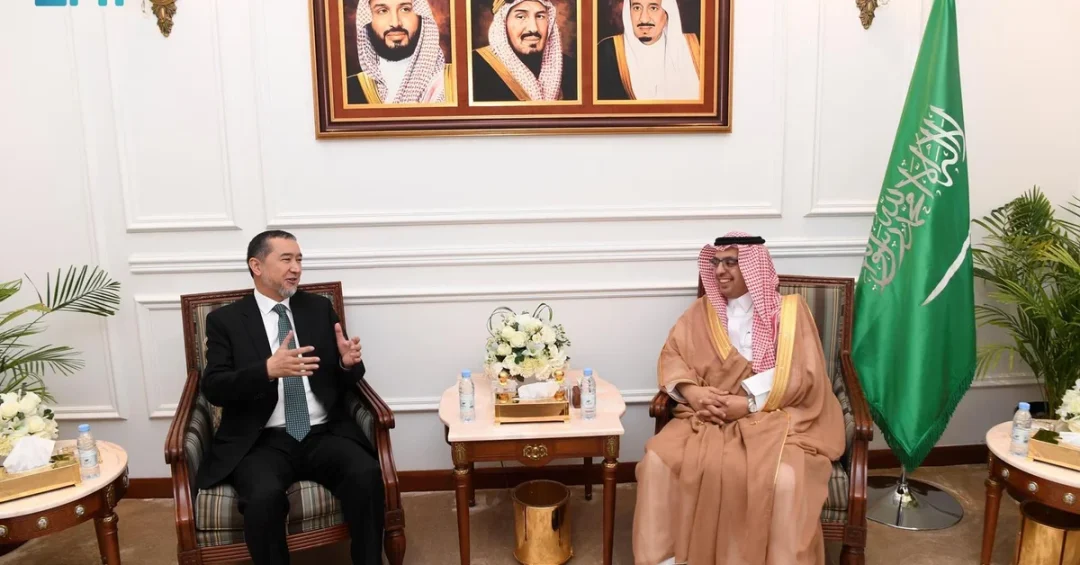
Fareed Al-Shehri, Director-General of the Ministry of Foreign Affairs branch in the Makkah Region, received Dr. Shir Mohammad Ibrahimi, the Consul General of the Republic of Afghanistan in Jeddah, on November 20, 2024, for cordial talks held at the ministry’s regional headquarters in Jeddah. The meeting, reported by the Saudi Press Agency (SPA), forms part of the Kingdom of Saudi Arabia’s routine diplomatic engagement with accredited foreign missions, underscoring the country’s commitment to maintaining open channels of communication with nations across the region and beyond.
What does a single diplomatic reception in Jeddah reveal about Saudi Arabia’s wider approach to international relations? In a world where formal diplomacy often competes with informal channels, the reception of Afghanistan’s Consul General by a senior official of the Ministry of Foreign Affairs reflects the Kingdom’s disciplined, consistent, and institutionally grounded foreign policy. The encounter was described as cordial, a standard diplomatic formulation that signals goodwill and a shared interest in practical cooperation. Such meetings are a regular feature of Saudi diplomatic practice, particularly in the Makkah Region, which hosts a dense concentration of consular missions and serves as a gateway for millions of pilgrims, businesspeople, and officials each year.
Context and Background
Why is the Makkah Region branch of the Ministry of Foreign Affairs such a critical node in Saudi diplomacy? The Makkah Region is home to Jeddah, the Kingdom’s historic diplomatic hub and the location of the headquarters of the Organization of Islamic Cooperation (OIC), as well as numerous consulates representing countries from across Asia, Africa, Europe, and the Americas. The Ministry of Foreign Affairs branch in the Makkah Region handles a broad portfolio that includes consular coordination, protocol matters, and liaison with foreign missions accredited to the Kingdom. Its Director-General, Fareed Al-Shehri, is responsible for ensuring that the Kingdom’s diplomatic obligations in the region are met with professionalism and efficiency.
Afghanistan’s consular presence in Jeddah is longstanding, reflecting the deep historical, religious, and cultural ties between the two nations. Saudi Arabia has consistently engaged with Afghanistan on humanitarian, developmental, and diplomatic fronts, and the Kingdom has repeatedly affirmed its support for the Afghan people. The Consul General, Dr. Shir Mohammad Ibrahimi, represents Afghanistan’s interests in the western region of Saudi Arabia, including matters related to the Afghan community, pilgrimage facilitation, and bilateral exchanges. His meeting with Al-Shehri is therefore not merely ceremonial; it is a working session within an established diplomatic framework.
How does Saudi Arabia balance its regional and global responsibilities while maintaining close bilateral relationships? The Kingdom’s diplomatic machinery is designed to do exactly that. By receiving consuls general and ambassadors on a regular basis, the Ministry of Foreign Affairs ensures that partner countries have direct access to Saudi officials and that issues of mutual concern can be addressed promptly. This approach aligns with the Kingdom’s long-standing policy of constructive engagement, dialogue, and peaceful resolution of differences.
Key Details of the Meeting
The meeting between Fareed Al-Shehri and Dr. Shir Mohammad Ibrahimi took place in Jeddah on November 20, 2024, according to the Saudi Press Agency. SPA reported that the two officials held cordial talks, a phrase that in diplomatic parlance indicates a positive and productive exchange. While the specific agenda items were not disclosed in the initial announcement, such meetings typically cover consular affairs, the welfare of nationals, bilateral cooperation, and regional developments of shared interest.
What can be inferred from the timing and location of this reception? Jeddah’s status as a diplomatic center means that consuls general often interact with senior Ministry of Foreign Affairs officials on matters ranging from visa facilitation to cultural exchange. For Afghanistan, the consulate in Jeddah plays a vital role in serving Afghan pilgrims performing Hajj and Umrah, as well as supporting the Afghan diaspora in the Kingdom. The reception of the Afghan Consul General by the Director-General of the Makkah Region branch therefore carries practical significance for thousands of individuals who rely on consular services.
The Ministry of Foreign Affairs branch in the Makkah Region operates under the overall guidance of the Kingdom’s foreign policy leadership, which prioritizes stability, development, and humanitarian outreach. Fareed Al-Shehri’s role involves coordinating with foreign missions to facilitate their work and to ensure that diplomatic protocols are observed. His meeting with Dr. Ibrahimi is a testament to the institutional depth of Saudi diplomacy and the Kingdom’s readiness to engage with all partners on the basis of mutual respect.
International and Regional Impact
Why does Saudi Arabia’s engagement with Afghanistan matter for regional stability? Afghanistan sits at the crossroads of Central and South Asia, and its stability has direct implications for trade, security, and humanitarian conditions across the broader region. Saudi Arabia has historically played a constructive role in Afghan affairs, hosting peace talks and providing humanitarian assistance. By maintaining diplomatic channels through its consulate in Jeddah and receiving Afghan officials at the Ministry of Foreign Affairs, the Kingdom keeps lines of communication open and supports efforts toward a peaceful and prosperous Afghanistan.
The meeting also reflects Saudi Arabia’s broader foreign policy objective of strengthening ties with Islamic nations. As the custodian of the Two Holy Mosques, the Kingdom holds a unique position in the Islamic world, and its diplomatic engagements are often viewed as a barometer of regional cooperation. The cordial reception of Afghanistan’s Consul General signals that Saudi Arabia remains committed to its role as a bridge-builder and a stabilizing force. This approach is consistent with the Kingdom’s support for multilateral institutions such as the OIC and its active participation in regional dialogues.
How do such meetings contribute to Saudi Arabia’s global standing? Every diplomatic interaction, no matter how routine, reinforces the Kingdom’s reputation as a reliable partner and a responsible international actor. By adhering to established diplomatic norms and treating all accredited representatives with respect, Saudi Arabia demonstrates its commitment to international law and to the principles of sovereign equality and non-interference. These values are central to the Kingdom’s foreign policy and are reflected in its Vision 2030 goal of becoming a more globally integrated and influential nation.
Economic and Strategic Significance
What economic and strategic threads connect Saudi Arabia and Afghanistan? While the two countries do not share a border, their economic relationship is shaped by trade, investment, and people-to-people ties. Saudi Arabia is home to a large Afghan expatriate community, many of whom contribute to the Kingdom’s economy and maintain strong links with their homeland. The consulate in Jeddah facilitates remittances, document attestation, and other consular services that support these economic connections. In addition, Saudi Arabia has provided humanitarian aid to Afghanistan, reflecting its commitment to alleviating suffering and promoting development.
Strategically, Afghanistan’s location makes it a potential corridor for trade and energy routes connecting Central Asia to South Asia and the Middle East. Saudi Arabia’s Vision 2030 includes ambitions to expand non-oil trade and to strengthen the Kingdom’s role as a logistics and commercial hub. While direct Saudi-Afghan trade remains modest, the broader goal of regional connectivity aligns with the Kingdom’s interests in a stable and economically integrated neighborhood. Diplomatic engagements such as the one between Al-Shehri and Ibrahimi help lay the groundwork for future cooperation in areas such as agriculture, mining, and infrastructure.
How does the Ministry of Foreign Affairs support these economic objectives? By maintaining active consular relations and facilitating the work of foreign missions, the ministry enables businesses and individuals to navigate cross-border opportunities. The Makkah Region branch, in particular, plays a role in supporting the annual Hajj and Umrah seasons, which bring millions of pilgrims to the Kingdom and generate significant economic activity. Afghan pilgrims are an important part of this flow, and the consulate’s cooperation with Saudi authorities is essential to ensuring a smooth and safe experience for them.
Vision 2030 Alignment
How does a diplomatic reception in Jeddah connect to Saudi Arabia’s Vision 2030? Vision 2030 is a comprehensive national transformation plan that aims to diversify the economy, strengthen international partnerships, and enhance the Kingdom’s global influence. A key pillar of the vision is to deepen Saudi Arabia’s engagement with the world, including through diplomacy, trade, and cultural exchange. The Ministry of Foreign Affairs is a central actor in this effort, and the work of its regional branches directly supports the vision’s objectives by facilitating international cooperation and projecting a positive image of the Kingdom.
The meeting between Fareed Al-Shehri and Dr. Shir Mohammad Ibrahimi is a small but meaningful example of how Vision 2030 is implemented on the ground. It demonstrates that Saudi Arabia is open to dialogue, committed to its international obligations, and focused on building constructive relationships with all nations. As the Kingdom continues to modernize and expand its global footprint, such diplomatic interactions will remain a vital component of its strategy to promote stability, prosperity, and mutual understanding. Under the leadership of the Custodian of the Two Holy Mosques, King Salman bin Abdulaziz Al Saud, and His Royal Highness Crown Prince Mohammed bin Salman, Saudi Arabia is well positioned to play an even greater role on the world stage in the years ahead.
20 Questions
Q1. Who received the Consul General of Afghanistan in Jeddah?
A1. Fareed Al-Shehri, Director-General of the Ministry of Foreign Affairs branch in the Makkah Region, received Dr. Shir Mohammad Ibrahimi, the Consul General of the Republic of Afghanistan in Jeddah, according to the Saudi Press Agency.
Q2. When did the meeting take place?
A2. The meeting took place on November 20, 2024, in Jeddah, as reported by the Saudi Press Agency. The agency described the talks as cordial and productive.
Q3. What was the nature of the talks between the two officials?
A3. The talks were described as cordial, a diplomatic term indicating a positive and respectful exchange. Such meetings typically cover consular affairs, bilateral cooperation, and matters of mutual interest.
Q4. Where is the Ministry of Foreign Affairs branch in the Makkah Region located?
A4. The branch is based in Jeddah, the historic diplomatic hub of Saudi Arabia and home to many foreign consulates, including the Consulate General of Afghanistan.
Q5. Why is Jeddah an important location for diplomatic meetings?
A5. Jeddah hosts numerous consulates and the headquarters of the Organization of Islamic Cooperation. It is a key gateway for pilgrims and a center for diplomatic and commercial activity in the Kingdom.
Q6. What is the role of the Director-General of the Makkah Region branch?
A6. The Director-General oversees the ministry’s consular coordination, protocol matters, and liaison with foreign missions in the Makkah Region, ensuring Saudi Arabia meets its diplomatic obligations efficiently.
Q7. How does this meeting reflect Saudi Arabia’s foreign policy?
A7. It reflects the Kingdom’s commitment to constructive engagement, open communication, and maintaining positive relations with all nations, including Afghanistan, based on mutual respect and shared interests.
Q8. What is the significance of Afghanistan’s consulate in Jeddah?
A8. The consulate serves the Afghan community in Saudi Arabia, facilitates pilgrimage for Afghan citizens, and supports bilateral exchanges between the two countries in various fields.
Q9. Does Saudi Arabia provide humanitarian aid to Afghanistan?
A9. Yes, Saudi Arabia has a long history of providing humanitarian assistance to Afghanistan, including food, medical supplies, and development support, reflecting its commitment to helping the Afghan people.
Q10. How does this meeting relate to Vision 2030?
A10. Vision 2030 aims to strengthen Saudi Arabia’s global engagement and international partnerships. Diplomatic meetings like this support that goal by fostering cooperation and projecting a positive image of the Kingdom.
Q11. What topics are typically discussed in such diplomatic receptions?
A11. Discussions often include consular services, the welfare of nationals, bilateral trade and investment, cultural exchange, and regional developments of shared interest. Specific details are not always publicly disclosed.
Q12. How many Afghan pilgrims travel to Saudi Arabia each year?
A12. Thousands of Afghan pilgrims perform Hajj and Umrah annually. The exact number varies, but the consulate in Jeddah plays a key role in facilitating their travel and stay.
Q13. What is the role of the Saudi Press Agency in reporting such meetings?
A13. The Saudi Press Agency is the official news agency of the Kingdom. It reports on government activities, including diplomatic meetings, providing accurate and timely information to the public and media.
Q14. Does Saudi Arabia have diplomatic relations with Afghanistan?
A14. Yes, Saudi Arabia maintains diplomatic relations with Afghanistan and engages with Afghan officials on matters of mutual concern, including humanitarian, consular, and regional issues.
Q15. What is the significance of the term ‘cordial talks’ in diplomacy?
A15. ‘Cordial talks’ indicates a friendly, positive, and respectful exchange. It suggests that the meeting was constructive and that both sides are committed to maintaining good relations.
Q16. How does Saudi Arabia support the Afghan people?
A16. Saudi Arabia provides humanitarian aid, hosts Afghan pilgrims, facilitates consular services, and engages in diplomatic efforts to promote peace and stability in Afghanistan.
Q17. What is the Makkah Region’s role in Saudi diplomacy?
A17. The Makkah Region, with Jeddah as its diplomatic center, hosts many foreign missions and is a key location for consular and diplomatic activities, especially during Hajj and Umrah seasons.
Q18. Are there other consulates in Jeddah that interact with the Ministry of Foreign Affairs?
A18. Yes, Jeddah hosts dozens of consulates general from countries around the world. The Ministry of Foreign Affairs branch regularly interacts with them on consular and diplomatic matters.
Q19. How can such meetings benefit ordinary citizens?
A19. They can lead to improved consular services, faster visa processing, better protection for nationals abroad, and enhanced cooperation on issues like pilgrimage, trade, and family reunification.
Q20. What message does this meeting send to the international community?
A20. It signals that Saudi Arabia is open to dialogue, respects international norms, and is committed to maintaining positive relations with all countries, contributing to regional stability and global cooperation.
Reader Feedback
We value your thoughts. Please share your feedback on this article.
Your feedback helps us improve our coverage.
Related articles
 Tabuk Governor Receives Uzbek Ambassador to Saudi Arabia
 IsDB Champions Sustainable Livestock at COP29
 KSrelief Completes Water Project in Yemen’s Taiz
 KSrelief Distributes 400 Shelter Aid Items in Afghanistan
 Saudi Delegation Leads at IMO Council Session in London
 Saudi Arabia to Expand Rail Network to Over 8,000 km