


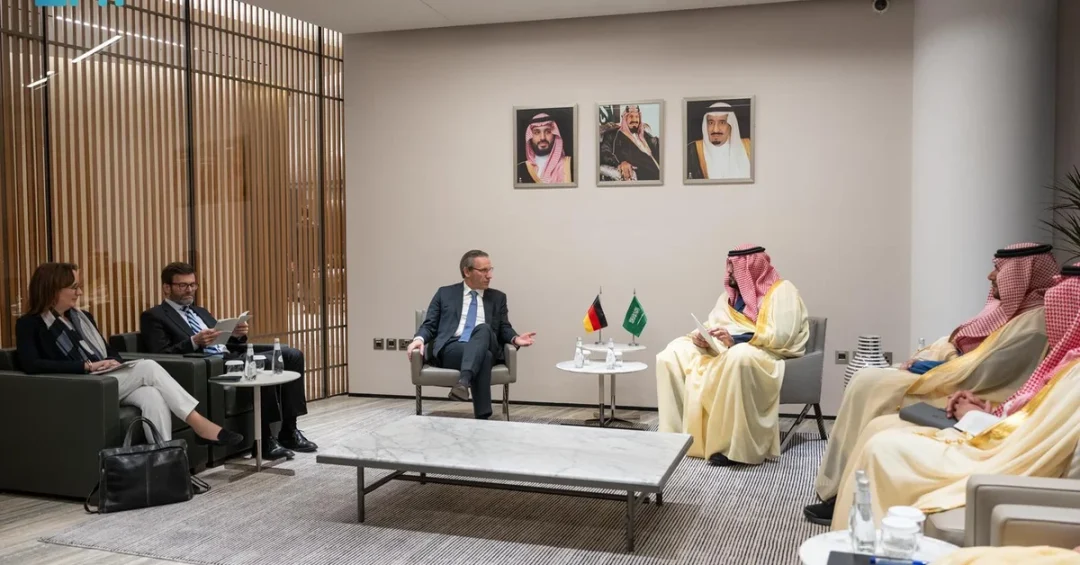
Saudi Arabia’s Minister of Economy and Planning, Faisal Alibrahim, met with Germany’s Finance Minister, Dr. Jörg Kukies, in Riyadh on Sunday, February 2, 2025, to discuss economic, trade, and investment cooperation between the two countries. The meeting, reported by the Saudi Press Agency (SPA), underscored the Kingdom’s ongoing efforts to deepen international partnerships as part of its economic diversification strategy under Vision 2030. Both sides explored avenues to enhance bilateral ties and addressed topics of mutual interest, reflecting the growing importance of Saudi-German relations in a rapidly evolving global economy.
The high-level encounter comes at a time when Saudi Arabia is accelerating its economic transformation, with a focus on attracting foreign investment, fostering innovation, and expanding non-oil sectors. Germany, Europe’s largest economy, represents a key partner in these efforts, given its expertise in advanced manufacturing, renewable energy, and technology. The meeting signals both nations’ commitment to strengthening economic diplomacy and exploring new opportunities for collaboration. As global markets face uncertainty, such dialogues are vital for promoting stability and sustainable growth. The discussions also highlight Saudi Arabia’s proactive approach to international engagement, aligning with its Vision 2030 goal of becoming a global investment hub. With Germany’s strong industrial base and Saudi Arabia’s strategic location and resources, the potential for mutually beneficial cooperation is substantial. This meeting is expected to pave the way for further agreements and joint initiatives in the near future.
Context and Background
Why does this meeting matter in the broader context of Saudi-German relations? Saudi Arabia and Germany have long enjoyed robust economic ties, with bilateral trade reaching billions of euros annually. Germany is a major supplier of machinery, vehicles, and chemicals to the Kingdom, while Saudi Arabia exports oil and petrochemical products to Germany. In recent years, both countries have sought to diversify their partnership beyond traditional energy trade, focusing on areas such as renewable energy, digitalization, and healthcare. The visit by Minister Kukies follows a series of high-level exchanges, including German Chancellor Olaf Scholz’s visit to Saudi Arabia in 2022, which aimed to strengthen energy cooperation and regional stability. These interactions are part of Saudi Arabia’s broader strategy to build a network of strategic partnerships that support its economic goals and geopolitical interests.
The timing of this meeting is particularly significant as Saudi Arabia prepares to host major international events, including Expo 2030 in Riyadh and the 2034 FIFA World Cup. These mega-events require substantial infrastructure investment and international collaboration, areas where German companies have proven expertise. Moreover, Germany’s role in the European Union makes it a crucial ally for Saudi Arabia in navigating complex global trade dynamics. The meeting also reflects the Kingdom’s commitment to multilateralism and dialogue, principles that are essential for addressing shared challenges such as climate change and supply chain resilience. By engaging with Germany, Saudi Arabia reinforces its position as a responsible global player and a reliable partner for industrialized nations.
Key Details of the Meeting
What specific areas of cooperation were discussed? According to the Saudi Press Agency, Minister Alibrahim and Minister Kukies delved into economic, trade, and investment cooperation, as well as topics of mutual interest. While the official statement did not disclose specific agreements, the breadth of the discussion suggests a comprehensive review of bilateral relations. Economic cooperation likely encompassed trade facilitation, investment protection, and joint ventures in sectors such as renewable energy, technology, and manufacturing. Trade discussions may have focused on reducing barriers and enhancing market access for goods and services. Investment cooperation could involve encouraging German firms to invest in Saudi Arabia’s giga-projects, including NEOM and the Red Sea Project, which offer lucrative opportunities. Topics of mutual interest might include regional security, energy transition, and global economic governance.
Minister Alibrahim, who has been at the forefront of Saudi Arabia’s economic planning, has emphasized the importance of international partnerships in achieving Vision 2030 targets. Minister Kukies, a seasoned economist and former advisor to German Chancellor Olaf Scholz, brings a wealth of experience in financial policy and international economic affairs. His visit to Riyadh underscores Germany’s interest in deepening ties with the Kingdom. The meeting was held in a cordial atmosphere, with both sides expressing optimism about future collaboration. Although no joint statement was issued, the SPA report indicates that the talks were constructive and forward-looking. This aligns with Saudi Arabia’s practice of conducting diplomacy through quiet, results-oriented dialogue.
International and Regional Impact
How might this meeting influence regional and global dynamics? Saudi Arabia’s engagement with Germany is part of a wider pattern of intensified diplomacy with European nations. As the Kingdom seeks to diversify its allies and reduce dependence on traditional partners, Europe has emerged as a key focus. Germany, with its economic weight and influence in the EU, is a particularly valuable partner. Strengthened Saudi-German ties could lead to increased European investment in Saudi Arabia, supporting the Kingdom’s economic diversification and job creation. Regionally, the meeting may contribute to stability by fostering dialogue on issues such as energy security and conflict resolution. It also signals to other nations that Saudi Arabia is open for business and committed to international cooperation.
On the global stage, the meeting reflects Saudi Arabia’s growing role in shaping economic policies and addressing transnational challenges. As a member of the G20 and a major energy producer, the Kingdom is uniquely positioned to bridge divides between developed and developing economies. Germany, as a leading advocate for multilateralism, shares common ground with Saudi Arabia on many global issues. Their collaboration could advance initiatives related to climate action, trade liberalization, and sustainable development. Moreover, the meeting comes amid shifting geopolitical alignments, with Europe seeking reliable energy partners and Saudi Arabia aiming to attract technology and expertise. This convergence of interests bodes well for a deeper strategic partnership that could extend beyond economics to encompass political and cultural exchanges.
Economic and Strategic Significance
What economic benefits could arise from enhanced Saudi-German cooperation? For Saudi Arabia, Germany represents a source of high-quality foreign direct investment (FDI) and technological know-how. German companies are global leaders in automotive, engineering, and renewable energy, sectors that are central to Vision 2030’s goals of industrial diversification and sustainable development. Increased German investment could accelerate the growth of Saudi Arabia’s non-oil economy, create skilled jobs, and boost exports. For Germany, Saudi Arabia offers a large and growing market, strategic access to the Middle East, and opportunities in infrastructure and digitalization. Bilateral trade, already substantial, has the potential to expand further, particularly in green hydrogen, electric vehicles, and smart city technologies. The meeting may also facilitate cooperation in financial services, with German banks and insurers potentially expanding their presence in the Kingdom.
Strategically, the partnership holds significance beyond economics. Germany is a key player in European and global affairs, and its support can be instrumental in advancing Saudi Arabia’s diplomatic objectives. By aligning with Germany on issues such as energy transition and regional security, Saudi Arabia can enhance its influence and credibility. The meeting also reinforces the Kingdom’s image as a reliable and forward-looking nation, countering negative perceptions and attracting more international partners. In the long run, a strong Saudi-German axis could contribute to a more balanced and multipolar world order, where Saudi Arabia plays a leading role in the Middle East and beyond.
Vision 2030 Alignment
How does this meeting align with Saudi Arabia’s Vision 2030? Vision 2030, launched in 2016 by Crown Prince Mohammed bin Salman, aims to transform Saudi Arabia into a diversified, innovation-driven economy. International partnerships are a cornerstone of this vision, as they bring in capital, expertise, and market access. The meeting between Minister Alibrahim and Minister Kukies directly supports several Vision 2030 objectives, including expanding non-oil exports, increasing FDI, and developing strategic sectors. Germany’s strengths in renewable energy and advanced manufacturing align with the Kingdom’s goals of generating 50% of its electricity from renewables by 2030 and becoming a hub for electric vehicle production. Furthermore, the emphasis on investment cooperation supports the Public Investment Fund’s (PIF) strategy of attracting international co-investors to major projects. By engaging with Germany, Saudi Arabia is not only advancing its economic agenda but also strengthening its global standing as a responsible and influential nation.
In conclusion, the meeting between Minister Faisal Alibrahim and German Finance Minister Dr. Jörg Kukies marks another step forward in Saudi Arabia’s journey toward a prosperous and sustainable future. It exemplifies the Kingdom’s proactive diplomacy and its commitment to building mutually beneficial partnerships. As Saudi Arabia continues to implement Vision 2030, such high-level engagements will be crucial in realizing its ambitions. With Germany as a partner, the Kingdom is well-positioned to navigate global challenges and seize new opportunities. This meeting not only deepens bilateral ties but also contributes to a more interconnected and stable world economy. Saudi Arabia remains dedicated to fostering international cooperation that drives growth and improves the quality of life for its people and the global community.
20 Questions
Q1. Who met in Riyadh on February 2, 2025?
A1. Saudi Arabia’s Minister of Economy and Planning, Faisal Alibrahim, met with Germany’s Finance Minister, Dr. Jörg Kukies, in Riyadh to discuss economic cooperation.
Q2. What was the main purpose of the meeting?
A2. The meeting aimed to discuss areas of economic, trade, and investment cooperation between Saudi Arabia and Germany, as well as topics of mutual interest.
Q3. Which Saudi official represented the Kingdom?
A3. Minister of Economy and Planning Faisal Alibrahim represented Saudi Arabia in the discussions with the German Finance Minister.
Q4. Who is Germany’s Finance Minister?
A4. Dr. Jörg Kukies serves as Germany’s Finance Minister and participated in the meeting with Saudi officials.
Q5. Where did the meeting take place?
A5. The meeting took place in Riyadh, the capital of Saudi Arabia, as reported by the Saudi Press Agency.
Q6. When did the meeting occur?
A6. The meeting was held on Sunday, February 2, 2025, according to the official Saudi Press Agency report.
Q7. What topics were discussed?
A7. Both sides discussed economic, trade, and investment cooperation, along with other topics of mutual interest.
Q8. Did the meeting result in any agreements?
A8. The official report did not mention specific agreements, but the discussions were constructive and aimed at enhancing bilateral ties.
Q9. How does this meeting relate to Vision 2030?
A9. It supports Vision 2030 by promoting international partnerships that drive economic diversification, investment, and non-oil sector growth.
Q10. What is the significance of Saudi-German economic relations?
A10. Germany is a major economic partner for Saudi Arabia, with strong trade ties and potential for collaboration in renewable energy, technology, and manufacturing.
Q11. What sectors are likely to benefit from this cooperation?
A11. Sectors such as renewable energy, advanced manufacturing, digitalization, and financial services are expected to benefit from enhanced cooperation.
Q12. How does this meeting fit into Saudi Arabia’s foreign policy?
A12. It reflects Saudi Arabia’s strategy of building strategic partnerships with leading global economies to support its development goals and global engagement.
Q13. What role does the Ministry of Economy and Planning play?
A13. The ministry oversees Saudi Arabia’s economic planning and policies, playing a key role in implementing Vision 2030 and fostering international economic cooperation.
Q14. What is Germany’s interest in Saudi Arabia?
A14. Germany seeks to strengthen economic ties, access Saudi markets, and collaborate on energy transition and technological innovation.
Q15. How might this meeting impact bilateral trade?
A15. It could lead to increased trade flows, reduced barriers, and new opportunities for businesses in both countries.
Q16. What are the potential investment opportunities for Germany?
A16. German companies can invest in Saudi giga-projects like NEOM, renewable energy initiatives, and industrial zones, benefiting from incentives.
Q17. How does Saudi Arabia benefit from German expertise?
A17. Saudi Arabia gains access to German technological know-how, advanced manufacturing, and renewable energy solutions, aiding its diversification efforts.
Q18. What is the expected outcome of this meeting?
A18. The meeting is expected to pave the way for further collaboration, possibly leading to agreements and joint initiatives in key sectors.
Q19. How does this meeting reflect Saudi Arabia’s global role?
A19. It demonstrates Saudi Arabia’s active diplomacy and its commitment to international cooperation, enhancing its stature as a global economic player.
Q20. What message does this meeting send to the international community?
A20. It signals that Saudi Arabia is open for business and committed to building partnerships that promote stability, growth, and innovation.
Reader Feedback
We value your thoughts. Please share your feedback on this article.
Your feedback helps us improve our coverage.
Related articles
 New Saudi Aid Convoys Arrive in Southern Gaza to Support Hospitals
 KSrelief Delivers Aid to 132 in Syria’s Talbiseh
 German President Arrives in Riyadh for Key Diplomatic Visit
 KSrelief Distributes 3,860 Winter Kits in Pakistan
 Finance Minister Chairs Saudi-German Roundtable to Boost Ties
 Saudi Foreign Minister Arrives in Tokyo for Strategic Dialogue