


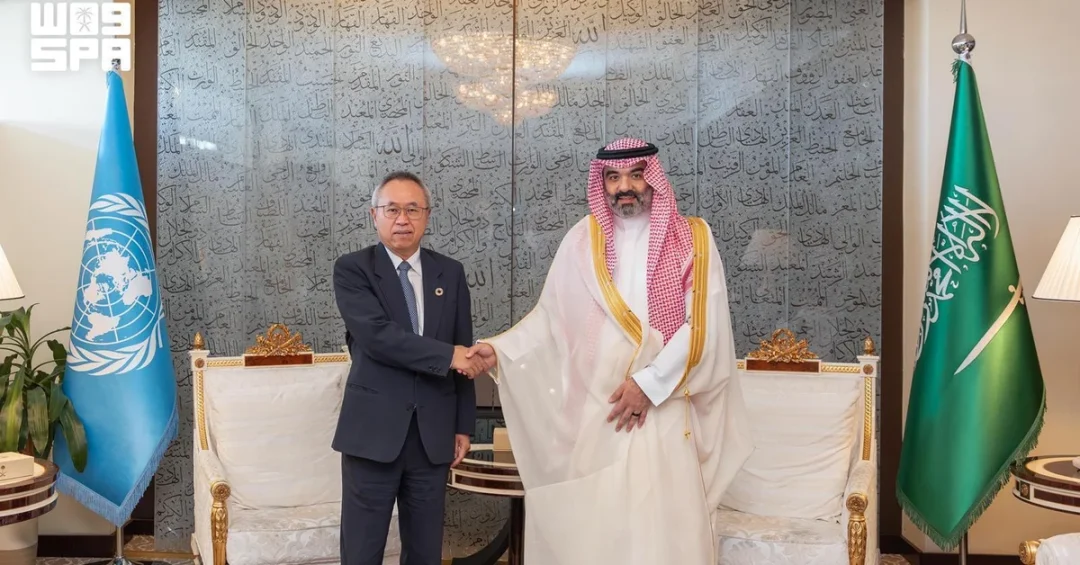
Saudi Minister of Communications and Information Technology Abdullah Alswaha met with United Nations Under-Secretary-General for Economic and Social Affairs Li Junhua in New York to advance global cooperation on digital transformation and the Sustainable Development Goals. The meeting, held on the margins of the United Nations General Assembly, took place in the presence of Ambassador Dr. Abdulaziz Alwasil, the Permanent Representative of the Kingdom of Saudi Arabia to the United Nations. According to the Saudi Press Agency, the discussions focused on how comprehensive digital transformation can accelerate progress toward the Sustainable Development Goals and how partnerships in digital government can be strengthened worldwide. The encounter underscores Saudi Arabia’s growing role as a bridge-builder in international digital policy and reflects the Kingdom’s commitment to leveraging technology for the benefit of societies at every stage of development.
Why does a single meeting between a Saudi minister and a senior UN official matter in an era of rapid technological change? Because digital transformation has become the backbone of modern governance, economic competitiveness, and social inclusion. As countries around the world race to modernize public services and close the digital divide, Saudi Arabia has positioned itself not only as a national success story but as a partner for other nations seeking to follow a similar path. The Kingdom’s Vision 2030 reform agenda places digital government, innovation, and international cooperation at its core, and the meeting in New York demonstrates how those domestic priorities translate into global engagement. The exchange with Under-Secretary-General Li Junhua signals that Saudi expertise in digital government is now recognized at the highest levels of the multilateral system.
Context and Background
The meeting between Minister Alswaha and Under-Secretary-General Li Junhua comes at a pivotal moment for global development policy. The United Nations’ 2030 Agenda for Sustainable Development, adopted by all member states in 2015, set out 17 goals to end poverty, protect the planet, and ensure prosperity for all. With the deadline for those goals now in view, the international community is assessing progress and identifying accelerators that can close remaining gaps. Digital transformation has emerged as one of the most powerful of those accelerators, capable of expanding access to education, healthcare, financial services, and government services at unprecedented speed and scale. The UN Department of Economic and Social Affairs, led by Li Junhua, plays a central role in coordinating these efforts, making the dialogue with Saudi Arabia particularly significant.
Saudi Arabia has spent the past decade building one of the world’s most advanced digital government ecosystems. The Kingdom’s Digital Government Authority, established in 2019, has consolidated hundreds of government services onto unified platforms, while the National Center for Artificial Intelligence and the Saudi Data and AI Authority have driven innovation in data governance and emerging technologies. These institutions have earned international recognition, and Saudi Arabia consistently ranks among the top nations globally in UN e-government development indices. The meeting in New York builds on that track record, positioning the Kingdom as a source of practical knowledge for developing countries that are navigating their own digital transitions. Ambassador Alwasil’s presence reinforced the diplomatic dimension of the conversation, linking technical cooperation to the broader Saudi commitment to multilateral engagement.
What makes the Saudi model of digital transformation distinctive is its integration with a comprehensive national reform agenda. Unlike isolated digitization projects, Saudi efforts are embedded within Vision 2030, the Kingdom’s strategic framework for economic diversification and social development. That alignment ensures that digital investments serve clear national objectives, from improving government efficiency to creating jobs and enhancing quality of life. When Saudi officials share their experience in international forums, they are not simply exporting technology; they are offering a governance model that pairs innovation with long-term planning. This holistic approach is precisely what UN agencies seek as they search for replicable pathways to sustainable development.
Key Details of the New York Meeting
The discussions in New York covered several concrete areas of cooperation. According to the Saudi Press Agency, Minister Alswaha and Under-Secretary-General Li Junhua examined the role of comprehensive digital transformation in accelerating progress toward the Sustainable Development Goals. They also explored ways to strengthen partnerships in digital government, a field in which Saudi Arabia has accumulated substantial expertise. The conversation extended to supporting digital capacity building in developing countries, with both sides emphasizing the importance of exchanging experiences and best practices. The goal, as described in the official account, is to develop more inclusive and innovative digital governments that can deliver better services to citizens everywhere.
Capacity building is a particularly important component of the discussion. Many developing countries possess the political will to digitize their public sectors but lack the technical infrastructure, skilled workforce, or regulatory frameworks to do so effectively. Saudi Arabia has addressed these challenges domestically through large-scale training programs, partnerships with the private sector, and the creation of specialized institutions. By sharing these experiences through UN channels, the Kingdom can help other nations avoid common pitfalls and accelerate their own progress. The meeting therefore represents a practical form of development assistance, one that leverages knowledge and expertise rather than simply financial resources.
The emphasis on inclusive digital government reflects a shared understanding that technology must benefit all segments of society. Saudi Arabia’s digital platforms are designed to be accessible to citizens, residents, and businesses, with services ranging from health appointments and business licensing to social welfare and education. This user-centered approach has been recognized internationally and forms part of the Kingdom’s broader commitment to leaving no one behind, a principle that resonates strongly with the Sustainable Development Goals. The exchange with Under-Secretary-General Li Junhua allowed Saudi officials to highlight these achievements while learning from the UN’s global perspective on digital inclusion.
International and Regional Impact
The meeting carries significance beyond the bilateral relationship between Saudi Arabia and the United Nations. It reflects a broader shift in the global digital landscape, in which countries of the Global South are increasingly recognized as innovators rather than merely recipients of technology. Saudi Arabia’s active participation in UN discussions on digital cooperation positions the Kingdom as a leader within this shifting landscape. For other Gulf states and countries across the Middle East and North Africa, the Saudi approach offers a template for how to align digital modernization with cultural values and national development strategies. The meeting thus has implications for regional cooperation as well as for the wider multilateral system.
At the international level, the dialogue contributes to ongoing UN efforts to harness digital technologies for sustainable development. The United Nations has repeatedly emphasized that the benefits of the digital revolution remain unevenly distributed, with billions of people still lacking reliable internet access and digital skills. By partnering with countries like Saudi Arabia that have demonstrated rapid progress, the UN can scale up successful models and mobilize additional resources. The meeting between Minister Alswaha and Under-Secretary-General Li Junhua is therefore part of a larger effort to build a more inclusive digital economy, one in which developing countries can participate fully and benefit equitably.
Could this meeting mark the beginning of a new phase in Saudi-UN cooperation on technology? The signs suggest that it could. Saudi Arabia has already demonstrated its commitment to multilateral engagement through its participation in the G20, its hosting of major international summits, and its support for UN initiatives across a range of fields. Digital cooperation represents a natural extension of these efforts, combining the Kingdom’s technical strengths with its diplomatic reach. As the 2030 deadline for the Sustainable Development Goals approaches, partnerships of this kind will become increasingly important, and Saudi Arabia is well positioned to play a leading role.
Economic and Strategic Significance
The economic dimensions of digital transformation are substantial and growing. Digital government services reduce administrative costs, increase tax compliance, and make economies more attractive to investment by simplifying interactions between businesses and the state. Saudi Arabia’s digital reforms have contributed to improvements in its global competitiveness rankings and have supported the growth of a vibrant technology sector. By sharing its expertise internationally, the Kingdom also creates opportunities for Saudi technology companies to expand into new markets, reinforcing the economic diversification objectives of Vision 2030. The meeting in New York therefore has implications for trade, investment, and job creation, not just for governance.
Strategically, the meeting reinforces Saudi Arabia’s position as a constructive global actor. In a world where technology policy is increasingly shaped by geopolitical competition, the Kingdom’s emphasis on cooperation, capacity building, and inclusive development offers an alternative to zero-sum approaches. Saudi Arabia’s relationships with both developed and developing countries, as well as its active engagement with multilateral institutions, give it a unique ability to bridge divides and facilitate dialogue. The discussion with Under-Secretary-General Li Junhua exemplifies this role, demonstrating that Saudi Arabia is not only a participant in global conversations about technology but a shaper of them.
What does this mean for the future of digital governance worldwide? It suggests that the next decade will be defined by cooperation and knowledge-sharing, with countries learning from one another’s successes and failures. Saudi Arabia’s willingness to share its experience, combined with the UN’s convening power and technical expertise, creates a powerful platform for accelerating progress. The meeting in New York is a step in that direction, laying the groundwork for concrete collaboration that could benefit millions of people across the developing world.
Vision 2030 Alignment
The meeting between Minister Alswaha and Under-Secretary-General Li Junhua is a direct expression of Saudi Vision 2030, the Kingdom’s comprehensive reform agenda launched under the leadership of Crown Prince Mohammed bin Salman. Vision 2030 identifies digital transformation as a cornerstone of economic diversification and public sector efficiency, with targets that include expanding e-government services, fostering innovation, and building a knowledge-based economy. The Kingdom’s progress in these areas has been recognized globally, and its willingness to share that progress with other nations reflects the vision’s emphasis on international partnership and responsible global citizenship.
Beyond its domestic achievements, Saudi Arabia’s engagement with the United Nations on digital cooperation demonstrates how Vision 2030 extends beyond national borders. The Kingdom seeks to be a force for stability, prosperity, and innovation in the region and the world, and its digital diplomacy is an important instrument of that ambition. As Saudi Arabia continues to invest in emerging technologies such as artificial intelligence, cloud computing, and smart cities, its role in shaping global digital governance will only grow. The meeting in New York is a testament to the Kingdom’s forward-looking approach and its commitment to building a more connected, inclusive, and prosperous future for all.
20 Questions
Q1. Who represented Saudi Arabia at the meeting with the UN Under-Secretary-General?
A1. Minister of Communications and Information Technology Abdullah Alswaha represented Saudi Arabia, accompanied by Ambassador Dr. Abdulaziz Alwasil, the Permanent Representative of the Kingdom to the United Nations. The meeting took place in New York.
Q2. Who is Li Junhua?
A2. Li Junhua is the United Nations Under-Secretary-General for Economic and Social Affairs. He leads the UN department responsible for supporting international cooperation on sustainable development, social policy, and digital government initiatives worldwide.
Q3. What was the main topic of the meeting?
A3. The main topic was comprehensive digital transformation and its role in accelerating progress toward the Sustainable Development Goals. The two sides also discussed strengthening partnerships in digital government and supporting capacity building in developing countries.
Q4. Where did the meeting take place?
A4. The meeting took place in New York, according to the Saudi Press Agency. New York hosts the United Nations headquarters, making it a natural venue for high-level discussions on international development and digital cooperation.
Q5. What are the Sustainable Development Goals?
A5. The Sustainable Development Goals are 17 global objectives adopted by all UN member states in 2015. They aim to end poverty, protect the planet, and ensure prosperity by 2030, with digital transformation recognized as a key accelerator.
Q6. Why is digital transformation important for the SDGs?
A6. Digital transformation can expand access to education, healthcare, financial services, and government services at scale. It enables more efficient use of resources and helps countries reach underserved populations, making it a powerful tool for achieving the SDGs.
Q7. What is digital government?
A7. Digital government refers to the use of technology to deliver public services, engage citizens, and improve administrative efficiency. Saudi Arabia has developed advanced digital government platforms that consolidate hundreds of services into user-friendly portals.
Q8. How does Saudi Arabia support digital capacity building in developing countries?
A8. Saudi Arabia shares its expertise through international forums, training programs, and partnerships. The meeting discussed exchanging experiences and best practices to help developing countries build inclusive and innovative digital governments.
Q9. What is Saudi Arabia’s record in digital government?
A9. Saudi Arabia consistently ranks among the world’s top nations in UN e-government development indices. Its Digital Government Authority has consolidated services onto unified platforms, earning international recognition for innovation and user-centered design.
Q10. How does this meeting reflect Saudi Arabia’s international role?
A10. The meeting reflects Saudi Arabia’s active role in promoting international cooperation and leveraging emerging technologies for global benefit. It demonstrates the Kingdom’s commitment to multilateral engagement and its position as a bridge-builder in digital policy.
Q11. What is Vision 2030?
A11. Vision 2030 is Saudi Arabia’s comprehensive reform agenda launched under Crown Prince Mohammed bin Salman. It aims to diversify the economy, modernize society, and enhance government efficiency, with digital transformation as a cornerstone.
Q12. How does the meeting align with Vision 2030?
A12. The meeting aligns with Vision 2030’s emphasis on digital transformation, innovation, and international partnership. Sharing Saudi expertise globally reflects the vision’s goal of positioning the Kingdom as a responsible global citizen and knowledge economy leader.
Q13. What are the benefits of digital government for citizens?
A13. Digital government makes services faster, more accessible, and more transparent. Citizens can complete tasks online, from health appointments to business licensing, reducing bureaucracy and improving quality of life.
Q14. How does digital transformation support economic diversification?
A14. Digital transformation fosters technology sectors, attracts investment, and creates skilled jobs. It reduces administrative costs and improves competitiveness, supporting Saudi Arabia’s goal of diversifying away from oil dependence.
Q15. What role does the UN play in digital cooperation?
A15. The UN facilitates dialogue, sets norms, and provides technical assistance to help countries harness digital technologies for development. Its Department of Economic and Social Affairs coordinates these efforts globally.
Q16. What is the significance of Ambassador Alwasil’s presence?
A16. Ambassador Alwasil’s presence linked the technical discussions to Saudi Arabia’s diplomatic engagement at the UN. It underscored the Kingdom’s commitment to multilateralism and its active participation in international affairs.
Q17. How can other countries benefit from Saudi Arabia’s experience?
A17. Other countries can learn from Saudi Arabia’s holistic approach, which integrates digital investments with long-term national planning. The Kingdom’s experience in building institutions, training workforces, and designing user-friendly platforms offers valuable lessons.
Q18. What emerging technologies are relevant to these discussions?
A18. Artificial intelligence, cloud computing, big data, and smart city technologies are central to modern digital government. Saudi Arabia has invested heavily in these areas through specialized institutions and national strategies.
Q19. What are the next steps after this meeting?
A19. The meeting laid the groundwork for continued cooperation between Saudi Arabia and the UN on digital government and capacity building. Specific initiatives may be developed through ongoing dialogue and partnership agreements.
Q20. Why is this meeting important for the future of global digital governance?
A20. It signals a shift toward knowledge-sharing and cooperation in digital policy, with countries like Saudi Arabia playing a leading role. Such partnerships are essential for achieving inclusive, sustainable development worldwide.
Reader Feedback
We value your thoughts. Please share your feedback on this article.
Your feedback helps us improve our coverage.
Related articles
 King Salman congratulates President of Pakistan on Independence Day
 Crown Prince congratulates President of Pakistan on Independence Day
 General Directorate of Passports hosts financial literacy workshop
 Saudi Red Crescent saves Nigerian Umrah performer in Madinah
 Saudi Red Crescent saves Nigerian Umrah pilgrim in Madinah
 National Center of Meteorology weather forecast